
Yingde Hong
Black tea
About this tea
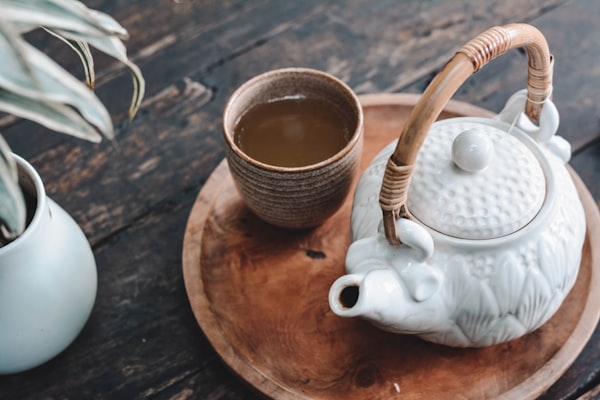
Yingde Hong (also written Ying De Hong, 'Ying De red') is a golden-tipped black tea from Yingde, in northern Guangdong Province — one of China's youngest major black teas and, by export volume, one of its most important. Unlike the centuries-old black teas of Anhui or Fujian, Yingde Hong was purpose-built in the late 1950s and 1960s as a state-backed export crop, using large-leaf cultivars selected specifically for bold, brisk character and hard currency earnings. The cup is sweet, malty, and smooth, with a honeyed finish and none of the smoky or peppery edge found in some other Chinese reds — closer in spirit to a fine Assam than to Keemun's orchid delicacy. Brewed strong, it holds up well to milk, making it a rare Chinese black tea equally at home in a gongfu session or a builder's mug.
How to brew: 95°C, 3.5 min, 3 g per cup.
Caffeine
Medium
How to brew
Flavor notes
sweet, malty, honeyed, smooth
Often associated with
Moderate energy, Warmth
Best time to enjoy
Morning, Afternoon
Tags
Origin & Production
Yingde sits in the hilly, subtropical north of Guangdong, where the Qingyuan mountains trap warm, humid air off the Pearl River basin and give the region one of the longest growing seasons in China. Tea gardens here were established largely from scratch starting in the 1950s, when agronomists selected large-leaf cultivars — including stock related to Yunnan's broad-leaf assamica-type bushes — for their high yield, vigorous growth, and suitability for mechanized, factory-scale black tea processing. The warm climate and rich, slightly acidic red soils of the area push the leaf to develop high levels of polyphenols and sugars, which is part of why Yingde Hong leans so consistently sweet and malty rather than astringent. Production today ranges from large state-descended factories turning out broken-leaf grades for blending to smaller estates making whole-leaf, golden-tip lots for the specialty market.
Production process
Selective plucking
Pickers take a bud with one or two young leaves from large-leaf cultivar bushes; the proportion of golden, downy buds in the pluck determines whether the lot becomes a premium 'golden tip' grade or a standard export grade.
Withering
Leaves are spread thinly on bamboo trays or withering troughs for several hours in Yingde's warm, humid air, softening them and concentrating aromatic compounds ahead of rolling.
Rolling
Withered leaves are rolled, traditionally by orthodox rolling machines, to break cell walls and release juices, shaping the leaf into tight, even strips while jump-starting oxidation.
Full oxidation
Rolled leaf rests in cool, humid rooms until it turns a deep copper-red, developing the theaflavins and thearubigins responsible for the tea's bright color and malty sweetness.
Firing and drying
The oxidized leaf is dried in stages over hot air to halt oxidation, lock in the honeyed aroma, and bring moisture down to a stable, storable level.
Sorting and grading
Dried leaf is sieved and sorted by size and bud content — whole, downy golden-tip leaves are separated out for premium lots, while broken grades are bagged for bulk export and blending.
History & Tradition
Yingde Hong has no ancient lineage — it is a deliberately engineered tea, born from China's mid-20th-century push to build a modern, high-volume black tea industry for export markets, and it became one of the country's signature success stories in doing so.
State tea farms established
Large state-run tea farms were founded around Yingde in northern Guangdong as part of China's broader push to expand agricultural production and develop new export crops in the years after 1949.
Cultivar selection trials
Agronomists trialed large-leaf tea varieties at Yingde, including stock related to Yunnan's broad-leaf bushes, looking specifically for plants suited to vigorous growth and consistent black tea processing at scale.
First Yingde Hong produced
The first batches of what became known as Yingde Hong were processed, designed from the outset as a bold, full-bodied black tea that could compete in international markets and blend well in commercial tea bags.
Rapid expansion for export
Tea acreage around Yingde expanded quickly as the region became one of Guangdong's main black tea export centers, with output shipped chiefly to the Soviet Union, Eastern Europe, and other socialist-bloc trading partners during this period.
Diversification of markets and grades
As China's economy opened up, Yingde producers diversified beyond bulk export blends, developing premium golden-tip and whole-leaf grades aimed at the growing domestic specialty market alongside continued bulk exports.
Recognized regional specialty
Yingde Hong is now recognized within China as a distinct regional black tea style and a point of local pride for Guangdong, with golden-tip lots increasingly marketed on quality and origin rather than purely on export volume.
Health Benefits
Steady, moderate energy
Like other fully oxidized black teas, Yingde Hong carries a moderate-to-high caffeine content, paired with the amino acid L-theanine, which traditionally is associated with a steadier, more even lift than coffee tends to deliver.
Polyphenol antioxidants
Oxidation converts the catechins of fresh leaf into theaflavins and thearubigins, the pigmented antioxidant compounds that give black tea its color and that are widely studied for their general antioxidant activity.
Everyday wellness ritual
A smooth, low-astringency black tea like Yingde Hong is easy to drink daily without sugar or milk, making it a comfortable, sustainable way to build a regular tea habit into a morning or early-afternoon routine.
Warming, comforting character
The malty sweetness and honeyed finish give Yingde Hong a naturally warming, comforting quality, traditionally enjoyed as a grounding cup on cooler mornings or after a meal.
Naturally low bitterness
The warm Guangdong climate and slightly acidic soils push the leaf toward higher natural sugars, which is part of why Yingde Hong reads as sweet and smooth rather than tannic — friendly for newcomers easing into stronger black teas.
Grades & Varieties
Golden tip (Jin Hao)
The premium grade, made almost entirely from downy golden buds. The dry leaf has a distinct golden sheen and the liquor is sweet, honeyed, and exceptionally smooth, with minimal astringency even when brewed strong.
Best for
- ✓Gongfu-style brewing
- ✓Drinking plain to appreciate sweetness
- ✓Gifting and special occasions
Whole-leaf orthodox
Tightly rolled whole leaves with a moderate share of golden tips. Balances good body with sweet, malty depth — the most common format for specialty retail outside of bulk export blends.
Best for
- ✓Everyday black tea drinking
- ✓Brewing with or without milk
- ✓Western-style steeping
Broken leaf (export grade)
Smaller, broken leaf particles that infuse quickly and strongly. This is the traditional bulk format that built Yingde's export trade — brisk, robust, and reliable for large-batch brewing.
Best for
- ✓Strong milky tea
- ✓Tea bags and quick brewing
- ✓Iced tea base
Yingde Hong Cui (premium spring pick)
A refined spring-harvest style emphasizing tender bud sets, lighter oxidation control, and a more delicate, floral-honey aroma layered over the classic malty base — produced in smaller quantities for the specialty market.
Best for
- ✓Special tastings
- ✓Drinking without milk or sugar
- ✓Those who enjoy Dianhong but want a lighter touch
Did you know?
Unlike China's centuries-old black teas, Yingde Hong was deliberately engineered in 1959 by state agronomists using large-leaf cultivars, and for decades was shipped mainly to the Soviet Union and Eastern Europe.
Foods with this tea
What to Eat with Yingde Hong
Sweet, malty, and honeyed with a smooth finish, Yingde Hong is a flexible everyday black tea that pairs beautifully with Cantonese dim sum, roasted meats, and simple buttered toast.
Yingde Hong Char Siu Pork
A glossy, sweet-savory roasted pork glazed with a Yingde Hong reduction — the tea's malty honey notes deepen the classic Cantonese char siu marinade.
Yingde Hong Honey Steamed Sponge Cake
A light Cantonese-style steamed sponge cake infused with Yingde Hong and finished with a honey glaze — the tea's malty sweetness folds right into the soft crumb.
Drinks with this tea

Yingde Hong Honey Ginger Morning Tonic
A warming morning tonic that leans into Yingde Hong's natural malt and honey notes with fresh ginger and a touch of citrus — a steady, grounding way to start the day.
Iced Yingde Hong Milk Tea
A cold, lightly sweetened milk tea built on Yingde Hong's malty backbone — smooth, creamy, and refreshing, in the spirit of Hong Kong-style milk tea from just down the coast.
Yingde Hong Whisky Sour
A malty whisky sour built on a Yingde Hong tea syrup — the tea's honey and malt notes echo the whisky's own character for a smooth, well-balanced cocktail (with a non-alcoholic version included).