
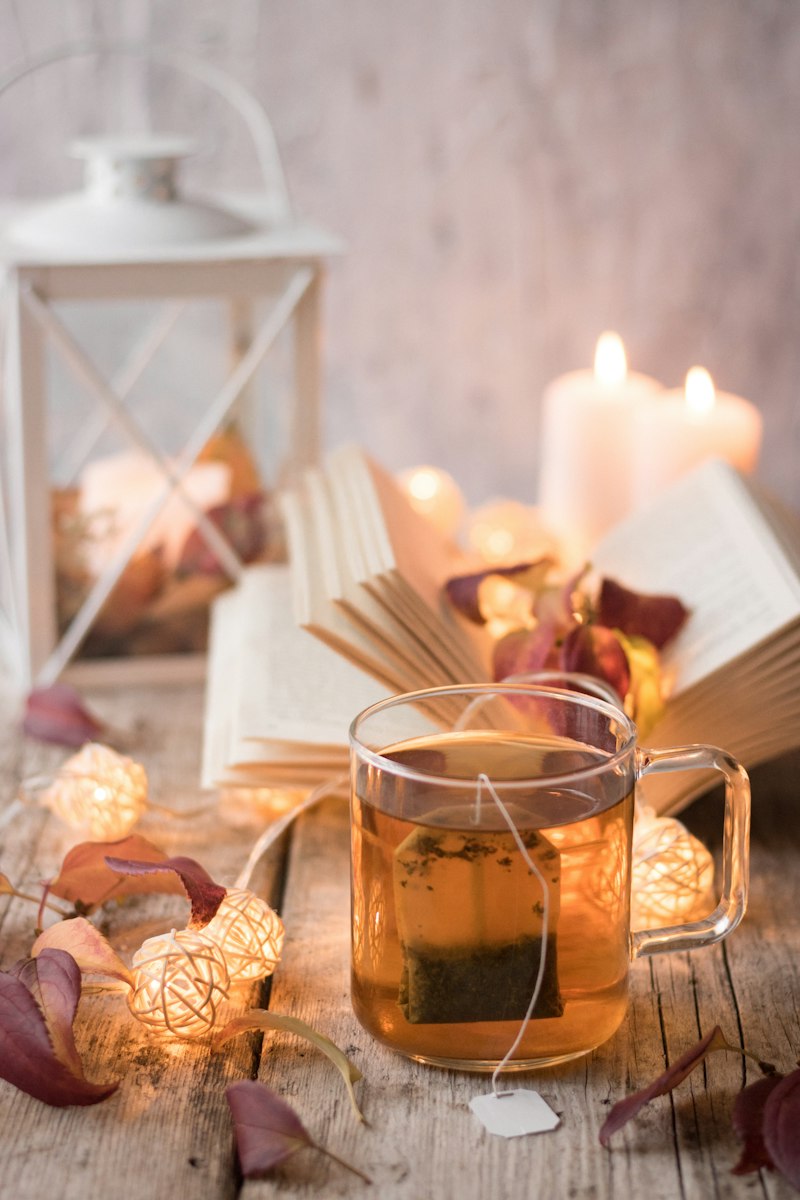
Da Hong Pao
Oolong tea
About this tea
Da Hong Pao (Big Red Robe) is the most famous of the Wuyi rock oolongs (Yan Cha), a heavily roasted, partially oxidized tea grown on the cliffs of the Wuyi Mountains in northern Fujian, China. It is treasured for its deep mineral character — the so-called 'rock rhyme' (yan yun) — layered with notes of roasted stone fruit, dark chocolate, and toasted grain, finishing with a long, sweet aftertaste. The original mother bushes on Jiulongke cliff are considered a national treasure and have been retired from harvest since 2006, with all modern Da Hong Pao now made from cuttings or related Wuyi cultivars.
How to brew: 95°C, 30s, 5 g per cup.
Caffeine
High
How to brew
Flavor notes
toasted, mineral, fruity
Often associated with
Focus, Sustained energy
Best time to enjoy
Mid-morning, Early afternoon, After a meal
Tags
Origin & Production
Da Hong Pao is born of the dramatic landscape of the Wuyi Mountains, a UNESCO World Heritage Site of red sandstone cliffs, narrow gorges, and nine winding streams. Tea bushes are planted in pockets of mineral-rich soil among the rocks at elevations of roughly 200–700 meters, where filtered sunlight, constant mist, and iron-laden stone shape a famously deep, mineral profile. The most prestigious tea comes from the 'zhengyan' (true rock) inner core of the protected area, with somewhat softer 'banyan' (half rock) and 'zhoucha' (riverside) zones around it.
Production process
Solar withering
Mature leaves — typically two or three leaves and a bud — are spread on bamboo mats in the sun to lose moisture and activate oxidative enzymes. Wuyi producers prefer mature leaves rather than buds because they carry the body and minerality the style requires.
Shaking and partial oxidation (zuoqing)
Leaves are gently shaken in bamboo trays, then rested, in cycles that bruise the edges and trigger controlled oxidation. The process is repeated over many hours until oxidation reaches roughly 40–70%, the level traditional for Da Hong Pao.
Kill-green (sha qing)
When the master judges that oxidation is right, the leaves are heated quickly in a wok or rotary drum to deactivate the enzymes. This locks in the developing aroma and sets the stage for shaping.
Rolling into twisted strips
Unlike ball-rolled Anxi oolongs, Wuyi teas are rolled and twisted into long, dark, open strips. This characteristic shape lets the tea brew gradually over many infusions and helps showcase the rock-tea character.
Charcoal roasting (hong bei)
The defining step: slow charcoal roasting in bamboo baskets over several hours, sometimes repeated two or three times across weeks or months. Roast level (light, medium, or heavy) determines whether the cup tilts toward floral fruit or deep, dark caramel and minerality.
Resting
After roasting, the tea is rested in cool, dry conditions for weeks or months to let the 'fire' (huo wei) settle. Well-made Da Hong Pao can continue to evolve and smooth out over several years of careful storage.
History & Tradition
Da Hong Pao sits at the heart of Chinese tea legend — six ancient bushes on a Wuyi cliff, a Ming scholar in distress, and an imperial robe — and its story is closely tied to the very birth of oolong tea itself.
The robe legend
The most widely told origin story: a scholar travelling to the imperial exams fell ill near a Wuyi temple. Monks brewed him tea from cliff-grown bushes; he recovered, passed the exams, and on his return draped his red imperial robe over the bushes in gratitude — giving the tea its name, 'Big Red Robe'.
Birthplace of oolong
Tea historians widely consider the Wuyi Mountains as the birthplace of oolong (partially oxidized) tea production. The processing techniques refined here became the template for the entire oolong category.
European trade as 'Bohea'
European traders shipped large quantities of Wuyi tea — known in English as 'Bohea', a romanization of Wuyi — to Britain and its colonies. Bohea was among the teas destroyed in the 1773 Boston Tea Party.
Record-setting auction
20 grams of Da Hong Pao harvested from the original mother bushes sold at auction in Wuyishan for 208,000 yuan (around US$25,000 at the time), making it one of the most expensive teas ever sold.
Mother bushes protected
The six surviving original Da Hong Pao mother bushes on the Jiulongke cliff — believed to be over 350 years old — were officially retired from harvesting by the Chinese government. The 2005 harvest was placed in the National Museum of China.
Health Benefits
Broad polyphenol mix
Partial oxidation means Da Hong Pao contains a wide spectrum of catechins, theaflavins, and thearubigins, all polyphenols studied for antioxidant activity. The mix is broader than in fully green or fully oxidized teas.
Metabolic interest
Oolong polyphenols have been studied for their interaction with fat metabolism and energy expenditure. Wuyi-style oolongs in particular have been used in clinical research alongside diet and exercise interventions.
Cardiovascular support
Population studies in China and Japan have linked regular oolong consumption with healthier blood pressure and cholesterol profiles, particularly when it replaces sweetened drinks in the diet.
Sustained focus
With moderate caffeine and L-theanine, Da Hong Pao supports a long, steady attention curve. Many drinkers describe Wuyi oolongs as 'long energy' (cha qi) ideal for deep work or contemplative reading.
Digestive comfort
The deep charcoal roast lowers astringency and softens tannins, making Da Hong Pao a traditional after-meal cup in Fujian. It is often chosen specifically to follow rich or fatty foods.
Grades & Varieties
Zhengyan (true rock)
Tea grown in the protected core of the Wuyi scenic area, on or directly beside the cliffs. The most complete expression of 'rock rhyme' (yan yun): deep, layered minerality, stone-fruit sweetness, and a long, evolving finish across many infusions.
Best for
- ✓Gongfu brewing
- ✓Contemplative tasting
- ✓Pairing with dark chocolate
Banyan (half rock)
Grown in the buffer zone around the scenic area, still in mineral-rich soil but with softer terroir. A more accessible Da Hong Pao that keeps the toasted, fruity character with a slightly lighter mineral depth.
Best for
- ✓Daily rock tea drinking
- ✓Introduction to Wuyi style
- ✓Gongfu sessions
Commercial blend Da Hong Pao
Most Da Hong Pao on the market is a blend of cuttings from the original bushes with related Wuyi cultivars such as Rou Gui, Shui Xian, and Que She. Skilled blenders aim to approximate the classic profile at a fraction of the price of zhengyan tea.
Best for
- ✓Affordable everyday choice
- ✓Learning the style
- ✓Western-style brewing
Did you know?
In 2005, just 20 grams of Da Hong Pao from the original Wuyi mother bushes sold at auction for 208,000 yuan (about US$25,000) — the six surviving mother bushes have been retired from harvest since 2006 and are now a national treasure.
Foods with this tea
What to Eat with Da Hong Pao Tea
Da Hong Pao's deep mineral, roasted, almost smoky character pairs powerfully with roast meats, wild mushrooms, dark chocolate, and aged cheeses—bold food for a bold tea.
Da Hong Pao Braised Beef Short Ribs
Beef short ribs slow-braised in a deeply aromatic Da Hong Pao broth with star anise, soy, and ginger—the rock oolong's roasted minerality meeting tender, fork-soft meat.
Da Hong Pao Dark Chocolate Pot de Crème
A dense, silky dark chocolate pot de crème infused with Da Hong Pao oolong—roasted minerality meets bittersweet cocoa in a small jar of pure pleasure.
Drinks with this tea
Da Hong Pao Mineral Digestive Tonic
Wuyi rock oolong steeped with ginger, dried tangerine peel, and a touch of rock sugar—a warming, mineral-rich digestive tonic rooted in Fujianese folk medicine.
Cold-Brew Da Hong Pao with Orange Peel
Wuyi rock oolong cold-brewed overnight with strips of fresh orange peel and a smoked-salt rim—a deep, mineral, lightly bitter iced tea for grown-up palates.
Da Hong Pao Scotch Rock
Lightly peated Scotch infused with Da Hong Pao, stirred down with honey syrup and orange bitters—a smoky, mineral, deeply autumnal sipping cocktail.