
Junshan Yinzhen
Yellow tea
About this tea
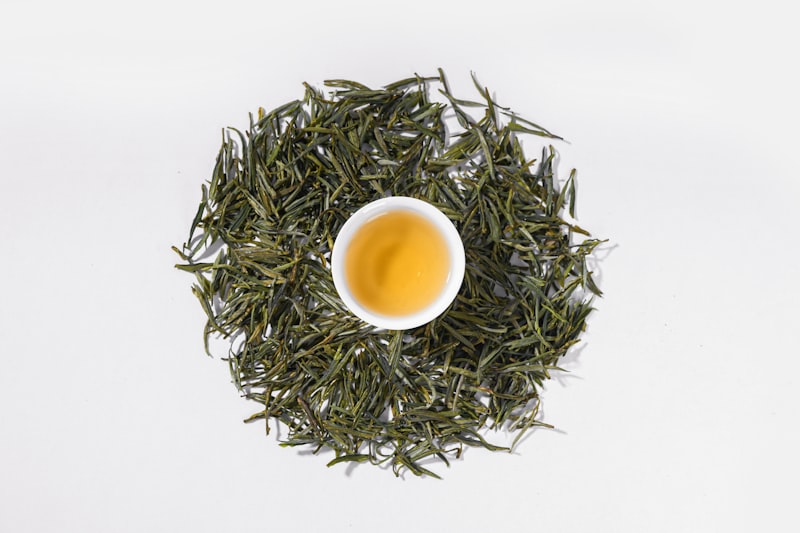
Junshan Yinzhen ('Junshan Silver Needles') is the most famous yellow tea (huang cha) in China and the only widely recognized bud-only example of the rare yellow category. It is made exclusively from plump, silvery spring buds picked on tiny Junshan Island in Lake Dongting, Yueyang, Hunan Province. The defining processing step is men huang — 'sealed yellowing' — a gentle, slow non-enzymatic post-warming under cloth or paper, which transforms a green-style base into a softer, mellower cup with a clear gold liquor and characteristic toasted-corn, chestnut, and sweet-melon notes. Historically presented as tribute to the Tang court, Junshan Yinzhen remains one of China's most prized and limited-production teas.
How to brew: 80°C, 3 min, 3 g per cup.
Caffeine
Medium
How to brew
Flavor notes
sweet, subtle, toasted
Often associated with
Calm alertness, Clarity
Best time to enjoy
Mid-morning, Early afternoon
Tags
Origin & Production
Junshan is a small island, less than one square kilometer in area, set in the vast Lake Dongting near Yueyang in northern Hunan. The combination of constant lake mist, humid microclimate, mineral-rich soils, and a very limited cultivated area means total production of authentic Junshan Yinzhen is small — by some accounts only a few hundred kilograms in some years. Tea bushes on the island are picked just once a year for the bud-only Yinzhen lots, with very short windows in spring before and around the Qingming festival.
Production process
Bud-only spring picking
Pickers select only fat, unopened spring buds wrapped in fine silvery down, traditionally avoiding picks on rainy days or after frost. Strict standards — sometimes called 'nine cannots' — exclude purple buds, hollow buds, broken buds, insect-damaged buds, and several other defects.
Kill-green (sha qing)
Fresh buds are heated quickly in a wok at a moderate temperature to deactivate the oxidative enzymes, similar to green tea production. This locks in the silvery color and clean aroma before the yellowing step.
Primary drying
Pan-fired buds are partially dried over gentle heat so they retain a controlled amount of internal moisture. The right residual moisture is critical for the slow non-enzymatic browning that comes next.
Sealed yellowing (men huang)
The defining step of yellow tea: warm, moist buds are wrapped in cloth or special paper packets and left to rest in a warm room for many hours, sometimes over several days with periodic reopening. Heat and moisture inside the bundle drive a non-enzymatic 'yellowing' that softens grassiness and develops the tea's signature mellow, slightly toasted aroma.
Repeated wraps and final firing
Top-grade Junshan Yinzhen is often men-huanged in two or more wrap stages, with brief firings in between to control moisture and aroma. A final low-temperature drying stabilizes the buds for storage.
Hand sorting
Finished buds are sorted by length, uniformity, color, and downiness. Only the most consistent buds are reserved as top-grade Junshan Yinzhen; mixed and broken material is used in lower grades.
History & Tradition
Junshan Yinzhen has been celebrated in Chinese tea literature for more than a thousand years. Tribute records, classic poetry, and twentieth-century 'Famous Teas of China' lists all single it out as the standard-bearer of the rare yellow tea category.
Tribute tea for the imperial court
Tea from Junshan Island was already known as 'Huang Ling Mao' (yellow feather hair) and presented as tribute to the Tang imperial court, becoming one of the most prestigious teas in the empire.
Literary fame
Junshan tea appears in poetry and tea writings of the Song period as a renowned product of Lake Dongting. Many of the famous tribute teas of the Tang–Song era have since disappeared; Junshan Yinzhen is one of the few that survived in continuous production.
Qing imperial favor
Junshan Yinzhen remained a tribute tea under the Qing dynasty, and tradition holds that it was a favorite of emperors including Qianlong. The bud-only Yinzhen ('Silver Needle') style took its modern shape during this period.
International gold medal
Junshan Yinzhen received a gold medal at the Leipzig International Trade Fair in 1956 — an early postwar moment that helped reintroduce Chinese yellow tea to international audiences.
China Top Ten Famous Teas
Junshan Yinzhen was included in the influential 1959 'China Famous Tea' selection convened in Beijing, often referenced as one of China's Top Ten Famous Teas, alongside teas like Longjing and Bi Luo Chun.
Health Benefits
Gentle, focused calm
Like other bud-rich teas, Junshan Yinzhen contains caffeine and L-theanine. The men huang step softens stimulating edges, often giving a mellower, less wired focus than an equivalent dose of green tea.
Tea polyphenols
As a lightly processed bud tea, Junshan Yinzhen retains many catechins typical of green tea, including EGCG, polyphenols studied for their antioxidant activity.
Gentler on the stomach
Yellow tea's sealed yellowing rounds off some of the grassiness and tannic edge of green tea, which many drinkers find easier on a sensitive stomach. It is a traditional choice for those who like green tea aromas but find pure green tea too astringent.
Unsweetened ritual cup
Junshan Yinzhen invites slow, deliberate brewing — often in a tall glass so the buds 'dance' upright. Choosing it instead of a sweetened drink supports the habit, linked in population data with better cardiometabolic outcomes, of drinking unsweetened beverages.
Light, clean energy
Bud-only teas are relatively caffeinated for their weight but are usually brewed at very low leaf-to-water ratios, giving a clear, light energy that suits mid-morning work or afternoon study without overpowering.
Grades & Varieties
Authentic Junshan Yinzhen
Bud-only tea from Junshan Island itself, made with full men huang processing. Uniform silver-gold needles, golden liquor with a clear, soft aroma of toasted corn, chestnut, and sweet melon. Production is small and prices are correspondingly high.
Best for
- ✓Special-occasion tasting
- ✓Tall-glass brewing
- ✓Yellow tea collectors
Junshan Yinzhen 'Yueyang area' style
Bud-only yellow tea made in the Yueyang area around Lake Dongting, beyond strict Junshan Island sourcing. Closely resembles classic Junshan Yinzhen but more widely available and more affordable. A good first encounter with the style.
Best for
- ✓First-time yellow tea drinkers
- ✓Daily refined cup
- ✓Sharing with guests
Junshan Huang Cha (bud-and-leaf)
Yellow tea made in the Junshan / Yueyang style but from bud-and-leaf material rather than pure buds — often labeled simply 'Junshan huang cha' or 'huang ya'. Fuller body and stronger aroma than bud-only Yinzhen, at a much lower price.
Best for
- ✓Everyday yellow tea drinking
- ✓Western-style brewing
- ✓Pairing with light meals
Did you know?
Junshan Yinzhen comes from a single island of less than one square kilometer in Lake Dongting, Hunan; it was tribute tea to the Tang court and won a gold medal at the 1956 Leipzig Trade Fair, helping reintroduce Chinese yellow tea to the world.
Foods with this tea
What to Eat with Junshan Yinzhen Yellow Tea
Junshan Yinzhen's gentle sweetness and lightly toasted finish ask for the most delicate plates—silken tofu, steamed white fish, fresh fruit, and soft custards.
Junshan Yinzhen Steamed Sea Bass with Ginger and Scallion
Whole sea bass steamed Cantonese-style and finished with a Junshan Yinzhen-infused soy—light, silky, and quietly luxurious.
Junshan Yinzhen Steamed Milk Pudding (Shuang Pi Nai)
Cantonese double-skin milk pudding infused with Junshan Yinzhen—silken, faintly toasted, sweet without weight.
Drinks with this tea
Junshan Yinzhen Spring Water Sipper
Junshan Yinzhen yellow tea brewed gently in mineral spring water with a single fresh chrysanthemum—a meditative, ultra-delicate wellness ritual.
Cold-Brewed Junshan with Cucumber and Honeydew
Slow cold-brew Junshan Yinzhen poured over cucumber, honeydew, and ice—a clean, sweet, barely-there iced tea that whispers rather than shouts.
Junshan Sake Spritz
Junshan Yinzhen cold brew stirred with junmai sake, yuzu, and a splash of sparkling sake—an ultra-delicate, almost-floral spritz that drinks like silk.