
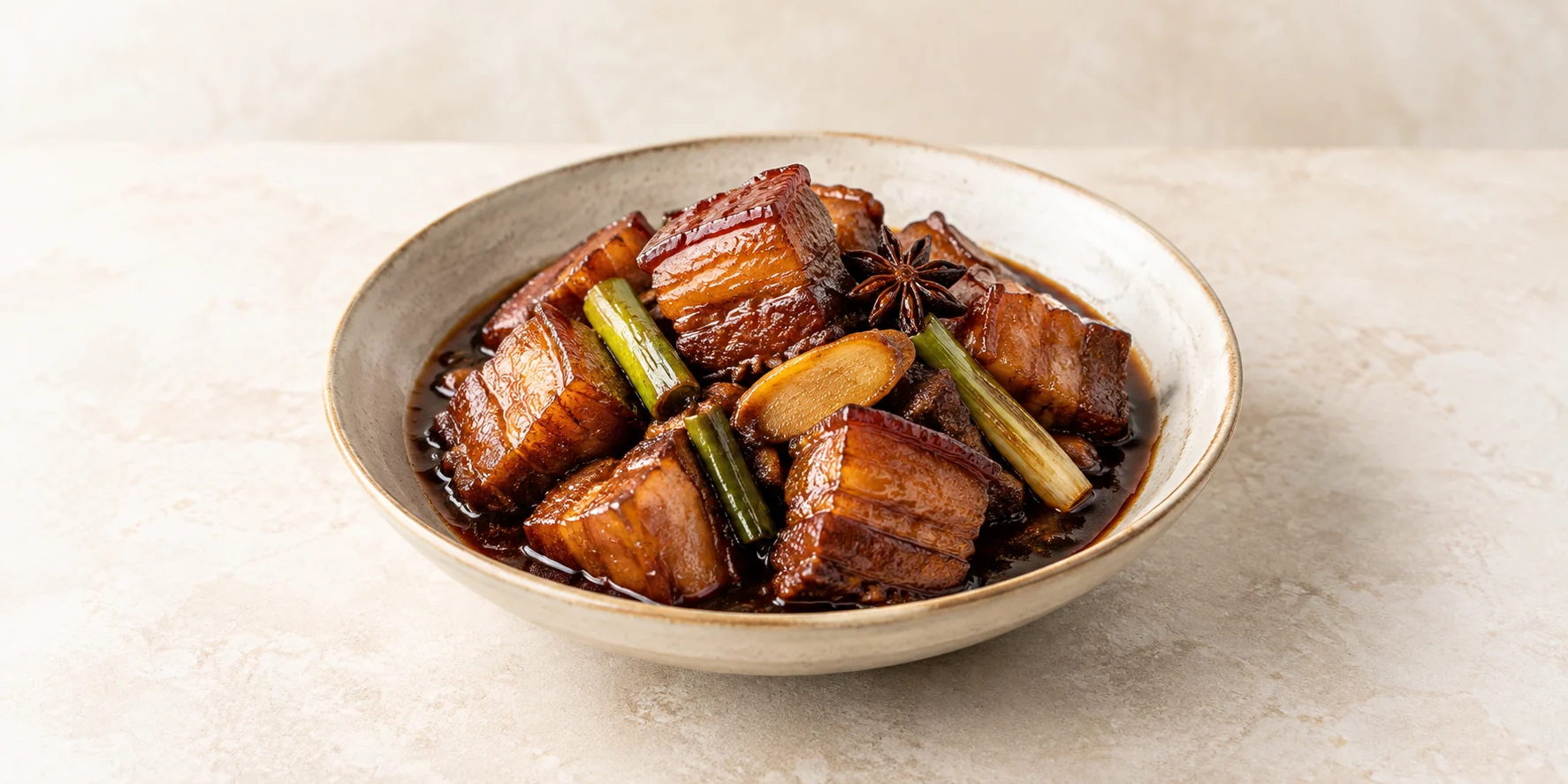
Tocino de cerdo braseado en té Liu Bao
Tierno tocino de cerdo braseado lentamente en té Liu Bao fuerte con soja, anís estrellado y jengibre—la profundidad terrosa del té oscuro equilibra la grasa en un plato principal muy sabroso.
El braseado es la forma ideal de cocinar con Liu Bao. Su carácter profundo, terroso y aterciopelado se funde en el líquido de braseado y trabaja en conjunto con la soja y las especias, dándole al cerdo una complejidad sabrosa que sabe a cocción larga y casi ahumada sin nada de humo real.
La baja astringencia del Liu Bao es una verdadera ventaja aquí. Los tés negros más fuertes pueden amargar un braseado, pero este té oscuro postfermentado se mantiene suave por más concentrado que esté, así que puedes prepararlo fuerte y reducirlo sin miedo a la aspereza.
La grasa del tocino de cerdo es exactamente lo que este té sabe manejar. Mientras la carne se brasea lenta y baja, el licor de té terroso corta la riqueza y mantiene el plato equilibrado, mientras el colágeno se funde en una salsa brillante y cremosa.
Sírvelo sobre arroz al vapor con una verdura verde simple, y vierte tazas del mismo Liu Bao al lado. El té en el plato y el té en la taza se reflejan, logrando una comida reconfortante y cohesiva que resulta a la vez rústica y refinada.
Ingredientes
- 800 g de tocino de cerdo, en cubos de 4 cm
- 3 tazas de té Liu Bao fuerte (3 cdas de hojas)
- 3 cdas de salsa de soja
- 1 cda de salsa de soja oscura
- 2 cdas de vino Shaoxing
- 1 cda de azúcar morena
- 3 rodajas de jengibre fresco
- 2 estrellas de anís enteras
- 2 cebollines, en trozos
- 1 cda de aceite neutro
Preparación
- 1Prepara el Liu Bao fuerte y resérvalo. Blanquea los cubos de tocino en agua hirviendo 3 minutos y escúrrelos.
- 2Calienta el aceite en una olla pesada y dora los cubos de cerdo por todos lados a fuego medio-alto.
- 3Agrega el jengibre, el anís estrellado y el cebollín y revuelve 1 minuto hasta que estén fragantes.
- 4Vierte el vino Shaoxing, ambas salsas de soja, el azúcar morena y el té Liu Bao fuerte hasta cubrir apenas el cerdo.
- 5Lleva a hervor suave, tapa y brasea suavemente unos 90 minutos hasta que el cerdo esté muy tierno.
- 6Destapa y reduce la salsa a fuego más alto hasta que esté brillante y espesa, luego sirve sobre arroz.
¿Quieres saber más sobre Liu Bao? Visita su ficha completa.
Volver a Liu BaoTambién te puede gustar
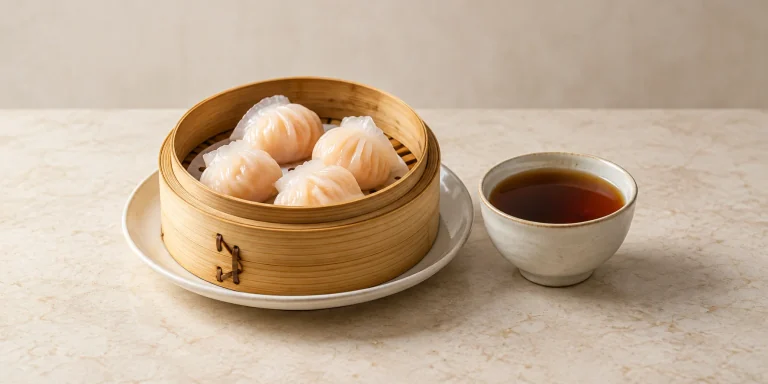
Qué comer con té Liu Bao
El carácter suave, terroso y a nuez de betel del Liu Bao es un socio natural de la comida rica y sabrosa—dim sum, carnes asadas, hongos y todo lo graso que pueda cortar con suavidad.
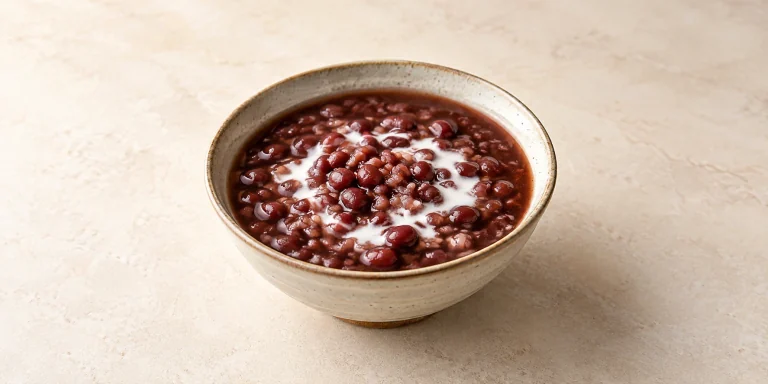
Sopa dulce de frijoles rojos al té Liu Bao
Una reconfortante sopa china de frijoles rojos cocida con té Liu Bao—terrosa, ligeramente dulce y muy reconfortante, con el té oscuro aportando una profundidad amaderada y firme.