
Qué comer con Pu-erh Sheng (crudo)
El mordisco vegetal y la frescura a albaricoque del Sheng Pu-erh maridan de maravilla con hongos de Yunnan, vegetales encurtidos y—cuando está añejado—chocolate amargo.
El Sheng (crudo) es el lado no fermentado de la famosa tradición de té prensado de Yunnan. El sheng joven es vegetal, vivaz y un poco amargo, con notas brillantes de albaricoque, heno y alcanfor. A medida que añeja durante años y décadas, profundiza hacia frutas de hueso, hojas secas y una dulzura suave y resinosa. Los maridajes cambian con el té.
Para sheng joven (1–5 años), la comida de montaña al estilo Yunnan es el match natural. Salteados de hongos silvestres, brotes frescos de bambú y ensaladas de helechos con chile y vinagre comparten la columna verde-mineral del té. La astringencia del té corta el aceite y refresca el paladar entre bocados.
Los vegetales encurtidos y fermentados también funcionan de maravilla. Suan cai, pao cai al estilo Sichuan y kimchi coreano aportan acidez y umami que el té joven y vivaz maneja con facilidad. Evita salsas cremosas pesadas—pelearán con los taninos del té.
Para sheng de edad media (8–15 años), piensa en panes chinos al vapor (mantou), congee simple o un plato de vegetales asados con un hilo de aceite de sésamo. El té se suavizó y agradece socios más gentiles que dejen brillar sus notas emergentes de frutas de hueso.
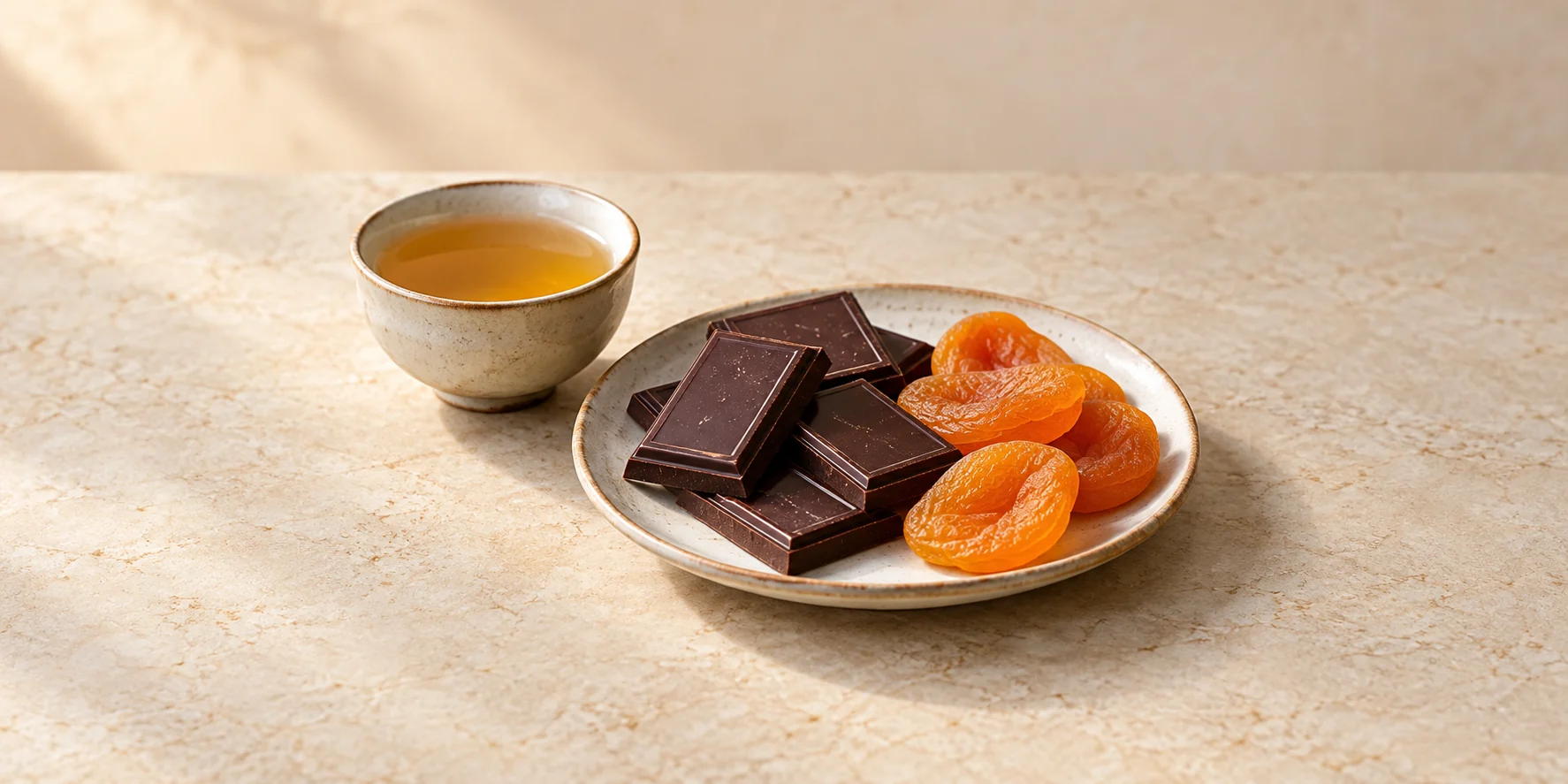
El sheng añejo (20+ años) es la sorpresa para chocolate amargo. La dulzura profunda y resinosa de un sheng añejado bien guardado envuelve una tableta del 70–80% como un Bordeaux añejo. Suma unos albaricoques secos al plato y se cierra el círculo.
¿Quieres saber más sobre Pu-erh Sheng? Visita su ficha completa.
Volver a Pu-erh ShengTambién te puede gustar
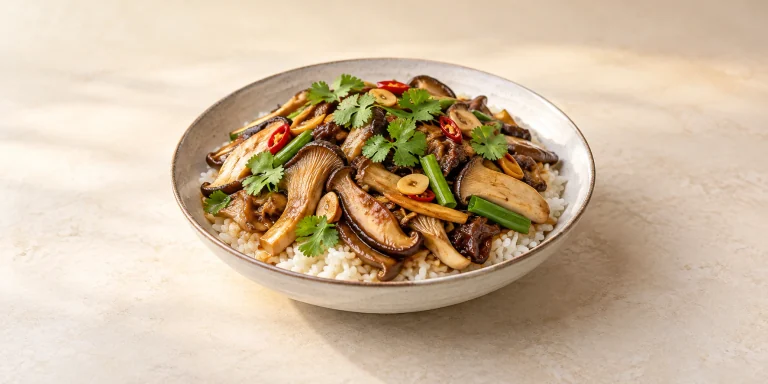
Salteado de hongos de Yunnan con caldo de Sheng Pu-erh
Un salteado de hongos al estilo Yunnan terminado con un chorro de sheng pu-erh recién preparado—terroso, brillante y silenciosamente adictivo.
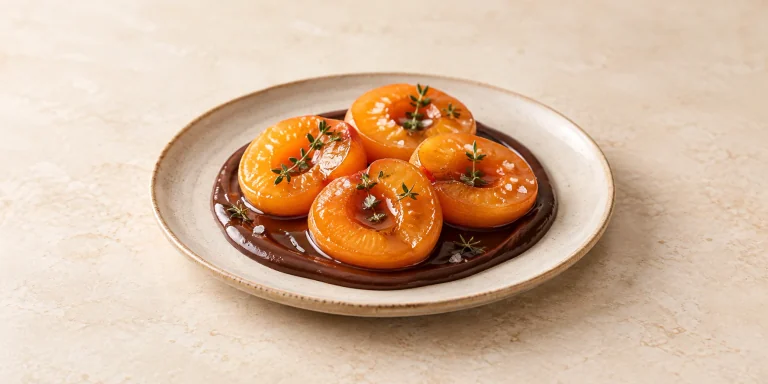
Albaricoques pochados en Sheng Pu-erh con ganache de chocolate
Albaricoques pochados suavemente en almíbar de sheng pu-erh, servidos tibios sobre un disco fino de ganache de chocolate amargo—frutal y silenciosamente yunnanés.