
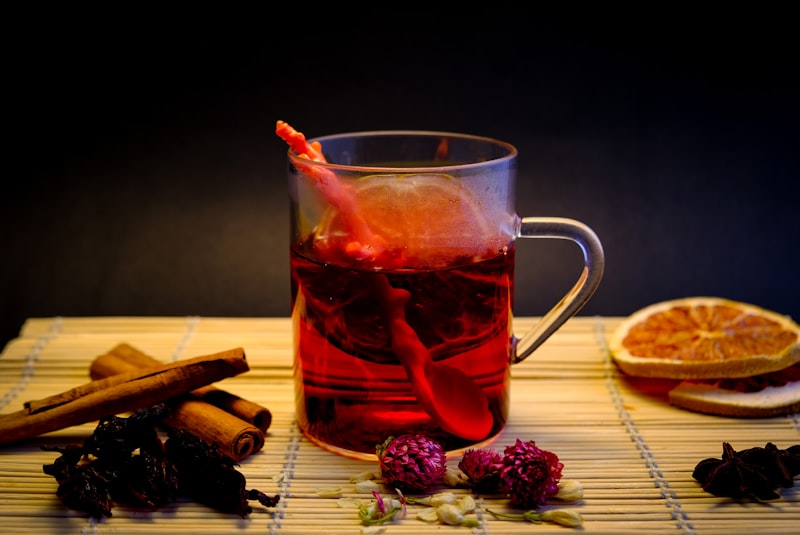
Honeybush
Herbal infusion
About this tea
Honeybush (Cyclopia spp.) is a naturally caffeine-free herbal tisane native exclusively to the fynbos biome of South Africa's Cape mountains — a close botanical cousin of rooibos with a distinctive honey-like aroma that comes from its bright yellow pea-like flowers. The infusion is sweet, smooth, and lightly woody, with notes of honey, dried apricot, and warm spice. Naturally low in tannins and free of caffeine, honeybush has a centuries-old reputation as a gentle evening beverage and is widely enjoyed by children and pregnant women in South Africa, though as with any herbal tea, anyone pregnant, breastfeeding, or on medication should check with a healthcare professional.
How to brew: 95°C, 5 min, 2.5 g per cup.
Caffeine
None
How to brew
Flavor notes
sweet, honeyed, smooth
Often associated with
Relaxation, Comfort
Best time to enjoy
Afternoon, Evening
Tags
Origin & Production
Honeybush is endemic to the Cape fold mountains of South Africa, growing wild in the fynbos shrubland of the Western and Eastern Cape. The genus Cyclopia contains 23 known species, of which Cyclopia intermedia, C. subternata, and C. genistoides are the most commercially important. The plant flourishes in poor, sandy, acidic soils at altitudes between 30 and 1,500 meters, often in the same regions as rooibos but extending further along the southern Cape coast. Production is split between wild harvest in the mountains and increasing cultivation in commercial plantations.
Production process
Harvest
Honeybush branches are cut by hand or machine during the South African summer when the plants are in flower and aromatic compounds peak. Wild-harvested plants are cut leaving enough stem for regrowth, while cultivated plants are harvested annually.
Cutting & bruising
Harvested material — leaves, stems, and flowers — is mechanically cut into 2–4 mm pieces and bruised to break cell walls and release the enzymes needed for oxidation.
Oxidation (curing)
The cut material is heaped and 'cured' — traditionally in the sun for 24–60 hours, or in heated chambers at 70–90°C for faster modern processing. Curing turns the green plant brown and develops the characteristic honey-sweet aroma.
Drying & sterilization
Cured honeybush is spread thinly and dried to about 10% moisture, then steam-pasteurized to ensure microbiological safety. Modern facilities follow strict food-safety protocols established by the South African Honeybush Tea Association.
Sieving & grading
Dried honeybush is sieved into uniform cuts, graded by particle size and aroma, and packaged. Premium grades retain visible bright yellow flowers, while finer cuts are used for tea bags.
History & Tradition
Honeybush has been brewed in the Cape mountains of South Africa for centuries, evolving from a wild-harvested folk remedy of the Khoisan and early Cape settlers into a globally recognized speciality herbal tea.
Khoisan traditional use
The indigenous Khoisan people gathered wild Cyclopia branches in the Cape mountains, drying them to brew a sweet, restorative infusion centuries before written records.
First European mention
Honeybush appears in a Cape Dutch herbal record describing the plant's sweet aroma and use as a 'mountain tea' by Cape settlers and trekboers.
Botanical classification
The genus Cyclopia was formally described in scientific literature, and several Cape species were catalogued for their economic potential as a beverage and remedy.
Commercial cultivation
South African researchers at the Agricultural Research Council developed protocols for the systematic cultivation of honeybush, transforming the industry from purely wild-harvested to mixed cultivation and reducing pressure on wild populations.
International export growth
Annual honeybush production reached around 200 tonnes, with the majority exported to Germany, the Netherlands, the UK, the US, and Japan. The South African Honeybush Tea Association established quality and sustainability standards.
Health Benefits
Naturally caffeine-free
Like its cousin rooibos, honeybush contains no caffeine and is very low in tannins, making it suitable for any time of day and gentle on the stomach.
Polyphenol antioxidants
Honeybush is rich in mangiferin, hesperidin, and other flavonoids. Studies at South Africa's Agricultural Research Council have documented its antioxidant capacity in vitro.
Mineral content
The infusion provides small amounts of calcium, iron, potassium, magnesium, and zinc, complementing a varied diet while remaining low in calories.
Evening relaxation
Caffeine-free, naturally sweet, and warm in character, honeybush is widely used in South African households as a soothing evening drink that needs no added sugar.
Safety & considerations
Honeybush is considered very safe and has been widely consumed by pregnant women and children in South Africa for generations. Even so, anyone pregnant, breastfeeding, or taking medication should consult a healthcare professional before regular daily use.
Grades & Varieties
Cyclopia intermedia (Bergtee)
Traditionally the dominant commercial species, harvested wild in the mountains. Produces a robust, deeply honey-sweet infusion with caramel and dried-fruit notes. Known in Afrikaans as 'Bergtee' (mountain tea).
Best for
- ✓Full-bodied evening cup
- ✓Robust honey character preference
- ✓Traditional South African brewing
Cyclopia subternata (Vleitee)
The most commercially cultivated species today, valued for its higher yields and lighter, more delicate honey-floral flavor. Produces an amber infusion with bright floral top notes and a smooth finish.
Best for
- ✓Delicate floral preference
- ✓Iced honeybush tea
- ✓Blending with citrus or vanilla
Green (unoxidized) honeybush
A newer style in which the cut material is quickly dried without curing, preserving higher levels of mangiferin and producing a lighter, more grassy infusion with a subtle hint of honey.
Best for
- ✓Maximum mangiferin intake
- ✓Lighter, grassier flavor
- ✓Health-focused drinking
Did you know?
Honeybush is named for the honey-like aroma of its bright yellow pea-shaped flowers; the genus Cyclopia contains 23 species, all endemic to the Cape fold mountains of South Africa, and the plant is a close botanical cousin of rooibos.
Foods with this tea

What to Eat with Honeybush Tea
Honeybush's natural honey-sweet smoothness pairs beautifully with South African milk tart, buttery rusks, vanilla custards, and lightly roasted nuts.
Honeybush-Glazed Roasted Almonds and Aged Gouda Board
Whole almonds glazed with reduced honeybush tea and a touch of honey, roasted until fragrant and served alongside aged Gouda and dried apricots.
Honeybush Melktert (South African Milk Tart)
A creamy, cinnamon-dusted Cape Malay milk tart with honeybush infused into the custard—silky, gently sweet, and quintessentially South African.
Drinks with this tea

Honeybush Lemon Throat Soother
Honeybush brewed strong with fresh lemon, raw honey, and a touch of ginger—a naturally sweet, caffeine-free remedy for sore throats and tired evenings.
Iced Honeybush Oat Milk Latte
Cold-brewed honeybush poured over ice with creamy oat milk and a swirl of vanilla—a caffeine-free, naturally sweet iced latte that drinks like dessert.
Honeybush Bourbon Old Fashioned
Honeybush-infused bourbon stirred with honey syrup and orange bitters—a warming, autumnal cocktail where South Africa meets Kentucky in a heavy rocks glass.