
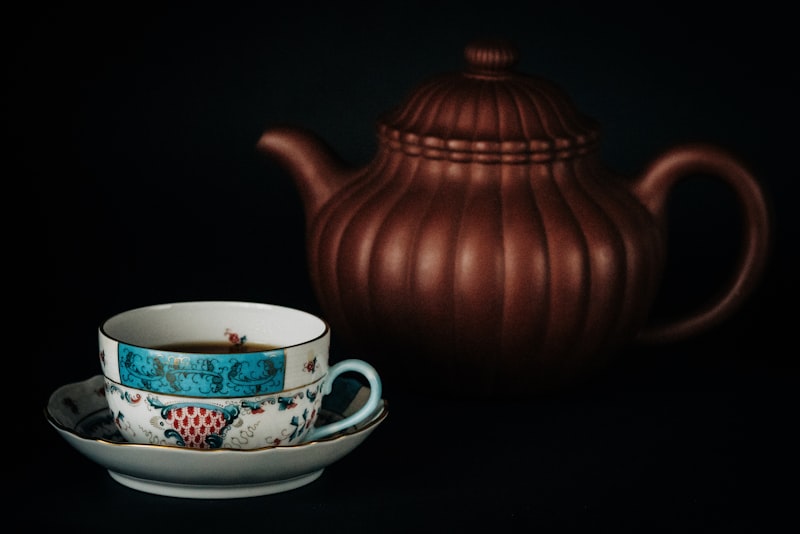
Baozhong
Oolong tea
About this tea
Baozhong (also spelled Pouchong or Bao Zhong) is one of the most delicately oxidized oolongs in the world, made from long, twisted, un-roasted leaves grown in the misty hills of northern Taiwan. With an oxidation level of only around 8–18%, it sits gently between a green tea and a fuller oolong, offering a fresh, almost weightless cup. Its signature is a lifted floral aroma — lilac, orchid, and fresh spring blossoms — over a smooth, lightly sweet body with no roast or astringency. Prized in the Wenshan area around Pinglin, Baozhong is the everyday luxury of Taiwanese tea drinkers who love clarity and fragrance above all.
How to brew: 90°C, 2.5 min, 3 g per cup.
Caffeine
Medium
How to brew
Flavor notes
floral, delicate, fresh, lightly sweet
Often associated with
Gentle focus, Clarity
Best time to enjoy
Morning, Mid-morning, Early afternoon
Tags
Origin & Production
Baozhong is most closely associated with the Wenshan area, especially the green hills of Pinglin District just southeast of Taipei. The region's cool mist, frequent cloud cover, and humid mountain air slow leaf growth and concentrate aromatic compounds, which is exactly what a fragrance-driven tea like Baozhong needs. Tea gardens here sit on terraced slopes where the Qingxin and other cultivars thrive. Because the tea is only lightly oxidized and left un-roasted, freshness is everything — the best Baozhong is enjoyed soon after spring or winter harvest, when its floral lift is at its peak.
Production process
Plucking
Tender leaf sets are hand-picked from the Qingxin and related cultivars, traditionally as a bud with two or three leaves, during spring and winter when fragrance is most pronounced.
Sun & indoor withering
Freshly picked leaves are wilted briefly in sunlight, then moved indoors to continue softening. This gentle withering begins the very light oxidation that defines Baozhong's character.
Gentle shaking
The leaves are tossed and shaken lightly so their edges bruise just slightly, releasing enzymes that build the floral aroma. Baozhong is shaken far less than darker oolongs, keeping oxidation around 8–18%.
Fixing (kill-green)
Once the desired aroma develops, the leaves are heated in a pan or drum to halt oxidation. This locks in the fresh, green-leaning fragrance before it can deepen further.
Rolling into twists
Rather than being rolled into tight balls like many island oolongs, Baozhong is gently shaped into long, loosely twisted strips that preserve its delicate, open leaf style.
Drying
A final low-temperature drying reduces moisture for storage. Because Baozhong is left un-roasted, this step is kept gentle to protect its bright, fresh fragrance.
History & Tradition
Baozhong's story follows the spread of oolong craft from Fujian in mainland China to the mountains of northern Taiwan, where it became a celebrated specialty in its own right around Wenshan and Pinglin.
Roots in Fujian craft
The wrapped-paper method that gives Baozhong its name — bao zhong meaning 'the wrapped kind' — is traditionally traced to oolong-making techniques in Fujian province, where leaves were folded in square paper for shaping and sale.
Arrival in Taiwan
As tea cultivation expanded across northern Taiwan, migrants and merchants brought lightly oxidized oolong methods to the hills around Taipei, where the cool, misty climate proved ideal for fragrant teas.
Taipei tea trade grows
Around this period, tea merchants helped establish refining and trading houses in the Taipei area, strengthening the commercial network that would carry Baozhong-style oolong to wider markets.
Wenshan specialty emerges
The Wenshan area, including Pinglin, became known for a distinctly fresh, floral, strip-style oolong. Local farmers refined a lighter touch in withering and shaking that set Baozhong apart from darker, rolled oolongs.
A named regional treasure
Wenshan Baozhong became one of Taiwan's signature teas, celebrated at local competitions and tea festivals. Pinglin grew into a hub for visitors seeking the freshest floral oolong each season.
Global appreciation
As specialty tea culture spread worldwide, Baozhong earned a devoted following among drinkers seeking its delicate, un-roasted floral character — a gentle introduction to the world of Taiwanese oolong.
Health Benefits
Gentle, fresh character
Because Baozhong is so lightly oxidized and un-roasted, it keeps much of the fresh, green-leaning quality of the leaf, making for a smooth cup that traditionally feels easy on the palate and the stomach.
Calm, clear focus
Like other true teas, Baozhong naturally contains the amino acid L-theanine alongside its moderate caffeine, a pairing many people associate with a sense of calm, settled attention rather than a jittery lift.
Natural antioxidants
As a leaf from the Camellia sinensis plant, Baozhong contains naturally occurring polyphenols and catechins, plant compounds widely valued as part of an antioxidant-rich daily routine.
Soothing ritual
Its lifted floral aroma makes Baozhong a favorite for slow, mindful tea sessions. Many drinkers find the act of brewing and savoring its fragrance a naturally relaxing, grounding moment in the day.
Light, balanced lift
With a moderate caffeine level, Baozhong offers a gentle pick-me-up that suits the morning or early afternoon, supporting steady wakefulness without the intensity of a heavily oxidized or roasted tea.
Grades & Varieties
Spring Wenshan Baozhong
The classic, most prized expression — fresh spring leaf from the Wenshan area with a vivid lilac-orchid aroma and a light, sweet body. Best enjoyed soon after harvest while its floral lift is brightest.
Best for
- ✓Mindful solo brewing
- ✓Showcasing pure floral aroma
- ✓Morning or early-afternoon cup
Winter Baozhong
Harvested in the cooler season, this style is often slightly rounder and more mellow, with a soft, lingering sweetness. A favorite among drinkers who want a gentle, smooth floral cup.
Best for
- ✓Relaxing evening sessions
- ✓Smoother, mellower sippers
- ✓Gongfu-style multiple infusions
Aromatic high-mountain Baozhong
Leaf grown at higher elevations where cool mist intensifies fragrance, giving an especially crisp, lifted floral profile and a clean finish. A more concentrated take on the un-roasted Baozhong style.
Best for
- ✓Aroma-focused tasting
- ✓Special-occasion brewing
- ✓Pairing with delicate foods
Did you know?
Baozhong's name — bao zhong, 'the wrapped kind' — comes from the old practice of folding the leaves in square paper for shaping and sale, a tradition traced back to oolong-making in Fujian.
Foods with this tea
What to Eat with Baozhong Oolong
Baozhong's lifted lilac-orchid aroma and light, sweet body pair beautifully with delicate, fresh foods—steamed dumplings, white fish, and lightly floral desserts.
Baozhong-Steamed Sea Bass with Ginger and Scallion
Delicate sea bass steamed over a fragrant Baozhong infusion with ginger, scallion, and a light soy drizzle—a clean, floral take on a Taiwanese classic.
Baozhong Floral Panna Cotta
A silky panna cotta gently infused with Baozhong oolong, its lilac-orchid aroma turning a simple cream dessert into something fragrant and elegant.
Drinks with this tea
Baozhong Honey-Osmanthus Calm Cup
A soothing warm cup of lightly brewed Baozhong with a touch of honey and dried osmanthus—floral upon floral for a calm, clear-headed moment.
Cold-Brew Baozhong with Pear and Mint
Smooth cold-brewed Baozhong layered with fresh pear and a few mint leaves—a crisp, floral iced tea that tastes like a spring breeze.
Baozhong Floral Gin Fizz
A bright, floral gin fizz built on Baozhong-infused gin with fresh lemon and a soft sparkle—plus an easy alcohol-free mocktail version.