
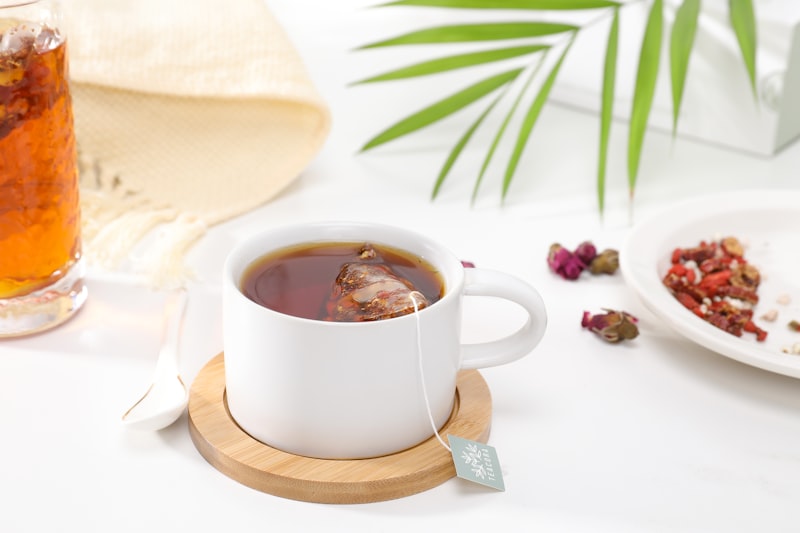
Tulsi (Holy Basil)
Herbal infusion
4.4/5 · FindMeTea score
About this tea
Tulsi (Ocimum tenuiflorum), also known as Holy Basil, is a sacred herbal tisane from the Indian subcontinent — not a true tea — revered for thousands of years in Hindu tradition and Ayurvedic medicine. Classified as an adaptogen, tulsi is believed to help the body cope with physical, chemical, and emotional stress, and its leaves are rich in eugenol, ursolic acid, and rosmarinic acid. Its flavor is warm, slightly peppery, and clove-like, with two main cultivars of O. tenuiflorum — Rama (green-leafed) and Krishna (purple-leafed) — alongside Vana (wild forest tulsi, a distinct species, Ocimum gratissimum), each contributing different aromatic notes. Pregnant and breastfeeding women, people on blood-sugar or blood-thinning medication, and anyone with a planned surgery should consult a healthcare professional before regular use.
How to brew: 95°C, 5 min, 2 g per cup.
Caffeine
None
How to brew
Flavor notes
spiced, aromatic, warming
Often associated with
Calm alertness, Balance
Best time to enjoy
Morning, Mid-afternoon
Tags
Where to find it in United States
 Where to find it in United States
- This tea
Upton Tea Imports
Rama Tulsi / Holy Basil (40 g packet)
US$ 19.75· 40 g
OnlineGo to shop → - Other Herbal infusion
Harney & Sons
New York · SoHo (ships nationwide)
Chamomile, Egyptian flowers (loose, 1.5 oz tin)
US$ 6.60· 1.5 oz
In storeOnline433 Broome StreetGo to shop → - Other Herbal infusion
McNulty's Tea & Coffee
New York · Greenwich Village
Lavender (2 oz tin)
from US$ 13.95· 2 oz
In storeOnline109 Christopher StreetGo to shop → - Other Herbal infusion
Chado Tea Room
Los Angeles · Downtown (Little Tokyo) and Hollywood; also Pasadena, Torrance
Peppermint
US$ 14.38· 4 oz
In storeOnline369 East 1st StreetGo to shop → - Other Herbal infusion
Rishi Tea
Organic Ginger (loose, 1 lb)
US$ 30· 454 g
OnlineGo to shop →
Prices checked by us on Sep 6, 2026; they may change.
No shop pays to appear here — we list what we verified ourselves.
Know a shop that sells it? Tell usOrigin & Production
Tulsi is native to the Indian subcontinent and has been cultivated across India, Nepal, Bangladesh, and Sri Lanka for at least 3,000 years. The plant thrives in the warm, humid climate of the Indo-Gangetic plains, growing as a small aromatic shrub up to 60 cm tall. It is traditionally grown in earthenware pots in temple courtyards and household entrances, where it is venerated daily as a manifestation of the goddess Tulasi. Today commercial cultivation is concentrated in Uttar Pradesh, Madhya Pradesh, and Karnataka, with smaller organic farms in Nepal supplying premium tisane markets.
Production process
Cultivation
Tulsi is grown from seed sown in late spring, requiring full sun and well-drained soil. The plant matures in about 8–10 weeks and produces fragrant leaves and small purple-white flower spikes.
Hand harvest
Leaves and tender flowering tops are hand-picked in the morning, when essential oil concentration peaks. Multiple harvests are taken per year from the same plant, with the most aromatic leaves coming just before or during flowering.
Shade-drying
Freshly picked leaves are spread in thin layers and dried in ventilated shade for 5–7 days to preserve the volatile eugenol and methyl eugenol compounds that give tulsi its characteristic clove-like aroma.
Cutting & grading
Dried leaves are gently cut and sieved into uniform sizes. Premium grades retain larger, intact leaf pieces with intense aroma; broken pieces and stems are sorted for tea bag production.
Packaging
Graded tulsi is packed in airtight, light-protected containers to preserve aromatic compounds. Organic certification is common, as tulsi is widely produced under Ayurvedic herb standards.
History & Tradition
Tulsi has been venerated as 'the Queen of Herbs' in India for over three thousand years, weaving together religious devotion, traditional medicine, and modern adaptogenic research into a single sacred plant.
Vedic texts
Tulsi is mentioned in the Rigveda and later the Atharvaveda among the most important sacred plants of the Indian subcontinent, used in offerings, rituals, and healing practices.
Charaka Samhita
The foundational Ayurvedic text Charaka Samhita classifies tulsi as a rasayana (rejuvenating herb), prescribing it for respiratory ailments, fevers, and as a tonic for longevity.
Temple cultivation
Tulsi became a fixture of Vaishnavite Hindu households and temples, planted in dedicated stone shrines called tulsi-vrindavan. Daily watering and worship of the plant remain widespread practices today.
Adaptogen recognition
Pharmacological reviews in the Indian Journal of Pharmacology formally classified Ocimum sanctum as an adaptogen, summarizing its anti-stress, antioxidant, and immunomodulatory activity.
Clinical reviews
A systematic review published in Evidence-Based Complementary and Alternative Medicine analyzed 24 human studies on tulsi, concluding it shows favorable effects on metabolic, immune, and psychological stress markers.
Health Benefits
Adaptogenic stress support
Tulsi is classified as an adaptogen — a plant that helps the body resist stressors. Clinical studies report reductions in perceived stress and improved mood after several weeks of regular tulsi consumption.
Antioxidant activity
Tulsi leaves are rich in eugenol, ursolic acid, rosmarinic acid, and apigenin — polyphenols that neutralize free radicals and support cellular defense against oxidative stress.
Respiratory comfort
Traditional Ayurvedic medicine uses tulsi for coughs, colds, and bronchial discomfort. The essential oils camphor and eugenol contribute warming, decongestant-like sensations in the airways.
Metabolic balance
Several randomized trials suggest tulsi may help support healthy blood-glucose and lipid levels. Because of these effects, people taking diabetes or cholesterol medication should consult a healthcare professional.
Safety & considerations
Pregnant or breastfeeding women should avoid regular tulsi consumption, as the herb is traditionally used to support menstrual flow. Tulsi may also slow blood clotting and lower blood sugar — caution is advised with anticoagulant or hypoglycemic medication and before scheduled surgery.
Grades & Varieties
Rama Tulsi (green-leafed)
The most widely cultivated cultivar, with light-green leaves and a mellow, clove-like aroma. Produces a smooth, slightly sweet infusion and is the standard tulsi found in most Ayurvedic preparations.
Best for
- ✓Daily adaptogenic infusion
- ✓Newcomers to tulsi
- ✓Blending with lemon or ginger
Krishna Tulsi (purple-leafed)
Distinguished by its dark purple leaves and purple stems, Krishna tulsi has a more peppery, intense aroma and is considered the most medicinally potent cultivar in classical Ayurveda. Higher in eugenol than Rama tulsi.
Best for
- ✓Strong, peppery flavor preference
- ✓Traditional Ayurvedic use
- ✓Cool-season warming infusion
Vana Tulsi (wild forest)
A wild, hairy-leafed species (Ocimum gratissimum) gathered in the foothills of the Himalayas. Vana tulsi has a lighter, lemony-clove aroma and is the most resilient of the three traditional types, often blended with Rama and Krishna in classical tulsi mixes.
Best for
- ✓Wild-foraged authenticity
- ✓Light, citrusy aroma preference
- ✓Traditional three-tulsi blends
Did you know?
Tulsi is so revered in Hindu tradition that many households still grow it in a dedicated stone shrine called a 'tulsi-vrindavan' and water it daily as a manifestation of the goddess Tulasi — the plant is sometimes called 'the Queen of Herbs' in Ayurveda.
Foods with this tea

What to Eat with Tulsi Tea
Tulsi's adaptogenic, clove-peppery warmth pairs naturally with Indian dals, spiced curries, and warm flatbreads—earthy foods that meet its sacred bite head-on.
Tulsi-Tempered Yellow Dal with Cumin Rice
Creamy moong dal simmered in tulsi tea broth and finished with a sizzling clove-cumin tadka—comforting, fragrant, and ready in under an hour.
Tulsi and Honey Gingerbread Loaf
A dark, sticky gingerbread loaf infused with tulsi tea, sweetened with honey and molasses, and finished with a thin tulsi-honey glaze.
Drinks with this tea

Tulsi Ginger Turmeric Adaptogen Shot
A potent morning shot combining tulsi's adaptogenic power with fresh ginger, turmeric, and black pepper—an Ayurvedic immunity boost in a small glass.
Iced Tulsi Lime Fizz with Honey
Cold-brewed tulsi shaken with fresh lime, raw honey, and sparkling water—an aromatic, herbal soda that cools and grounds in equal measure.
Tulsi Gin and Tonic
Gin infused with tulsi, finished with tonic, lime, and fresh basil—a botanical, herbaceous twist on the classic G&T that tastes like a garden in a glass.