
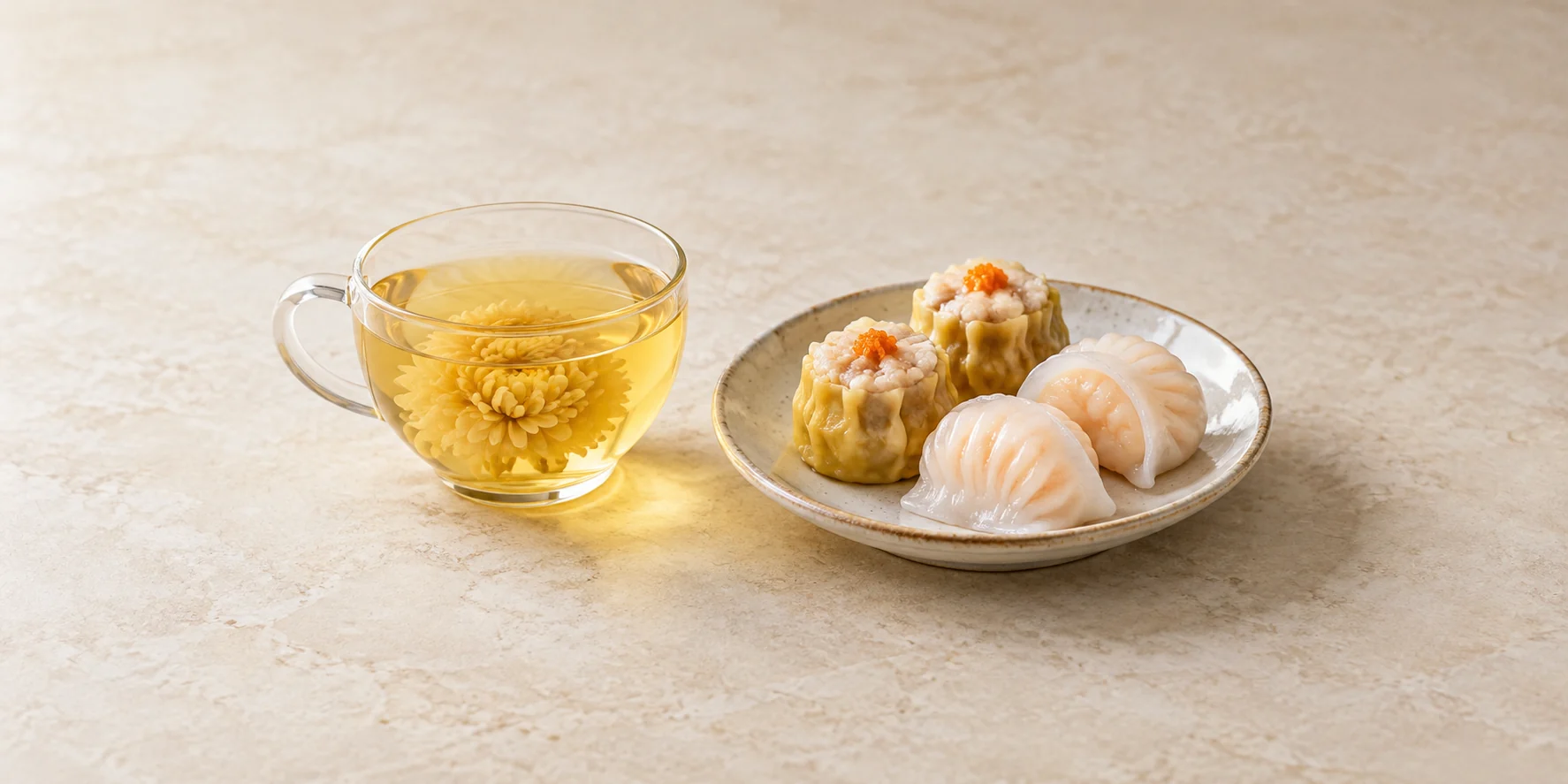
What to Eat with Chrysanthemum Tea
Chrysanthemum's light, floral sweetness pairs beautifully with delicate dim sum, steamed dumplings, and gentle Cantonese dishes—a cooling counterpoint to warm, savory food.
Chrysanthemum is a caffeine-free floral infusion that has been part of Chinese tea culture for centuries. Its flavor is soft, sweet, and cooling, with a clean finish that never overwhelms the palate. This gentleness makes it an ideal partner for delicate, lightly seasoned food rather than bold or heavily spiced dishes.
The classic pairing is dim sum. A pot of chrysanthemum, often called juhua, is the traditional accompaniment to a Cantonese yum cha spread—steamed har gow, siu mai, rice noodle rolls, and barbecue pork buns. The flower's cooling sweetness refreshes the palate between bites and lightens the richness of fried and steamed morsels alike.
Chrysanthemum also shines beside simple steamed fish, tofu dishes, and clear broths. Its floral notes echo the subtle aromatics of ginger and scallion without competing with them, making it a natural choice for a quiet, home-style Chinese meal.
Because it is naturally caffeine-free and often paired with goji berries or a little rock sugar, chrysanthemum is lovely with light afternoon snacks—almond cookies, sponge cake, or fresh fruit such as Asian pear and lychee. The flower's sweetness mirrors these gentle desserts beautifully.
Avoid pairing chrysanthemum with intensely spicy, smoky, or heavily charred foods, which will trample its delicate character. Lean instead toward steamed, poached, and lightly seasoned dishes. One note of caution: chrysanthemum is part of the daisy family (Asteraceae), so anyone with ragweed or daisy allergies should sample it carefully before serving it to guests.
Want to learn more about Chrysanthemum? Visit its full profile.
Back to ChrysanthemumYou might also like
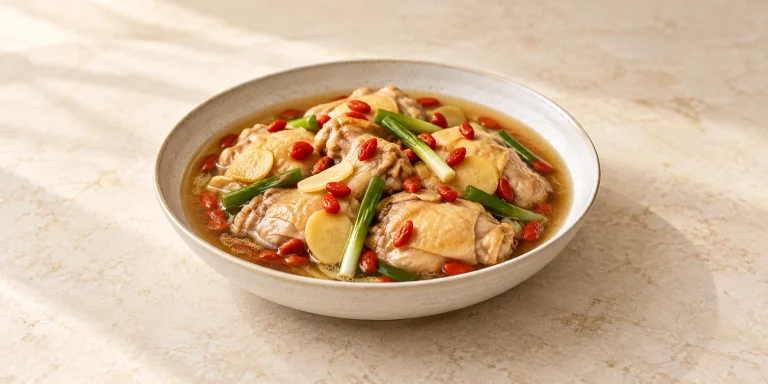
Chrysanthemum and Goji Steamed Chicken
Tender chicken steamed over a fragrant chrysanthemum and goji broth with ginger and scallion—a light, cooling, home-style Chinese dish.
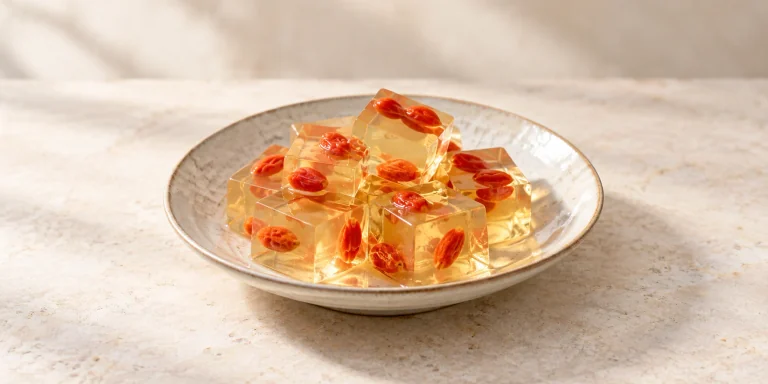
Chrysanthemum and Goji Jelly
A delicate, jewel-like jelly set from fragrant chrysanthemum tea and sweetened with rock sugar, studded with ruby goji berries—a cooling, caffeine-free Chinese-style dessert.