
Vietnam Shan Tuyet
Black tea
About this tea
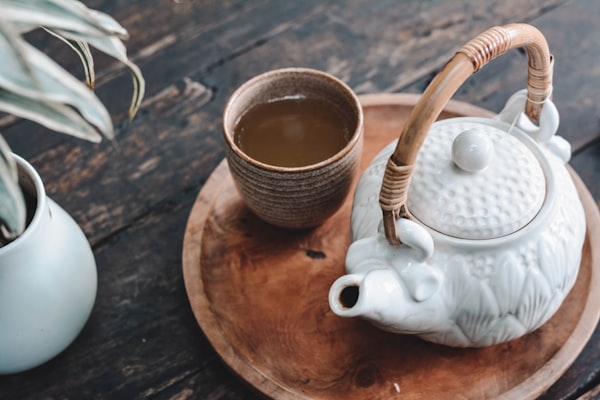
Vietnamese Black Shan Tuyet ('snow mountain') is a full-bodied black tea hand-processed from the leaves of ancient, wild-growing tea trees in Vietnam's far-northern highlands. Unlike most black teas, which come from neatly rowed plantation bushes, Shan Tuyet is plucked from gnarled trees — some many meters tall and centuries old — that grow scattered through misty forest at high elevation. The leaves carry a thick coat of silvery-white down, the 'snow' that gives the tea its name, and they yield a deep amber liquor with a malty, full body and a distinctive wild honey sweetness underneath. Because the trees are unpruned, untreated with chemicals, and often shared with local H'mong and Dao communities who have tended them for generations, Shan Tuyet is as much a story of place and tradition as it is a tea. It rewards a patient brew and is prized by collectors for its depth, minerality, and the faint wildness that plantation-grown black teas rarely achieve.
How to brew: 95°C, 4 min, 4 g per cup.
Caffeine
High
How to brew
Flavor notes
malty, honeyed, mineral, full-bodied
Often associated with
Strong wake-up, Energy
Best time to enjoy
Morning, After a meal
Tags
Origin & Production
Shan Tuyet black tea comes from Ha Giang, Vietnam's northernmost province, a region of dramatic limestone karst plateaus bordering China's Yunnan. The ancient tea trees grow wild or semi-wild on mountainsides above 1,000–1,600 meters, especially around districts like Hoang Su Phi and the Tay Con Linh range, where cool temperatures, heavy mist, and acidic forest soils slow the growth of the leaf and concentrate its flavor compounds. These are Camellia sinensis var. assamica trees, but a distinct Vietnamese highland population, many of them centuries old and tall enough to require climbing rather than hand-reaching to pluck. Local ethnic minority families — predominantly H'mong, but also Dao and Tay communities — have managed these tea forests for generations, often treating individual ancient trees as inherited family property passed down through households.
Production process
Climbing and hand-plucking
Because many Shan Tuyet trees reach several meters in height, pickers climb into the canopy to hand-pluck the bud and top two leaves, working tree by tree rather than along plantation rows.
Withering
Fresh leaves are spread thinly on bamboo trays or cloth in open air for several hours, losing moisture and turning supple so they can be rolled without tearing.
Rolling
Withered leaves are rolled by hand or with simple rolling machines to break cell walls and release the enzymes and juices that drive oxidation, while twisting the leaf into its final shape.
Full oxidation
Rolled leaves rest in humid, temperature-controlled rooms for several hours, turning from green to coppery-brown as full oxidation develops the tea's malty body and amber color.
Firing and drying
The oxidized leaf is dried over gentle heat to halt oxidation and lock in flavor, leaving behind dark, twisted leaves still flecked with the trees' silvery down.
Sorting and grading
Finished leaves are hand-sorted to remove stems and broken pieces, then graded by the proportion of downy buds and leaf integrity before packing for domestic sale or export.
History & Tradition
Vietnam's Ha Giang highlands have grown tea for centuries, but Shan Tuyet's modern identity as a distinct, exportable category is a more recent development, built on rediscovering and formalizing what local communities had quietly cultivated for generations.
Ancient trees take root
Wild and semi-wild tea trees became established across the high ridges of Ha Giang and neighboring provinces, long predating organized plantation agriculture in the region; many of today's harvested trees are believed to be 100–300 years old or more.
French colonial tea surveys
French colonial administrators in Indochina documented wild tea forests in the northern mountains and began experimenting with tea cultivation and processing across Vietnam, though the remote Ha Giang highlands remained largely outside formal plantation systems.
Subsistence and local trade
Through decades of conflict and isolation, H'mong and Dao households continued tending ancient family trees mainly for household use and small local markets, preserving traditional hand-processing methods passed down within families.
Rediscovery by the specialty trade
As Vietnam opened its economy, domestic tea companies and international buyers began seeking out Ha Giang's old-growth tea trees, branding the leaf 'Shan Tuyet' (snow mountain) and promoting it as a distinct, terroir-driven category separate from Vietnam's larger lowland tea industry.
Sustainable and fair-trade attention
Conservation groups and specialty importers have promoted Ha Giang's ancient tea forests as both a biodiversity asset and a livelihood for ethnic minority communities, supporting organic, wild-harvest certification and direct trade relationships that pay growers a premium over commodity tea prices.
Health Benefits
Steady, high alertness
As a fully oxidized black tea, Shan Tuyet carries a meaningful caffeine load alongside L-theanine, traditionally associated with a steadier, more even lift than coffee — well suited to mornings or the start of a demanding task.
Polyphenol-rich leaf
Wild, unpruned ancient tea trees are often noted by researchers for producing leaves with a particularly rich polyphenol and catechin profile, compounds generally associated with antioxidant activity in black tea.
Everyday heart-healthy ritual
Like other black teas, Shan Tuyet is traditionally included in everyday wellness routines across tea-growing Asia as part of a balanced lifestyle that supports general cardiovascular wellbeing — best enjoyed as one habit among many, not a remedy.
Mineral depth from old roots
The deep root systems of centuries-old trees are thought by growers to draw minerals from far below the topsoil, contributing to the tea's characteristic minerality and savory backbone alongside its sweetness.
Gentle digestive warmth
Brewed strong, Shan Tuyet's malty, full-bodied character is traditionally drunk after meals in northern Vietnamese highland communities as a warming, settling cup to round off a meal.
Grades & Varieties
Bud-rich Tuyet Shan (snow bud)
The highest grade, plucked mostly as single downy buds, producing a smooth, honeyed cup with minimal astringency and a pale-gold to amber liquor. Rare and limited in volume because each ancient tree yields relatively few true buds.
Best for
- ✓Quiet, unhurried morning cup
- ✓Gongfu-style short steeps
- ✓Tea collectors and connoisseurs
Classic bud-and-leaf Shan Tuyet
The standard commercial grade, combining a bud with the top two leaves. Delivers the full malty, wild-honey character the tea is known for, with more body and a deeper amber-red color than the bud-only grade.
Best for
- ✓Everyday breakfast-style cup
- ✓Brewing with milk
- ✓Building a daily black tea habit
Aged Shan Tuyet
Some producers rest finished Shan Tuyet for one or more years in controlled conditions, mellowing its initial brightness into deeper dried-fruit and woody notes — a style aimed at tea drinkers who enjoy the slow evolution found in aged pu-erh.
Best for
- ✓Slow afternoon sipping
- ✓Tea drinkers who enjoy aged or fermented styles
- ✓Pairing with rich desserts
Did you know?
Shan Tuyet leaves are hand-plucked by climbing into wild tea trees that can be centuries old and several meters tall, with a thick coat of silvery down that gives the tea its 'snow mountain' name.
Foods with this tea

What to Eat with Vietnamese Shan Tuyet Black Tea
Malty, full-bodied, and touched with wild honey sweetness — Shan Tuyet calls for hearty Vietnamese street food, sticky rice, and caramelized dishes that can stand up to its depth.
Shan Tuyet Tea-Smoked Chicken Thighs with Sticky Rice
Chicken thighs smoked over Shan Tuyet leaves and brown sugar, served with mung-bean sticky rice — a highland-inspired dish built around the tea's malty, wild-honey depth.
Shan Tuyet Black Tea and Coconut Caramel Custard
A silky Vietnamese-style steamed custard infused with Shan Tuyet black tea and topped with coconut caramel — the tea's malt and wild honey notes deepen the dessert's caramel base.
Drinks with this tea

Shan Tuyet Ginger-Honey Morning Tonic
A warming morning tonic that pairs Shan Tuyet's malty, wild-honey depth with fresh ginger and a touch of real honey — built for a steady, grounded start to the day.
Vietnamese Iced Shan Tuyet with Condensed Milk
A highland twist on Vietnam's classic iced milk tea — Shan Tuyet's malty depth and wild honey sweetness meet sweetened condensed milk over crushed ice.
Shan Tuyet Honey-Rum Highland Sour
A malty, honey-forward sour built on Shan Tuyet-infused dark rum — a cocktail that channels the tea's wild, mountain-grown depth, with a non-alcoholic mocktail variant included.