
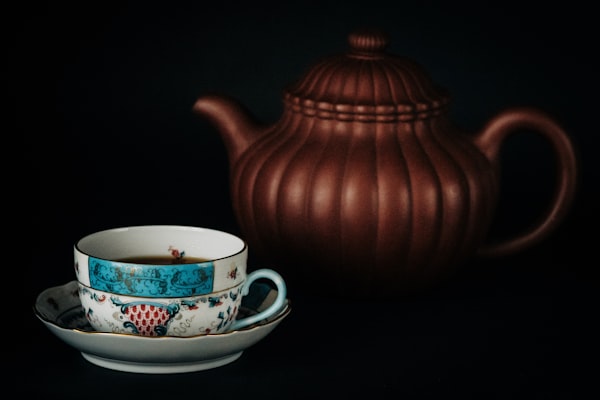
GABA Oolong
Oolong tea
About this tea
GABA Oolong is a distinctive Taiwanese tea defined not by altitude or cultivar but by a unique processing technique: the leaves are fermented in a sealed, nitrogen-rich (oxygen-depleted) chamber instead of undergoing the open-air oxidation typical of standard oolong. This anaerobic step dramatically raises the tea's natural content of gamma-aminobutyric acid (GABA), an amino acid the plant produces under anaerobic stress, giving the tea its name. The result is a mellow, fruity, low-astringency cup with notes reminiscent of dried plum, tamarind, and soft red fruit, layered over the familiar honeyed roundness of Taiwanese oolong. Many drinkers reach for GABA Oolong in the evening, valuing it as a gently calming, easy-on-the-stomach cup rather than a brisk morning tea. It is a genuinely modern invention within an ancient craft — a 20th-century processing breakthrough grafted onto centuries of oolong-making tradition.
How to brew: 90°C, 45s, 5 g per cup.
Caffeine
Low
How to brew
Flavor notes
fruity, honeyed, sweet, smooth
Often associated with
Gentle relaxation, Digestive comfort
Best time to enjoy
Afternoon, Evening
Tags
Origin & Production
GABA Oolong can be made from leaf grown in several of Taiwan's established oolong districts, including Nantou and Chiayi counties, since what defines the tea is not a single fixed terroir but the post-harvest processing method applied to it. Growers typically use the same cultivars employed for standard Taiwanese oolongs — often Qingxin or Jin Xuan — picked at normal maturity. What sets the tea apart happens after plucking, in a dedicated nitrogen-flushed fermentation chamber that replaces part of the conventional oxidation stage. Because the technique can be applied to leaf from many different gardens and elevations, GABA Oolong is best understood as a processing category — a deliberate engineering of the leaf's internal chemistry — rather than a single-origin specialty tea.
Production process
Standard plucking
Fresh shoots are hand-picked from established oolong gardens using the same cultivars and plucking standards as conventional Taiwanese oolong production.
Brief outdoor withering
The leaf is withered only briefly in the sun, far shorter than for standard oolong, since most of the chemical transformation will happen later in the sealed chamber.
Sealed nitrogen-chamber fermentation
The defining step: leaves are placed in an airtight chamber flushed with nitrogen gas to displace oxygen for several hours. Deprived of oxygen, the leaf cells shift to anaerobic metabolism, sharply increasing GABA levels and softening tannins.
Resumed oxidation & bruising
After the anaerobic phase, leaves are returned to open air and gently bruised and tumbled to resume a moderate, more conventional oxidation, developing the fruity aromatics typical of oolong.
Fixing & rolling
Heat halts oxidation at the desired point, and the leaves are rolled into tight balls or twisted strips, locking in the mellow, low-astringency character the process produces.
Final drying
A slow finishing dry stabilizes moisture content for storage, preserving the fruity, slightly tart aromatics built up during fermentation.
History & Tradition
GABA Oolong's story begins not in ancient tea lore but in a 20th-century laboratory, where Japanese food-science research into anaerobic processing was adapted by Taiwanese tea makers into a wholly new category of oolong.
Original GABA research in Japan
Japanese food-science researchers demonstrated that subjecting tea leaf to a nitrogen-rich, oxygen-free environment sharply increased its natural GABA content, building on earlier work on anaerobic treatment of plant tissue.
Adoption by Taiwanese tea makers
Taiwanese growers and processors, already renowned for technical innovation in oolong production, adapted the anaerobic nitrogen-chamber method to their own leaf and cultivars, creating what became known commercially as 'GABA tea' or 'GABA Oolong'.
Marketed as a functional tea
GABA Oolong was promoted in Taiwan and Japan as a 'functional' or wellness-oriented tea, distinct from teas valued primarily for terroir or cultivar, riding a broader regional interest in GABA-enriched foods and beverages.
Refinement of the technique
Taiwanese tea factories refined chamber design, fermentation duration, and the balance between anaerobic and conventional oxidation, improving consistency and producing the smoother, fruitier style now associated with quality GABA Oolong.
International recognition
GABA Oolong gained a following among specialty tea drinkers outside Asia, marketed for its mellow, low-astringency profile and its novelty as a tea defined by processing chemistry rather than garden or season.
Health Benefits
Naturally elevated GABA content
The defining feature of this tea is a notably higher level of the naturally occurring amino acid GABA compared with conventionally processed oolong, a result of the anaerobic fermentation step rather than any additive.
Gently calming character
Drinkers often describe GABA Oolong as having a soothing, settling quality, which many associate with its higher GABA content and its comparatively low caffeine impact relative to brisker oolongs.
Gentle on digestion
The fruity, low-astringency cup produced by the anaerobic process is generally easier on the stomach than tannin-forward teas, making it a popular after-meal choice in Taiwanese tea culture.
Lower astringency, richer mouthfeel
The unique fermentation step softens the leaf's tannin structure, producing a rounder, smoother body with far less of the dry, puckering sensation found in many oxidized oolongs.
Distinct fruity, low-bitterness profile
The combination of anaerobic and conventional oxidation gives GABA Oolong a layered fruitiness — often compared to dried plum or tamarind — without the bitterness that can accompany more heavily oxidized teas.
Grades & Varieties
Rolled-ball GABA Oolong
Tightly rolled into small balls similar in appearance to high-mountain oolong, this is the most widely available format. It unfurls slowly over multiple infusions, releasing a deep amber liquor with dried-fruit sweetness.
Best for
- ✓Evening wind-down cup
- ✓Multiple short infusions (gongfu style)
- ✓Newcomers to GABA tea
Twisted-leaf GABA Oolong
Processed with a more traditional twisted-strip shape rather than rolled balls, this style tends to oxidize slightly further during the post-chamber stage, yielding a darker cup with bolder stone-fruit and molasses notes.
Best for
- ✓Drinkers who prefer bolder oolong styles
- ✓After-dinner pairing
- ✓Western-style (longer) steeping
High-mountain-leaf GABA Oolong
A premium variant made by applying the nitrogen-chamber technique to leaf sourced from higher-elevation gardens, combining the inherent sweetness of high-mountain tea with the mellow, low-astringency result of anaerobic processing.
Best for
- ✓Special-occasion brewing
- ✓Tea collectors comparing processing styles
- ✓Slow, contemplative tasting sessions
Did you know?
GABA Oolong gets its name from being fermented in a sealed, oxygen-free nitrogen chamber, a technique adapted from 1987 Japanese food-science research that dramatically boosts the tea's natural GABA amino acid content.
Foods with this tea
What to Eat with GABA Oolong
GABA Oolong's mellow, fruity, low-astringency cup makes it one of the easiest oolongs to pair with food, from light evening snacks to richer desserts.
GABA Oolong-Steamed Tofu with Ginger Scallion Sauce
Silken tofu gently steamed over GABA Oolong-infused broth, finished with a bright ginger scallion sauce — a light, calming dish built around the tea's mellow fruitiness.
GABA Oolong and Dried Plum Mochi
Chewy mochi filled with a GABA Oolong-infused dried plum paste — a soft, calming dessert that echoes the tea's own fruity, low-astringency character.
Drinks with this tea
GABA Oolong Wind-Down Latte
A warm, low-caffeine-impact oolong latte built for evening relaxation, sweetened with honey and rounded out with a touch of warming spice.
Iced GABA Oolong with Plum and Lime
A refreshing cold-brewed GABA Oolong drink with muddled plum and lime, drawing out the tea's natural dried-fruit sweetness in a bright, low-astringency iced tea.
GABA Oolong Plum Sour
A gently calming cocktail built on GABA Oolong-infused brandy, fresh lime, and plum syrup — mellow, fruity, and easy on the palate, with a non-alcoholic mocktail version included.