
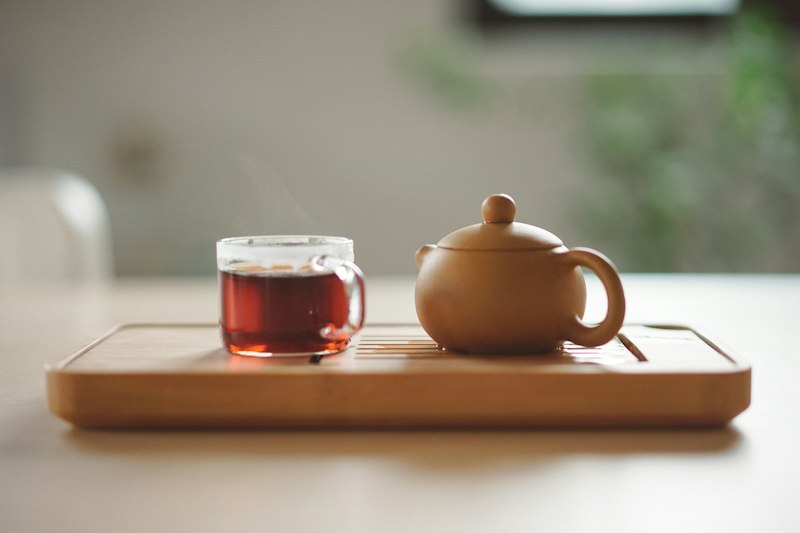
Bi Luo Chun
Green tea
About this tea
Bi Luo Chun (Green Snail Spring) is one of China's Ten Famous Teas, a delicate spring green tea from the Dongting mountains beside Lake Tai in Jiangsu Province. The finished tea is tightly curled into small spiral shapes covered in fine white down (pekoe), brewing to a pale, jade-green liquor with a soft, fruity-floral aroma often described as reminiscent of apricot, peach, and chestnut. Bi Luo Chun is famed for being interplanted among fruit trees, which is widely credited with shaping its distinctive sweet, fragrant character.
How to brew: 75°C, 2 min, 2 g per cup.
Caffeine
Medium
How to brew
Flavor notes
floral, fruity, sweet
Often associated with
Calm alertness, Clarity
Best time to enjoy
Mid-morning, Early afternoon
Tags
Origin & Production
Authentic Bi Luo Chun comes from East and West Dongting Mountains (Dongshan and Xishan) on the shores of Lake Tai, just south of Suzhou. The traditional growing area is famous for interplanting tea bushes with apricot, peach, plum, and loquat trees. The microclimate created by the lake — humid, foggy mornings and mild temperatures — combines with the fruit blossoms and acidic soil to give the tea its delicate fragrance. The protected Geographic Indication zone covers a relatively small area, making genuine Dongting Bi Luo Chun scarce.
Production process
Very early spring harvest
The finest Bi Luo Chun is picked before the Qingming Festival (around April 5), using only the unopened bud and one tiny adjacent leaf. Tens of thousands of these shoots are needed to produce a single kilogram of finished tea.
Sorting and cleaning
Pickers and sorters meticulously remove any damaged leaves, stems, or oversized shoots by hand. Uniformity of the buds is essential to the final tea's even appearance and clean taste.
Pan-firing (sha qing)
Leaves are placed in a hot wok and tossed with bare hands at temperatures around 70–90 °C to halt oxidation. This is one of the most labor-intensive steps of any Chinese green tea, requiring constant motion to avoid scorching the tiny buds.
Rolling into spirals
While still warm, the leaves are rolled by hand against the wok to form their signature tight snail-like curls. This step also raises the fine white hairs (pekoe) that coat finished Bi Luo Chun.
Final drying
A final low-temperature drying stabilizes moisture content to roughly 5–6%, locking in aroma and shape. The whole process — from picking to finished tea — is generally completed within a single day to preserve freshness.
History & Tradition
Bi Luo Chun has been celebrated in China for at least 300 years, and tradition links its present name directly to a Qing emperor who rebranded the tea after tasting it.
Early Dongting tea
Ming-era texts already record fragrant green tea being produced on the Dongting mountains by Lake Tai. Locally it was known by an informal name, often translated as 'scary fragrance' (xia sha ren xiang), in reference to its powerful aroma.
Imperial naming by Kangxi
According to the most repeated story, Kangxi Emperor visited Lake Tai, tasted the local tea, and disliked its rustic name. Charmed by its spiral shape and spring season, he renamed it Bi Luo Chun — Green Snail Spring.
Imperial tribute tea
Through the rest of the Qing Dynasty, Bi Luo Chun was sent annually as tribute to the imperial court, cementing its reputation as one of China's most prestigious green teas.
China's Ten Famous Teas
Bi Luo Chun is officially included in China's first Ten Famous Teas list, an honor that remains central to its marketing and protection to this day.
Geographic Indication
Dongting Bi Luo Chun receives Chinese Geographic Indication protection, restricting the name to tea grown and processed in the official Dongting Mountain area of Suzhou.
Health Benefits
Catechin-rich greens
As an early-spring, lightly processed green tea, Bi Luo Chun retains significant levels of catechins such as EGCG, polyphenols with well-documented antioxidant activity in laboratory studies.
Soft alertness
First-flush buds are naturally high in L-theanine, the amino acid that pairs with the tea's moderate caffeine to support a calm, focused mental state without the sharp edge of stronger teas or coffee.
Heart-friendly habit
Population studies in China and Japan have associated regular green tea consumption with healthier cholesterol profiles and lower cardiovascular mortality. Bi Luo Chun complements — but does not replace — a balanced diet and lifestyle.
Light hydration
Brewed at low temperatures, Bi Luo Chun produces a clean, light cup that is easy to drink in volume and counts as part of daily fluid intake — a gentle alternative to heavier beverages.
Metabolic support
The catechin-and-caffeine combination found in green teas has been studied for modest effects on thermogenesis and fat oxidation, supporting healthy metabolism in combination with an active lifestyle.
Grades & Varieties
Ming Qian (pre-Qingming)
The premier grade, picked before the Qingming Festival from the very first spring shoots. Tiny, downy, tightly curled buds with the most refined fruity-floral aroma and a delicate, sweet finish. The most expensive Bi Luo Chun and the closest to the historic imperial tribute style.
Best for
- ✓Special occasions
- ✓Gongfu brewing
- ✓Tea collectors
Yu Qian (pre-Gu Yu)
Picked between Qingming and the Gu Yu solar term (around April 20). Slightly larger leaves, a stronger and more vegetal taste, while still showing the classic curled spiral shape and downy hairs. Excellent everyday quality.
Best for
- ✓Daily premium drinking
- ✓Gifting
- ✓Introduction to Bi Luo Chun
Outside-Dongting Bi Luo Chun
Tea produced in the same Bi Luo Chun style but outside the protected Dongting GI zone — often from Sichuan or other parts of Jiangsu. Generally more vegetal and less aromatic, sold at a more accessible price and easier to find internationally.
Best for
- ✓Everyday drinking
- ✓Value-oriented choice
- ✓Learning the style
Did you know?
Bi Luo Chun was originally nicknamed 'aroma so scary' for its powerful fragrance; the Kangxi Emperor disliked the name and renamed it 'Green Snail Spring' around 1699 after its curled spiral shape.
Foods with this tea
What to Eat with Bi Luo Chun Tea
Bi Luo Chun's delicate floral-fruity profile pairs best with light seafood, spring vegetables, and gentle stone-fruit or shortbread desserts that respect its elegance.
Bi Luo Chun Steamed Sea Bass with Ginger and Scallion
A whole sea bass steamed over a bath of Bi Luo Chun infusion with ginger, scallion, and a finishing drizzle of sizzling sesame oil—pure spring elegance.
Bi Luo Chun Poached Peaches with Honey Shortbread
White peaches poached in a fragrant Bi Luo Chun and honey syrup, served warm over buttery shortbread—the orchard echo of the tea, on the plate.
Drinks with this tea

Bi Luo Chun Bee-Pollen Spring Tonic
Delicate Bi Luo Chun infused gently and finished with bee pollen, raw honey, and lemon—a floral, immune-supporting spring tonic that celebrates the tea's orchard origins.
Cold-Brewed Bi Luo Chun Peach Iced Tea
Bi Luo Chun cold-brewed with fresh peach slices and a whisper of vanilla—a delicate, blossom-scented iced tea that tastes like a Jiangsu orchard in midsummer.
Bi Luo Chun Blossom Gin Cooler
Gin briefly infused with Bi Luo Chun, shaken with elderflower, lemon, and white peach—a spring-blossom cocktail as delicate as the tea itself.