
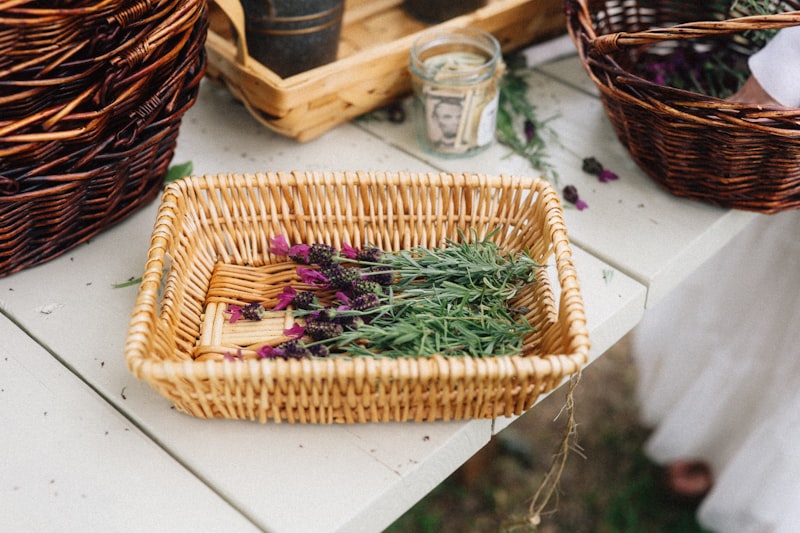
Sleep Blend
Herbal infusion
About this tea
The Sleep Blend is a caffeine-free herbal recipe combining four classic Western 'nervine' herbs traditionally used to support relaxation, ease nighttime tension, and promote restful sleep: chamomile (Matricaria chamomilla) for its apigenin-driven calming effect, lemon balm (Melissa officinalis) for its mild anxiolytic profile, lavender (Lavandula angustifolia) for its linalool-rich floral aroma, and optionally valerian (Valeriana officinalis) for a stronger sedative kick. The result is a gently sweet, herbaceous, slightly floral infusion designed as a wind-down ritual in the hour before bed.
How to brew: 95°C, 8 min, 2.5 g per cup.
Caffeine
None
How to brew
Flavor notes
floral, smooth, relaxing
Often associated with
Relaxation, Calm
Best time to enjoy
Evening
Tags
Origin & Production
Sleep blends as commercial products are a modern invention, but every component is centuries-old. Chamomile is widely grown in Egypt and Eastern Europe; lemon balm originates around the eastern Mediterranean and is now cultivated across temperate Europe; lavender's heartland is Provence (France) and Bulgaria; valerian roots come mainly from temperate Central and Northern Europe. The four-herb combination became popular in 20th-century herbal medicine in Europe and North America, where each herb is monographed by ESCOP and Germany's Commission E for nervous tension or sleep support.
Production process
Recipe (per ~2.5 g serving)
A classic balanced ratio: 40% chamomile flowers, 30% lemon balm leaf, 20% lavender buds, 10% valerian root (optional). For a milder, more aromatic blend, drop the valerian and increase lemon balm to 40%.
Source dried, single-herb ingredients
Buy each herb separately as dried, food-grade loose herb (not pre-mixed teabag dust). Whole or coarsely-cut material preserves the volatile oils that drive each herb's effect, especially lavender's linalool and lemon balm's citral.
Weigh and combine
Weigh each herb on a small kitchen scale according to the ratio. Combine in a clean, dry bowl and toss gently to distribute. Avoid breaking the chamomile flowers — intact heads brew a cleaner infusion.
Store airtight, away from light
Transfer the blend to a glass jar with a tight lid; keep in a cool, dark cupboard. Stored this way, potency is good for 6–9 months. Volatile oils degrade with light, heat, and air — avoid clear jars on a windowsill.
Brew
Use 1 heaping teaspoon (~2.5 g) per cup, water just off the boil (~95 °C), and steep covered for 7–10 minutes. Covering preserves the aromatic oils. Strain and drink 30–60 minutes before bed.
History & Tradition
Each herb in the Sleep Blend has been used individually for relaxation since antiquity, but the modern multi-herb 'sleepytime' formula is a 20th-century product of European phytotherapy and Anglo-American herbalism.
Dioscorides on valerian
Greek physician Dioscorides describes valerian (called 'phu') in De Materia Medica as a remedy for nervous conditions and insomnia — the earliest detailed Western record of a sleep herb.
Monastic 'simples' gardens
Chamomile, lavender, and lemon balm (Carmelite water, 17th century) all became staples of European monastic medicine. They were grown in cloister gardens and prescribed for restlessness, melancholy, and sleeplessness.
German Commission E monographs
Germany's Commission E publishes positive monographs for chamomile flower, lemon balm leaf, lavender flower, and valerian root — formally recognizing each as a treatment for nervous tension, restlessness, and sleep difficulties.
Clinical research on combinations
Randomized trials begin testing valerian-lemon-balm combinations and lavender oil (Silexan) for sleep onset and anxiety, with positive but modest results. Sleep teas become a mainstream consumer category sold in supermarkets worldwide.
EMA herbal monographs
The European Medicines Agency's HMPC issues 'traditional use' monographs for chamomile, lemon balm, lavender, and valerian, supporting their use to relieve mild symptoms of mental stress and to aid sleep.
Health Benefits
Supports sleep onset
Apigenin from chamomile and valepotriates from valerian both interact with GABA-A receptors, the brain's primary inhibitory system. Clinical trials show modest improvements in time to fall asleep and subjective sleep quality.
Eases nervous tension
Lemon balm contains rosmarinic acid and is rich in compounds that inhibit GABA transaminase; small trials suggest reductions in anxiety scores and stress-related symptoms after a few weeks of use.
Aromatic wind-down
Lavender's linalool and linalyl acetate, even inhaled from a hot cup, have demonstrated mild parasympathetic effects — slowing heart rate slightly and signaling the body that it is time to rest.
Digestive comfort before bed
Chamomile and lemon balm both have mild antispasmodic effects on the gastrointestinal tract, helping settle a slightly unsettled stomach after dinner — a common cause of delayed sleep onset.
Safety & considerations
Valerian can amplify the effects of alcohol, benzodiazepines, opioids, and other CNS depressants — do not combine. Avoid driving until you know how the blend affects you. Chamomile and lemon balm are in the Asteraceae and Lamiaceae families respectively; people allergic to ragweed/daisies may react to chamomile. Avoid in pregnancy unless cleared by a clinician (especially valerian and high-dose lavender). Use occasionally rather than nightly long-term; reassess if sleep issues persist beyond a few weeks.
Grades & Varieties
Balanced classic (chamomile-led)
The default recipe: 40% chamomile, 30% lemon balm, 20% lavender, 10% valerian. Mildly sweet and floral with a faint root note. A good all-purpose evening blend for most adults.
Best for
- ✓Standard evening wind-down
- ✓Mild restlessness
- ✓Occasional sleep difficulty
Caffeine-free aromatic (no valerian)
40% chamomile, 40% lemon balm, 20% lavender. Brighter, more floral, and easier to drink with no 'rooty' valerian note. Best for people who dislike valerian's flavor or take medications that valerian could interact with.
Best for
- ✓Lighter aromatic infusion
- ✓Sensitive to valerian flavor
- ✓People on CNS-depressant medications
Stronger sedative (valerian-heavy)
30% chamomile, 25% lemon balm, 20% lavender, 25% valerian root. Earthier, more medicinal, and noticeably more sedating. Best reserved for occasional use on a difficult night, not as a daily habit.
Best for
- ✓Occasional difficult nights
- ✓Heavier evening tension
- ✓Adults only — not for children
Did you know?
Lavender's calming reputation has a chemical signature: more than 70% of its essential oil is made up of just two compounds — linalool and linalyl acetate — and a 2010 study in Phytomedicine on the standardized lavender oil 'Silexan' found it comparable to low-dose lorazepam for generalized anxiety symptoms, while monks of medieval Europe had been growing it in cloister gardens for the same purpose nearly a thousand years earlier.
Foods with this tea
What to Eat with Sleep Blend Tea
Sleep Blend's calming mix of chamomile, lemon balm, and lavender pairs beautifully with light, warm evening fare—honey-glazed pears, oat porridge, and gentle savory comforts.
Creamy Butternut Squash Soup with Lemon Balm Drizzle
A silky butternut squash soup infused with Sleep Blend tea and finished with a fresh lemon balm oil—a soothing, light evening bowl that honors the tea's calming profile.
Chamomile-Lavender Shortbread with Honey-Glazed Pears
Buttery shortbread cookies scented with chamomile flowers and a hint of lavender, served alongside warm honey-glazed pears—a quiet, golden ending to the evening.
Drinks with this tea
Bedtime Sleep Blend Golden Milk
Our sleep blend (chamomile, lemon balm, lavender) brewed into warm oat milk with honey and a whisper of nutmeg—a caffeine-free golden milk that gently signals your body it's time to rest.
Iced Sleep Blend Tonic for Hot Summer Evenings
A cold-brewed sleep blend with cucumber, lemon, and honey—an evening cooler for summer nights when it's too warm for hot tea but you still want to unwind.
Evening Calm Bedtime Mocktail (Alcohol-Free)
A bedtime mocktail in cocktail clothing—sleep blend tea, lemon, honey-lavender syrup, and a splash of sparkling water served in a coupe glass. Zero alcohol, all the ritual.