
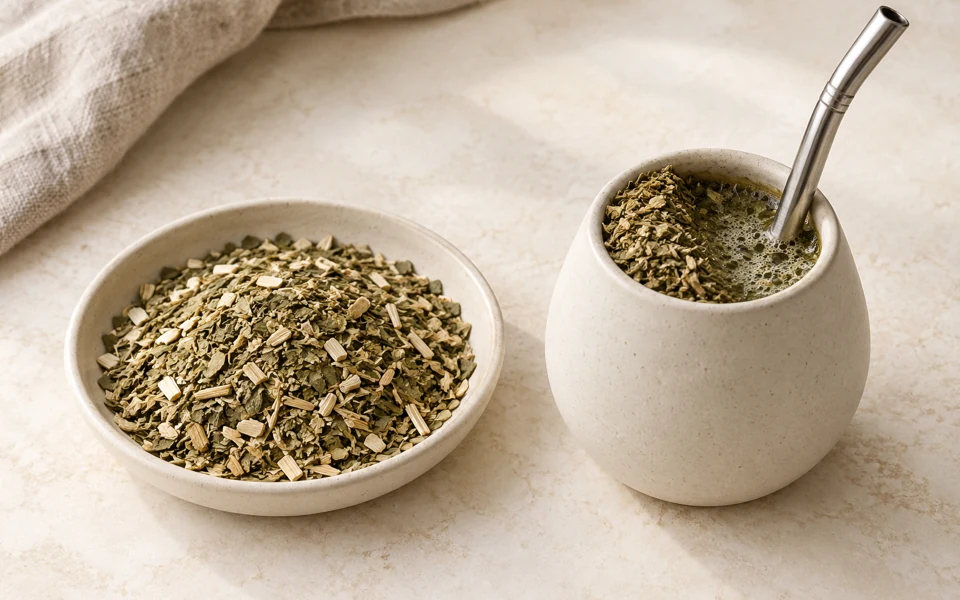
Mate
Yerba mate
4.9/5 · FindMeTea score
About this tea
Yerba mate (Ilex paraguariensis) is a caffeinated herbal infusion native to the subtropical forests of South America, revered as the national drink of Argentina, Uruguay, and Paraguay. Unlike true tea (Camellia sinensis), mate comes from a species of holly, brewed by steeping dried leaves and stems in hot water inside a hollowed gourd and sipped through a metal filtered straw called a bombilla. Rich in caffeine (often called mateine), theobromine, and saponins, yerba mate delivers a uniquely balanced stimulation that has sustained indigenous Guaraní communities for centuries and today unites millions across South America in a daily ritual of sharing and connection.
How to brew: 75°C, no steep, yerba to taste.
Caffeine
Medium
How to brew
Flavor notes
earthy, bitter, vegetal
Often associated with
Sustained energy, Focus
Best time to enjoy
Morning, Mid-morning
Tags
Where to find it in United States
 Where to find it in United States
- Harney & SonsThis tea
New York · SoHo (ships nationwide)
Yerba Mate (loose, 4 oz tin)
from US$ 11· 4 oz
In storeOnline433 Broome StreetSee the shop → - Tippecanoe Herbs and ApothecaryThis tea
Milwaukee · Bay View, S Kinnickinnic Ave
Yerba Mate
US$ 3· 1 oz
In storeOnline2235 S Kinnickinnic Ave, Milwaukee, WI 53207See the shop → - The Random Tea RoomThis tea
Philadelphia · Northern Liberties
Roasted Maté
US$ 19.50· 6 oz
In storeOnline713 N 4th St, Philadelphia, PA 19123See the shop → - Sencha Tea BarThis tea
Minneapolis · Uptown (also Madison, WI)
Yerba Mate
from US$ 3.49· 1 oz
In storeOnline2601 Hennepin Ave S, Minneapolis, MN 55408See the shop → - The Head NutThis tea
Philadelphia · Reading Terminal Market
Raw Yerba Mate
from US$ 3.50· 1 oz
In storeOnline51 N 12th St, Philadelphia, PA 19107See the shop →
Origin & Production
Yerba mate grows naturally in the Atlantic Forest region spanning northeastern Argentina, eastern Paraguay, and southern Brazil. The province of Misiones in Argentina is the world's largest producer, where the red laterite soil and subtropical climate (20–30°C, high humidity) create ideal growing conditions. Paraguay's Itapúa department and Brazil's Rio Grande do Sul and Paraná states are also major producers. Uruguay, though not a producer, is the world's largest per-capita consumer (roughly 8–10 kg per person annually) and imports nearly all of its yerba from Brazil and Argentina. Wild-harvested mate from native forests is considered superior in complexity to plantation-grown varieties. The plant requires shade during early growth and takes 4–8 years to reach its first harvest.
Production process
Harvest (tarefa)
Branches with mature leaves are hand-cut from Ilex paraguariensis trees between April and September (winter harvest). Skilled tareferos select branches carefully to allow regrowth, as over-harvesting can damage the plant.
Flash-drying (sapecado)
Within 24 hours of harvest, fresh leaves are passed through open flames at ~400°C for 20–30 seconds — a process called sapecado — which halts enzymatic oxidation, fixes the green color, and imparts a characteristic smoky note.
Drying (secado)
After sapecado, leaves undergo a longer drying phase in a barbacuá (traditional brick oven) or industrial dryer at 80–100°C, reducing moisture content to about 5% and developing deeper flavor notes.
Milling & aging (canchado y estacionamiento)
Dried leaves are coarsely milled (canchado), then aged in controlled conditions for 6–24 months. Aging mellows bitterness, rounds out the flavor, and develops the characteristic golden-green color of premium yerba mate.
Final blending & packaging
The aged yerba is blended to achieve a consistent ratio of leaves (hojas), stems (palos), and dust (polvo) according to each brand's recipe, then vacuum-packed to preserve freshness.
- Free
- Sundays
- 2 min
Drink better tea, one Sunday at a time.
A fact for the table·A shop worth the trip·A better cup·Ritual & kit of the week·Tea fun facts
History & Tradition
Yerba mate's history stretches from pre-Columbian Guaraní traditions through Jesuit missions and gaucho culture to its modern status as a symbol of South American identity, with the tereré tradition recognized by UNESCO as intangible cultural heritage.
Guaraní discovery
The Guaraní people of the Paraná Plateau were the first to cultivate and consume yerba mate, chewing the leaves or steeping them in gourds. They called it ka'a (herb) and considered it a gift from the gods that provided strength and clarity.
Jesuit missions & first plantations
Spanish Jesuit missionaries in Paraguay and Argentina learned mate cultivation from the Guaraní and established the first commercial yerba mate plantations. They discovered the seed germination secret (the seeds sprout best after being eaten and passed by birds) and organized large-scale production.
Gaucho culture & national identity
As Argentina and Uruguay gained independence, mate became central to gaucho culture and national identity. The ritual of sharing mate from a single gourd in a circle (ronda de mate) became a defining social custom of the Río de la Plata region.
Argentine national infusion
Argentina officially declared yerba mate its national infusion by law (Ley 26.871, sanctioned in 2013). November 30 was designated National Yerba Mate Day in honor of Guaraní leader Andrés Guacurarí.
Global expansion & UNESCO recognition
Mate gained international visibility through South American athletes and cultural ambassadors. In 2020, UNESCO inscribed the traditional practices and knowledge of tereré in the culture of pohã ñana (Paraguay) as intangible cultural heritage. Global consumption grew, with markets expanding into Europe, the Middle East (especially Syria and Lebanon), and North America.
What's in the cup
Caffeine: level 2 of 3
Yerba mate sits at level 2 of our 0–3 caffeine scale — the same rung as most green teas — and its caffeine is the ordinary molecule, whatever the old "mateine" label suggests. The leaf also carries theobromine, the second stimulant found in cacao.
Bitterness and foam
Chlorogenic acids are the backbone of mate's bitterness, and its saponins are what raise the foam on the first pour. Both are why a yerba tastes so different from a Camellia tea, and why stems (palo) are blended in to soften the cup.
Not steeped: cebado
Mate has no steeping time. The gourd is filled with yerba to taste, water at about 75 °C — never boiling, which scorches the leaf — is poured in small amounts, and the same yerba is refilled many times before it washes out (se lava).
Leaf, stem and dust
A bag of yerba is a blend of leaf, stem and fine powder. More leaf means more bitterness and caffeine; more stem means a milder gourd that lasts more refills; the powder gives the water its body. Argentine con palo and Brazilian chimarrão sit at opposite ends of that spectrum.
- Free
- Sundays
- 2 min
Drink better tea, one Sunday at a time.
A fact for the table·A shop worth the trip·A better cup·Ritual & kit of the week·Brew better
Grades & Varieties
Con Palo (with stems)
The most common Argentine style, blending 60–70% leaves with 30–40% stems. The stems mellow the flavor and reduce bitterness, producing a balanced, approachable mate with good durability across multiple refills (cebadas).
Best for
- ✓Everyday Argentine-style mate
- ✓Beginners
- ✓Long sharing sessions
Despalada (pure leaf)
Made almost entirely of leaves with minimal stems, producing a more intense, bitter, and full-bodied infusion. Higher in caffeine and polyphenols. Preferred by experienced mate drinkers who enjoy a strong, concentrated flavor.
Best for
- ✓Experienced mate drinkers
- ✓Maximum flavor intensity
- ✓Short, concentrated sessions
Barbacuá (smoke-dried)
Slowly dried over wood fire in a traditional barbacuá oven, developing deep smoky, toasty notes reminiscent of the original Guaraní preparation. Produced mainly in Paraguay and Misiones, Argentina.
Best for
- ✓Smoky flavor lovers
- ✓Traditional experience
- ✓Tereré (cold mate)
Chimarrão (Brazilian green mate)
Brazilian-style mate made from finely ground, bright green leaves with minimal aging. Produces a very fresh, grassy, and slightly sweet infusion. Typically prepared in a larger cuia (gourd) with a specific mounding technique.
Best for
- ✓Fresh, grassy flavor preference
- ✓Brazilian-style preparation
- ✓Mild mate introduction
Did you know?
Argentina's national team took 240 kg of yerba mate to the 2022 World Cup and won; the drink is shared in a ritual with a metal straw called a bombilla.
Foods with this tea
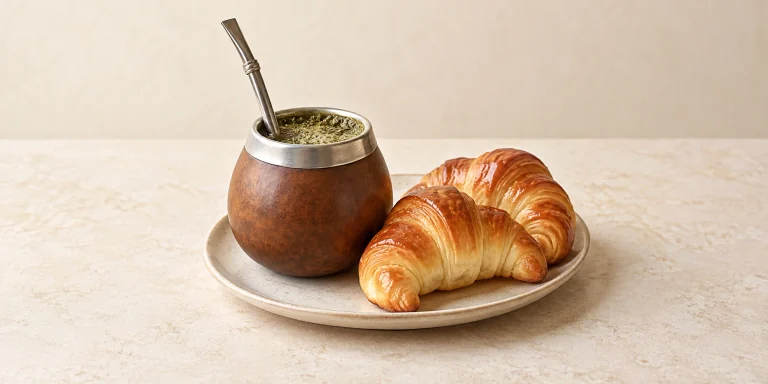
What to Eat with Yerba Mate
Yerba mate's grassy, slightly bitter profile pairs naturally with buttery pastries, grilled meats, and rustic South American flavors.
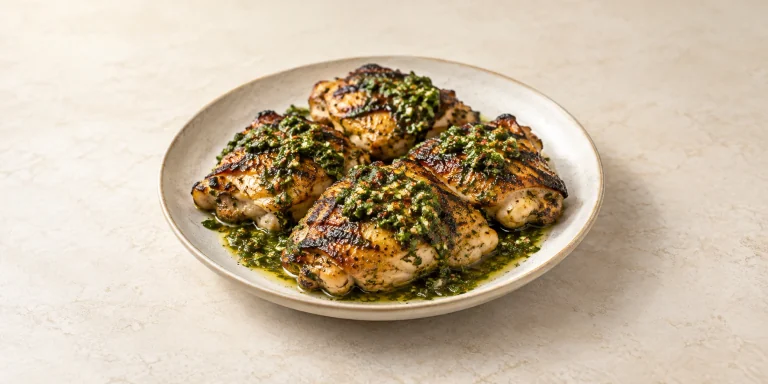
Yerba Mate Chimichurri Grilled Chicken
Chicken thighs marinated in a yerba mate chimichurri—herbal, garlicky, and smoky—grilled until crispy-skinned and impossibly juicy.
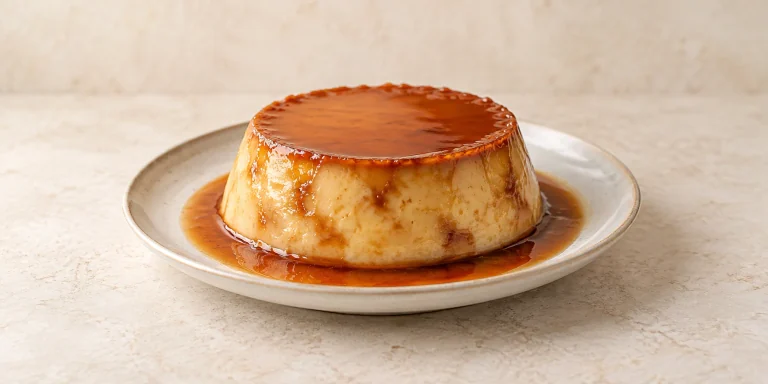
Yerba Mate Dulce de Leche Flan
A silky flan infused with yerba mate and swirled with dulce de leche—Argentina's two obsessions united in one irresistible dessert.
- Free
- Sundays
- 2 min
Drink better tea, one Sunday at a time.
A fact for the table·A shop worth the trip·A better cup·Ritual & kit of the week·Tea recipes & drinks
Drinks with this tea
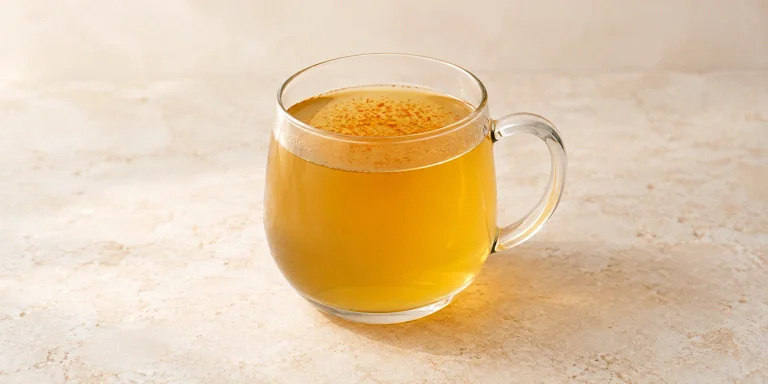
Yerba Mate with Ginger, Lemon and Honey
Loose yerba mate steeped at 80°C with sliced ginger, lemon and honey: earthy, bitter and caffeine-rich, for the morning.
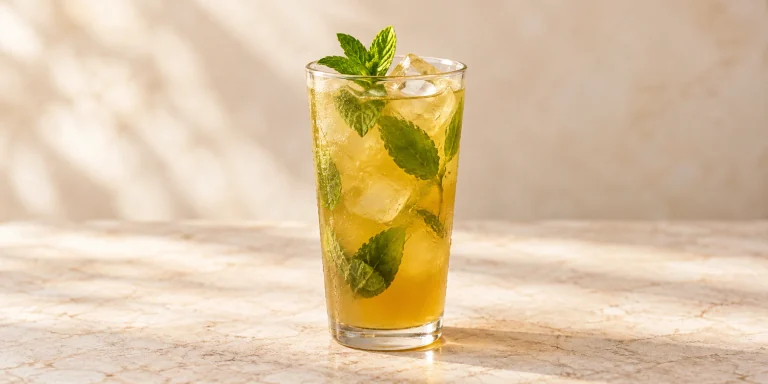
Tereré — Iced Yerba Mate with Citrus and Mint
Paraguay's beloved tereré: ice-cold yerba mate with fresh citrus and mint—the ultimate South American summer cooler.
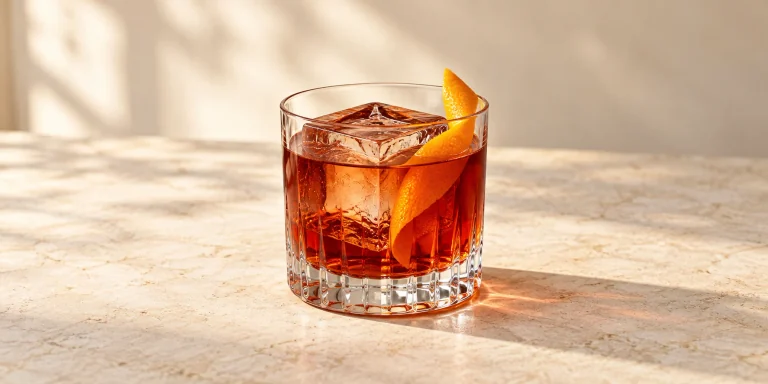
Mate Negroni
A South American twist on the classic Negroni—gin infused with yerba mate adds an earthy, herbaceous depth that takes this cocktail to another level.