
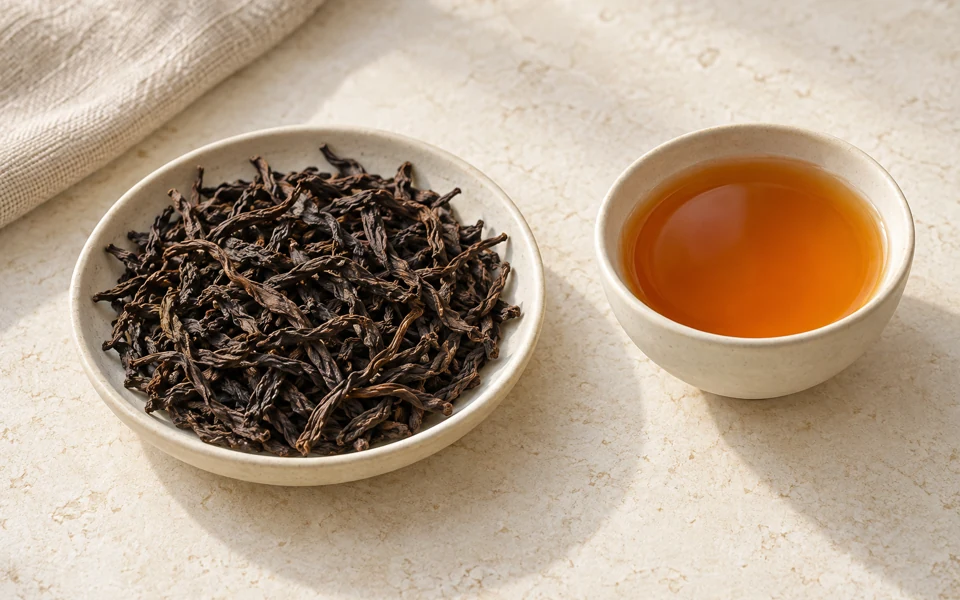
Wuyi Oolong
Oolong tea
4.6/5 · FindMeTea score
About this tea
Wuyi Rock oolong (Yan Cha) is a legendary category of heavily oxidized, charcoal-roasted oolong teas grown in the mineral-rich, rocky cliffs of the Wuyi Mountains in northern Fujian, China. Da Hong Pao (Big Red Robe) is its most famous variety, prized for its deep mineral character — known as 'rock rhyme' (yan yun) — layered notes of roasted stone fruit, dark chocolate, and a lingering sweet finish. These teas are among the most revered and historically significant in all of Chinese tea culture.
How to brew: 95°C, 3 min, 3 g per cup.
Caffeine
Medium
How to brew
Flavor notes
smoky, toasted, mineral
Often associated with
Calm, Gentle focus
Best time to enjoy
Early afternoon, Mid-afternoon
Tags
Where to find it in United States
 Where to find it in United States
- TeaSourceThis tea
St. Anthony · St. Anthony Village, north-east of Minneapolis (also Roseville)
Agate Hunter Rock Tea
from US$ 8.10· 2 oz
In storeOnline2908 Pentagon Dr NE, St. Anthony, MN 55418See the shop → - Cultivate Tea & Spice Co.This tea
Saint Augustine · Trinity Parish North Campus (State Road 16A)
Wuyi Oolong
from US$ 7· 0.8 oz
In storeOnline6350 FL-16A, St. Augustine, FL 32092See the shop → - This tea
Wuyi Rock Oolong (organic)
from US$ 55· 4 oz
OnlineSee the shop → - This tea
Traveling Leaf (Organica Herb & Tea Co)
Colorado Springs · Old Colorado City
Wuyi Oolong Organic 1 oz
US$ 8.19· 1 oz
In storeOnlineWebsite: travelingleaf.com
- The Head NutOther Oolong tea
Philadelphia · Reading Terminal Market
Huang Jin Kui Oolong
from US$ 2.99· 1 oz
In storeOnline51 N 12th St, Philadelphia, PA 19107See the shop →
Origin & Production
The Wuyi Mountains are a UNESCO World Heritage Site where narrow gorges, towering cliffs of volcanic and metamorphic rock, and nine winding streams create a unique microclimate. Tea bushes cling to rocky crevices and terraced cliff faces at 200–650 meters elevation, drawing minerals from the ancient stone. This 'rock bone' terroir — a combination of iron-rich soil, filtered sunlight, and constant humidity from mist and streams — is what gives Yan Cha its unmistakable mineral depth.
Production process
Solar withering
Freshly picked leaves are spread on bamboo mats in the sun to begin moisture loss and activate oxidative enzymes. Wuyi teas use mature leaves (not just buds), which contribute to the tea's body and mineral character.
Shaking and oxidation (zuoqing)
Leaves are vigorously shaken in bamboo drums or by hand to bruise them extensively, then rested — a cycle repeated 8–12 times over 10+ hours. This achieves 60–80% oxidation, far more than lighter oolongs.
Kill-green and rolling
Oxidation is halted by high-heat tumbling in a rotating drum. Leaves are then rolled into long, twisted strips (not balls) — the classic Wuyi leaf shape that distinguishes them from Anxi-style oolongs.
Charcoal roasting (hong bei)
The defining step: slow roasting over hardwood charcoal in bamboo baskets for 8–12 hours, repeated 2–3 times over several weeks. This painstaking process deepens flavor, reduces astringency, and develops the roasted mineral profile.
Resting and aging
After roasting, Wuyi oolongs are rested for weeks to months to allow the 'fire' to settle. Well-made Yan Cha improves over 1–3 years of proper storage, gaining smoothness and complexity.
- Free
- Sundays
- 2 min
Drink better tea, one Sunday at a time.
A fact for the table·A shop worth the trip·A better cup·Ritual & kit of the week·Tea fun facts
History & Tradition
Wuyi teas are among the oldest known oolongs, with legends stretching back to the Ming Dynasty and a pivotal role in shaping the entire oolong tea category — and even sparking global tea trade.
Ming Dynasty: the Da Hong Pao legend
According to the most popular legend, a Ming Dynasty scholar fell ill on his way to the imperial examinations. Monks at a Wuyi temple brewed him tea from cliff-grown bushes. After recovering and passing his exams, he draped his red robe over the bushes in gratitude — giving Da Hong Pao its name.
Birth of oolong processing
The Wuyi Mountains are widely considered the birthplace of oolong tea production. The partial-oxidation technique was developed here by tea farmers experimenting with processing methods between green and black tea.
Global trade via 'Bohea'
European traders knew Wuyi tea as 'Bohea' (a romanization of Wuyi). It became one of the first Chinese teas exported to Europe and was among the teas dumped into Boston Harbor during the 1773 Boston Tea Party.
Mother trees declared national treasure
The six original Da Hong Pao mother bushes on Jiulongke cliff — estimated at 350+ years old — were officially retired from harvesting by the Chinese government and designated as state-protected heritage. The last harvest (2005) was placed in the National Museum of China.
What's in the cup
Rich antioxidant profile
Heavy oxidation creates a unique blend of theaflavins, thearubigins, and residual catechins that provide potent antioxidant activity — a broader spectrum than either green or black tea alone.
Fat metabolism
Wuyi oolong polyphenols have been specifically studied for their lipase-inhibiting properties, which may help reduce the absorption of dietary fats and support healthy weight management.
Cardiovascular health
The mineral-rich terroir contributes trace elements like manganese and selenium, while the tea's flavonoids help support healthy blood pressure and vascular function.
Mental stamina
With a robust caffeine content (40–60 mg per cup) modulated by L-theanine, Wuyi oolongs provide sustained mental energy and focus — ideal for deep work and creative tasks.
Digestive comfort
The deep charcoal roasting reduces the tea's astringency and creates compounds that are gentle on the stomach. Wuyi oolongs are traditionally enjoyed after rich meals to aid digestion.
Mineral replenishment
Grown in mineral-rich rock, Wuyi oolongs naturally contain trace minerals including potassium, calcium, and iron that support hydration and electrolyte balance.
- Free
- Sundays
- 2 min
Drink better tea, one Sunday at a time.
A fact for the table·A shop worth the trip·A better cup·Ritual & kit of the week·Brew better
Grades & Varieties
Da Hong Pao (Big Red Robe)
The most famous Wuyi Yan Cha. Modern Da Hong Pao is produced from cuttings of the original mother bushes. Deep amber-brown liquor with roasted stone fruit, dark chocolate, and pronounced mineral 'rock bone' character. Exceptionally long, sweet finish.
Best for
- ✓Gongfu brewing
- ✓Contemplative drinking
- ✓Special occasions
Rou Gui (Cassia / Cinnamon)
Prized for its bold, spicy-sweet character with prominent cinnamon and cassia bark notes. A more assertive, punchier Yan Cha with excellent depth and a warm, lingering spice finish.
Best for
- ✓Bold flavor seekers
- ✓Cold weather drinking
- ✓Pairing with dark chocolate
Shui Xian (Water Sprite / Narcissus)
Made from large-leaf cultivar bushes, often old-growth. Smoother, rounder, and more mellow than Da Hong Pao or Rou Gui, with notes of orchid, honey, and wet stone. Excellent value entry point to Wuyi oolongs.
Best for
- ✓Daily drinking
- ✓Newcomers to rock tea
- ✓Multiple infusions
Did you know?
Da Hong Pao (Big Red Robe), a Wuyi rock oolong, sold for 208,000 yuan (~US$25,000) for just 20 grams at a 2005 auction; the original mother trees are now protected and retired from production.
Foods with this tea
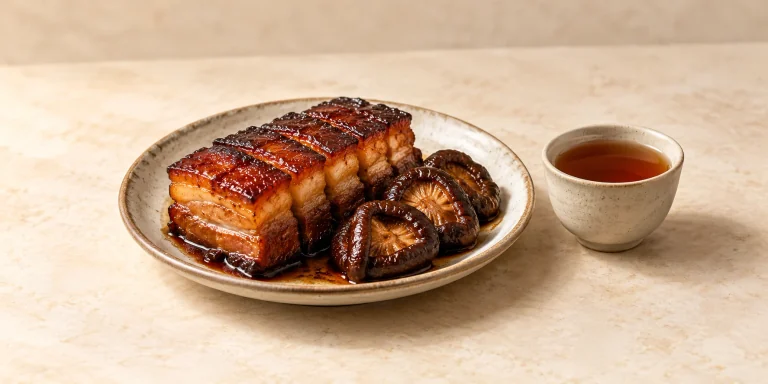
What to Eat with Da Hong Pao (Wuyi Rock Oolong)
Da Hong Pao's roasted, mineral complexity pairs beautifully with rich meats, aged cheeses, dark chocolate, and anything with deep umami or smoky character.
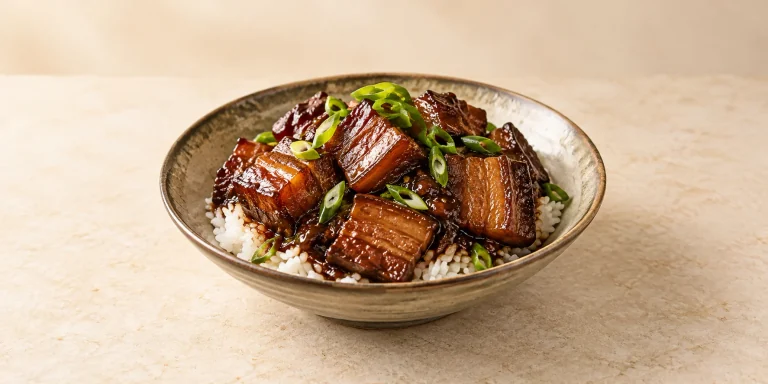
Da Hong Pao Braised Pork Belly
Pork belly slow-braised in Da Hong Pao tea with soy, star anise, and dark sugar—meltingly tender with a deep, smoky-sweet glaze.
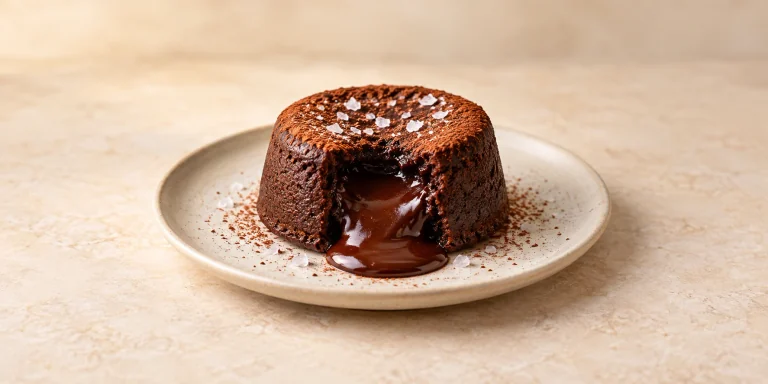
Da Hong Pao Chocolate Lava Cakes
Intensely roasted Da Hong Pao infused into dark chocolate lava cakes—a molten center of smoky, mineral-rich decadence.
- Free
- Sundays
- 2 min
Drink better tea, one Sunday at a time.
A fact for the table·A shop worth the trip·A better cup·Ritual & kit of the week·Tea recipes & drinks
Drinks with this tea
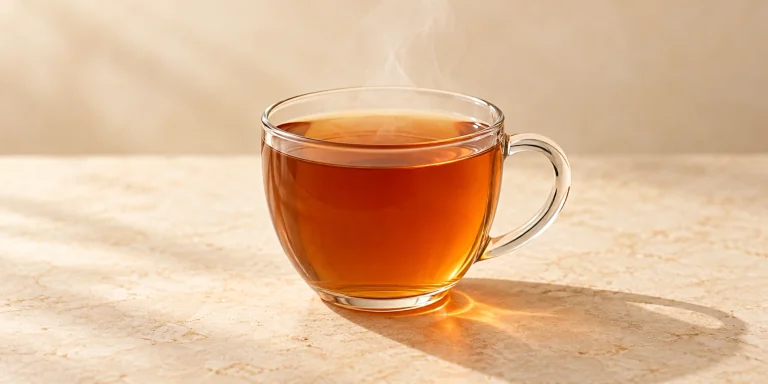
Da Hong Pao with Ginger, Cinnamon and Honey
Da Hong Pao's roasted depth with fresh ginger, a piece of cinnamon bark, and raw honey: warm, spiced, and lightly sweet for a cold afternoon.
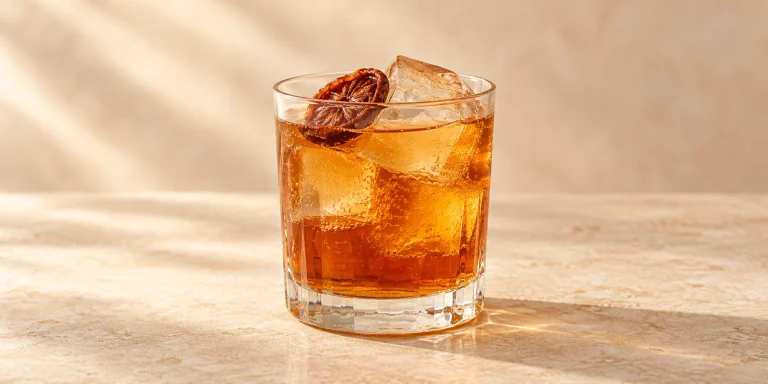
Iced Da Hong Pao with Smoked Plum
Cold-brewed Da Hong Pao meets smoked plum syrup and sparkling water—a dark, complex iced tea with an irresistible smoky-sweet edge.
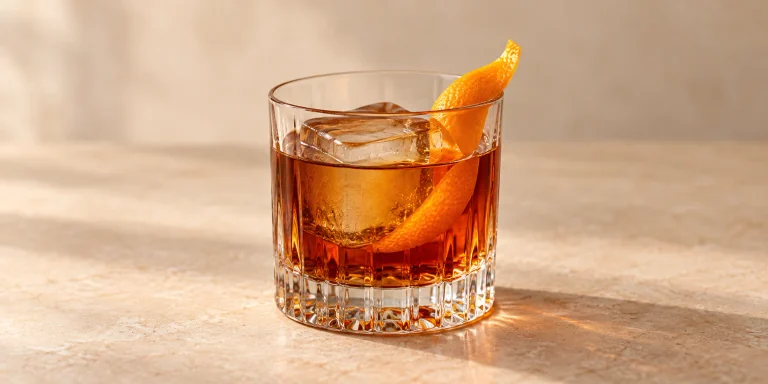
Da Hong Pao Smoked Old Fashioned
Bourbon infused with Da Hong Pao, a dash of molasses bitters, and a flame-kissed orange peel—a smoky, roasted twist on the classic Old Fashioned.