
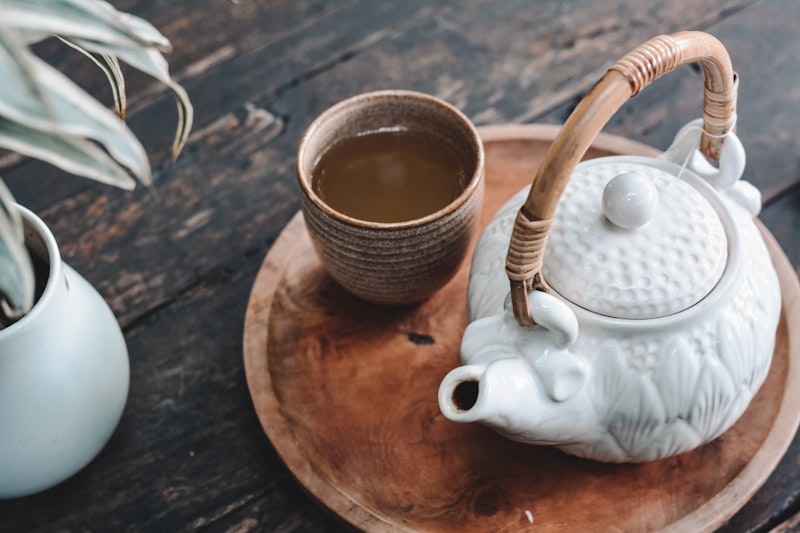
Keemun
Black tea
About this tea
Keemun (Qimen hongcha) is one of China's most celebrated black teas, produced in the mountainous Qimen county of Anhui province. Renowned for its smooth, refined character, it offers a wine-like depth layered with notes of cocoa, dried fruit, and a gentle orchid-like floral fragrance known affectionately as the 'Keemun aroma'. Unlike many robust black teas, Keemun is prized for its elegance and lack of harshness, making it as suited to delicate solo sipping as it is to forming the backbone of classic English Breakfast blends. Since its creation in the late nineteenth century, it has remained a benchmark of fine Chinese black tea on the world stage.
How to brew: 95°C, 3 min, 3 g per cup.
Caffeine
Medium
How to brew
Flavor notes
malty, sweet, floral, full-bodied
Often associated with
Gentle wake-up, Focus
Best time to enjoy
Morning, Mid-morning, After a meal
Tags
Origin & Production
Keemun is grown in the cool, misty highlands of Qimen county in southern Anhui province, near the famed Huangshan (Yellow Mountain) range. The region's high altitude, frequent fog, and humid subtropical climate slow the growth of the tea bushes, concentrating the aromatic compounds that give Keemun its distinctive fragrance. The local cultivar, Qimen zhuye, combined with mineral-rich soils, produces leaves uniquely suited to black tea production. Most Keemun is still grown on small family farms scattered across the county's terraced hillsides, where traditional craftsmanship remains central to its quality.
Production process
Plucking
Tender leaf sets of one bud and two or three leaves are hand-plucked in spring and early summer, when the aromatic potential of the leaf is at its highest.
Withering
Freshly plucked leaves are spread out to wither for several hours, gently reducing moisture so they become pliable and ready for shaping without breaking.
Rolling
The withered leaves are rolled to break the cell walls and release juices, encouraging oxidation and forming the slender, tightly twisted strips characteristic of Keemun.
Oxidation
The rolled leaves are left to oxidize fully in a warm, humid environment, developing the deep coppery color and the cocoa, fruit, and floral notes that define the tea.
Drying
A careful charcoal or hot-air drying halts oxidation and locks in the aroma, leaving the leaves dark, glossy, and fragrant while preserving the famed 'Keemun aroma'.
Sorting & grading
The dried leaves are meticulously sorted by size and quality, with the finest, most uniform strips reserved for premium grades such as Keemun Mao Feng and Hao Ya.
History & Tradition
Although Anhui province had long been famous for its green teas, Keemun black tea is a comparatively young creation, born from a single entrepreneur's ambition in the late nineteenth century and rising swiftly to international acclaim.
The creation of Keemun
Yu Ganchen, a former civil servant from Qimen, is credited with adapting black tea production techniques he had studied elsewhere and applying them to the local leaf, founding the first Keemun black tea workshops.
Export to the West
Keemun quickly found favor with European merchants, becoming a sought-after export through the treaty ports and earning a reputation as a refined alternative to the stronger teas of India and Ceylon.
Panama-Pacific gold medal
Keemun was awarded a gold medal at the Panama-Pacific International Exposition in San Francisco, cementing its status as one of the world's great black teas alongside the finest Chinese specialties.
Backbone of English Breakfast
British blenders embraced Keemun for its smoothness and aroma, making it a classic component of English Breakfast blends and a fixture of the European afternoon tea tradition.
National honors
Keemun was repeatedly recognized among China's most distinguished teas in national quality evaluations, reaffirming its place as one of the country's ten famous teas.
Health Benefits
Gentle morning lift
With a moderate caffeine content, Keemun traditionally offers a smooth, steady energy that helps ease into the day without the jolt or crash associated with stronger drinks.
Focus and clarity
The combination of caffeine and the amino acid L-theanine naturally present in tea is traditionally associated with a calm, alert state that supports focus and mental clarity.
Antioxidant content
Like other black teas, Keemun contains theaflavins and thearubigins formed during oxidation, polyphenols studied for their antioxidant activity in the body.
A comforting ritual
Brewing and savoring a warm cup of Keemun is, for many, a calming daily ritual, traditionally enjoyed as a moment of pause and gentle warmth.
Naturally low astringency
Keemun's refined, smooth character means it is far less astringent than many black teas, making it easy to enjoy on its own without milk or sugar.
Grades & Varieties
Keemun Hao Ya
The most prized grade, made from young, tender buds and leaves. Hao Ya (often labeled A or B) yields a remarkably smooth, aromatic cup with pronounced cocoa, dried-fruit, and orchid notes and almost no bitterness.
Best for
- ✓Delicate solo sipping
- ✓Special occasions
- ✓Appreciating the 'Keemun aroma'
Keemun Mao Feng
A premium grade with slightly larger, twisted leaves and visible golden tips. It brews a bright, fragrant infusion with a wine-like depth and a soft floral finish, balancing refinement and body.
Best for
- ✓Everyday fine black tea
- ✓Afternoon tea
- ✓Pairing with light foods
Keemun Gongfu (Congou)
The traditional 'fine work' grade of neatly rolled, uniform strips. Reliable and full of the classic Keemun character, it is the style most often used in quality breakfast and afternoon blends.
Best for
- ✓English Breakfast blends
- ✓Tea with milk
- ✓Daily mornings
Did you know?
Keemun was created relatively recently, in 1875, by Yu Ganchen, yet within decades it became the prized backbone of classic English Breakfast blends and won a gold medal at the 1915 Panama-Pacific Exposition.
Foods with this tea
What to Eat with Keemun Tea
Keemun's wine-like depth, cocoa notes, and gentle floral aroma make it an elegant partner for breakfast classics, dark chocolate, and lightly smoked or roasted dishes.
Keemun Tea-Smoked Chicken
Chicken gently tea-smoked over Keemun leaves, brown sugar, and rice, yielding a fragrant, mahogany-glazed bird with delicate cocoa and floral undertones.
Keemun Chocolate Truffles
Dark chocolate truffles infused with Keemun tea, where the leaf's cocoa and dried-fruit notes deepen the chocolate and add a whisper of floral aroma.
Drinks with this tea
Keemun Morning Focus Tonic
A warming morning cup of Keemun with a touch of honey, lemon, and cinnamon, crafted to ease into the day with smooth, steady energy and a clear head.
Iced Keemun Peach Tea
Cold-brewed Keemun poured over ice with fresh peach and a hint of honey, a smooth, fragrant iced tea where the leaf's dried-fruit notes shine.
Keemun Whiskey Sour
A refined whiskey sour built on Keemun-infused whiskey, fresh lemon, and honey syrup, where the tea's cocoa and floral notes add elegant depth, with a non-alcoholic version too.