
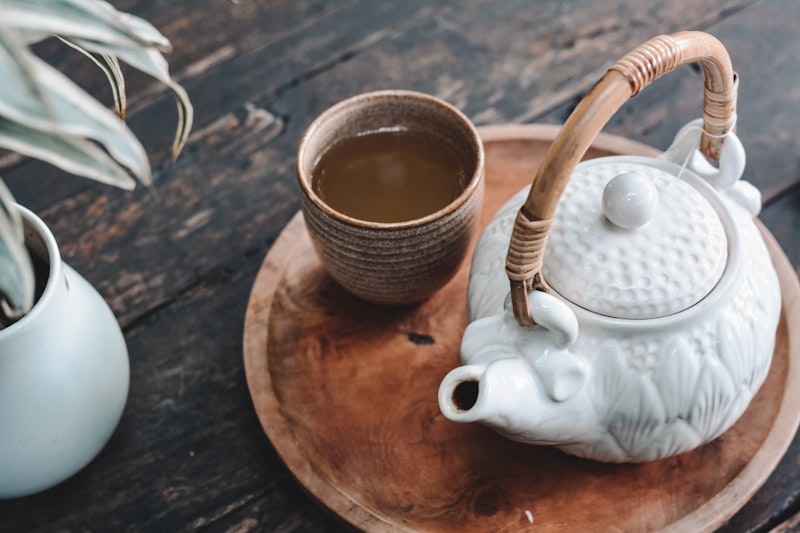
Jin Jun Mei
Black tea
4.7/5 · FindMeTea score
About this tea
Jin Jun Mei (金骏眉), whose name translates as "Golden Steed Eyebrow," is a modern Chinese black tea of extraordinary refinement, crafted entirely from the tender, downy buds of tea bushes grown in the Wuyi Mountains of Fujian. Created in the mid-2000s in the village of Tongmu — the same cradle that gave the world the original smoked Lapsang Souchong — Jin Jun Mei reinvented Wuyi black tea as an unsmoked, bud-only luxury. The dry leaf is a striking mix of dark twists laced with golden tips, and the liquor is a clear amber-gold. On the palate it is remarkably smooth and naturally sweet, layering notes of honey, ripe stone fruit, malt, and a gentle floral warmth. Among Chinese black teas it commands some of the highest prices on the market, prized as much for its delicacy as for its rarity.
How to brew: 90°C, 2.5 min, 3 g per cup.
Caffeine
Medium
How to brew
Flavor notes
sweet, malty, fruity, smooth
Often associated with
Focus, Gentle energy
Best time to enjoy
Morning, Mid-morning
Tags
Where to find it in United States
 Where to find it in United States
- Other Black tea
Harney & Sons
New York · SoHo (ships nationwide)
English Breakfast (loose, 4 oz tin)
US$ 13· 4 oz
In storeOnline433 Broome StreetGo to shop → - Other Black tea
McNulty's Tea & Coffee
New York · Greenwich Village
McNulty's English Breakfast
from US$ 10· 4 oz
In storeOnline109 Christopher StreetGo to shop → - Other Black tea
Chado Tea Room
Los Angeles · Downtown (Little Tokyo) and Hollywood; also Pasadena, Torrance
English Breakfast
US$ 9.88· 4 oz
In storeOnline369 East 1st StreetGo to shop → - Other Black tea
Tea and Whisk
Las Vegas · Chinatown (Spring Mountain Rd)
English Everyday Black Tea Blend
from US$ 20· 4 oz
In storeOnline6288 Spring Mountain Rd, Ste 110Go to shop → - Other Black tea
Rishi Tea
Organic English Breakfast (loose leaf)
US$ 18.50· 113 g
OnlineGo to shop →
Prices checked by us on Sep 5, 2026; they may change.
No shop pays to appear here — we list what we verified ourselves.
Know a shop that sells it? Tell usOrigin & Production
Jin Jun Mei originates in Tongmu, a remote village set within the Wuyishan National Nature Reserve in northern Fujian. This high, misty terrain of granite peaks, cool nights, and frequent cloud cover slows the growth of the tea bushes, concentrating sweetness and aroma in the young buds. The authentic tea uses only the small-leaf Wuyi varietals native to the area, and the tiny buds must be hand-plucked in early spring. Because a single cup requires thousands of buds and the genuine production zone is so tightly bounded, true Tongmu-grown Jin Jun Mei is scarce and expensive — a fact that has spawned countless lower-grade imitations made elsewhere in Fujian and beyond.
Production process
Hand-plucking the buds
In early spring, skilled pickers select only the single tender bud of each shoot. It can take tens of thousands of these tiny buds to produce a small batch, making this the most labor-intensive stage.
Withering
The fresh buds are spread in thin layers and gently withered to reduce moisture and make them pliable, softening the grassy notes and preparing the leaf for oxidation.
Rolling
The withered buds are rolled to bruise the cells and release their juices. This shapes the leaf into its characteristic fine twists and kick-starts the enzymatic reactions behind the honeyed flavor.
Full oxidation
Unlike smoked Lapsang Souchong, Jin Jun Mei is fully oxidized in a clean, controlled environment. This develops its deep amber liquor and the malty, fruity sweetness, with no smoke applied.
Gentle drying
The oxidized buds are dried at low temperature to lock in aroma and moisture content. Traditional producers avoid the pinewood smoke of classic Tongmu teas to keep the cup clean and sweet.
Sorting & grading
The finished tea is carefully sorted by the proportion of golden tips and the integrity of the buds. The highest grades show the most uniform golden down and command the steepest prices.
History & Tradition
Although the Wuyi Mountains have produced black tea for centuries, Jin Jun Mei itself is a strikingly young creation — a deliberate modern invention that married age-old Tongmu craftsmanship with a fresh, luxury vision of an all-bud, unsmoked black tea.
Birthplace of black tea
Tongmu village is widely credited as the birthplace of the world's first black tea, the smoked Lapsang Souchong, establishing centuries of Wuyi black-tea craftsmanship that Jin Jun Mei would later draw upon.
Wuyi tea goes global
During the Qing era, Wuyi black teas became a major export to Europe, where they were prized as fine "Bohea." This long trade history cemented the region's reputation for premium black tea.
Jin Jun Mei is created
Around 2005, tea masters in Tongmu experimented with crafting a black tea entirely from tender buds, without the traditional pinewood smoking. The result was a smooth, honey-sweet tea they named Jin Jun Mei.
Luxury tea boom
Jin Jun Mei rapidly became a sensation among Chinese tea connoisseurs and gift-givers. Its rarity and labor-intensive production pushed prices to remarkable heights, establishing it as a prestige tea.
Protected reputation
As demand soared, widespread imitations appeared across China. Efforts grew to define and protect authentic Tongmu-origin Jin Jun Mei, emphasizing the genuine Wuyi terroir and all-bud standard.
Health Benefits
Gentle, focused energy
As a bud-only black tea, Jin Jun Mei contains a moderate amount of caffeine alongside the amino acid L-theanine, traditionally associated with a smooth, calm-alert lift rather than a sharp jolt.
Clarity and focus
The pairing of caffeine and L-theanine found in fine black teas is traditionally enjoyed in the morning to support a sense of mental clarity and steady focus during work or study.
Rich in antioxidants
Like other black teas, Jin Jun Mei is a source of polyphenols and theaflavins, plant compounds traditionally valued for their antioxidant character as part of a balanced lifestyle.
A comforting ritual
Its naturally honeyed, smooth flavor makes Jin Jun Mei a soothing tea to savor slowly. The mindful ritual of brewing and sipping is traditionally associated with a sense of calm and wellbeing.
Smooth and easy on the palate
Because it is made only from tender buds and is low in bitterness, Jin Jun Mei brews into a remarkably gentle, sweet cup that many find easy to enjoy without milk or sugar.
Grades & Varieties
Authentic Tongmu Jin Jun Mei
The genuine article, grown and crafted within the Tongmu zone of the Wuyi reserve from local small-leaf varietals. Abundant golden tips, an intense honey-and-fruit aroma, and a long, sweet finish define this rare, top-tier grade.
Best for
- ✓Special occasions and gifting
- ✓Gongfu-style brewing
- ✓Connoisseurs seeking authenticity
Wuyi-region Jin Jun Mei
Made from buds grown in the wider Wuyishan area outside the strict Tongmu core. It offers much of the honeyed, malty character at a more accessible price, with a slightly lighter aroma than the Tongmu original.
Best for
- ✓Everyday premium drinking
- ✓Discovering the style
- ✓Smooth morning cups
Bud-and-leaf grade
A more affordable interpretation that blends tender buds with a small proportion of young leaf. The cup is fuller-bodied and a touch more robust, with fewer golden tips but a pleasant, fruity sweetness.
Best for
- ✓Value-conscious daily tea
- ✓Stronger morning brews
- ✓Pairing with food
Did you know?
Jin Jun Mei means "Golden Steed Eyebrow," and a single batch can require tens of thousands of tiny hand-plucked tea buds — one reason it ranks among the most expensive black teas in China.
Foods with this tea

What to Eat with Jin Jun Mei Black Tea
Jin Jun Mei's honeyed, malty smoothness pairs beautifully with delicate pastries, light dim sum, and gently sweet fruit—foods refined enough to honor this luxury Wuyi tea.
Jin Jun Mei Tea-Glazed Salmon
Pan-seared salmon brushed with a honey-malt glaze built on strong Jin Jun Mei tea, soy, and ginger—an elegant dish that mirrors the tea's smooth sweetness.
Jin Jun Mei Honey Panna Cotta
A silky panna cotta infused with Jin Jun Mei and sweetened with honey—the tea's malty, stone-fruit notes turn a simple Italian dessert into something quietly luxurious.
Drinks with this tea

Jin Jun Mei Honey and Ginger Morning Tonic
A warming morning tonic that pairs Jin Jun Mei's honeyed malt with fresh ginger and a squeeze of lemon—a smooth, gentle way to start a focused day.
Iced Jin Jun Mei with Peach and Honey
Cold-brewed Jin Jun Mei poured over ice with fresh peach and a drizzle of honey—a refreshing, naturally sweet iced tea that highlights the tea's stone-fruit side.
Jin Jun Mei Honey Whiskey Sour
A smooth, malty twist on the whiskey sour built on Jin Jun Mei-infused bourbon, honey syrup, and fresh lemon—plus an easy alcohol-free mocktail version.