
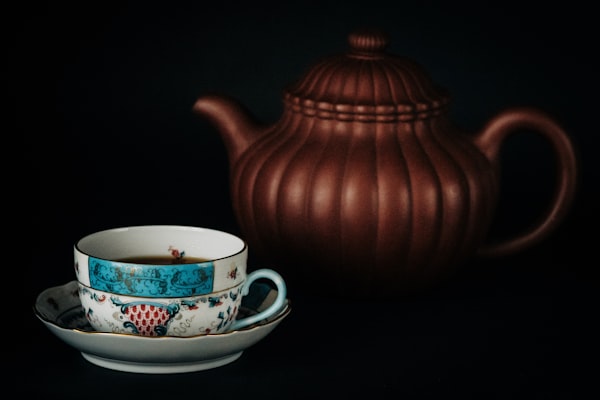
Osmanthus Oolong
Oolong tea
About this tea
Osmanthus Oolong is a scented tea in which a lightly oxidized, lightly roasted oolong base — most often a Tieguanyin-style leaf from Fujian or a strip-style oolong from Guangdong — is layered or co-fired with dried osmanthus (gui hua) blossoms until the leaf absorbs their honeyed, apricot-like fragrance. This is different from a tea whose aroma comes purely from cultivar and terroir: osmanthus oolong is deliberately scented, the way jasmine tea is scented with jasmine flowers, so the blossom's perfume sits on top of the oolong's own smooth, faintly toasty character rather than emerging from the leaf itself. The result is a cup that smells like apricot jam and honeysuckle and tastes round, mellow, and gently sweet, with almost no bitterness or astringency. In Chinese tea culture osmanthus is the defining scent of autumn, and this tea is traditionally brewed and gifted around the Mid-Autumn Festival when the real gui hua trees are in bloom.
How to brew: 95°C, 50s, 5 g per cup.
Caffeine
Medium
How to brew
Flavor notes
floral, sweet, aromatic, honeyed
Often associated with
Calm alertness, Gentle energy
Best time to enjoy
Afternoon, Mid-afternoon
Tags
Origin & Production
Osmanthus oolong is a two-ingredient tea built from two separate growing regions. The base leaf usually comes from the same misty, mineral-rich hill country around Anxi in southern Fujian that produces Tieguanyin, or from strip-style oolong gardens further south in Guangdong; either way it is picked, withered, and only partially oxidized so the leaf stays mild enough to carry a flower's perfume without competing with it. The osmanthus (Osmanthus fragrans) blossoms are harvested separately, mainly from Guangxi, Jiangsu, and Sichuan, where the small cream-to-gold flowers bloom in dense clusters each autumn and are shaken from the branches onto cloth or netting. Because the flowers are tiny and fragile, they must be processed within hours of picking, and scenting houses near both the tea gardens and the flower orchards coordinate harvest timing each year around the autumn equinox.
Production process
Oolong base production
The base leaf is picked, withered, lightly bruised to start oxidation (roughly 20–40%), pan-fired to halt it, and rolled into its characteristic curled or twisted shape, then given a light roast — finished as a standalone tea before scenting even begins.
Osmanthus harvest
Fresh osmanthus blossoms are gathered in autumn, typically by shaking or gently combing the clusters from the branches onto cloth sheets spread beneath the trees, since hand-picking each tiny flower is impractical.
Layering and scenting (yin hua)
Dried oolong leaf is layered with fresh osmanthus blossoms — sometimes repeated over two or three rounds with fresh flowers each time — so the leaf's surface absorbs the flowers' volatile aromatic oils over several hours of close contact.
Sifting and re-drying
After scenting, the mixture is gently sifted to separate spent or whole flowers from the leaf, and the tea is given a brief low-temperature re-drying to lock in the absorbed fragrance and bring moisture back down to a stable level.
Finishing blend
Many producers add back a small proportion of whole dried osmanthus flowers — usually 3–8% by weight — purely for visual appeal and a final top note of fragrance when the tea is brewed, rather than as the main source of scent.
History & Tradition
Osmanthus has been treasured in China for over two thousand years as a garden and temple tree, and scenting tea with its blossoms grew naturally out of a much older tradition of flavoring food, wine, and incense with gui hua.
Osmanthus enters Chinese gardens and cuisine
Osmanthus fragrans was already being cultivated for its fragrance and used to flavor wine and sweets, with classical poets praising its scent as a symbol of the moon and of autumn.
Flower-scented teas codified
Scholars and tea masters of the Song period documented techniques for layering tea leaf with fragrant flowers, establishing the scenting principles — including osmanthus, jasmine, and lotus — that later producers refined.
Pairing with Anxi oolong
As Tieguanyin and other Anxi oolongs rose to prominence in Fujian, scenting houses began applying osmanthus to oolong leaf specifically, valuing how the tea's mellow, lightly roasted base let the blossom's fragrance come through clearly.
Mid-Autumn Festival association
Osmanthus oolong became closely tied to the Mid-Autumn Festival, when real gui hua trees bloom across southern China; drinking and gifting the tea alongside mooncakes became a seasonal custom in Guangdong and Fujian households.
Global specialty tea market
Osmanthus oolong became one of the most widely available scented oolongs internationally, prized by specialty tea shops for its approachable sweetness and as an easy entry point into Chinese scented teas for newcomers.
Health Benefits
Gentle, balanced lift
With roughly half the caffeine of a typical black tea, osmanthus oolong offers a moderate, steady lift without the jitteriness sometimes associated with stronger teas or coffee.
Calming aromatic ritual
The act of warming, smelling, and slowly sipping a fragrant scented tea is widely used as a simple grounding ritual; osmanthus's sweet, comforting aroma in particular is associated in Chinese tradition with easing tension and lifting mood.
Polyphenol content
As a partially oxidized true tea (Camellia sinensis), the oolong base retains a meaningful share of the catechins and theaflavins found in green and black tea, contributing everyday antioxidant compounds to the cup.
Traditional digestive pairing
In Chinese tea culture, lightly roasted oolongs like this one are traditionally drunk after meals, valued for their smooth, low-astringency character that is considered gentler on the stomach than greener, more vegetal teas.
Mental clarity without overstimulation
The combination of moderate caffeine with L-theanine naturally present in tea leaf is associated with calm, focused alertness — a steadier kind of clarity than caffeine alone tends to produce.
Grades & Varieties
Premium hand-scented (multi-round)
Oolong leaf scented with fresh osmanthus blossoms over two or three separate rounds, each using new flowers. Produces the deepest, most lingering apricot-honey fragrance with very few visible flower bits, since most are sifted out after each round.
Best for
- ✓Slow, attentive afternoon tea
- ✓Gifting for Mid-Autumn Festival
- ✓Drinkers who want fragrance without added flowers
Standard scented with visible flowers
The most common commercial style — single-round scented oolong with a noticeable amount of small dried osmanthus blossoms mixed through the leaf, giving a lighter but still clearly floral cup and an attractive appearance in the dry leaf.
Best for
- ✓Everyday floral tea drinking
- ✓Multiple steeps across a session
- ✓Sharing with guests who enjoy fragrant teas
Roasted osmanthus oolong
Built on a more heavily roasted oolong base before scenting, this style trades some bright floral top notes for a deeper, toastier, almost caramelized sweetness underneath the osmanthus fragrance — closer to a Wuyi-style roast in feel.
Best for
- ✓Cooler weather or evening drinking
- ✓Tea drinkers who prefer roasted over green-style oolongs
- ✓Pairing with autumn desserts
Did you know?
Osmanthus oolong is a scented tea, not a flavored one: dried osmanthus blossoms are layered directly with the tea leaves until they absorb the flowers' apricot-honey fragrance, a technique the Chinese have used since at least the Song dynasty.
Foods with this tea
What to Eat with Osmanthus Oolong
Osmanthus oolong's honeyed, apricot-like fragrance loves food that's lightly sweet, nutty, or delicately savory — think mooncakes, steamed buns, and mild white fish.
Osmanthus Oolong Steamed Fish with Ginger and Scallion
A delicate Cantonese-style steamed fish brightened with an osmanthus oolong and ginger broth — the tea's honeyed fragrance turns a simple steaming liquid into something memorable.
Osmanthus Oolong Honey Jelly
A wobbly, translucent jelly set from brewed osmanthus oolong and honey — a classic Chinese teahouse dessert that tastes like apricot blossoms and autumn sunshine.
Drinks with this tea
Osmanthus Oolong Honey Calm Tonic
A warm, lightly sweetened osmanthus oolong tonic with honey and a touch of goji berry — a gentle, low-caffeine ritual for winding down without giving up flavor.
Iced Osmanthus Oolong with Peach and Lime
Cold-brewed osmanthus oolong with fresh peach and a squeeze of lime — a bright, honeyed iced tea that tastes like late summer turning into autumn.
Osmanthus Oolong Spritz
A delicate, low-ABV spritz built on osmanthus oolong syrup, sparkling wine, and soda — with an easy non-alcoholic mocktail version for the same honeyed, floral effect.