
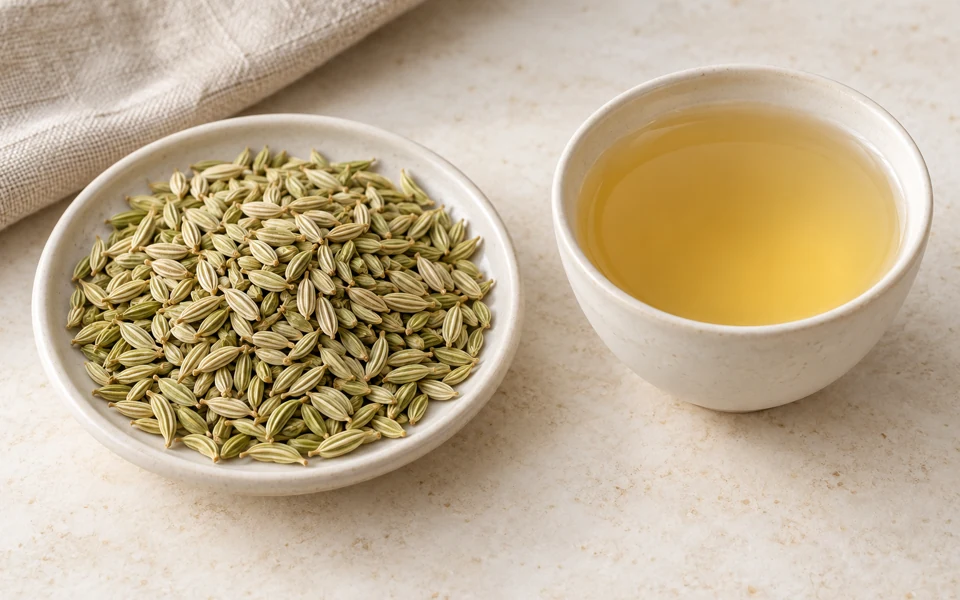
Fennel
Herbal infusion
4.3/5 · FindMeTea score
About this tea
Fennel tea is a warm, naturally sweet herbal tisane — not a true tea — made from the dried fruits of Foeniculum vulgare, an aromatic plant in the carrot family, commonly sold as seeds. Anethole is the compound that carries its licorice-anise flavor, and fenchone the slightly camphorous edge underneath it. The cup is caffeine-free, which is most of why it ended up where it did: poured when the meal is over and nobody wants coffee, from Mediterranean kitchens to South American sobremesas.
How to brew: 95°C, 5 min, 2 g per cup.
Caffeine
None
How to brew
Flavor notes
sweet, anise, smooth
Often associated with
Digestive comfort, Calm
Best time to enjoy
After a meal, Evening
Tags
Where to find it in United States
 Where to find it in United States
Near Columbus
- North Market SpicesOther Herbal infusion
Columbus · North Market, downtown
Spearmint, Crushed Leaves
from US$ 3.85· 1 oz
In storeOnline59 Spruce Street, Columbus, OH 43215See the shop → - Posh Teatime Co.Other Herbal infusion
Columbus · Franklinton, West Broad Street
Farmer's Market Fruit Blend
from US$ 16.95· 4 oz
In storeOnline1273 W Broad Street, Columbus, OH 43222See the shop → - This tea
HER Kitchen
Buffalo · Hertel Avenue (North Buffalo)
Deligh Teas Ayurvedic Cumin, Coriander + Fennel Pyramid Bag
US$ 2.95· 1 bag
In storeOnline1442 Hertel Avenue, Buffalo, NY 14216Website: herkitchenbuffalo.com
- Sencha Tea BarOther Herbal infusion
Minneapolis · Uptown (also Madison, WI)
Rose Hips
from US$ 3.99· 2 oz
In storeOnline2601 Hennepin Ave S, Minneapolis, MN 55408See the shop → - Old City CoffeeOther Herbal infusion
Philadelphia · Old City · Reading Terminal Market
Hibiscus
US$ 11· 4 oz
In storeOnline221 Church St, Philadelphia, PA 19106See the shop →
Origin & Production
Fennel is native to the Mediterranean basin, particularly the coastal regions of southern Europe and North Africa. It has been cultivated for millennia and is now grown commercially in Italy (especially Sicily and Puglia), Greece, Turkey, Egypt, India (Gujarat and Rajasthan), China, and Argentina. The hardy perennial thrives in dry, sunny climates with well-drained soil, often growing wild along roadsides and hillsides across southern Europe where it can reach up to 2.5 meters in height.
Production process
Cultivation
Fennel is sown in spring in well-drained soil with full sun exposure. Plants develop feathery fronds and yellow umbrella-shaped flower clusters (umbels) by midsummer.
Seed harvest
Seeds are harvested when the umbels turn brown and the seeds change from green to grayish-brown (September–October). Timing is critical — too early and anethole content is low; too late and seeds shatter and fall.
Threshing & cleaning
Harvested umbels are dried, then threshed to separate the seeds from stems and chaff. Seeds are cleaned using screens and air separation to remove debris.
Drying & grading
Clean seeds are dried to below 10% moisture content. They are graded by size, color, and essential oil content — larger, greener seeds with higher anethole levels command premium prices.
- Free
- Sundays
- 2 min
Drink better tea, one Sunday at a time.
A fact for the table·A shop worth the trip·A better cup·Ritual & kit of the week·Tea fun facts
History & Tradition
Fennel has been valued for over three thousand years as both food and medicine, appearing in the records of nearly every major Mediterranean civilization from ancient Egypt to the Roman Empire.
Ancient Egypt
Fennel appears in the Ebers Papyrus, one of the oldest surviving Egyptian medical compilations, among the plants written down for complaints of the belly. It is a record of what Egyptian scribes listed around 1500 BC, not a finding about what the plant does.
Battle of Marathon
The famous battle took place on a field of fennel — 'marathon' derives from the Greek 'marathos' (fennel). Greek athletes ate fennel seeds for stamina and courage before competitions.
Pliny the Elder's Natural History
Pliny documented over 20 medicinal uses for fennel, noting that serpents rubbed against the plant to sharpen their eyesight after shedding their skin — establishing fennel's association with vision.
Charlemagne's decree
Emperor Charlemagne issued the Capitulare de Villis, ordering fennel to be grown in every imperial garden across the Frankish Empire, recognizing its importance as food and medicine.
Global spread
Arab traders spread fennel cultivation to India (now the world's largest producer). Spanish colonizers brought it to the Americas. Today fennel tea is consumed on every continent.
What's in the cup
What the EU monograph says
The European Medicines Agency's herbal committee lists sweet fennel fruit as a traditional herbal medicinal product for symptomatic treatment of mild, spasmodic gastro-intestinal complaints including bloating and flatulence — an indication the monograph states rests exclusively on long-standing use, not on clinical trials. Its herbal tea posology is 1.5 g of the fruit in 250 ml of boiling water, steeped 15 minutes, up to three times daily.
Two more traditional indications
The same monograph lists two further traditional uses for the fruit: symptomatic treatment of minor spasm associated with menstrual periods, and use as an expectorant in cough associated with cold. Both carry the identical caveat — specified indications based exclusively on long-standing use — and the monograph adds that the preparation is not to be taken for more than two weeks.
Who the monograph leaves out
Fennel tea is not recommended for children under 4 years of age, and between 4 and 12 only short-term, for less than one week. Safety during pregnancy and breastfeeding has not been established, so the monograph does not recommend it there either; it notes trans-anethole is excreted in human breast milk. It is contraindicated with hypersensitivity to the Apiaceae family — aniseed, caraway, celery, coriander, dill — to anethole, or to mugwort pollen.
Anethole, fenchone and the licorice note
These are the compounds the cup is made of. Anethole is the sweet, licorice-anise note most people name first; fenchone is the cooler, faintly camphorous edge underneath that keeps sweet fennel from tasting like candy. Sweet fennel (var. dulce) carries more anethole and less fenchone than the bitter variety, which is why it is the one usually sold for infusion.
Flavonoids in the fruit
Alongside the essential oil, fennel fruits contain flavonoids such as quercetin, kaempferol and rutin. That is a fact about the composition of the seed, and it is worth keeping separate from what a mug of water steeped with 1.5 g of it does once you drink it — a different question, and one the monograph answers only in terms of traditional use.
Caffeine-free, and that is the point
Fennel has no caffeine at all, which is most of why it became the after-dinner cup in so many places at once: Italian sobremesa, Indian mukhwas chewed at the door of the restaurant, German Fencheltee. It is a habit built around a time of day, not around a promise.
This isn't medical advice. If you have a specific condition, or you are pregnant or taking medication, check with a healthcare provider.
- Free
- Sundays
- 2 min
Drink better tea, one Sunday at a time.
A fact for the table·A shop worth the trip·A better cup·Ritual & kit of the week·Brew better
Grades & Varieties
Whole seeds (sweet fennel)
Plump, greenish-brown whole seeds from the sweet fennel variety (var. dulce), with high anethole content and a naturally sweet, licorice-like flavor. The premium choice for infusion.
Best for
- ✓Hot infusion (standalone)
- ✓The after-dinner cup
- ✓Toasting and grinding for spice blends
Crushed / cracked seeds
Seeds lightly crushed to expose the inner oils for faster, more intense brewing. Releases anethole and fenchone quickly, producing a stronger infusion in less time.
Best for
- ✓Quick daily tea
- ✓Tea bags
- ✓Blending with other herbs (anise, chamomile)
Fennel-anise-caraway blend
A classic European blend of fennel, anise and caraway — three umbellifers whose essential oils share the same sweet, anise-leaning register, so the cup tastes like one herb rather than three. Long-standing in German and Austrian herbal tradition.
Best for
- ✓After dinner
- ✓When you want no caffeine
- ✓European herbal tradition
Did you know?
To the ancient Greeks, fennel represented success; the Battle of Marathon (490 BC) was fought in a fennel field, and the word "marathon" may come from the Greek for fennel.
Foods with this tea
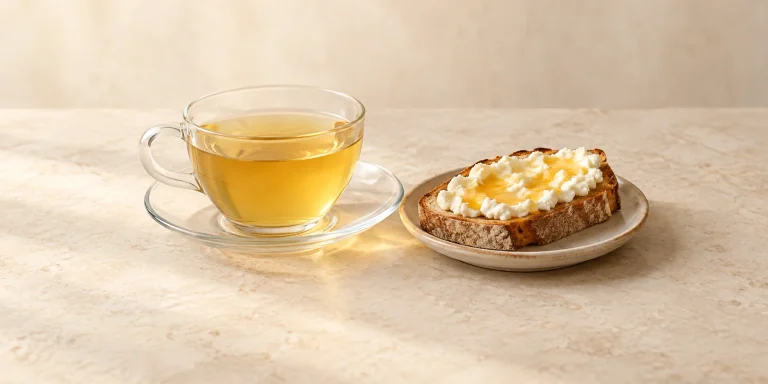
What to Eat with Fennel Tea
Fennel tea's sweet, anise-like character pairs beautifully with Mediterranean flavors, light cheeses, and honey-kissed pastries.
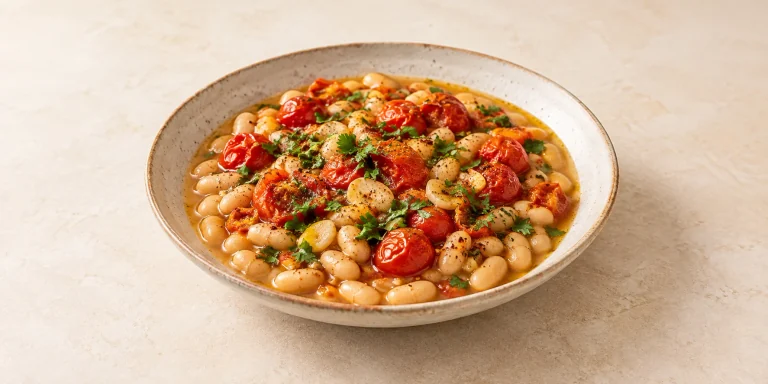
Fennel Tea-Braised White Beans with Roasted Tomatoes
Creamy white beans simmered in fennel tea with garlic and herbs, topped with burst cherry tomatoes—a warm, comforting bowl with anise undertones.
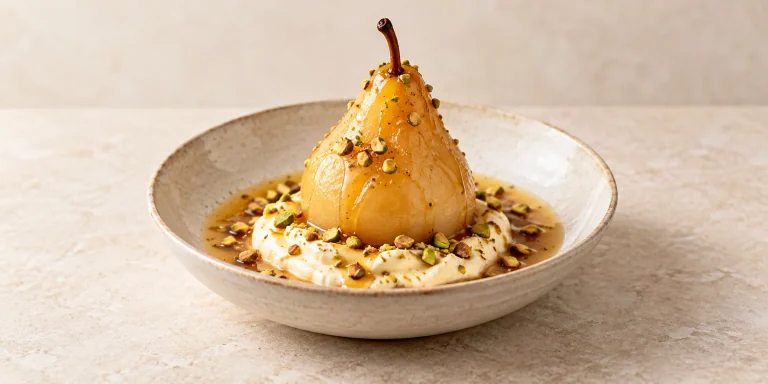
Fennel Tea Poached Pears with Honey Mascarpone
Pears gently poached in fennel tea with star anise and vanilla, served with a cloud of honey mascarpone—aromatic, elegant, and naturally light.
- Free
- Sundays
- 2 min
Drink better tea, one Sunday at a time.
A fact for the table·A shop worth the trip·A better cup·Ritual & kit of the week·Tea recipes & drinks
Drinks with this tea
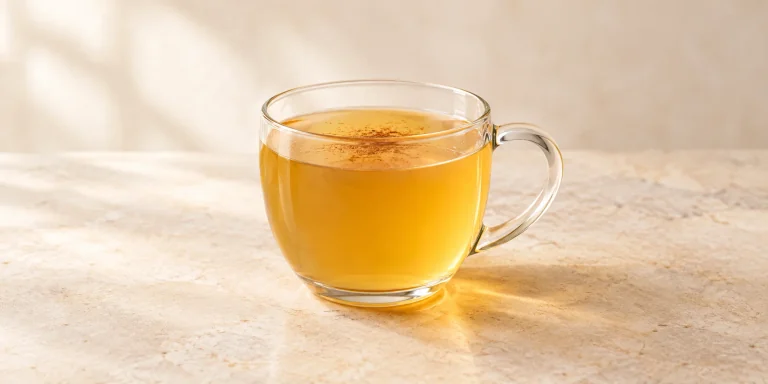
Fennel and Ginger Tea with Lemon and Honey: the Recipe
How to make fennel seed tea with fresh ginger, lemon and honey: exact quantities, a 10-minute recipe and a warm, caffeine-free classic for after dinner.
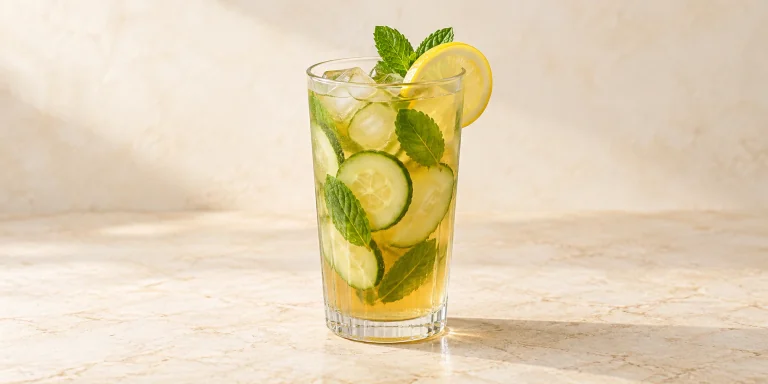
Iced Fennel Tea with Cucumber and Mint
Cold-brewed fennel tea with crisp cucumber and fresh mint—a cooling, anise-kissed refresher that's naturally sweet and caffeine-free.
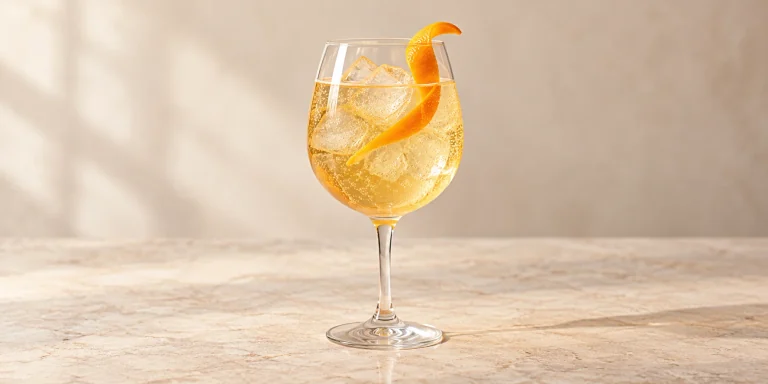
Fennel Tea Anise Spritz
A botanical spritz starring fennel tea-infused gin, Prosecco, and a dash of orange—herbal, bubbly, and irresistibly aromatic.