
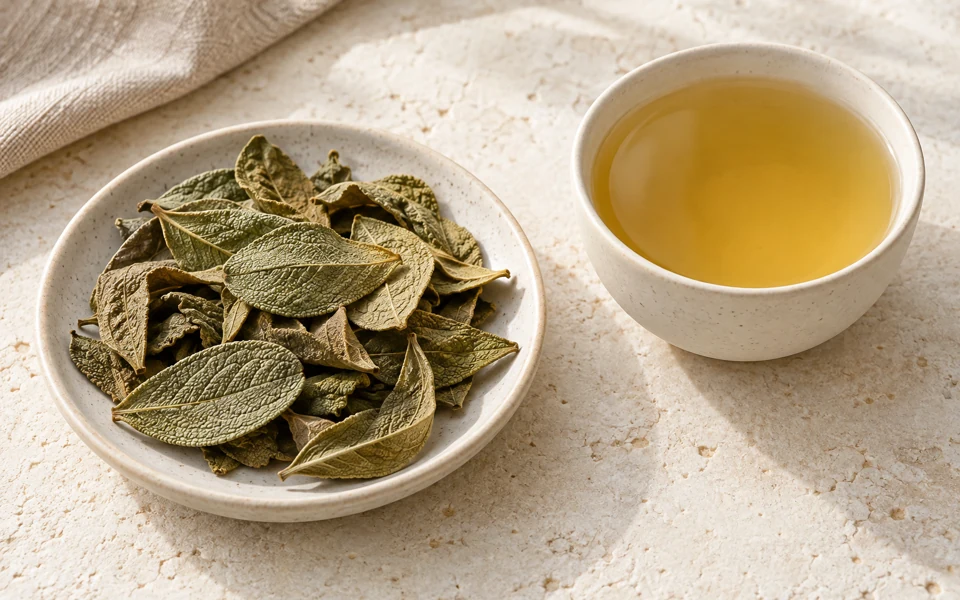
Boldo
Herbal infusion
4.1/5 · FindMeTea score
About this tea
Boldo (Peumus boldus) is a strongly aromatic herbal tisane — not a true tea — made from the leaves of a tree endemic to the central Chilean Andes, treasured throughout South America, where it is traditionally drunk after meals. Rich in the alkaloid boldine and essential oils like ascaridole and cineole, boldo delivers a distinctive camphoraceous, slightly bitter flavor. Deeply rooted in Chilean and Argentine folk medicine for centuries, boldo remains one of the most widely consumed herbs in Latin America. As with any potent medicinal herb, boldo should be avoided during pregnancy, breastfeeding, and in liver or biliary disease, and the concentrated essential oil should not be used.
How to brew: 95°C, 5 min, 2 g per cup.
Caffeine
None
How to brew
Flavor notes
bitter, aromatic, earthy
Often associated with
Digestive comfort
Best time to enjoy
After a meal, Afternoon
Tags
Where to find it in United States
 Where to find it in United States
Near Columbus
- North Market SpicesOther Herbal infusion
Columbus · North Market, downtown
Spearmint, Crushed Leaves
from US$ 3.85· 1 oz
In storeOnline59 Spruce Street, Columbus, OH 43215See the shop → - Posh Teatime Co.Other Herbal infusion
Columbus · Franklinton, West Broad Street
Farmer's Market Fruit Blend
from US$ 16.95· 4 oz
In storeOnline1273 W Broad Street, Columbus, OH 43222See the shop → - Sencha Tea BarOther Herbal infusion
Minneapolis · Uptown (also Madison, WI)
Rose Hips
from US$ 3.99· 2 oz
In storeOnline2601 Hennepin Ave S, Minneapolis, MN 55408See the shop → - Old City CoffeeOther Herbal infusion
Philadelphia · Old City · Reading Terminal Market
Hibiscus
US$ 11· 4 oz
In storeOnline221 Church St, Philadelphia, PA 19106See the shop → - The Random Tea RoomOther Herbal infusion
Philadelphia · Northern Liberties
Chamomile
US$ 18· 6 oz
In storeOnline713 N 4th St, Philadelphia, PA 19123See the shop →
Origin & Production
Boldo is endemic to Chile, growing wild in the dry slopes and ravines of the central Chilean Andes from the Coquimbo Region to the Los Lagos Region. It also extends into some western areas of Mendoza and Neuquén in Argentina. The evergreen tree thrives at altitudes of 300–1,000 meters in the Mediterranean-climate sclerophyll forests of central Chile. Unlike most commercial herbs, boldo is predominantly wild-harvested rather than plantation-grown, making sustainable collection practices essential.
Production process
Wild harvesting
Leaves are hand-picked from wild boldo trees in the Chilean matorral and sclerophyll forests, typically during the drier months (December–March) when essential oil concentration peaks.
Shade-drying
Freshly harvested leaves are spread on drying racks in ventilated shade for 5–7 days. Slow drying preserves the boldine alkaloid content and aromatic volatile oils.
Cutting & grading
Dried leaves are cut to uniform sizes and sorted by quality — whole, intact leaves with a strong aroma command higher value. Stems and damaged leaves are separated.
Packaging & export
Graded leaves are packed in sealed, light-protected containers. Chile exports boldo to Argentina, Brazil, Europe, and North America as both loose leaf and tea bags.
- Free
- Sundays
- 2 min
Drink better tea, one Sunday at a time.
A fact for the table·A shop worth the trip·A better cup·Ritual & kit of the week·Tea fun facts
History & Tradition
Boldo has been used by the indigenous peoples of Chile for thousands of years, long before European colonization, and has become one of the most culturally important medicinal plants of the Southern Cone.
Pre-Columbian use
Archaeological evidence from the Monte Verde site in southern Chile shows boldo leaves among the earliest known medicinal plant remains in the Americas, dating to approximately 14,000 years ago.
Mapuche medicine
Boldo held a prominent place in the traditional medicine of the Mapuche people, and Spanish chroniclers recorded the leaf among the plants of the indigenous peoples of central Chile.
Boldine isolated
French pharmacist J. Bourgoin isolated boldine, the principal aporphine alkaloid of boldo, enabling systematic scientific study of the plant.
European pharmacopoeias
Boldo entered the French, German, and Swiss pharmacopoeias, and the leaf became a familiar item in European herbalists' shelves as well as South American kitchens.
Modern phytotherapy
Boldine becomes a subject of laboratory study, and the European Medicines Agency's committee on herbal medicinal products adopts an EU herbal monograph on boldo leaf. Boldo is now sold in pharmacies, supermarkets and health food stores worldwide, as loose leaf and in tea bags.
What's in the cup
An after-meal herb in the Southern Cone
Boldo is what Chilean and Argentine households put in the kettle once the table is cleared: a strongly aromatic leaf, drunk on its own or blended with mint, that has been part of the after-meal routine for centuries. The infusion carries no caffeine, which is why it belongs to the end of the day rather than the start of it.
Covered by an EU herbal monograph
The European Medicines Agency's committee on herbal medicinal products concluded that boldo leaf preparations can be used for the relief of symptoms of dyspepsia (indigestion) and mild spasms of the gut. The agency is explicit that the conclusion rests on traditional use — there is insufficient evidence from clinical trials — and that boldo leaf must not be taken by people with liver disease, gallstones, obstruction of the bile duct or other bile duct disorders.
Boldine and the volatile oils
The chemistry of the leaf is dominated by boldine, its principal aporphine alkaloid, isolated in 1869, alongside a volatile oil whose main constituents include ascaridole and 1,8-cineole. Those oils are what you smell in the cup: camphor, eucalyptus, a resinous edge. Ascaridole, used long ago as an anthelmintic (dewormer), is toxic in quantity, so the concentrated essential oil is not something to drink.
A bitter, camphor-like cup
Boldo brews dark and resinous, closer to bay leaf or eucalyptus than to anything in the tea family, with a bitterness that lingers. The standard measure is about 2 g of dried leaf in water just off the boil (95 °C) for five minutes; a longer steep pushes the bitterness forward, which is why many households cut it with peppermint or chamomile.
Drunk in small cups, not by the liter
Boldo is a tisane, not a true tea, so there is no caffeine in the cup at all. In Chile and Argentina it is poured in small servings after a meal rather than sipped through the day — a potent leaf treated as an occasional infusion, and one that pregnancy, breastfeeding and any liver or bile duct condition rule out entirely.
This isn't medical advice. If you have a specific condition, or you are pregnant or taking medication, check with a healthcare provider.
- Free
- Sundays
- 2 min
Drink better tea, one Sunday at a time.
A fact for the table·A shop worth the trip·A better cup·Ritual & kit of the week·Brew better
Grades & Varieties
Whole dried leaf
Complete, leathery dried leaves with a strong camphoraceous aroma. The traditional preparation in Chile and Argentina — produces a robust, full-bodied infusion with maximum boldine content.
Best for
- ✓After-meal infusion
- ✓A household custom in Chile and Argentina
- ✓Standalone hot tea
Cut leaf (tea bags)
Leaves cut into small, uniform pieces for consistent brewing in tea bags. Slightly less aromatic than whole leaf but convenient for daily use. The most common commercial format.
Best for
- ✓Everyday after-dinner cup
- ✓Travel-friendly format
- ✓Blending with mint or chamomile
Boldo-mint blend
A popular South American blend combining boldo with peppermint or spearmint, softening boldo's bitterness and rounding off its camphor edge. Very common in Argentine and Chilean households.
Best for
- ✓Evening ritual after dinner
- ✓Milder flavor preference
- ✓Newcomers to boldo
Did you know?
Boldo is endemic to Chile; its name comes from Mapuche. Indigenous peoples used it before Spanish colonization, and it's often mixed with yerba mate in South America.
Foods with this tea
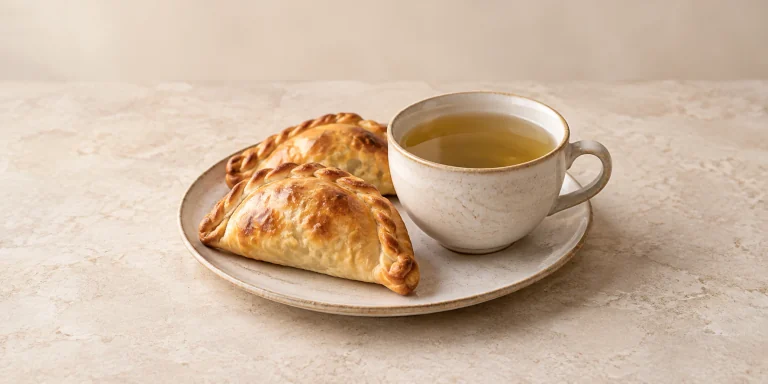
What to Eat with Boldo Tea
Boldo's earthy, slightly bitter profile pairs naturally with hearty South American comfort food—empanadas, grilled meats, and simple rustic breads.
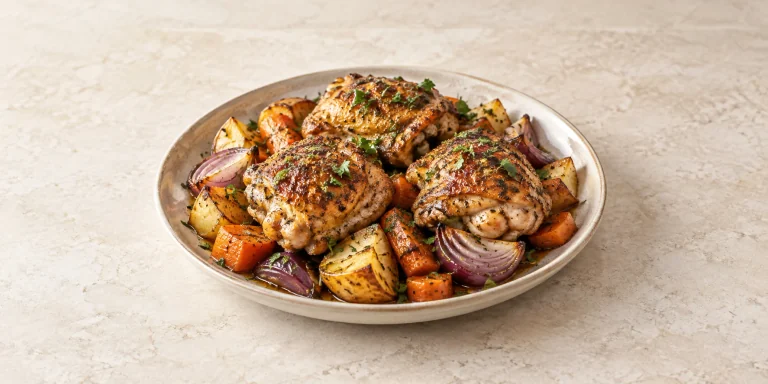
Boldo-Marinated Chicken with Roasted Vegetables
Chicken thighs marinated in a bold boldo tea reduction with garlic and cumin, roasted alongside seasonal vegetables for a rustic South American-inspired dish.
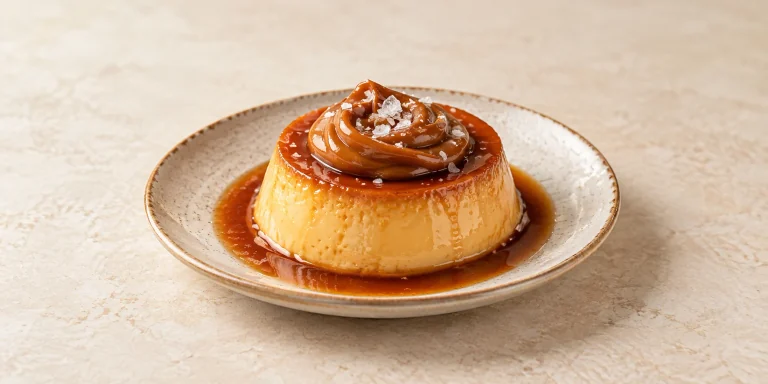
Boldo and Dulce de Leche Flan
A silky Argentine flan infused with boldo tea and crowned with dulce de leche—the tea's bitter edge perfectly balances the caramel sweetness.
- Free
- Sundays
- 2 min
Drink better tea, one Sunday at a time.
A fact for the table·A shop worth the trip·A better cup·Ritual & kit of the week·Tea recipes & drinks
Drinks with this tea
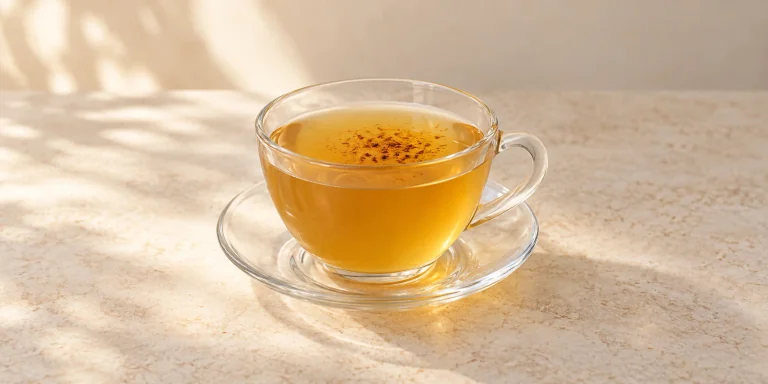
Boldo Tea with Ginger and Lemon: the Warm Recipe
How to make boldo tea with fresh ginger, lemon and honey: a 3-minute steep, exact quantities and the South American after-meal custom, step by step.
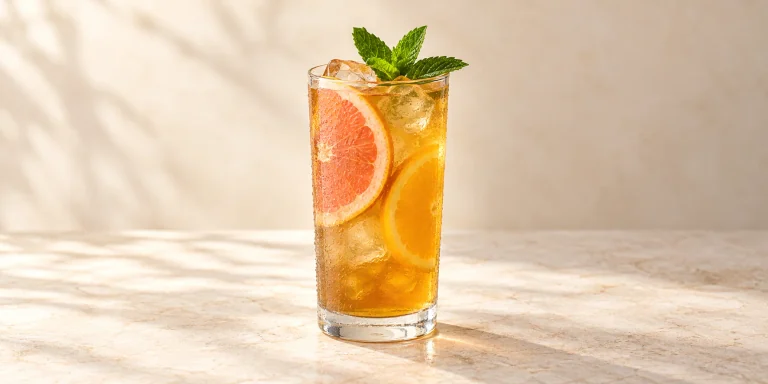
Iced Boldo Yerba Mate Blend with Citrus
Cold-brewed boldo blended with yerba mate, grapefruit and orange: a bitter-bright South American iced drink for a hot afternoon, with the overnight method step by step.
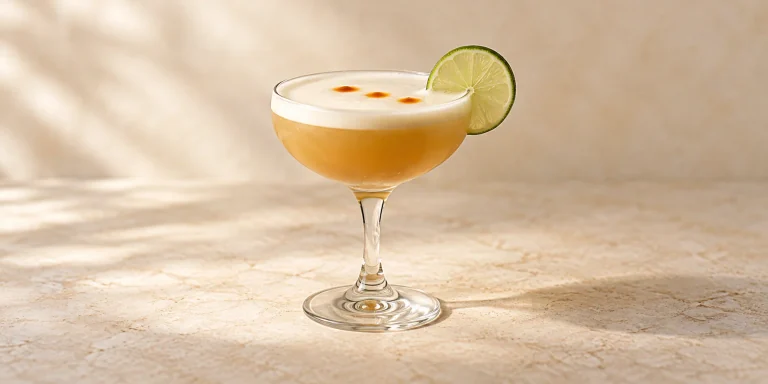
Boldo Amaro Sour
A bittersweet cocktail where boldo-infused pisco meets amaro and fresh lime—a South American twist on the classic sour that's herbaceous and dangerously smooth.