
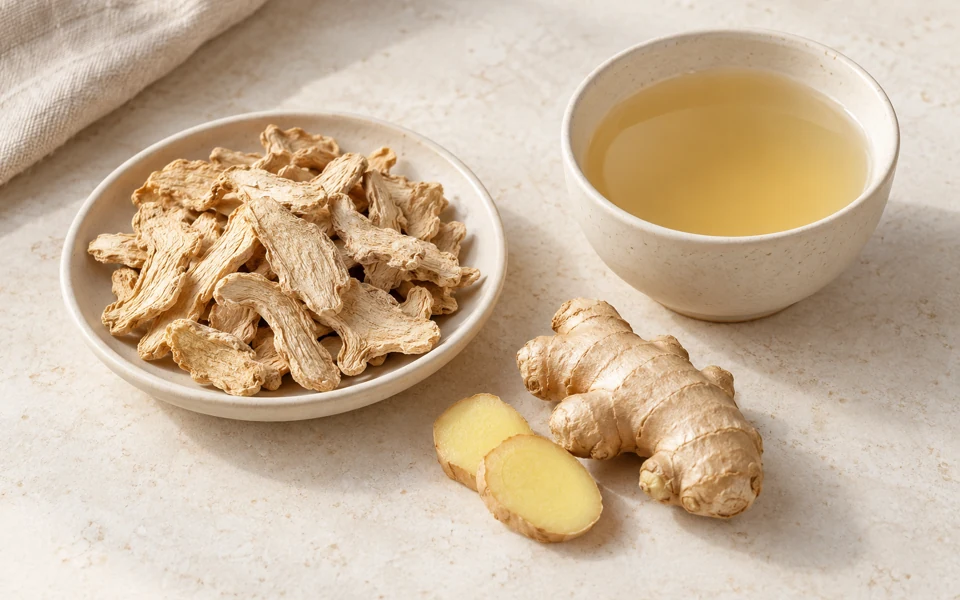
Ginger
Herbal infusion
4.7/5 · FindMeTea score
About this tea
Ginger (Zingiber officinale) is a pungent, warming rhizome that produces one of the most popular herbal tisanes in the world — a caffeine-free infusion, not a true tea. Its fiery kick comes from gingerols and shogaols, the compounds behind its heat and its resinous, citrus-peppery aroma. Cultivated for over 5,000 years across tropical Asia, ginger is a staple of Indian and Chinese kitchens and traditional apothecaries alike, with India, China, and Nigeria as the world's top producers.
How to brew: 95°C, 6 min, 2 g per cup.
Caffeine
None
How to brew
Flavor notes
spiced, spicy, warming
Often associated with
Warmth, Digestive comfort
Best time to enjoy
Morning, After a meal, Evening
Tags
Where to find it in United States
 Where to find it in United States
Near Columbus
- North Market SpicesOther Herbal infusion
Columbus · North Market, downtown
Spearmint, Crushed Leaves
from US$ 3.85· 1 oz
In storeOnline59 Spruce Street, Columbus, OH 43215See the shop → - Posh Teatime Co.Other Herbal infusion
Columbus · Franklinton, West Broad Street
Farmer's Market Fruit Blend
from US$ 16.95· 4 oz
In storeOnline1273 W Broad Street, Columbus, OH 43222See the shop → - Sencha Tea BarThis tea
Minneapolis · Uptown (also Madison, WI)
Ginger Root
from US$ 5.99· 2 oz
In storeOnline2601 Hennepin Ave S, Minneapolis, MN 55408See the shop → - Rishi TeaThis tea
Milwaukee headquarters; ships nationwide
Organic Ginger (loose, 1 lb)
US$ 30· 454 g
OnlineSee the shop → - Old City CoffeeSimilar
Philadelphia · Old City · Reading Terminal Market
Lemon Ginger Herbal
US$ 11· 4 oz
In storeOnline221 Church St, Philadelphia, PA 19106See the shop →
Origin & Production
Ginger originated in Maritime Southeast Asia and was among the first spices traded along ancient routes to Europe and Africa. India is the world's largest producer, with Kerala and Karnataka accounting for most output, followed closely by China's southern provinces. Nigeria has emerged as Africa's top ginger producer, with Kaduna State's volcanic highland soils yielding an especially pungent variety. The rhizome thrives in tropical and subtropical climates with rich, loamy soil and consistent rainfall.
Production process
Planting
Ginger is propagated vegetatively — small pieces of mature rhizome ('seed rhizomes') with growth buds are planted 5–10 cm deep in raised beds at the start of the monsoon season.
Growth & maturation
The plant grows for 8–10 months. As it matures, gingerol content increases. For tisane use, rhizomes are often harvested at 5–6 months ('young ginger') for a milder flavor, or at full maturity for maximum pungency.
Harvest
Rhizomes are carefully dug up by hand or with forks when the leaves turn yellow and begin to dry. The entire underground network of rhizomes is lifted, washed, and separated.
Drying & slicing
For dried ginger tisane, rhizomes are peeled, sliced thin (2–3 mm), and sun-dried or dehydrated at 55–60°C. During drying, gingerols convert to shogaols, intensifying the warming, peppery flavor.
Quality sorting
Dried slices are sorted by size, color, and aroma. Premium ginger for tisane has uniform golden-yellow slices with a strong, spicy fragrance and no signs of mold or discoloration.
- Free
- Sundays
- 2 min
Drink better tea, one Sunday at a time.
A fact for the table·A shop worth the trip·A better cup·Ritual & kit of the week·Tea fun facts
History & Tradition
Ginger's history as a culinary and medicinal spice spans over 5,000 years — from its origins in ancient India and China, through the spice trade routes, to the pharmacy shelves and supermarket aisles of today.
Ayurvedic origins in India
Ancient Ayurvedic texts describe ginger as 'vishwabhesaj' (universal medicine), and it remains one of the most used roots in Indian cooking and in the Ayurvedic tradition today.
Confucius & Chinese medicine
Confucius reportedly ate ginger with every meal. In Traditional Chinese Medicine, ginger ('shēng jiāng') was classified as a warming herb essential for balancing cold conditions and improving qi circulation.
Roman spice trade
Ginger became one of the most valuable commodities in Roman trade. Dioscorides prescribed it in De Materia Medica for warming the stomach and as an antidote to poisons.
Marco Polo & the spice routes
Marco Polo documented ginger cultivation in China and India during his travels. In medieval Europe, a pound of ginger was worth as much as a sheep, driving global exploration.
Europe writes ginger down
The European Medicines Agency's Committee on Herbal Medicinal Products adopted its first monograph on ginger rhizome in March 2012 — the document that sorts the medicinal uses of the powdered rhizome backed by clinical studies from those resting on long-standing traditional use. A revised version was adopted in May 2025.
What's in the cup
What the European monograph says
The EU herbal monograph on ginger rhizome lists prevention of nausea and vomiting in motion sickness as a well-established use of the powdered rhizome, at 1–2 g taken one hour before travel. Every other use it lists — from mild gastrointestinal complaints to minor joint pain — is filed as traditional, based on long-standing use alone. The monograph covers powder and tinctures in medicinal dosage forms, not a cup of infusion, and advises avoiding ginger medicinal products during pregnancy as a precaution.
Source: EMA/HMPC — EU herbal monograph on Zingiber officinale, rhizoma (2025)
What the evidence does and doesn't show
The US National Center for Complementary and Integrative Health puts it plainly: 'Most studies of ginger for motion sickness haven't shown it to be helpful', and ginger dietary supplements 'might be helpful for symptoms of knee osteoarthritis, but much of the research has been of poor quality'. Those studies test capsules and extracts at measured doses — not a mug of sliced root.
Gingerols, shogaols and heat
The bite of ginger comes from gingerols in the fresh rhizome. Drying turns part of them into shogaols, which taste sharper and more peppery — the reason dried slices and ground ginger brew a hotter, drier cup than fresh root, which is brighter and more citrusy.
Caffeine-free, any hour
Ginger is a rhizome, not a tea leaf, so an infusion of it carries no caffeine at all. That is why it turns up in late-evening cups and in blends meant for after dinner, and why it pairs so readily with lemon and honey, or with turmeric and cinnamon.
This isn't medical advice. If you have a specific condition, or you are pregnant or taking medication, check with a healthcare provider.
- Free
- Sundays
- 2 min
Drink better tea, one Sunday at a time.
A fact for the table·A shop worth the trip·A better cup·Ritual & kit of the week·Brew better
Grades & Varieties
Fresh ginger root slices
Thinly sliced fresh ginger root steeped in hot water. Produces the most aromatic, zesty infusion with high gingerol content. The flavor is bright, citrusy, and mildly spicy compared to dried preparations.
Best for
- ✓Maximum fresh aroma & flavor
- ✓Warming winter mug
- ✓Pairing with honey and lemon
Dried ginger slices
Sun-dried or dehydrated ginger slices with a more concentrated, peppery-warm flavor. During drying, gingerols convert to shogaols, which are up to twice as pungent, so the same amount of ginger brews a noticeably hotter cup.
Best for
- ✓Stronger warming infusion
- ✓Travel-friendly tisane
- ✓Blending with turmeric or cinnamon
Ginger powder (ground)
Finely ground dried ginger, often used in golden milk, chai blends, and quick infusions. Highest shogaol concentration, making it the most warming and pungent form. Dissolves partially, creating a slightly cloudy brew.
Best for
- ✓Golden milk (with turmeric)
- ✓Quick single-serve infusions
- ✓Smoothies & wellness shots
Did you know?
Ginger tea has been used as a health tonic for about 5,000 years; the plant was domesticated in Maritime Southeast Asia, and ancient texts from India, China, and the Middle East document its medicinal use.
Foods with this tea
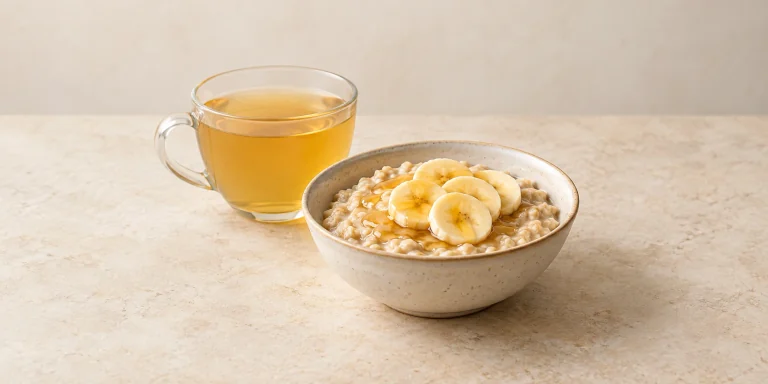
What to Eat with Ginger Tea
Ginger tea's bold, spicy warmth pairs beautifully with savory bites, citrus-kissed dishes, and rich comfort foods that match its fiery personality.
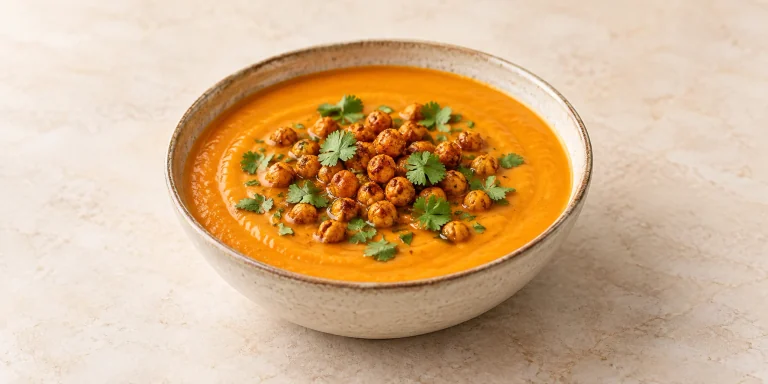
Ginger Tea Carrot Soup with Crispy Chickpeas
Sweet roasted carrots meet a bold ginger tea broth, blended silky smooth and crowned with crunchy spiced chickpeas.
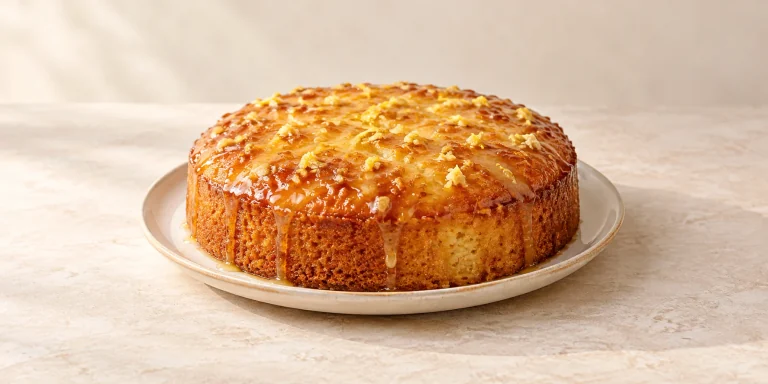
Ginger Tea Lemon Cake with Honey Glaze
A moist, zingy cake infused with brewed ginger tea and fresh lemon, finished with a warm honey-ginger glaze that soaks into every crumb.
- Free
- Sundays
- 2 min
Drink better tea, one Sunday at a time.
A fact for the table·A shop worth the trip·A better cup·Ritual & kit of the week·Tea recipes & drinks
Drinks with this tea
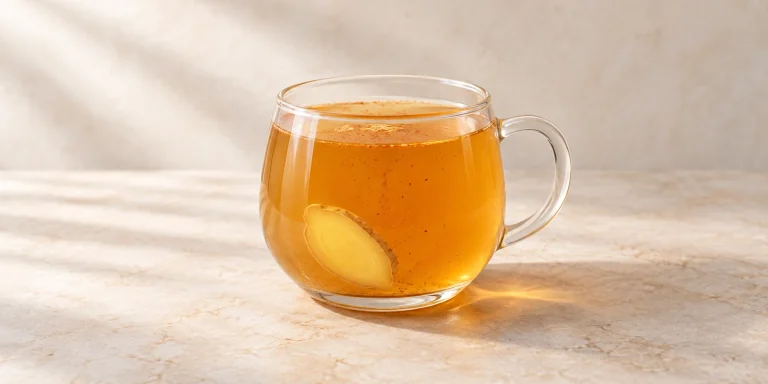
Strong Ginger Tea with Lemon, Honey and Cayenne
A small cup of strong ginger tea with fresh lemon, raw honey and a pinch of cayenne: sharp, hot and caffeine-free.
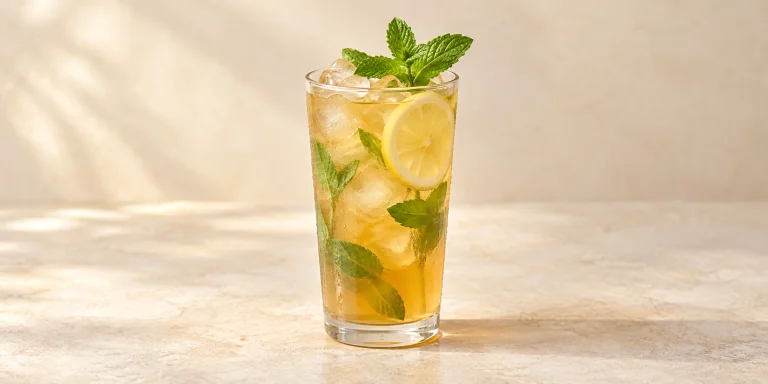
Iced Ginger Tea Lemonade with Mint
Spicy ginger tea meets tart lemonade and fresh mint over ice—a bold, refreshing cooler that bites back in the best way.
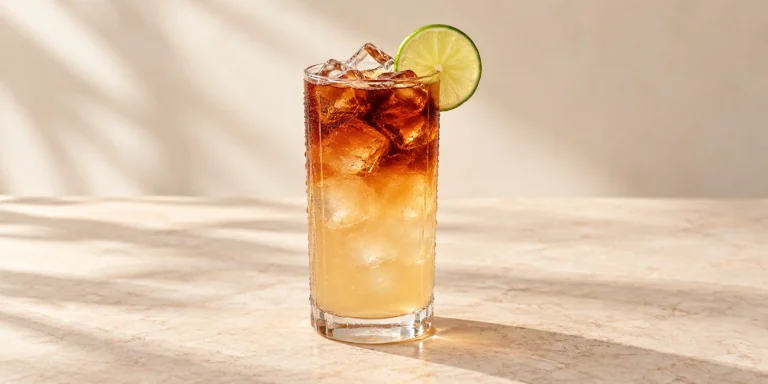
Ginger Tea Dark 'n' Stormy
A tea-twisted take on the classic Dark 'n' Stormy—dark rum meets ginger tea syrup and fresh lime for a spicy, boozy masterpiece.