
Rooibos
Rooibos
4.6/5 · FindMeTea score
About this tea
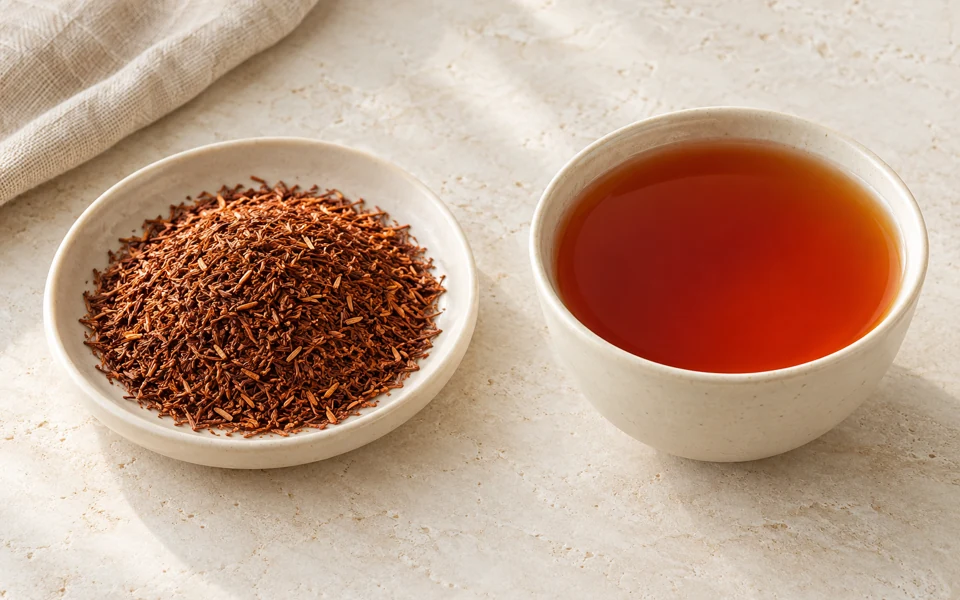
Rooibos (Aspalathus linearis) is a naturally caffeine-free herbal infusion that grows exclusively in the Cederberg mountain region of South Africa's Western Cape province. Known as "red bush" for its striking amber-red color when brewed, rooibos offers a naturally sweet, smooth flavor with notes of honey, vanilla, and light woodiness. Unlike true tea, rooibos contains no caffeine and is exceptionally low in tannins, making it gentle on the stomach and suitable for any time of day. Its unique antioxidant aspalathin, found in no other plant, has made rooibos the subject of growing scientific interest worldwide.
How to brew: 95°C, 5 min, 2.5 g per cup.
Caffeine
None
How to brew
Flavor notes
sweet, earthy, smooth
Often associated with
Relaxation, Caffeine-free
Best time to enjoy
Afternoon, Evening, Any time
Tags
Where to find it in United States
 Where to find it in United States
- MarketSpiceThis tea
Seattle · Pike Place Market
Pure African Redbush (Rooibos) Tea
from US$ 7.24· 4 oz
In storeOnline85 Pike St, Seattle, WA 98101See the shop → - T7 TEAThis tea
Dallas · Far North Dallas (showroom by appointment, local pickup)
Organic Rooibos
from US$ 8· 3 oz
In storeOnline4222 Trinity Mills Rd, Suite 220, Dallas, TX 75287See the shop → - Harney & SonsThis tea
New York · SoHo (ships nationwide)
Organic Rooibos (loose, 4 oz tin)
US$ 11· 4 oz
In storeOnline433 Broome StreetSee the shop → - Tippecanoe Herbs and ApothecaryThis tea
Milwaukee · Bay View, S Kinnickinnic Ave
Red Rooibos
US$ 2.75· 1 oz
In storeOnline2235 S Kinnickinnic Ave, Milwaukee, WI 53207See the shop → - Sencha Tea BarThis tea
Minneapolis · Uptown (also Madison, WI)
Rooibos
from US$ 3.49· 1 oz
In storeOnline2601 Hennepin Ave S, Minneapolis, MN 55408See the shop →
Origin & Production
Rooibos is endemic to a small area of the Cederberg mountain range, roughly 200 km north of Cape Town. The plant thrives only in this specific terroir: acidic, sandy, nutrient-poor soils at elevations of 450–900 meters, with hot dry summers, cold wet winters, and the unique fynbos biome climate. Attempts to cultivate rooibos in other regions — including Australia, China, and other parts of South Africa — have consistently failed. This extreme geographic specificity makes rooibos one of the most terroir-dependent plants commercially harvested, with approximately 500 farming families producing the world's entire supply.
Production process
Harvest
Rooibos branches are hand-cut or machine-harvested during the South African summer (January–March), when the needle-like leaves have reached peak maturity. Plants are cut to about 30 cm above ground to ensure regrowth.
Cutting & bruising
Harvested branches are transported to processing courts where they are machine-cut into uniform 2–4 mm pieces and bruised (rolled) to break cell walls, releasing enzymes that initiate the oxidation process.
Oxidation (fermentation)
For red rooibos, the cut leaves are heaped into rows on outdoor drying courts and moistened, then left to oxidize for 8–12 hours under the Cederberg sun. This enzymatic process turns the green leaves to deep red-brown and develops the characteristic sweet, honeyed flavor.
Sun-drying & grading
After oxidation, rooibos is spread thinly on drying courts and sun-dried to a moisture content of about 10%. It is then sieved, graded by cut size and quality, steam-pasteurized, and packaged.
- Free
- Sundays
- 2 min
Drink better tea, one Sunday at a time.
A fact for the table·A shop worth the trip·A better cup·Ritual & kit of the week·Tea fun facts
History & Tradition
Rooibos has journeyed from a wild-harvested Khoisan remedy to South Africa's most exported herbal product, gaining international recognition as a unique caffeine-free alternative to tea.
Khoisan traditional use
The indigenous Khoisan people of the Cederberg region were the first to harvest wild rooibos, cutting the needle-like leaves from Aspalathus linearis bushes and bruising them with hammers before fermenting and sun-drying — a method remarkably similar to today's production.
European botanical documentation
Swedish botanist Carl Thunberg, a student of Linnaeus, documented the Khoisan's use of rooibos during his travels in the Cape Colony, recording it as a pleasant, tea-like beverage used for health purposes.
Commercial cultivation begins
South African doctor and botanist Pieter le Fras Nortier, with farmer Benjamin Ginsberg, developed methods to germinate rooibos seeds commercially. Ginsberg, a descendant of Russian tea traders, recognized rooibos's commercial potential and began marketing it as "Mountain Tea."
International breakthrough
Rooibos exports surged as the health and wellness movement embraced its caffeine-free, antioxidant-rich profile. Japan became a major market after research highlighted aspalathin's unique properties. The South African Rooibos Council was formed to protect the industry.
EU geographical indication
The European Union granted rooibos a protected geographical indication (GI) — the first African product to receive this designation — legally ensuring that only rooibos grown in the Cederberg region can be sold under the name in the EU.
What's in the cup
Aspalathin, the rooibos compound
Rooibos carries aspalathin, a dihydrochalcone characteristic of the plant and the reason researchers keep coming back to it. On this page it is a matter of composition, not a promise: what you get in the cup is the Cederberg leaf, red from oxidation and naturally sweet, with nothing added.
Naturally caffeine-free
Rooibos is caffeine-free by nature — level 0 of 3 on our scale — with no decaffeination step, and it is low in tannins, so it stays smooth even when you forget the cup. Our catalogue brews it at 95 °C for about 5 minutes with 2.5 g per cup, and a few extra minutes rarely turn it bitter.
The last cup of the day, by custom
With no caffeine, rooibos is the classic evening cup: it takes milk and honey like a black tea, brews strong enough for a latte, and works iced. That is custom and flavour — we make no claim about what it does for your night.
- Free
- Sundays
- 2 min
Drink better tea, one Sunday at a time.
A fact for the table·A shop worth the trip·A better cup·Ritual & kit of the week·Brew better
Grades & Varieties
Red Rooibos (Oxidized)
The classic form — fully oxidized under the Cederberg sun, producing a deep reddish-amber infusion with a naturally sweet, honeyed flavor, light woodiness, and smooth, round body. The oxidation process converts aspalathin into orientin and other flavonoids.
Best for
- ✓Everyday drinking
- ✓Evening relaxation
- ✓With milk and honey
Green Rooibos (Unoxidized)
Unoxidized rooibos that is quickly dried after cutting to prevent fermentation, retaining a lighter, more herbaceous flavor with grassy and mineral notes. Contains up to 10x more aspalathin than red rooibos due to minimal oxidation.
Best for
- ✓Maximum antioxidant intake
- ✓Light, grassy flavor preference
- ✓Health-focused drinking
Long-Cut Premium
Longer-cut leaves and stems (5–8 mm) from select Cederberg farms, producing a more complex, nuanced cup with floral and caramel notes. Less common and more expensive than standard fine-cut rooibos.
Best for
- ✓Connoisseur tasting
- ✓Gongfu-style brewing
- ✓Special occasions
Did you know?
Rooibos only grows in South Africa's Cederberg region; its name was legally protected in South Africa in 2013, and in 2021 'Rooibos' became the first African food to receive the EU's protected designation of origin.
Foods with this tea
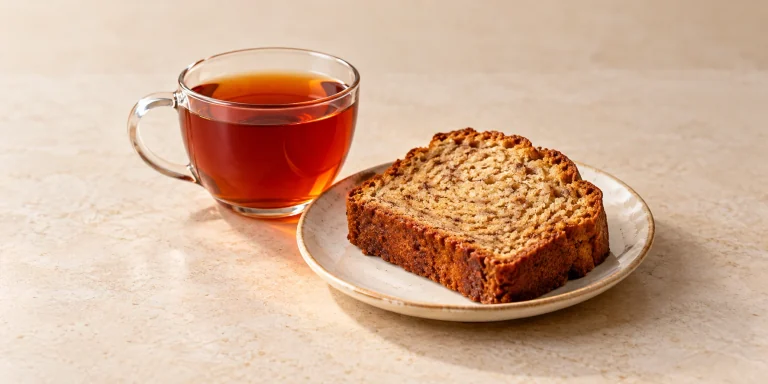
What to Eat with Rooibos Tea
Rooibos' naturally sweet, nutty profile pairs beautifully with warm spices, caramel flavors, dried fruit, and creamy cheeses.
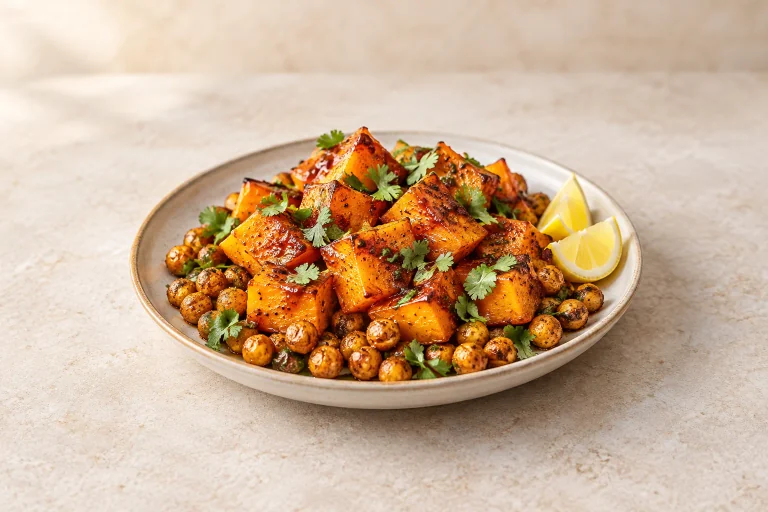
Rooibos-Glazed Butternut Squash with Spiced Chickpeas
Butternut squash roasted in a rooibos-honey glaze, served over a bed of spiced chickpeas and fresh herbs—warm, earthy, and deeply satisfying.
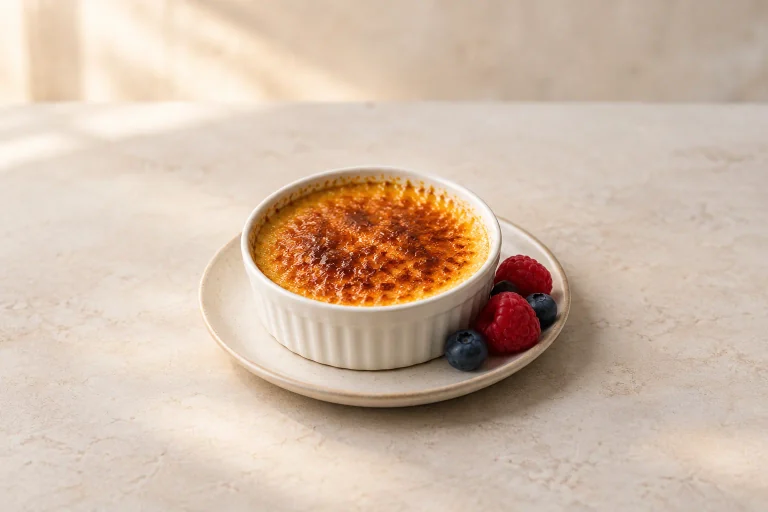
Rooibos Crème Brûlée
A velvety crème brûlée infused with rooibos tea—its natural vanilla and honey notes create the most elegant, caffeine-free custard.
- Free
- Sundays
- 2 min
Drink better tea, one Sunday at a time.
A fact for the table·A shop worth the trip·A better cup·Ritual & kit of the week·Tea recipes & drinks
Drinks with this tea
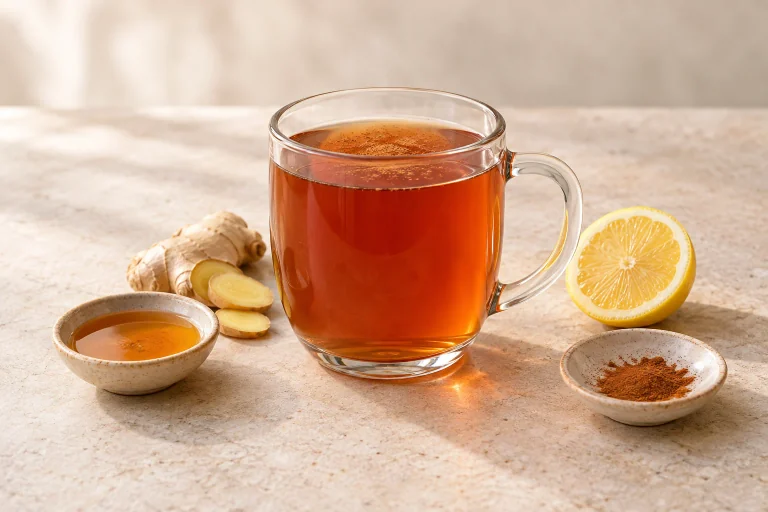
Rooibos with Ginger, Lemon and Honey
A caffeine-free cup of rooibos with fresh ginger, lemon, and raw honey: naturally sweet, lightly spicy, and good at any hour.

Iced Rooibos Vanilla Latte
A creamy, caffeine-free iced latte made with cold-brewed rooibos, vanilla, and oat milk—sweet, smooth, and impossibly refreshing.

Rooibos Amaretto Sour
A twist on the classic Amaretto Sour using rooibos-infused bourbon, amaretto, and fresh lemon—nutty, sweet, and irresistibly smooth.