
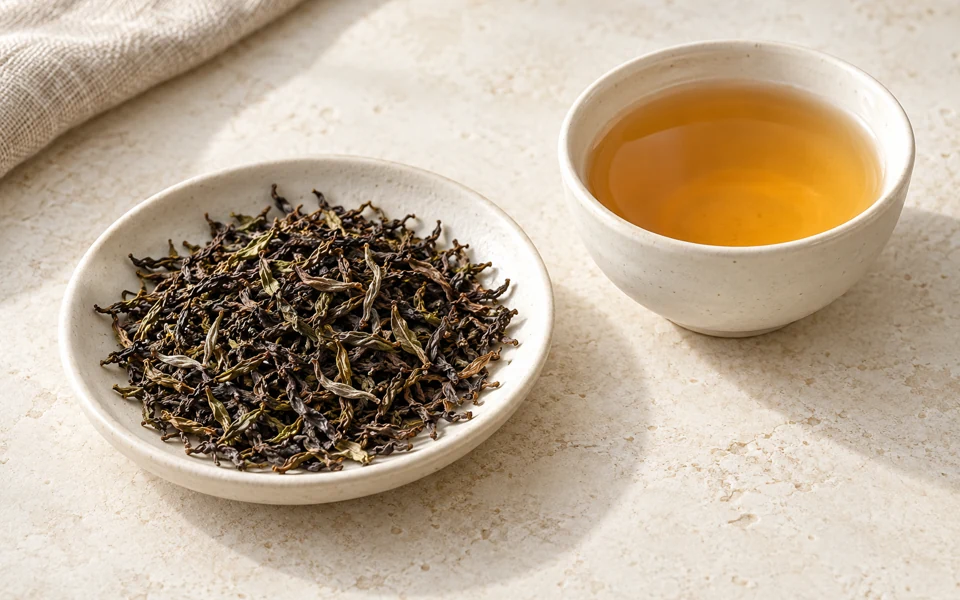
Darjeeling
Black tea
4.7/5 · FindMeTea score
About this tea
Darjeeling tea, often called the 'Champagne of Teas,' is a prestigious black tea grown in the misty foothills of the Himalayas in West Bengal, India. Renowned for its delicate muscatel grape flavor, light amber liquor, and complex floral-fruity aroma, Darjeeling is one of the few teas in the world with a Geographical Indication (GI) status. Its character shifts dramatically across seasonal flushes — from the light, green-tinged First Flush of spring to the rich, muscatel-laden Second Flush of summer.
How to brew: 90°C, 3 min, 2.5 g per cup.
Caffeine
High
How to brew
Flavor notes
floral, fruity, delicate
Often associated with
Clarity, Moderate energy
Best time to enjoy
Morning, Early afternoon
Tags
Where to find it in United States
 Where to find it in United States
Near Columbus
- North Market SpicesOther Black tea
Columbus · North Market, downtown
Lapsang Souchong
from US$ 11· 2 oz
In storeOnline59 Spruce Street, Columbus, OH 43215See the shop → - Posh Teatime Co.Other Black tea
Columbus · Franklinton, West Broad Street
English Breakfast Tea Sachets
from US$ 9.95· 10 sachets
In storeOnline1273 W Broad Street, Columbus, OH 43222See the shop → - McNulty's Tea & CoffeeThis tea
New York · Greenwich Village
Darjeeling Supreme (4 oz bag)
from US$ 12· 4 oz
In storeOnline109 Christopher StreetSee the shop → - Old City CoffeeThis tea
Philadelphia · Old City · Reading Terminal Market
Darjeeling, Organic
US$ 12· 4 oz
In storeOnline221 Church St, Philadelphia, PA 19106See the shop → - Harney & SonsThis tea
New York · SoHo (ships nationwide)
Organic Darjeeling (loose, 4 oz tin)
from US$ 16· 4 oz
In storeOnline433 Broome StreetSee the shop →
Origin & Production
The Darjeeling district contains 87 tea estates spread across steep, misty mountain slopes between 600 and 2,000 meters elevation. The unique combination of high altitude, cool temperatures, abundant rainfall, and loamy soil creates a terroir that cannot be replicated elsewhere. Notable estates include Makaibari, Castleton, Margaret's Hope, and Thurbo — each producing teas with distinctive character influenced by their specific microclimate.
Production process
Selective plucking
Only the terminal bud and two youngest leaves are hand-plucked — the 'two leaves and a bud' standard that defines Darjeeling quality.
Withering
Leaves are spread on withering racks for 14–16 hours in the cool mountain air, gently losing 60–70% of their moisture.
Rolling
Withered leaves are rolled in orthodox rolling machines, rupturing cell walls to initiate enzymatic oxidation while preserving the whole-leaf character.
Partial oxidation
Unlike most black teas, Darjeeling is often only 60–90% oxidized, giving it a lighter body and preserving delicate floral and muscatel notes.
Firing
Oxidized leaves are dried at controlled temperatures to halt oxidation and lock in the characteristic Darjeeling aroma and flavor.
- Free
- Sundays
- 2 min
Drink better tea, one Sunday at a time.
A fact for the table·A shop worth the trip·A better cup·Ritual & kit of the week·Tea fun facts
History & Tradition
Darjeeling tea owes its existence to British colonial ambition — an attempt to break China's monopoly on tea that resulted in one of the world's most celebrated terroir teas.
Dr. Campbell's experiment
Dr. Archibald Campbell, a British civil surgeon stationed in Darjeeling, planted Chinese tea seeds (Camellia sinensis var. sinensis) in his garden as an experiment, finding they thrived in the Himalayan climate.
Commercial estates established
The British government established commercial tea nurseries and commercial development began in 1856; by 1866 there were around 39 operating tea estates in Darjeeling producing tea for export to London.
Darjeeling Himalayan Railway
Construction began on the famous narrow-gauge 'Toy Train' railway, which opened to Darjeeling in July 1881, making it feasible to transport tea from the remote mountain estates to Kolkata's auction houses.
GI certification
Darjeeling tea received India's first Geographical Indication (GI) tag, legally protecting the name so only tea grown in the 87 registered gardens of Darjeeling can be sold as 'Darjeeling.'
What's in the cup
Caffeine: level 3 of 3
Darjeeling sits at level 3 on our caffeine scale, the same step as Assam and English Breakfast. The catalog brews it at 90 °C for 3 minutes with 2.5 g per cup — a touch cooler and shorter than most black teas, to keep the delicate leaf from turning harsh.
Partly oxidized, on the palate
Because Darjeeling is often only 60–90% oxidized, the leaf keeps some of the catechins of a green tea alongside the theaflavins of a black one. In the cup that reads as a lighter body, a brighter color and a touch more astringency than a fully oxidized Assam — a matter of flavor, not of effect.
Muscatel, the second-flush signature
The grape-like 'muscatel' note is the mark of the summer harvest, May–June, and the reason the second flush carries the classic Darjeeling reputation. First flush is greener and more floral; autumnal is darker and rounder.
Straight, by custom
First and second flush are drunk without milk: the liquor is too light to carry it and the aromatics are the whole point. The autumnal flush is the one that takes a splash, and the one most estates sell for everyday drinking.
- Free
- Sundays
- 2 min
Drink better tea, one Sunday at a time.
A fact for the table·A shop worth the trip·A better cup·Ritual & kit of the week·Brew better
Grades & Varieties
First Flush (Spring)
Harvested in March–April after winter dormancy. Light, bright, and floral with a greenish-gold liquor. Highly prized and commands the highest prices at auction.
Best for
- ✓Drinking straight without milk
- ✓Afternoon tea
- ✓Collectors and connoisseurs
Second Flush (Summer)
Harvested in May–June. The most iconic Darjeeling character — amber liquor with the famous muscatel grape flavor, fuller body, and a lingering sweet finish.
Best for
- ✓Classic Darjeeling experience
- ✓After meals
- ✓Gift-worthy teas
Autumnal Flush
Harvested in October–November. Darker, fuller, and more mellow than earlier flushes with a copper liquor and subdued sweetness. Excellent value for everyday drinking.
Best for
- ✓Everyday drinking
- ✓With a touch of milk
- ✓Late-afternoon cup
Did you know?
Darjeeling is called the "Champagne of Teas" for its place-specific terroir; since 2004 it has had Geographical Indication status, making it India's first GI-tagged product.
Foods with this tea
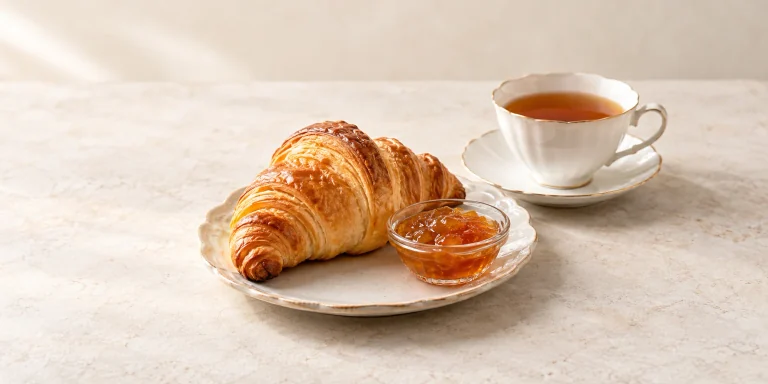
What to Eat with Darjeeling Tea
Darjeeling's delicate muscatel grape notes call for light, refined pairings—think finger sandwiches, stone fruit, and mild cheeses.
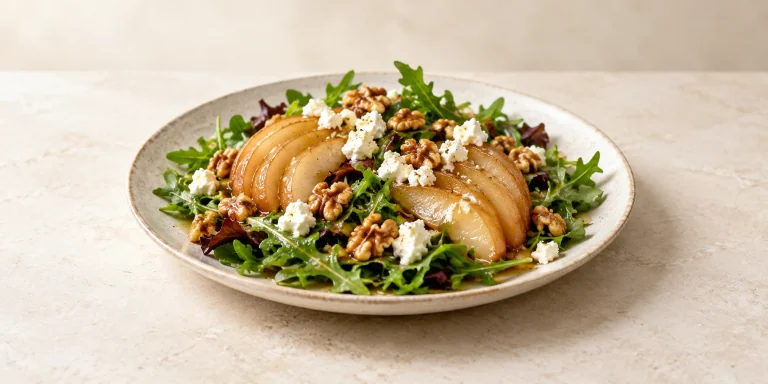
Darjeeling-Poached Pears with Goat Cheese Salad
Pears poached in Darjeeling tea become silky and fragrant, then served over mixed greens with creamy goat cheese and walnuts.
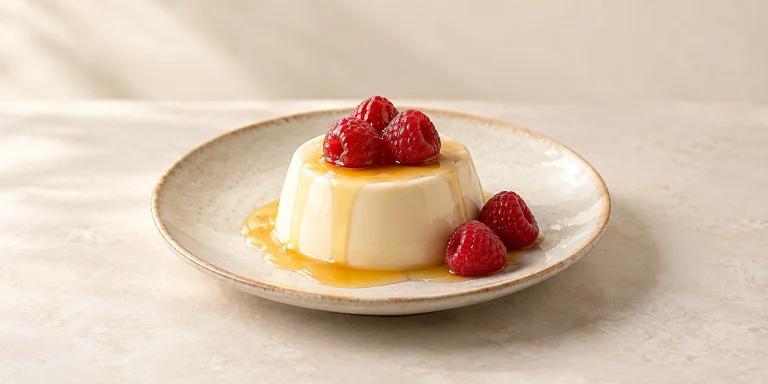
Darjeeling Honey Panna Cotta
A silky panna cotta infused with Darjeeling tea and wildflower honey—light, elegant, and effortlessly impressive.
- Free
- Sundays
- 2 min
Drink better tea, one Sunday at a time.
A fact for the table·A shop worth the trip·A better cup·Ritual & kit of the week·Tea recipes & drinks
Drinks with this tea
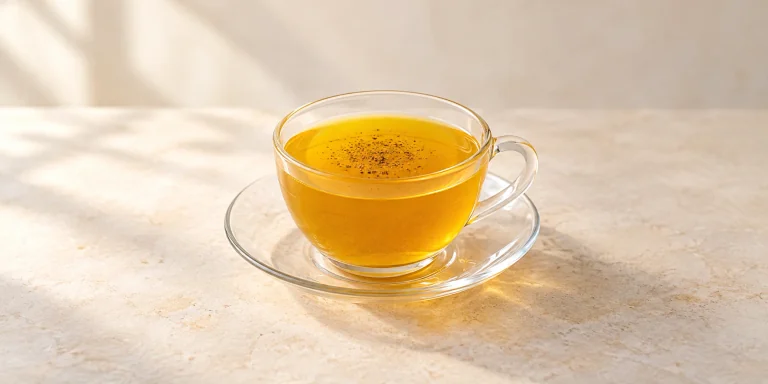
Darjeeling with Turmeric, Black Pepper and Honey
Darjeeling brewed at 85°C with ground turmeric, a pinch of black pepper, honey and a squeeze of lemon: golden, warm and lightly spiced.
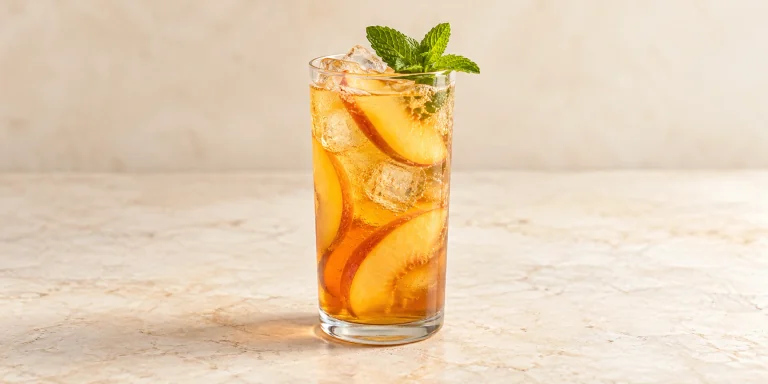
Sparkling Darjeeling Peach Iced Tea
Cold-brewed Darjeeling meets ripe peach and sparkling water for a fizzy, fruit-forward summer refresher.
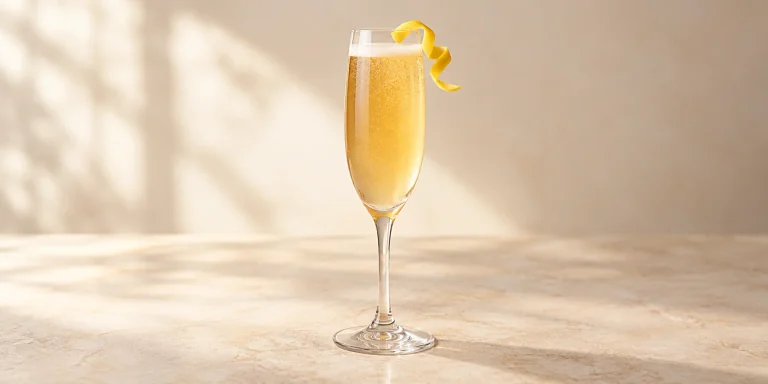
Darjeeling Champagne Cocktail
A refined cocktail pairing Darjeeling-infused vodka with Champagne and elderflower—as elegant as the tea itself.