
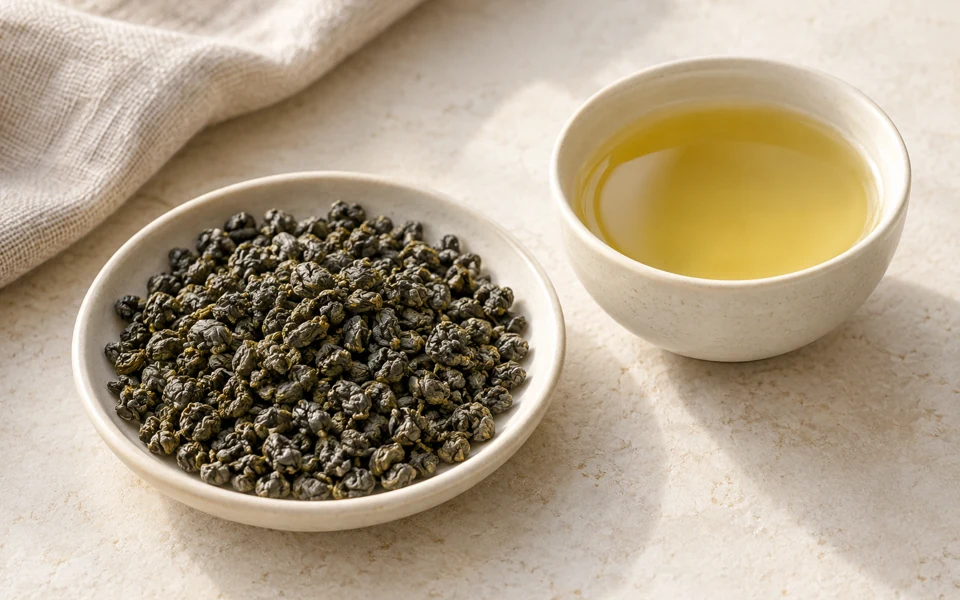
Gunpowder
Green tea
4.4/5 · FindMeTea score
About this tea
Gunpowder green tea is a Chinese green tea with a distinctive appearance: each leaf is tightly hand-rolled into a small, compact pellet that resembles grains of gunpowder — a name given by British traders in the 17th century. Originating in China's Zhejiang Province, gunpowder tea is pan-fired rather than steamed, yielding a bold, slightly smoky flavor with a clean astringent finish. Its tightly rolled form gives it one of the longest shelf lives of any green tea, and it remains one of China's most widely exported teas, forming the base of North Africa's beloved mint tea.
How to brew: 85°C, 2 min, 2 g per cup.
Caffeine
Medium
How to brew
Flavor notes
smoky, earthy, intense
Often associated with
Moderate energy, Focus
Best time to enjoy
Mid-morning, Early afternoon
Tags
Where to find it in United States
 Where to find it in United States
Near Columbus
- Posh Teatime Co.Other Green tea
Columbus · Franklinton, West Broad Street
Jasmine Pearl Green Tea
from US$ 14.95· 4 oz
In storeOnline1273 W Broad Street, Columbus, OH 43222See the shop → - The Head NutThis tea
Philadelphia · Reading Terminal Market
Pinhead Gunpowder China Green Tea
from US$ 1.99· 1 oz
In storeOnline51 N 12th St, Philadelphia, PA 19107See the shop → - Tippecanoe Herbs and ApothecaryThis tea
Milwaukee · Bay View, S Kinnickinnic Ave
Tea - Gunpowder Green
US$ 2.50· 1 oz
In storeOnline2235 S Kinnickinnic Ave, Milwaukee, WI 53207See the shop → - Seattle Best TeaThis tea
Seattle · Chinatown-International District (also University District)
Gun Powder Green Tea
from US$ 45· 1 lb
In storeOnline506 S King St, Seattle, WA 98104See the shop → - McNulty's Tea & CoffeeThis tea
New York · Greenwich Village
Green Gunpowder Pinhead (4 oz bag)
from US$ 12· 4 oz
In storeOnline109 Christopher StreetSee the shop →
Origin & Production
Gunpowder tea originated in Zhejiang Province during the Tang Dynasty, with the city of Shaoxing and surrounding areas being the traditional heartland of production. Today, Zhejiang remains the primary source for premium gunpowder, while Anhui, Hunan, and Guangdong provinces also produce large volumes. Significant production also occurs in Taiwan, where it is known as 'pearl tea,' as well as in Sri Lanka.
Production process
Harvest
Young tea leaves and buds are plucked in spring. Higher grades use only the bud and first two leaves; lower grades may include larger, more mature leaves.
Withering & pan-firing
Leaves are briefly withered, then heated in large woks or rotating drums to halt oxidation. Pan-firing gives gunpowder its characteristic slightly toasty, smoky notes — unlike the grassy sweetness of steamed Japanese teas.
Rolling into pellets
While still warm and pliable, leaves are rolled into tight, round pellets either by hand (for premium grades) or by machine. The tighter the roll, the higher the quality and the longer the tea stays fresh.
Final drying
The rolled pellets are dried to lock in flavor and reduce moisture to around 3–5%. The compact shape protects the leaves from breakage and oxidation, giving gunpowder an exceptional shelf life.
- Free
- Sundays
- 2 min
Drink better tea, one Sunday at a time.
A fact for the table·A shop worth the trip·A better cup·Ritual & kit of the week·Tea fun facts
History & Tradition
Gunpowder tea has been traded for over a millennium and played a pivotal role in China's tea export history, becoming an essential ingredient in North African tea culture.
Tang Dynasty origins
The rolling of tea leaves into pellet form begins during the Tang Dynasty in Zhejiang Province, originally as a practical measure to preserve tea for long trade journeys along the Silk Road.
British traders name it 'gunpowder'
European traders — particularly the British — begin importing this rolled tea and name it 'gunpowder' because the small, dark pellets resemble the lead shot used in muskets of the era.
North African mint tea tradition
When British merchants lost access to Slavic markets during the Crimean War (1853–1856), they redirected gunpowder tea stocks to Morocco. The Moroccans blended it with fresh spearmint and sugar, creating the iconic Maghrebi mint tea still served today.
Global staple
Gunpowder remains one of China's most exported green teas. It is the standard base for mint tea across Morocco, Algeria, Tunisia, and much of West Africa — consumed daily by millions.
What's in the cup
Potent antioxidants
The tight rolling preserves catechins (EGCG, EGC) exceptionally well. Gunpowder tea retains high polyphenol levels even after long storage, making it a reliable source of antioxidant protection.
Higher caffeine content
Gunpowder tea tends to have slightly more caffeine than other green teas (~35–45 mg per cup) because the compact pellets release their compounds intensely. This makes it an effective morning energizer.
Metabolism & fat oxidation
The combination of caffeine and EGCG in gunpowder tea has been shown in studies to increase metabolic rate and enhance fat oxidation, particularly when consumed before physical activity.
Cholesterol management
Regular green tea consumption is associated with reduced total and LDL cholesterol. A meta-analysis in the American Journal of Clinical Nutrition found green tea catechins lowered LDL by an average of 2.19 mg/dL.
Mental alertness
Contains L-theanine alongside its caffeine content, promoting focused attention without anxiety. The slightly higher caffeine makes it particularly effective for concentration during work or study.
- Free
- Sundays
- 2 min
Drink better tea, one Sunday at a time.
A fact for the table·A shop worth the trip·A better cup·Ritual & kit of the week·Brew better
Grades & Varieties
Temple of Heaven (premium)
The highest commercial grade of gunpowder — small, tightly rolled, shiny pellets made from young spring buds. Produces a smooth, nuanced cup with layers of toasty sweetness, minimal bitterness, and a jade-green liquor.
Best for
- ✓Drinking straight
- ✓Premium mint tea
- ✓Gongfu brewing
Pinhead (fine)
Small, uniform pellets with good density. A step below Temple of Heaven but still high quality, with a bold, clean flavor and pleasant smokiness. The most common grade in specialty tea shops.
Best for
- ✓Daily drinking
- ✓Moroccan-style mint tea
- ✓Iced tea
Standard (common)
Larger, looser pellets made from more mature leaves. Bolder and more astringent flavor, sometimes with a noticeable smokiness. Widely used in commercial blends and teabags, and as the base for everyday North African mint tea.
Best for
- ✓Moroccan mint tea
- ✓Budget-friendly daily tea
- ✓Strong brewing
Did you know?
Gunpowder tea's Chinese name "Zhu Cha" means "pearl tea"; the tightly rolled pellet shape is traditionally said to have helped preserve flavor on long overland trade routes.
Foods with this tea
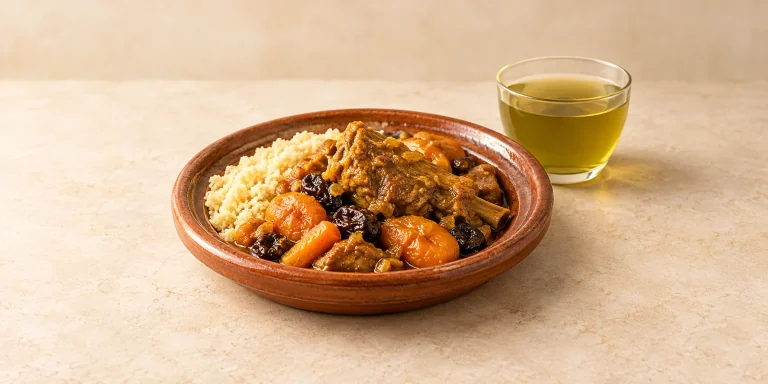
What to Eat with Gunpowder Green Tea
Gunpowder green tea's bold, slightly smoky character and minty freshness pair beautifully with robust flavors—think grilled meats, spiced dishes, and North African cuisine.
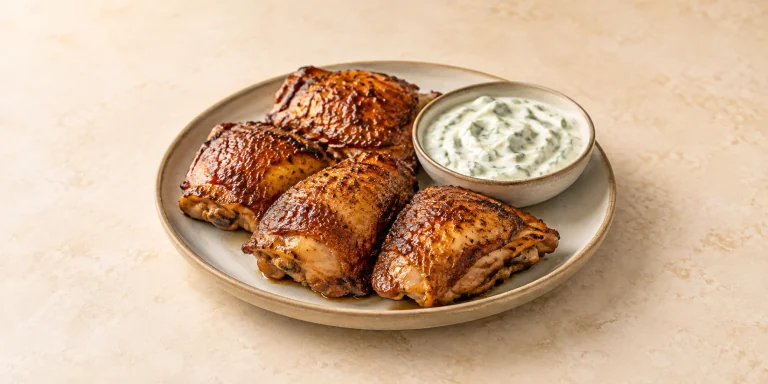
Gunpowder Tea-Smoked Chicken with Mint Yogurt
Chicken thighs smoked with Gunpowder green tea leaves become incredibly aromatic, served with a cooling mint yogurt that echoes the tea's own freshness.
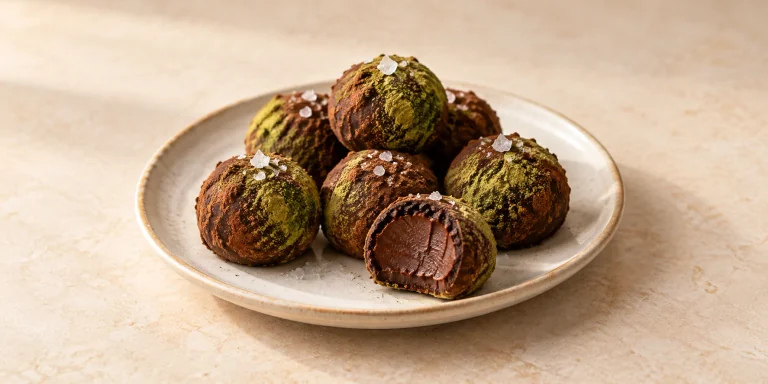
Gunpowder Green Tea and Dark Chocolate Truffles
Intense dark chocolate truffles infused with Gunpowder green tea—smoky, bittersweet, and dusted with matcha for a striking finish.
- Free
- Sundays
- 2 min
Drink better tea, one Sunday at a time.
A fact for the table·A shop worth the trip·A better cup·Ritual & kit of the week·Tea recipes & drinks
Drinks with this tea
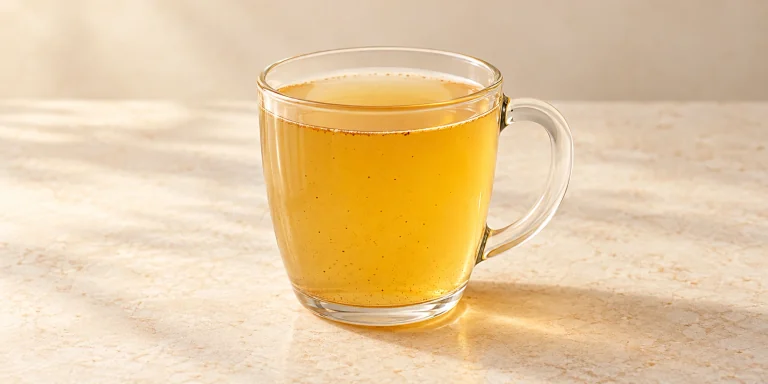
Gunpowder Green Tea with Ginger, Lemon and Honey
Bold Gunpowder green tea with fresh ginger, lemon and raw honey: smoky, bright and sharply peppery, served warm.

Iced Moroccan Mint Gunpowder Tea
The classic Moroccan mint tea reimagined as a refreshing iced drink—bold Gunpowder green tea with fresh spearmint, honey, and a splash of orange blossom water.
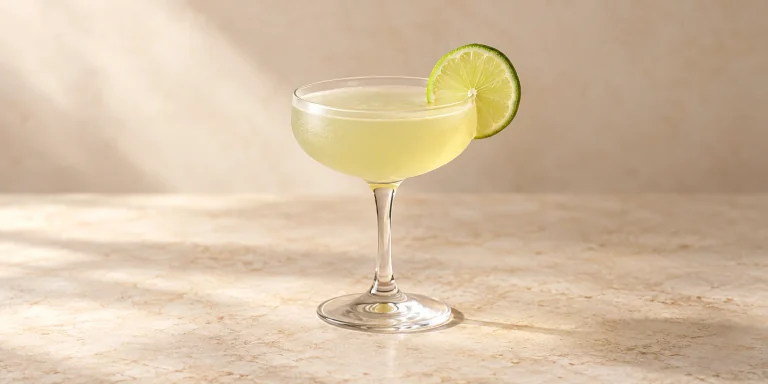
Gunpowder Tea Smoky Gimlet
A smoky twist on the classic gimlet—gin infused with Gunpowder green tea, fresh lime, and a hint of mint for a cocktail with real character.