
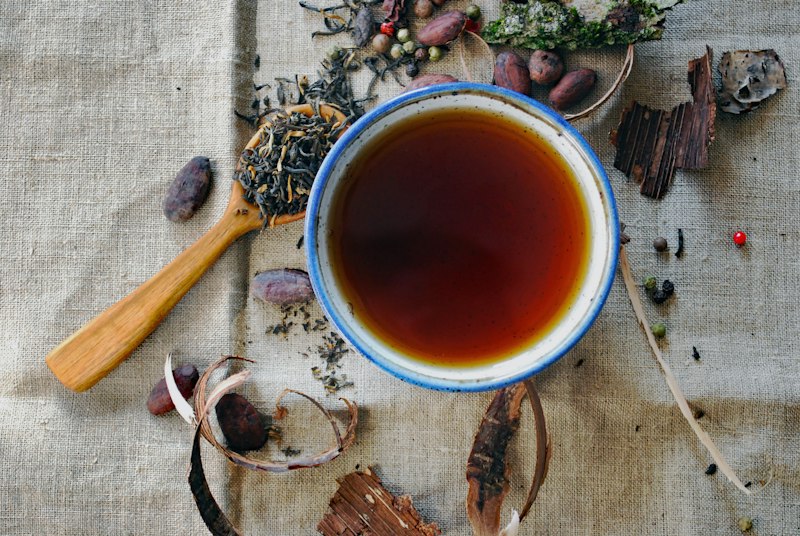
Ginger
Herbal infusion
4.7/5 · FindMeTea score
About this tea
Ginger (Zingiber officinale) is a pungent, warming rhizome that produces one of the most popular herbal tisanes in the world — a caffeine-free infusion, not a true tea. Its fiery kick comes from gingerols and shogaols, bioactive compounds with potent anti-inflammatory and antiemetic properties. Cultivated for over 5,000 years across tropical Asia, ginger remains a cornerstone of Ayurvedic, Traditional Chinese Medicine, and modern integrative health, with India, China, and Nigeria as the world's top producers.
How to brew: 95°C, 6 min, 2 g per cup.
Caffeine
None
How to brew
Flavor notes
spiced, spicy, warming
Often associated with
Warmth, Digestive comfort
Best time to enjoy
Morning, After a meal, Evening
Tags
Where to find it in United States
 Where to find it in United States
- This tea
Rishi Tea
Organic Ginger (loose, 1 lb)
US$ 30· 454 g
OnlineGo to shop → - Similar
Old City Coffee
Philadelphia · Old City · Reading Terminal Market
Lemon Ginger Herbal
US$ 11· 4 oz
In storeOnline221 Church St, Philadelphia, PA 19106Go to shop → - Other Herbal infusion
Harney & Sons
New York · SoHo (ships nationwide)
Chamomile, Egyptian flowers (loose, 1.5 oz tin)
US$ 6.60· 1.5 oz
In storeOnline433 Broome StreetGo to shop → - Other Herbal infusion
McNulty's Tea & Coffee
New York · Greenwich Village
Lavender (2 oz tin)
from US$ 13.95· 2 oz
In storeOnline109 Christopher StreetGo to shop → - Other Herbal infusion
Chado Tea Room
Los Angeles · Downtown (Little Tokyo) and Hollywood; also Pasadena, Torrance
Peppermint
US$ 14.38· 4 oz
In storeOnline369 East 1st StreetGo to shop →
Prices checked by us on Sep 6, 2026; they may change.
No shop pays to appear here — we list what we verified ourselves.
Know a shop that sells it? Tell usOrigin & Production
Ginger originated in Maritime Southeast Asia and was among the first spices traded along ancient routes to Europe and Africa. India is the world's largest producer, with Kerala and Karnataka accounting for most output, followed closely by China's southern provinces. Nigeria has emerged as Africa's top ginger producer, with Kaduna State's volcanic highland soils yielding an especially pungent variety. The rhizome thrives in tropical and subtropical climates with rich, loamy soil and consistent rainfall.
Production process
Planting
Ginger is propagated vegetatively — small pieces of mature rhizome ('seed rhizomes') with growth buds are planted 5–10 cm deep in raised beds at the start of the monsoon season.
Growth & maturation
The plant grows for 8–10 months. As it matures, gingerol content increases. For tisane use, rhizomes are often harvested at 5–6 months ('young ginger') for a milder flavor, or at full maturity for maximum pungency.
Harvest
Rhizomes are carefully dug up by hand or with forks when the leaves turn yellow and begin to dry. The entire underground network of rhizomes is lifted, washed, and separated.
Drying & slicing
For dried ginger tisane, rhizomes are peeled, sliced thin (2–3 mm), and sun-dried or dehydrated at 55–60°C. During drying, gingerols convert to shogaols, intensifying the warming, peppery flavor.
Quality sorting
Dried slices are sorted by size, color, and aroma. Premium ginger for tisane has uniform golden-yellow slices with a strong, spicy fragrance and no signs of mold or discoloration.
History & Tradition
Ginger's history as a medicinal and culinary powerhouse spans over 5,000 years — from its origins in ancient India and China through the spice trade routes to becoming one of the most researched natural remedies in modern medicine.
Ayurvedic origins in India
Ancient Ayurvedic texts describe ginger as 'vishwabhesaj' (universal medicine). It was prescribed for digestive issues, joint pain, and respiratory ailments — uses that persist in Indian medicine today.
Confucius & Chinese medicine
Confucius reportedly ate ginger with every meal. In Traditional Chinese Medicine, ginger ('shēng jiāng') was classified as a warming herb essential for balancing cold conditions and improving qi circulation.
Roman spice trade
Ginger became one of the most valuable commodities in Roman trade. Dioscorides prescribed it in De Materia Medica for warming the stomach and as an antidote to poisons.
Marco Polo & the spice routes
Marco Polo documented ginger cultivation in China and India during his travels. In medieval Europe, a pound of ginger was worth as much as a sheep, driving global exploration.
FDA-recognized antiemetic research
A comprehensive meta-analysis published in the Journal of the American Board of Family Medicine confirmed ginger's efficacy in reducing nausea and vomiting, supporting its use in clinical settings.
Health Benefits
Anti-nausea powerhouse
Gingerols and shogaols act on serotonin 5-HT3 receptors in the gut, the same target as the prescription antiemetic ondansetron. Clinical trials confirm ginger reduces morning sickness, motion sickness, and chemotherapy-induced nausea.
Anti-inflammatory action
6-gingerol inhibits COX-2 and iNOS enzymes, reducing inflammatory prostaglandins. A study in Arthritis & Rheumatism found ginger extract reduced knee pain in osteoarthritis patients by 40%.
Thermogenic metabolism boost
Gingerols stimulate thermogenesis — the body's heat-producing process — which can increase caloric expenditure. Research in Metabolism journal showed ginger enhanced the thermic effect of food.
Immune support
Fresh ginger contains potent antimicrobial compounds that inhibit the growth of bacteria like Salmonella and E. coli. Gingerols also support the body's innate immune response to respiratory infections.
Cognitive protection
6-shogaol has demonstrated neuroprotective effects in preclinical research, reducing oxidative stress in brain cells and potentially slowing age-related cognitive decline.
Blood sugar regulation
A randomized controlled trial in the Iranian Journal of Pharmaceutical Research found that 2g of ginger powder daily significantly reduced fasting blood sugar and HbA1c in type 2 diabetes patients.
Grades & Varieties
Fresh ginger root slices
Thinly sliced fresh ginger root steeped in hot water. Produces the most aromatic, zesty infusion with high gingerol content. The flavor is bright, citrusy, and mildly spicy compared to dried preparations.
Best for
- ✓Maximum fresh aroma & flavor
- ✓Cold & flu relief brew
- ✓Pairing with honey and lemon
Dried ginger slices
Sun-dried or dehydrated ginger slices with a more concentrated, peppery-warm flavor. During drying, gingerols convert to shogaols, which are up to twice as pungent and have enhanced anti-inflammatory properties.
Best for
- ✓Stronger warming infusion
- ✓Travel-friendly tisane
- ✓Blending with turmeric or cinnamon
Ginger powder (ground)
Finely ground dried ginger, often used in golden milk, chai blends, and quick infusions. Highest shogaol concentration, making it the most warming and pungent form. Dissolves partially, creating a slightly cloudy brew.
Best for
- ✓Golden milk (with turmeric)
- ✓Quick single-serve infusions
- ✓Smoothies & wellness shots
Did you know?
Ginger tea has been used as a health tonic for about 5,000 years; the plant was domesticated in Maritime Southeast Asia, and ancient texts from India, China, and the Middle East document its medicinal use.
Foods with this tea

What to Eat with Ginger Tea
Ginger tea's bold, spicy warmth pairs beautifully with savory bites, citrus-kissed dishes, and rich comfort foods that match its fiery personality.
Ginger Tea Carrot Soup with Crispy Chickpeas
Sweet roasted carrots meet a bold ginger tea broth, blended silky smooth and crowned with crunchy spiced chickpeas.
Ginger Tea Lemon Cake with Honey Glaze
A moist, zingy cake infused with brewed ginger tea and fresh lemon, finished with a warm honey-ginger glaze that soaks into every crumb.
Drinks with this tea

Ginger Fire Tonic with Lemon and Cayenne
A potent wellness shot powered by ginger tea, fresh lemon, raw honey, and a kick of cayenne—your immune system's best friend.
Iced Ginger Tea Lemonade with Mint
Spicy ginger tea meets tart lemonade and fresh mint over ice—a bold, refreshing cooler that bites back in the best way.
Ginger Tea Dark 'n' Stormy
A tea-twisted take on the classic Dark 'n' Stormy—dark rum meets ginger tea syrup and fresh lime for a spicy, boozy masterpiece.