
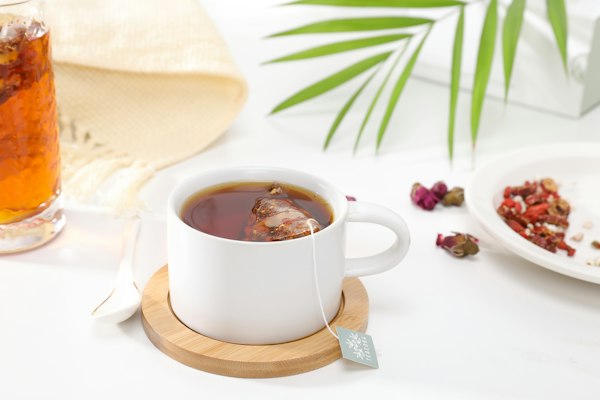
Rosemary
Herbal infusion
4.2/5 · FindMeTea score
About this tea
Rosemary (Salvia rosmarinus, formerly classified as Rosmarinus officinalis) is a piney, sharply aromatic herbal infusion — not a true tea — made from the narrow, needle-like leaves of a woody Mediterranean evergreen shrub. Its flavor is resinous and forest-like, with notes of pine, eucalyptus, and a faint peppery bite that lingers on the palate. Rosemary has been woven into European folklore for over two thousand years as the herb "for remembrance," historically burned, worn, and brewed to sharpen the mind. Caffeine-free and bracing rather than soothing, rosemary infusion is best known today as a traditional companion to mental focus and after-meal digestion, distinct from milder, sweeter Mediterranean herbs like sage or lavender.
How to brew: 95°C, 5 min, 2 g per cup.
Caffeine
None
How to brew
Flavor notes
earthy, aromatic, intense
Often associated with
Clarity, Digestive comfort
Best time to enjoy
Morning, Mid-morning, After a meal
Tags
Where to find it in United States
 Where to find it in United States
- Other Herbal infusion
Harney & Sons
New York · SoHo (ships nationwide)
Chamomile, Egyptian flowers (loose, 1.5 oz tin)
US$ 6.60· 1.5 oz
In storeOnline433 Broome StreetGo to shop → - Other Herbal infusion
McNulty's Tea & Coffee
New York · Greenwich Village
Lavender (2 oz tin)
from US$ 13.95· 2 oz
In storeOnline109 Christopher StreetGo to shop → - Other Herbal infusion
Chado Tea Room
Los Angeles · Downtown (Little Tokyo) and Hollywood; also Pasadena, Torrance
Peppermint
US$ 14.38· 4 oz
In storeOnline369 East 1st StreetGo to shop → - Other Herbal infusion
Rishi Tea
Organic Ginger (loose, 1 lb)
US$ 30· 454 g
OnlineGo to shop → - Other Herbal infusion
Upton Tea Imports
Chamomile Organic (40 g packet)
US$ 6.25· 40 g
OnlineGo to shop →
Prices checked by us on Sep 6, 2026; they may change.
No shop pays to appear here — we list what we verified ourselves.
Know a shop that sells it? Tell usOrigin & Production
Rosemary is native to the rocky, wind-swept cliffs and scrublands bordering the Mediterranean Sea, where it grows wild from the Iberian Peninsula through southern France and Italy to the Adriatic. Spain — particularly the dry, calcareous hillsides of Andalusia and the eastern coast — has long been one of the largest producers of cultivated rosemary, prized for its high concentration of aromatic resins. The shrub thrives in poor, well-drained soil under intense sun, conditions that paradoxically make the leaves more pungent and oil-rich. Unlike sage, which favors the Dalmatian coast, rosemary's commercial heartland centers on the western Mediterranean, and the plant's tolerance for drought has made it a fixture of low-water gardens worldwide.
Production process
Harvesting
Woody stems bearing needle-like leaves are cut by hand, ideally in the morning after the dew has lifted, when the volatile oil content in the leaves is highest.
Bundling & drying
Cut stems are tied into small bundles and hung to air-dry in a shaded, well-ventilated space for one to two weeks, allowing the needles to dry without losing their pine-green color.
Stripping
Once brittle, the needle-like leaves are stripped from the woody stems by hand or light mechanical sieving, separating the usable leaf from the inedible wood.
Grading & sorting
Dried needles are sorted by size and color — whole, deep-green needles with a strong piney scent are graded above broken or pale, faded leaves.
Packing & export
Graded rosemary is packed in airtight, light-protected containers to preserve its volatile oils, then distributed for both the culinary spice trade and the herbal infusion market.
History & Tradition
Few herbs carry as rich a symbolic history as rosemary, whose Latin name ros marinus — "dew of the sea" — reflects its love of salt-sprayed Mediterranean cliffs, and whose folk reputation for sharpening memory has endured from antiquity to the modern day.
Symbol of memory and fidelity
Greek students reportedly wore sprigs of rosemary in their hair while studying for exams, believing it strengthened recall, while Romans used it in religious ceremonies, weddings, and funerals as a symbol of remembrance and loyalty.
Hungary Water
Rosemary became the central ingredient of "Hungary Water," one of the first distilled alcohol-based perfumes in Europe, used both as a fragrance and as a folk tonic believed to restore vitality.
European herbals
Renaissance herbalists such as John Gerard catalogued rosemary extensively, recommending infusions of the leaves for the head, heart, and digestion, cementing its place in household apothecary cabinets across Europe.
Shakespeare's enduring line
Ophelia's line in Hamlet — "there's rosemary, that's for remembrance" — was already centuries old by Shakespeare's time but continued to popularize the herb's association with memory well into the modern literary canon.
Scientific interest in cognition
Researchers began formally investigating rosemary's aroma and constituents such as 1,8-cineole and rosmarinic acid for their possible links to alertness and cognitive performance, lending modern scientific attention to centuries of folklore.
Global culinary and wellness staple
Rosemary today is grown commercially across the Mediterranean, the Americas, and beyond, valued equally as a culinary herb and as a caffeine-free infusion marketed for focus, digestion, and everyday aromatic comfort.
Health Benefits
Traditional focus support
Rosemary's sharp, piney aroma is one of the most studied herbal scents for alertness — its volatile compounds, including 1,8-cineole, are traditionally associated with mental clarity and a refreshed sense of focus.
Digestive comfort
Rosemary has long been sipped after rich meals in Mediterranean households, traditionally valued for easing bloating and supporting a settled stomach after eating.
Antioxidant compounds
Rosemary leaves are rich in polyphenols such as rosmarinic acid and carnosic acid, plant compounds studied for their antioxidant activity and their role in protecting the leaf's own essential oils from degradation.
Aromatic uplift
The bracing, forest-like scent of brewed rosemary is widely used in aromatherapy traditions as a stimulating counterpart to softer floral herbs, offering a wakeful, outdoorsy sensory experience in a single cup.
Circulatory folk use
In traditional European herbal practice, rosemary infusions were taken to support healthy circulation and ease feelings of mental fatigue, a use that paralleled its reputation as a tonic for vitality.
Grades & Varieties
Whole dried needles
Intact, deep-green needle-like leaves with the strongest, most concentrated piney aroma. The classic format for steeping a robust, resinous infusion at home.
Best for
- ✓Strong morning focus infusion
- ✓Culinary dual-use (cooking and tea)
- ✓Standalone hot infusion
Cut & sifted leaf
Needles broken into smaller, uniform pieces for faster, more even extraction in tea bags or infusers. Slightly milder aroma than whole needles but very convenient for daily steeping.
Best for
- ✓Everyday focus or digestive tea
- ✓Travel-friendly tea bags
- ✓Blending with lemon or mint
Rosemary-lemon blend
Rosemary combined with dried lemon peel or lemongrass, softening the herb's sharp edge with bright citrus notes while keeping its alerting, piney character intact.
Best for
- ✓Mid-afternoon mental reset
- ✓Milder flavor preference
- ✓Newcomers to rosemary infusions
Did you know?
Ancient Greek students reportedly wore sprigs of rosemary in their hair while studying for exams, believing it strengthened memory — a folk reputation echoed centuries later in Ophelia's line from Hamlet, 'there's rosemary, that's for remembrance.'
Foods with this tea

What to Eat with Rosemary Tea
Rosemary's piney, sharp herbal edge pairs beautifully with roasted vegetables, grilled meats, and rustic Mediterranean breads and cheeses.
Rosemary Tea-Brined Roast Chicken with Lemon Potatoes
A whole roast chicken brined in strong rosemary tea, garlic, and lemon, served alongside crispy rosemary-tea-tossed potatoes for a Mediterranean Sunday dinner.
Rosemary Tea and Olive Oil Cake with Honey Glaze
A moist Mediterranean olive oil cake infused with rosemary tea and finished with a honey-lemon glaze — piney, floral, and quietly sophisticated.
Drinks with this tea

Rosemary Tea with Honey and Lemon: the Recipe
How to brew rosemary tea with honey and lemon: quantities, steep time and tips for a bright, piney, caffeine-free cup to pour mid-afternoon.
Iced Rosemary Grapefruit Cooler
Cold-brewed rosemary blended with fresh grapefruit and a touch of agave — a piney, bittersweet iced infusion that feels like a Mediterranean afternoon.
Rosemary Garden Mocktail
A sparkling, piney mocktail built on strong rosemary tea, lime, and a rosemary-honey syrup — a sophisticated, alcohol-free sipper for any evening gathering.