
Ceylon Nuwara Eliya
Black tea
4.5/5 · FindMeTea score
About this tea
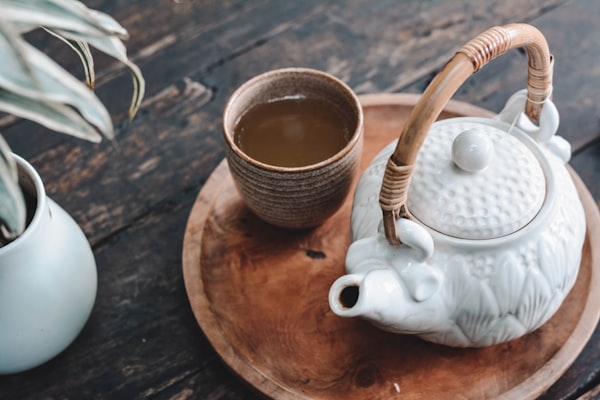
Nuwara Eliya Ceylon is the lightest and most delicate of Sri Lanka's black teas — grown at the highest elevations on the island, in gardens that ring the misty hill town the British nicknamed 'Little England.' Where lowland and mid-elevation Ceylons turn malty and robust, Nuwara Eliya stays pale, brisk, and almost weightless in the cup, with a floral, slightly fruity aroma and a brightness that can fool a first-time taster into thinking they've poured green tea instead of black. It is the one Ceylon style built on restraint rather than punch: thin, golden liquor, gentle astringency, and a perfumed finish rather than the deep coppery color and brisk malt of Dimbula or the menthol-eucalyptus bite of Uva grown just across the same mountain range. Connoisseurs often call it the 'champagne of Ceylon teas' for exactly this reason — it is prized for finesse, not strength.
How to brew: 90°C, 3 min, 3 g per cup.
Caffeine
Medium
How to brew
Flavor notes
floral, delicate, lightly sweet, smooth
Often associated with
Clarity, Gentle energy
Best time to enjoy
Early afternoon, Mid-afternoon
Tags
Where to find it in United States
 Where to find it in United States
- Other Black tea
Harney & Sons
New York · SoHo (ships nationwide)
English Breakfast (loose, 4 oz tin)
US$ 13· 4 oz
In storeOnline433 Broome StreetGo to shop → - Other Black tea
McNulty's Tea & Coffee
New York · Greenwich Village
McNulty's English Breakfast
from US$ 10· 4 oz
In storeOnline109 Christopher StreetGo to shop → - Other Black tea
Chado Tea Room
Los Angeles · Downtown (Little Tokyo) and Hollywood; also Pasadena, Torrance
English Breakfast
US$ 9.88· 4 oz
In storeOnline369 East 1st StreetGo to shop → - Other Black tea
Tea and Whisk
Las Vegas · Chinatown (Spring Mountain Rd)
English Everyday Black Tea Blend
from US$ 20· 4 oz
In storeOnline6288 Spring Mountain Rd, Ste 110Go to shop → - Other Black tea
Rishi Tea
Organic English Breakfast (loose leaf)
US$ 18.50· 113 g
OnlineGo to shop →
Prices checked by us on Sep 5, 2026; they may change.
No shop pays to appear here — we list what we verified ourselves.
Know a shop that sells it? Tell usOrigin & Production
Nuwara Eliya sits at the highest elevations of any Ceylon tea district, with gardens planted around 1,800 to over 2,000 meters above sea level on the slopes surrounding the town itself — the highest tea-growing zone in Sri Lanka. The British colonial settlers who developed the town from the late 1840s, drawn by its cool climate, golf courses, and Tudor-style architecture, gave it the nickname 'Little England,' and the comparison still fits: daytime temperatures rarely climb out of the mid-teens to low-20s Celsius, and nights can dip close to freezing. That cold, thin mountain air slows the tea bush dramatically, stretching out the growing cycle and starving the leaf of the heat and humidity that build body and color in lower gardens. The result is a small, slow-growing leaf with much lower levels of the compounds that darken liquor and add malt, producing instead a pale, bright cup with a delicate floral lift closer in character to a high-grown Darjeeling than to a typical Ceylon.
Production process
High-altitude plucking
Two leaves and a bud are hand-plucked from slow-growing bushes on cold, mist-wrapped slopes, often by pluckers working in chilly morning conditions unusual for a tropical island.
Long, gentle withering
Leaf is withered for an extended 16–20 hours in the cool highland air, far longer and gentler than lowland withers, which preserves delicate aromatic compounds rather than developing heavy malt notes.
Light orthodox rolling
Withered leaf receives a comparatively light, brief roll on orthodox machinery, just enough to rupture cell walls and begin oxidation without bruising the leaf heavily.
Short, cool oxidation
Because of the cool ambient temperature and the leaf's low enzyme activity at altitude, oxidation runs shorter and more restrained than in other Ceylon districts, keeping color and body light.
Firing
Hot-air firing halts oxidation and dries the leaf to a stable moisture content, locking in the pale liquor and floral aromatics before the leaf darkens any further.
Grading & sorting
Dried leaf is sorted by size into orthodox grades such as OP and FBOP; the finest, most fragrant Nuwara Eliya lots are typically sold as single-estate or quality-season teas rather than blended away.
History & Tradition
Nuwara Eliya's tea story is inseparable from its founding as a British hill station — a town built to recreate a cool English climate in the middle of a tropical island, and one whose plantations went on to define the lightest, most refined style of Ceylon tea.
A hill station is founded
First documented for the British by Dr. John Davy in 1819, Nuwara Eliya took shape as a settlement after Samuel Baker — who arrived in Ceylon in 1846 — established an agricultural colony there in 1847–1848, developing it with colonial administrators as a cool-climate retreat from the heat of the lowlands, building English-style cottages, a racecourse, and golf links that earned it the nickname 'Little England.'
Coffee gives way to tea
After a devastating coffee leaf rust epidemic wiped out Ceylon's coffee plantations, growers followed the lead of James Taylor — whose pioneering Loolecondera estate (1867) lay in the Kandy district — and began converting highland estates around Nuwara Eliya to tea, taking advantage of the cool, high-altitude terrain.
High-grown gardens take shape
Estates were planted at progressively higher elevations around the town as planters discovered that altitude, rather than soil alone, was the defining factor behind the pale, fragrant character that distinguished Nuwara Eliya leaf from other Ceylon districts.
Recognition as a distinct style
As Ceylon tea exports boomed under colonial trade, Nuwara Eliya became recognized internationally as a distinct, lighter style within Ceylon tea, often singled out by London tea brokers for its delicate, Darjeeling-like character.
Independence and continued reputation
After Ceylon gained independence in 1948 and was renamed Sri Lanka in 1972, Nuwara Eliya's estates continued operating much as before, and the district retained its reputation as the source of the country's lightest, most floral single-origin black teas.
Health Benefits
Gentle, clear-headed lift
Nuwara Eliya's moderate caffeine content, lower than many bolder black teas, delivers a steady, even alertness without the jittery edge of a heavier brew — well suited to focused work.
Polyphenol antioxidants
Like all true Camellia sinensis teas, Nuwara Eliya retains theaflavins and catechins from the leaf; its shorter, gentler oxidation preserves a comparatively high share of fresher polyphenol compounds.
Light on the stomach
Its lower tannin and astringency levels compared to heavier Ceylons make Nuwara Eliya a gentler choice for those who find robust black teas harsh on an empty stomach.
Everyday cardiovascular wellness
Regular black tea drinking is traditionally associated with general cardiovascular wellness as part of a balanced diet, an association researchers link in part to the flavonoids tea shares with Nuwara Eliya's delicate leaf.
Sustained, smooth energy
The combination of moderate caffeine and the amino acid L-theanine naturally present in tea leaves is associated with a smoother, more sustained sense of energy than caffeine taken alone.
Grades & Varieties
OP (Orange Pekoe)
Long, wiry, mostly whole leaves with minimal tip. Produces the classic pale, golden-amber Nuwara Eliya liquor with a clean, brisk, floral cup and gentle body — the most traditional expression of the grade.
Best for
- ✓Daily afternoon cup
- ✓Tasting Nuwara Eliya in its purest form
- ✓Light milk or no milk at all
FBOP (Flowery Broken Orange Pekoe)
Broken leaf with a higher proportion of golden tips, giving a slightly faster, fuller infusion than whole-leaf OP while keeping the same pale color and floral lift. A popular grade for showcasing aroma quickly.
Best for
- ✓Quick brews on busy mornings
- ✓Iced tea with a fragrant base
- ✓Gift tins and tasting flights
Quality-season flush (January–February)
The driest, coolest months in Nuwara Eliya produce the district's most prized lots — exceptionally pale, intensely floral, sometimes verging on a wine-like or lily-of-the-valley note that single-estate buyers compete for.
Best for
- ✓Special-occasion brewing
- ✓Connoisseur tastings
- ✓Pairing with delicate desserts
Did you know?
Grown above 1,800 meters around a hill town the British nicknamed 'Little England,' Nuwara Eliya is so pale and delicate that first-time tasters sometimes mistake it for green tea — connoisseurs call it the 'champagne of Ceylon teas.'
Foods with this tea

What to Eat with Nuwara Eliya Ceylon Tea
Nuwara Eliya's pale, floral, almost green-tea-like cup calls for light, delicate foods — think scones, soft cheeses, and fresh fruit rather than anything heavy or smoky.
Nuwara Eliya Tea-Poached Chicken Salad
Chicken breast gently poached in Nuwara Eliya tea, sliced over a bright salad of greens, citrus, and toasted almonds — light enough to let the tea's floral notes carry through.
Nuwara Eliya Tea and Honey Panna Cotta
A silky, barely-set panna cotta infused with Nuwara Eliya tea and a touch of honey — the tea's floral perfume comes through clearly in a dessert built around restraint.
Drinks with this tea

Nuwara Eliya Clarity Tonic with Lemon and Mint
A light, fragrant tonic that pairs Nuwara Eliya's floral brightness with fresh lemon and mint — a gentle mid-morning ritual for a clear, settled focus.
Iced Nuwara Eliya with Peach and White Grape
Cold-brewed Nuwara Eliya layered with peach and white grape juice — a pale, delicately fruity iced tea that mirrors the tea's own floral lightness.
Nuwara Eliya Elderflower Spritz
A pale, floral spritz built on Nuwara Eliya-infused gin, elderflower liqueur, and sparkling wine — light, fragrant, and made for slow sipping in the late afternoon.