
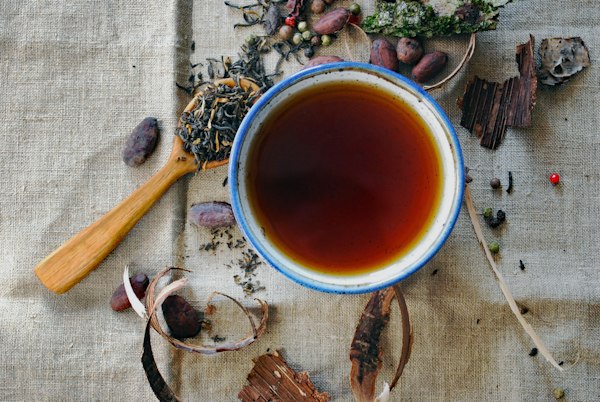
Mengding Huangya
Yellow tea
About this tea
Mengding Huangya ('Mount Mengding Yellow Buds') is Sichuan's legendary yellow tea and, by long-standing reputation, the single most prestigious tribute tea in Chinese history — grown on the misty slopes of Mount Mengding above the Sichuan basin since at least the Han dynasty. Local tradition credits the monk Wu Lizhen with planting tea bushes on the mountain's Five Peaks around 53 BCE, a story often cited as marking the very beginning of deliberate tea cultivation in China. The tea itself is made from tender early-spring buds taken through a slow, gentle 'sealed yellowing' step that softens grassy edges and builds a mellow, sweet, gently nutty character quite different from the grassier snap of green tea. Light gold in the cup with a soft, lingering sweetness, Mengding Huangya is treasured by tea drinkers as a calm, contemplative cup — historically reserved for the emperor and now slowly finding wider appreciation outside China.
How to brew: 80°C, 1.5 min, 3 g per cup.
Caffeine
Medium
How to brew
Flavor notes
sweet, smooth, nutty, lightly sweet
Often associated with
Gentle focus, Calm alertness
Best time to enjoy
Morning, Mid-morning
Tags
Origin & Production
Mount Mengding rises above the city of Ya'an in western Sichuan, at the edge of the Tibetan Plateau foothills, where moisture-laden air from the Sichuan basin collides with the mountains and produces near-constant mist, cloud cover, and rainfall. Locals say the mountain receives rain on the vast majority of days each year, and this perpetual humidity, combined with mineral-rich, slightly acidic soils, slows leaf growth and concentrates amino acids — the foundation of the tea's signature sweetness and umami depth. Gardens cluster on the mountain's Five Peaks (Wuding Feng) at elevations of roughly 800 to 1,400 meters, where small-leaf Sichuan tea cultivars are still hand-picked each spring. Authentic Mengding Huangya production is small relative to demand, and most of what carries the name today is grown in the wider Ya'an area rather than the historic core gardens.
Production process
Early-spring bud picking
Harvest begins in the first weeks of spring, often before the Qingming festival, when pickers select single buds or a bud with one barely-opened leaf. Only the tenderest, most uniform growth is taken for the finest grades.
Kill-green (sha qing)
Fresh buds are gently pan-heated at a controlled temperature to halt oxidation, in a style close to green tea processing. This step locks in color and fresh aroma while leaving enough internal moisture for yellowing.
Initial rolling and shaping
Warm leaves are lightly rolled by hand to shape the buds into their characteristic slim, slightly curved form and to encourage even moisture distribution before wrapping.
Sealed yellowing (men huang)
The defining step of all yellow tea: warm, moist buds are wrapped in paper or cloth bundles and left to rest, sometimes through several short cycles of wrapping, resting, and light re-firing over one to three days. This slow, non-enzymatic warming mellows grassy notes and builds the tea's gentle sweetness and soft golden liquor.
Final drying
Yellowed buds are dried slowly over gentle heat to stabilize moisture content for storage, preserving the delicate down on the buds and the tea's soft aroma without scorching.
Sorting and grading
Finished buds are hand-sorted by size, uniformity, and downy coverage. The finest, most uniform single-bud lots are reserved for the highest grades and command premium prices.
History & Tradition
Few teas carry a weight of legend like Mengding Huangya — a tea so tied to imperial ritual that for over a thousand years it was, by tradition, grown specifically to be offered to the emperor and never sold on the open market.
Wu Lizhen plants the first bushes
Local legend credits the monk Wu Lizhen with planting seven tea bushes on Mount Mengding's Five Peaks during the Western Han dynasty — a story frequently cited as the symbolic beginning of cultivated tea in China, predating most other recorded tea gardens.
Formalized as imperial tribute
Mengding tea was formally designated as tribute (gong cha) to the Tang imperial court, and the practice continued through subsequent dynasties — making it one of the longest-running tribute tea traditions in Chinese history.
Peak imperial prestige
Mengding tea reached its height of reputation, often cited by scholars and poets as the finest tea under heaven. The 'Seven Bushes' planted by Wu Lizhen were said to be fenced and guarded, with their tiny yield reserved exclusively for ancestral and court rituals.
Yellow tea style develops
As yellow tea processing techniques — including the sealed-yellowing step — were refined across China, Mengding gardens adapted their tribute tea into the mellow, lightly oxidized yellow-bud style now known as Mengding Huangya, distinct from earlier, more purely green tribute teas from the same mountain.
Listed among China's famous teas
Mengding Huangya was included in a national assessment of China's most celebrated teas, formally recognizing the yellow-bud style alongside the region's other historic Mengding teas and cementing its modern reputation.
A rare style outside China
Because true sealed-yellowing is slow, labor-intensive, and produces modest yields, genuine Mengding Huangya remains uncommon outside China and is often confused with green tea by less careful producers — true yellow tea specialists remain a small fraction of Sichuan's tea industry.
Health Benefits
Calm, sustained focus
Mengding Huangya's moderate caffeine paired with L-theanine from its tender buds is traditionally associated with an alert but unhurried mental state, often favored for quiet reading, writing, or study sessions rather than a sharp jolt.
Gentle on the stomach
The sealed-yellowing step softens the grassy, astringent compounds found in unprocessed green tea, which many drinkers find easier on an empty or sensitive stomach compared with sharper green teas.
Antioxidant-rich buds
As a lightly processed tea made from young spring buds, Mengding Huangya retains a meaningful share of the catechins and polyphenols found in fresh tea leaves, though somewhat softened by the yellowing process compared with green tea.
Mindful tea ritual
Historically brewed and presented with great ceremony as imperial tribute, Mengding Huangya lends itself naturally to slow, attentive brewing — a small daily ritual many drinkers associate with a sense of calm and wellbeing.
Steady, moderate energy
With caffeine levels generally lower than black tea but present enough to notice, Mengding Huangya is often chosen for a moderate energy lift in the late morning or after a meal without the intensity of stronger teas.
Grades & Varieties
Mengding Huangya (single bud)
The finest and most traditional grade, made entirely from plump, downy single buds picked in the earliest days of spring. Pale gold liquor, delicate sweetness, and a soft, lingering nutty finish — the closest modern equivalent to the historic tribute tea.
Best for
- ✓Slow, attentive brewing
- ✓Gifting and special occasions
- ✓Comparing against green tea side by side
Mengding Huangya (bud and leaf)
Made from a bud with one young unfurled leaf, this grade is fuller-bodied and slightly more robust than the single-bud style, with a rounder sweetness and a touch more depth — a versatile everyday version of the tribute style.
Best for
- ✓Everyday afternoon tea
- ✓Drinkers new to yellow tea
- ✓Multiple short re-steeps
Did you know?
Mengding Huangya was reserved exclusively for the emperor for over a thousand years; local legend even credits a monk named Wu Lizhen with planting the mountain's first tea bushes around 53 BCE, often cited as the symbolic birth of cultivated tea in China.
Foods with this tea
What to Eat with Mengding Huangya
Sichuan's tribute yellow tea is sweet, mellow, and gently nutty — built for delicate, savory snacks rather than bold or spicy dishes that would overpower it.
Mengding Huangya Steamed Egg Custard with Shrimp
A silky savory egg custard steeped with Mengding Huangya tea and topped with sweet shrimp — a delicate dish that mirrors the tea's own gentle, mellow character.
Mengding Huangya Honey Custard Tarts
Mini egg tarts with a Mengding Huangya-infused custard and a touch of honey — a delicate, sweet-nutty dessert that honors a tea once reserved for emperors.
Drinks with this tea
Mengding Huangya Honey Calm Tonic
A gentle warm tonic that lets Mengding Huangya's natural sweetness lead, lifted with honey and a whisper of ginger for easy after-meal comfort.
Iced Mengding Huangya with Peach and Mint
Cold-brewed Mengding Huangya with fresh peach and mint — a delicate, lightly sweet iced tea that preserves the tea's mellow, nutty softness without bitterness.
Mengding Huangya Golden Pear Spritz
A pale-gold sparkling cocktail of Mengding Huangya, pear, and a touch of elderflower — with a fully non-alcoholic mocktail version that keeps the same delicate balance.