
Immunity Blend
Herbal infusion
4.4/5 · FindMeTea score
About this tea
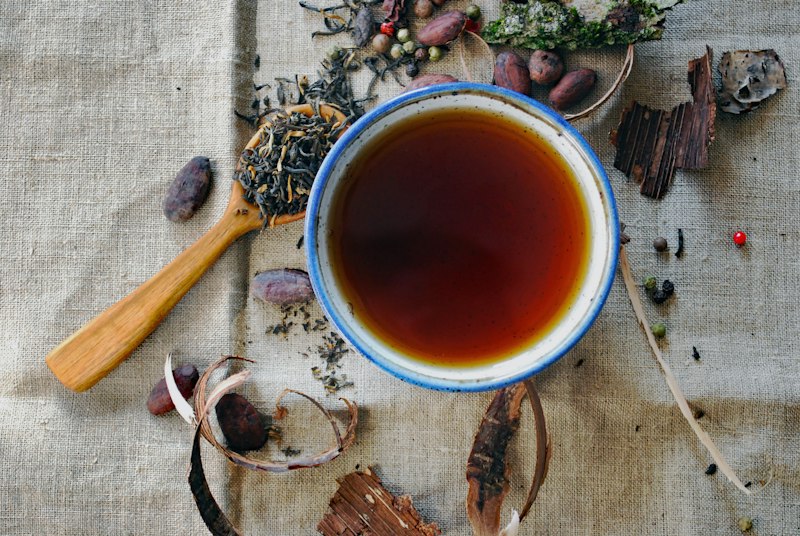
The Immunity Blend is a caffeine-free, warmly spiced herbal recipe traditionally taken at the first sign of seasonal sniffles or as a winter wellness ritual. The base combines echinacea (Echinacea purpurea aerial parts) — long associated with cold-symptom support — with fresh or dried ginger (Zingiber officinale) for warmth and gingerol's anti-inflammatory profile, and lemon (peel or juice) for vitamin C and bright aroma. Optional additions include rosehip (Rosa canina), one of the highest natural sources of vitamin C, and elderberry (Sambucus nigra), studied for its anthocyanins and traditional use in upper-respiratory comfort.
How to brew: 98°C, 10 min, 3 g per cup.
Caffeine
None
How to brew
Flavor notes
spiced, citrusy, warming
Often associated with
Warmth, Digestive comfort
Best time to enjoy
Morning, Mid-morning, After a meal
Tags
Where to find it in United States
 Where to find it in United States
- Other Herbal infusion
Harney & Sons
New York · SoHo (ships nationwide)
Chamomile, Egyptian flowers (loose, 1.5 oz tin)
US$ 6.60· 1.5 oz
In storeOnline433 Broome StreetGo to shop → - Other Herbal infusion
McNulty's Tea & Coffee
New York · Greenwich Village
Lavender (2 oz tin)
from US$ 13.95· 2 oz
In storeOnline109 Christopher StreetGo to shop → - Other Herbal infusion
Chado Tea Room
Los Angeles · Downtown (Little Tokyo) and Hollywood; also Pasadena, Torrance
Peppermint
US$ 14.38· 4 oz
In storeOnline369 East 1st StreetGo to shop → - Other Herbal infusion
Rishi Tea
Organic Ginger (loose, 1 lb)
US$ 30· 454 g
OnlineGo to shop → - Other Herbal infusion
Upton Tea Imports
Chamomile Organic (40 g packet)
US$ 6.25· 40 g
OnlineGo to shop →
Prices checked by us on Sep 6, 2026; they may change.
No shop pays to appear here — we list what we verified ourselves.
Know a shop that sells it? Tell usOrigin & Production
The Immunity Blend is a modern multi-cultural recipe. Echinacea is native to the prairies of central and eastern North America, where Indigenous Plains nations (Lakota, Cheyenne, Dakota) used it widely; today it is cultivated commercially in Germany, the United States, and Eastern Europe. Ginger has been grown in tropical Asia for over 5,000 years; today India, Nigeria, and China are the leading producers. Lemons (Citrus × limon) are a Mediterranean staple cultivated since the Middle Ages. Rosehip is foraged or cultivated across temperate Europe, and elderberry is widely harvested wild across Europe and North America.
Production process
Recipe (per ~3 g serving)
Classic ratio: 30% echinacea (aerial parts, cut), 30% dried ginger root (cut/sifted), 20% dried lemon peel (or 1 fresh lemon slice + juice added per cup), 10% rosehip (cracked), 10% elderberry (optional). For a milder, more digestible blend, drop the elderberry and increase lemon peel to 20%.
Source quality dried herbs
Buy echinacea, ginger, rosehip, and elderberry as cut-and-sifted food-grade material from a reputable herb supplier. For lemon, use organic dried peel (no wax) or a fresh organic lemon. Avoid pre-mixed teabag dust which oxidizes quickly.
Weigh and combine
Weigh each herb according to the ratio. Combine in a clean dry bowl and toss gently. Crack any whole rosehips with the side of a knife to expose the seed — this dramatically improves vitamin C extraction.
Store airtight
Transfer to a glass jar with a tight seal; keep in a cool, dark cupboard. The ginger and rosehip stay potent for 9–12 months; elderberry and lemon peel are best within 6 months.
Brew (decoction-style)
Because ginger root and rosehip are dense, brew slightly longer than a typical herbal: 1 heaped teaspoon (~3 g) per cup, water at 95–100 °C, steep covered 8–12 minutes. For a stronger preparation, simmer gently for 5 minutes. Strain, add fresh lemon juice and (optionally) a teaspoon of honey to taste.
History & Tradition
The Immunity Blend is a 20th-century reinvention of much older traditions: Plains-nation echinacea medicine, Asian ginger remedies for chills, and European hot-lemon drinks for colds.
Indigenous use of echinacea
Indigenous Plains nations of North America — including the Lakota, Cheyenne, Dakota, and Pawnee — used Echinacea species for sore throat, snake bite, toothache, and infection. It was one of the most widely-used medicinal plants of the prairies.
Ginger across the Silk Road
Ginger spread from Maritime Southeast Asia along trade routes; in Traditional Chinese Medicine it was prescribed to 'expel cold,' and in medieval Europe it became a popular winter spice for warming drinks.
European hot lemon
Hot lemon-and-honey drinks for sore throats and chills became a standard remedy across Europe as citrus became more widely available, especially after the British Navy adopted lemon and lime against scurvy.
Echinacea reaches European phytotherapy
German physician Gerhard Madaus brings Echinacea purpurea seeds from North America to Germany, where it becomes the basis of widely used herbal cold-and-flu preparations still sold across Europe today.
Cochrane review on echinacea
A Cochrane systematic review (Karsch-Völk et al.) of 24 trials concluded that echinacea products may have a weak effect on the prevention and treatment of the common cold, with substantial variability between products. Best evidence supports short-term use at the first sign of symptoms.
Health Benefits
Traditional immune support
Echinacea purpurea is approved by the European Medicines Agency (EMA/HMPC) as a traditional herbal medicine to relieve the early symptoms of the common cold. Best results come from starting within 24 hours of first symptoms and limiting use to under 10 days.
Warming & circulation
Gingerols and shogaols in ginger have well-documented anti-inflammatory and vasodilatory effects, producing a sensation of warmth and supporting circulation during cold weather. Ginger is also EMA-monographed for symptomatic relief of motion sickness and mild digestive complaints.
Vitamin C from rosehip & lemon
Rosehip contains 400–1,500 mg of vitamin C per 100 g of fresh fruit (one of the highest plant sources), and lemon adds further ascorbic acid. Vitamin C contributes to the normal function of the immune system (EU-authorized health claim).
Polyphenols & anthocyanins
Elderberry is rich in anthocyanins; some randomized trials (e.g. Tiralongo et al., 2016) suggest reduced duration of cold symptoms with standardized extracts. Effects in a home-brewed tea are likely smaller, but the antioxidant load remains meaningful.
Safety & considerations
Limit echinacea to short-term use (up to 10 days; do not exceed continuous use as labeled). Avoid echinacea if you have an autoimmune condition (e.g. multiple sclerosis, lupus, rheumatoid arthritis) or take immunosuppressants — it stimulates immune activity. Echinacea is in the Asteraceae family; people allergic to ragweed, daisies, or marigolds may react. Raw elderberries are toxic; only use cooked/dried berries from a reputable supplier. Ginger may interact with anticoagulant medication at high doses. Consult a clinician if pregnant, breastfeeding, or on prescription medication.
Grades & Varieties
Classic recipe (echinacea + ginger + lemon)
The simplest, most accessible version: 40% echinacea, 40% dried ginger, 20% dried lemon peel. Warmly spiced and citrusy. Suitable for short-term use at the first sign of cold symptoms.
Best for
- ✓First signs of a cold
- ✓Cold winter mornings
- ✓Short courses of 5–7 days
Full 'winter wellness' (with rosehip + elderberry)
The fuller recipe: 30% echinacea, 30% ginger, 20% lemon peel, 10% rosehip, 10% elderberry. Fruitier and tarter, with deeper polyphenol content. The most nutrient-dense version of the blend.
Best for
- ✓Peak cold-and-flu season
- ✓Convalescence and recovery
- ✓Antioxidant-rich daily cup (short term)
Echinacea-free (autoimmune-safe variant)
For people with autoimmune conditions or on immunosuppressants who should avoid echinacea: 40% ginger, 30% lemon peel, 20% rosehip, 10% elderberry (optional). Still warming and vitamin-C rich, without immune-stimulant activity.
Best for
- ✓Autoimmune conditions
- ✓Long-term winter ritual
- ✓Safer daily use
Did you know?
Echinacea purpurea only became a European herbal staple thanks to a single shipment: in the 1930s, German physician Gerhard Madaus traveled to the United States, brought back seeds of the prairie plant traditionally used by Plains nations, and began cultivating it in Germany — within a decade, Echinacea-based cold remedies were on European pharmacy shelves, and they remain among the most-sold OTC herbal products in Germany today.
Foods with this tea
What to Eat with Immunity Blend Tea
Immunity Blend's bright kick of echinacea, ginger, and lemon pairs naturally with warming, nourishing foods—chicken-ginger congee, citrusy salads, and honey-spiced cookies for sniffly days.
Chicken-Ginger Congee with Lemon and Scallions
A silky chicken-ginger congee built on an Immunity Blend tea base—warming, brothy, and topped with fresh ginger, lemon, and scallions for the kind of bowl that helps you turn a corner.
Honey, Ginger and Lemon Cookies
Soft, chewy honey cookies with fresh ginger, lemon zest, and a hint of cinnamon—small enough to slip alongside an afternoon mug of Immunity Blend during the sniffly months.
Drinks with this tea

Immunity Blend Ginger-Honey Wellness Shot
Our immunity blend (echinacea, ginger, lemon, rosehip) brewed strong and combined with fresh ginger juice, raw honey, and a squeeze of lemon—a concentrated wellness shot for the first sign of a cold.
Iced Immunity Citrus Sparkler
Cold-brewed immunity blend topped with fresh orange juice, lemon, and sparkling water—a fizzy, vitamin-C-rich cooler that supports immunity without tasting like medicine.
Immunity Hot Toddy (with Mocktail Variant)
A classic cold-weather hot toddy built on strong immunity blend tea, whisky, fresh lemon, honey, and a clove-studded lemon peel—plus an alcohol-free version for the under-the-weather days.