
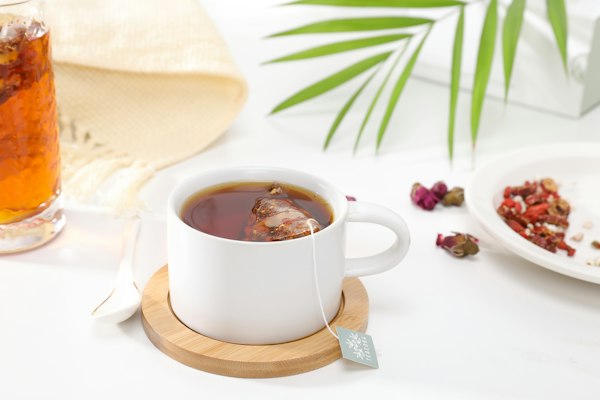
Throat Coat Blend
Herbal infusion
4.3/5 · FindMeTea score
About this tea
Throat Coat Blend is a caffeine-free herbal recipe built around three classic demulcent botanicals — licorice root (Glycyrrhiza glabra), slippery elm bark (Ulmus rubra), and marshmallow root (Althaea officinalis) — chosen specifically for their mucilage content, the slippery polysaccharide gel that forms when these plants meet hot water. Where a single-herb licorice tea offers gentle sweetness and mild soothing, this blend is engineered as a layered throat-comfort tisane: marshmallow and slippery elm provide the coating mucilage, while licorice adds natural sweetness and a long folk history of vocal and throat use. The result is a thick-bodied, faintly sweet, slightly earthy infusion that practitioners and singers alike have reached for whenever a throat feels scratchy, dry, or overworked. It belongs to the broader 'throat coat' tisane category popularized by commercial herbal tea brands in the late 20th century, though the underlying herb combination is far older than any single product.
How to brew: 100°C, 9 min, 3 g per cup.
Caffeine
None
How to brew
Flavor notes
sweet, earthy, smooth
Often associated with
Comfort, Sense of well-being
Best time to enjoy
Evening, Any time
Tags
Where to find it in United States
 Where to find it in United States
- Other Herbal infusion
Harney & Sons
New York · SoHo (ships nationwide)
Chamomile, Egyptian flowers (loose, 1.5 oz tin)
US$ 6.60· 1.5 oz
In storeOnline433 Broome StreetGo to shop → - Other Herbal infusion
McNulty's Tea & Coffee
New York · Greenwich Village
Lavender (2 oz tin)
from US$ 13.95· 2 oz
In storeOnline109 Christopher StreetGo to shop → - Other Herbal infusion
Chado Tea Room
Los Angeles · Downtown (Little Tokyo) and Hollywood; also Pasadena, Torrance
Peppermint
US$ 14.38· 4 oz
In storeOnline369 East 1st StreetGo to shop → - Other Herbal infusion
Rishi Tea
Organic Ginger (loose, 1 lb)
US$ 30· 454 g
OnlineGo to shop → - Other Herbal infusion
Upton Tea Imports
Chamomile Organic (40 g packet)
US$ 6.25· 40 g
OnlineGo to shop →
Prices checked by us on Sep 6, 2026; they may change.
No shop pays to appear here — we list what we verified ourselves.
Know a shop that sells it? Tell usOrigin & Production
Throat Coat Blend has no single growing region because it is a formulated recipe, not a single-origin crop. Licorice root is cultivated across the Mediterranean basin, Turkey, Iran, Afghanistan, and China. Slippery elm bark comes from the inner bark of Ulmus rubra, a tree native to the woodlands of eastern and central North America, traditionally harvested by Indigenous peoples including the Cherokee and Iroquois for food and medicine. Marshmallow root is native to damp meadows, riverbanks, and brackish marshes across Europe and Western Asia, and is now commercially cultivated in Eastern Europe and the Balkans. Because each ingredient is sourced and processed separately before blending, the character of the final tea depends heavily on the ratio of mucilage-rich roots and bark to licorice sweetness, and on how finely each component is cut.
Production process
Recipe (per ~2.5 g serving)
A classic balanced ratio: 40% slippery elm bark, 30% marshmallow root, 25% licorice root, 5% optional flavoring herb (cinnamon bark or orange peel). The two mucilage herbs lead; licorice rounds out the sweetness.
Bark and root harvesting
Slippery elm's inner bark is stripped from mature branches or trunks, traditionally in spring; marshmallow and licorice roots are dug after two or more years of growth, once the plant has built up sufficient mucilage and sweetness reserves.
Drying and grinding
Each ingredient is dried separately at low temperature to preserve mucilage and avoid scorching delicate compounds, then cut or coarsely ground — slippery elm is often powdered, while marshmallow and licorice are typically cut root.
Weigh and combine
Each dried botanical is weighed according to the target ratio and combined in a clean, dry container, tossed gently so the powdery slippery elm distributes evenly among the coarser root pieces.
Store airtight, away from moisture
Because slippery elm powder readily absorbs ambient moisture, the finished blend is kept in a sealed glass or tin container in a cool, dry cupboard, away from steam and direct light, to maintain potency for up to a year.
Brew
Use 1 heaping teaspoon (~2.5 g) per cup, water just off the boil (~95–100 °C), and steep covered for 8–10 minutes to fully release the mucilage. The longer steep is what gives this blend its characteristic thick, coating texture.
History & Tradition
Each herb in Throat Coat Blend carries its own long, separate folk-medicine history, but the multi-herb 'throat coat' tisane as a defined commercial category is a 20th-century development that drew on much older single-herb traditions.
Greek use of licorice for the throat
Theophrastus, the Greek 'father of botany', recorded that licorice root was chewed to relieve thirst and soothe the throat — among the earliest Western references to a botanical used specifically for vocal and respiratory comfort.
Indigenous use of slippery elm
Indigenous peoples of eastern North America, including the Cherokee and Iroquois, used the inner bark of slippery elm as a poultice and as a soothing food-medicine for sore throats, coughs, and digestive upset long before European contact.
Dioscorides on marshmallow
The Greek physician Dioscorides described Althaea officinalis (its genus name derived from the Greek 'altho', to heal) in De Materia Medica as a remedy for inflamed mucous membranes, establishing marshmallow's demulcent reputation for nearly two millennia.
Eclectic and Western herbalism converge
19th-century North American Eclectic physicians combined slippery elm and marshmallow with European herbs like licorice in throat lozenges and syrups, an early precedent for blending demulcent botanicals from different continents into a single remedy.
'Throat Coat' enters the herbal tea market
Commercial herbal tea brands in the United States popularized a packaged 'throat coat' tisane built on slippery elm, licorice, and other soothing herbs, turning what had been a home apothecary recipe into a recognizable, shelf-stable product category.
A global wellness staple
Throat coat-style blends are now sold worldwide by dozens of herbal tea companies, often with minor recipe variations, and remain a go-to seasonal infusion for singers, teachers, and anyone managing a scratchy or tired throat.
Health Benefits
Throat-coating mucilage
Slippery elm and marshmallow root both release mucilage — a viscous polysaccharide gel — when steeped in hot water, forming a temporary soothing film traditionally valued for scratchy throats and dry coughs.
Traditional digestive comfort
The same demulcent quality that soothes the throat is traditionally used along the rest of the digestive tract — marshmallow root in particular has a long folk history as a gentle stomach-settling infusion after meals.
Naturally caffeine-free comfort
With zero caffeine, this blend can be sipped at any time of day, including right before bed, making it a practical evening ritual for vocal rest or simply winding down with a warm, sweet cup.
Natural sweetness from licorice
Glycyrrhizin, the intensely sweet compound in licorice root, rounds out the earthy, slightly mucilaginous flavor of slippery elm and marshmallow, so the blend needs little or no added sugar to taste pleasant.
Safety & considerations
Because of the licorice content, this blend should not be used daily in large amounts or for prolonged periods — high, frequent intake of glycyrrhizin has been linked to elevated blood pressure and low potassium in sensitive individuals. Avoid regular or high-dose use during pregnancy and use caution with hypertension, kidney disease, or heart conditions; choose a licorice-free version (slippery elm and marshmallow only) if in doubt. Slippery elm's mucilage can also slow the absorption of other oral medications — separate dosing by a couple of hours if you take prescription drugs.
Grades & Varieties
Balanced classic (slippery elm-led)
The default recipe: 40% slippery elm bark, 30% marshmallow root, 25% licorice root, 5% cinnamon or citrus peel. Thick-bodied, faintly sweet, and gently spiced — the standard throat-comfort cup most commercial blends are modeled on.
Best for
- ✓Standard throat-comfort ritual
- ✓Singers and public speakers
- ✓Seasonal scratchiness
Licorice-forward (sweeter)
35% licorice root, 35% slippery elm bark, 30% marshmallow root. A sweeter, anise-adjacent cup that needs no added honey — popular with those who find the standard blend too earthy or bark-forward.
Best for
- ✓Sweet tooth without added sugar
- ✓Milder, rounder flavor
- ✓Pairing with citrus or ginger
Licorice-free (mucilage-only)
55% slippery elm bark, 45% marshmallow root, no licorice. A gentler option for pregnancy, hypertension, or anyone advised to limit glycyrrhizin, relying purely on the two mucilage herbs for a coating texture with a mild, neutral flavor.
Best for
- ✓Pregnancy or hypertension caution
- ✓Licorice-sensitive drinkers
- ✓Daily, lower-intensity use
Did you know?
The Greek 'father of botany,' Theophrastus, recorded in the 4th century BCE that licorice root was chewed to relieve thirst and soothe the throat — one of the earliest Western references to a plant used specifically for vocal comfort.
Foods with this tea

What to Eat with Throat Coat Blend
Thick, faintly sweet, and earthy from slippery elm and marshmallow root, Throat Coat Blend pairs best with soft, warm, gentle foods rather than anything sharp or spicy.
Throat Coat Tea-Poached Chicken and Rice Soup
A gentle, soft-textured chicken and rice soup poached with Throat Coat Blend, built for comfort on a day when your throat — or your spirits — need a little coddling.
Throat Coat Honey-Steeped Rice Pudding
A soft, slow-cooked rice pudding steeped with Throat Coat Blend and sweetened with honey — a soothing, gently spiced dessert built around the same mucilage herbs that make the tea so comforting.
Drinks with this tea

Throat Coat Honey-Lemon Soother
A warm, thick-bodied wellness drink that layers honey and fresh lemon over a strong Throat Coat Blend infusion — the classic combination for a scratchy throat or a tired voice.
Iced Throat Coat Peach Cooler
A chilled, lightly thickened cooler that pairs cold-brewed Throat Coat Blend with peach and a touch of honey — a gentler, less sugary alternative to typical iced herbal teas.
Throat Coat 'Hot Toddy' Mocktail
A non-alcoholic riff on the classic hot toddy, built on a strong Throat Coat Blend infusion with honey, lemon, and a whisper of warming spice — all the comfort, none of the alcohol.