
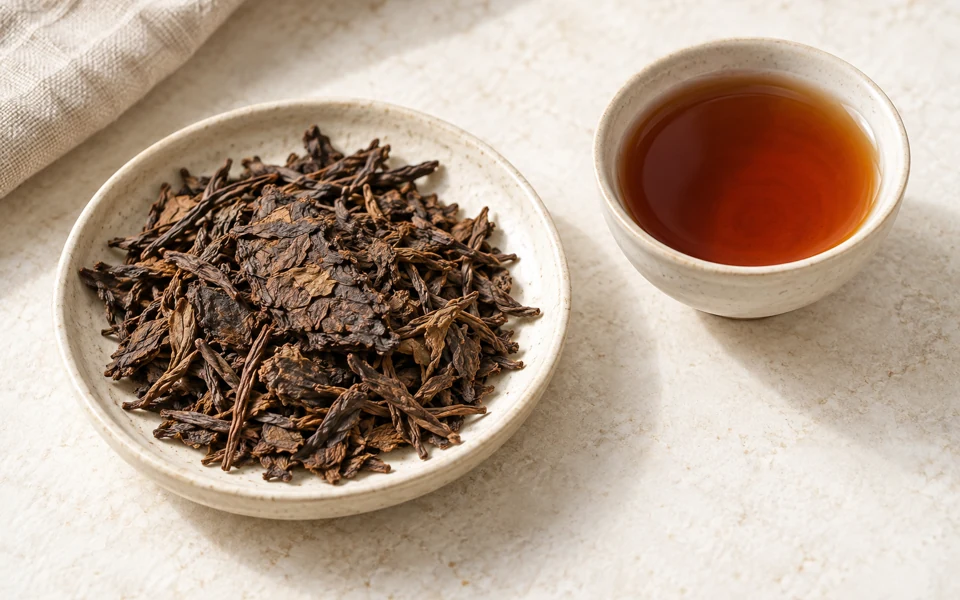
Aged Sheng Pu-erh
Pu-erh tea
4.8/5 · FindMeTea score
About this tea
Aged Sheng Pu-erh is not simply 'old tea' — it is a distinct category prized by collectors: raw pu-erh cakes from Yunnan's large-leaf assamica bushes that have been stored, monitored, and allowed to transform for a decade or more before drinking. Where young Sheng greets you with sharp, grassy bitterness and floral bite, a well-aged cake has mellowed through years of slow oxidation and microbial activity into something entirely different — smooth, woody, and layered with notes of dried fruit, camphor, and old-book sweetness. This is the tea that turned pu-erh into an investment-grade market, with named factories, specific storage histories, and vintage years tracked the way wine collectors track a Bordeaux vintage. Every cup carries a story of time: how it was stored, where, and for how long, and that story shows up directly in the color, aroma, and texture of the liquor. Ten-plus years is generally considered the entry point for 'aged' character to fully emerge, though many serious collectors hold cakes for twenty, thirty, or more.
How to brew: 100°C, 3.5 min, 4 g per cup.
Caffeine
Medium
How to brew
Flavor notes
earthy, woody, fruity, sweet
Often associated with
Calm alertness, Digestive comfort
Best time to enjoy
Afternoon, After a meal
Tags
Where to find it in United States
 Where to find it in United States
- This tea
2011 Yunnan Sourcing Cha Qi Raw Pu-erh Tea Cake
US$ 251.25· 400 g
OnlineSee the shop → - The Head NutOther Pu-erh tea
Philadelphia · Reading Terminal Market
China Pu Erh Tea
from US$ 1.99· 1 oz
In storeOnline51 N 12th St, Philadelphia, PA 19107See the shop → - McNulty's Tea & CoffeeOther Pu-erh tea
New York · Greenwich Village
Pu-erh, loose leaf (4 oz bag)
from US$ 12· 4 oz
In storeOnline109 Christopher StreetSee the shop → - Harney & SonsOther Pu-erh tea
New York · SoHo (ships nationwide)
Pu-Erh, shou style (loose, 4 oz tin)
US$ 13· 4 oz
In storeOnline433 Broome StreetSee the shop → - Tippecanoe Herbs and ApothecaryOther Pu-erh tea
Milwaukee · Bay View, S Kinnickinnic Ave
Tea - Pu'Erh
US$ 4.50· 1 oz
In storeOnline2235 S Kinnickinnic Ave, Milwaukee, WI 53207See the shop →
Origin & Production
The leaf itself comes from the same large-leaf Camellia sinensis var. assamica bushes and old forest trees found across Xishuangbanna, Lincang, and Pu'er prefectures in southern Yunnan that supply all Sheng pu-erh. What sets an aged cake apart is everything that happens after production: where the compressed cake spends the following years matters as much as where the leaf grew. Traditional 'wet-stored' cakes aged in the humid warehouses of Hong Kong or Guangdong develop faster, with deeper, earthier, sometimes muskier character; 'dry-stored' cakes kept in the more temperate, lower-humidity conditions of Kunming or Taiwan mature more slowly, preserving more of the original floral and fruity aromatics beneath the woody aged notes. Collectors and shops increasingly disclose storage history — region, humidity, and turnover — because it changes the finished cup as much as the tea garden did.
Production process
Selecting cakes for cellaring
Not every young Sheng cake ages gracefully. Collectors look for cakes with good leaf quality, sufficient bitterness and body, and a clean processing history — traits that research and tradition both associate with better long-term transformation.
Climate-controlled storage
Cakes are kept wrapped in their original paper inside ventilated, odor-free spaces with monitored temperature and humidity — generally moderate warmth and humidity, away from direct sun, strong smells, and extremes of either dryness or dampness.
Slow oxidation and microbial transformation
Over years, residual enzymes, ambient microflora, and slow oxidation act on the tea's polyphenols and catechins, gradually converting sharp, bitter compounds into smoother, darker, more complex ones — the same broad chemistry that ages a fine wine or cheese, at a much slower pace.
Periodic checking and turning
Serious cellars periodically inspect cakes for mold, pests, and moisture problems, and may rotate stacks to even out airflow. This ongoing attention distinguishes intentional aging from simply forgetting tea in a cupboard.
Tasting and grading over time
Cakes are periodically opened and tasted to track how the flavor is developing. Vendors and collectors record vintage year, factory, and storage notes on the wrapper or in a ledger, building the documented provenance that drives value in the aged-cake market.
- Free
- Sundays
- 2 min
Drink better tea, one Sunday at a time.
A fact for the table·A shop worth the trip·A better cup·Ritual & kit of the week·Tea fun facts
History & Tradition
Aging pu-erh began as an accident of geography and trade — tea simply took months to travel by caravan and improved along the way — but over the twentieth century it grew into a deliberate craft, and eventually a global collectors' market with its own vocabulary, vintages, and auction houses.
Hong Kong as an aging hub
Yunnan pu-erh cakes shipped to Hong Kong for the Cantonese tea-house trade sat in humid warehouses for months or years before sale, and merchants noticed the tea tasted better after this incidental storage — the beginning of intentional wet-storage aging.
'Wet storage' techniques formalized
Hong Kong and Guangzhou traders formalized humid-warehouse aging methods to accelerate the mellowing of raw pu-erh for faster resale, alongside the roughly contemporaneous invention of Shou (ripe) pu-erh, which used pile-fermentation to mimic aged character in months rather than years.
Taiwanese collectors popularize dry storage
Taiwanese tea enthusiasts began systematically collecting and studying vintage Sheng cakes, favoring slower, drier storage conditions and publishing detailed notes that turned pu-erh appreciation into something closer to wine connoisseurship.
The pu-erh price boom
Mainland Chinese demand for aged and aging-worthy Sheng cakes surged dramatically, with prices for old cakes and even new production spiking sharply before a sharp market correction in 2007 — a boom-and-bust cycle often compared to speculative commodity markets.
Vintage cakes reach auction houses
Well-documented cakes from famous mid-twentieth-century factories began appearing at auction houses in Hong Kong and mainland China, with rare vintage examples fetching prices comparable to fine wine and whisky at the top end of the market.
Traceability and provenance standards
Growing concern about counterfeit or mislabeled 'aged' cakes pushed reputable vendors and industry groups toward better documentation — factory marks, wrapper batch codes, and verified storage logs — to protect buyers in an increasingly valuable secondary market.
What's in the cup
What the years do to the caffeine cup
Aged Sheng keeps its caffeine — in our catalogue it sits at level 2 of 3, one step below young Sheng — but the tannic edge that made the young cake sharp has softened. The same leaf reads rounder and sweeter at the house parameters of 4 g per cup at 100 °C for 3.5 minutes, or in a run of short gongfu infusions.
The after-banquet cup, by custom
In southern China aged pu-erh is the tea poured after rich banquet food — in Cantonese tea houses through a long dim sum service, and at home after a holiday meal. It is a table habit that grew with the Hong Kong tea-house trade of the twentieth century, not a claim about what the tea does to the body.
Catechins into theabrownins
Long-term storage converts many of the sharp catechins present in young Sheng into larger polyphenolic compounds such as theabrownins. That chemistry is visible in the cup: the liquor moves from yellow-green to amber and red-brown, and the astringency drops year by year.
Less astringent than young Sheng
Because the tannic bitterness of a young cake has mellowed, drinkers who find fresh raw pu-erh too harsh usually take to aged cakes on the first session: the bite is replaced by huigan, the returning sweetness in the throat, with camphor, dried longan and old-paper notes behind it.
Ritual and attention
Brewing an aged cake gongfu-style — many short infusions, unhurried, often shared with others — is valued as a slow, contemplative ritual in its own right, and the tea rewards it: each pour shows a slightly different layer of the cake.
- Free
- Sundays
- 2 min
Drink better tea, one Sunday at a time.
A fact for the table·A shop worth the trip·A better cup·Ritual & kit of the week·Brew better
Grades & Varieties
Entry-aged (10–15 years)
The threshold where aged character becomes clearly recognizable: bitterness has softened noticeably, the liquor deepens from yellow-green to amber, and dried-fruit and light woody notes start to emerge alongside the tea's original floral base.
Best for
- ✓Everyday gongfu drinking
- ✓Learning to recognize aged character
- ✓Better value than older vintages
Mid-aged, documented vintage (15–30 years)
Cakes with a clear factory origin, vintage year, and storage history. The cup is smooth, woody, and layered with camphor, dried longan, and a lingering sweet aftertaste; documentation of provenance starts to meaningfully affect price.
Best for
- ✓Serious collectors starting a cellar
- ✓Comparing storage regions
- ✓Special-occasion gongfu sessions
Vintage / investment-grade (30+ years)
Rare cakes from named mid-twentieth-century factories with verified provenance, often traded at auction. Deep, mellow, almost sweet-woody with camphor, leather, and dried-date notes and very low astringency; priced as much for rarity and documentation as for flavor.
Best for
- ✓Collectors and connoisseurs
- ✓Formal tastings and comparisons
- ✓Gifting on major milestones
Did you know?
Aged Sheng pu-erh built an investment-grade collectors' market comparable to fine wine: rare vintage cakes from named mid-twentieth-century factories now sell at Hong Kong auction houses for prices rivaling top Bordeaux and whisky.
Foods with this tea
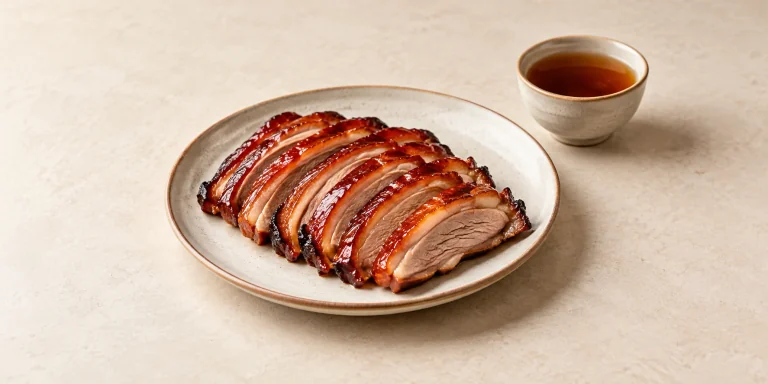
What to Eat with Aged Sheng Pu-erh
A decade-mellowed Sheng pu-erh — woody, dried-fruited, and smooth — calls for foods rich enough to meet its depth without fighting its quiet complexity.
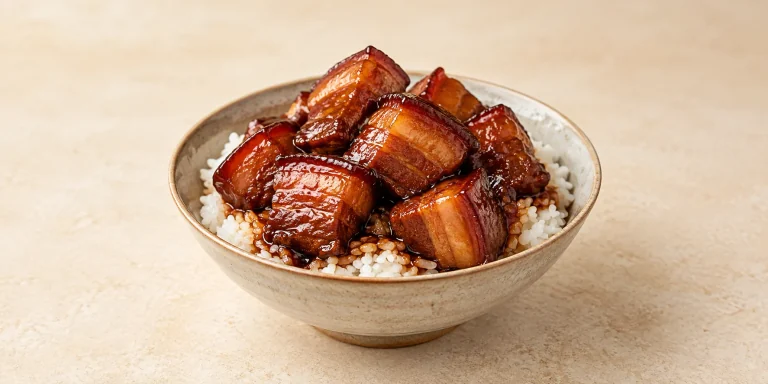
Aged Pu-erh Braised Pork Belly
A slow-braised pork belly where aged Sheng pu-erh replaces plain water in the braising liquid, lending deep woody, dried-fruit undertones to a classic Chinese red-braise.
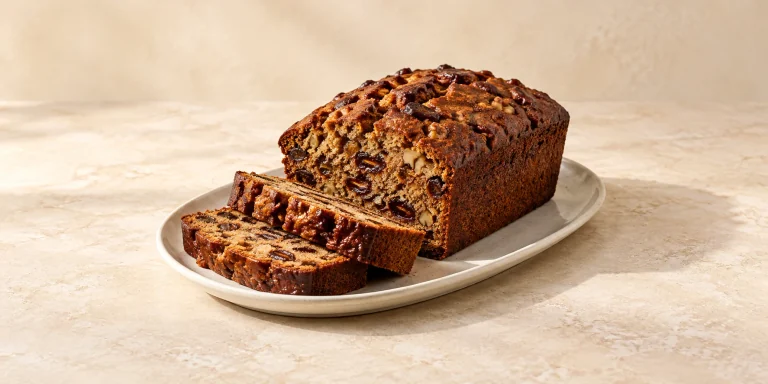
Aged Pu-erh and Dried Date Cake
A moist spiced cake steeped in aged Sheng pu-erh and studded with dried dates and walnuts — the tea's dried-fruit, woody notes baked right into every crumb.
- Free
- Sundays
- 2 min
Drink better tea, one Sunday at a time.
A fact for the table·A shop worth the trip·A better cup·Ritual & kit of the week·Tea recipes & drinks
Drinks with this tea
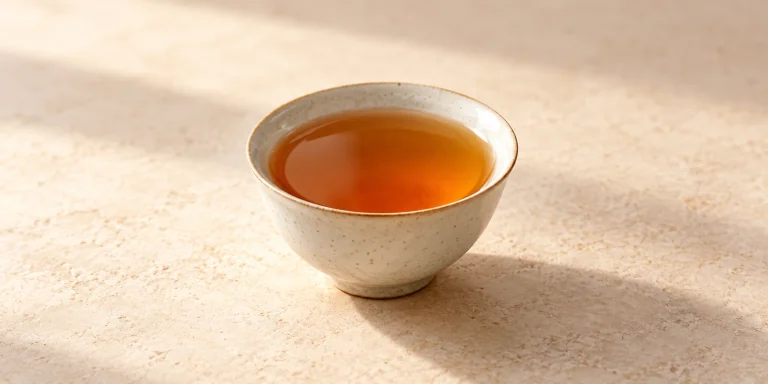
Aged Sheng Pu-erh, Poured Gongfu Style
Six to eight grams of aged Sheng pu-erh in a small gaiwan, rinsed twice and poured in ten or more short infusions — woody, dried-fruit sweet and faintly camphorous, a twenty-minute ritual to share.
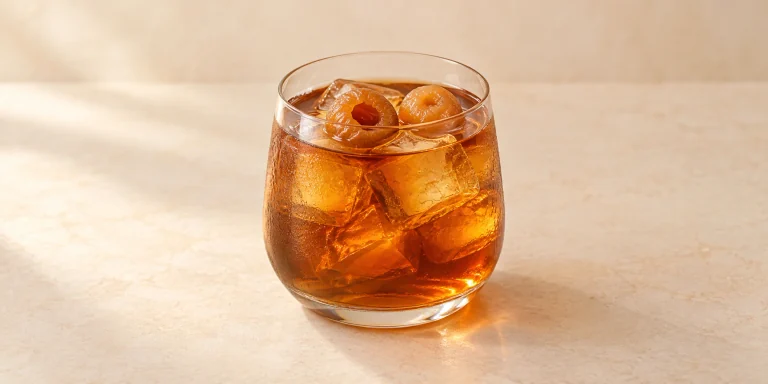
Iced Aged Pu-erh with Dried Longan and Ginger
A cold-brewed aged Sheng pu-erh sweetened naturally with dried longan and a whisper of ginger — the tea's dried-fruit character amplified, chilled, and refreshing.
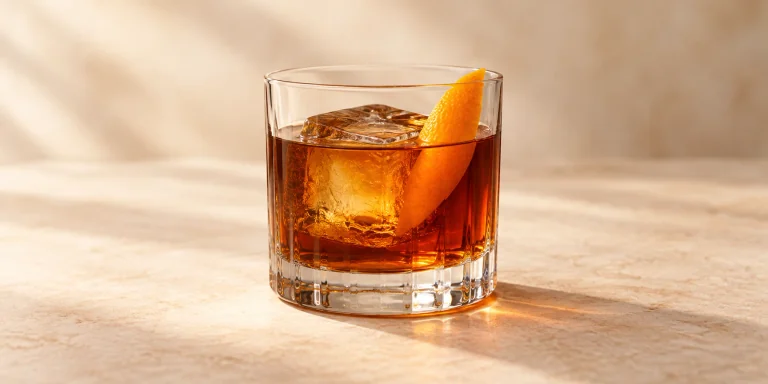
Aged Pu-erh Old Fashioned
A woody, dried-fruited aged Sheng pu-erh reduction stands in for simple syrup in this Old Fashioned riff — a slow-sipping cocktail for a slow-aged tea, with a full mocktail version alongside.