Spearmint
Herbal infusion
4.5/5 · FindMeTea score
About this tea
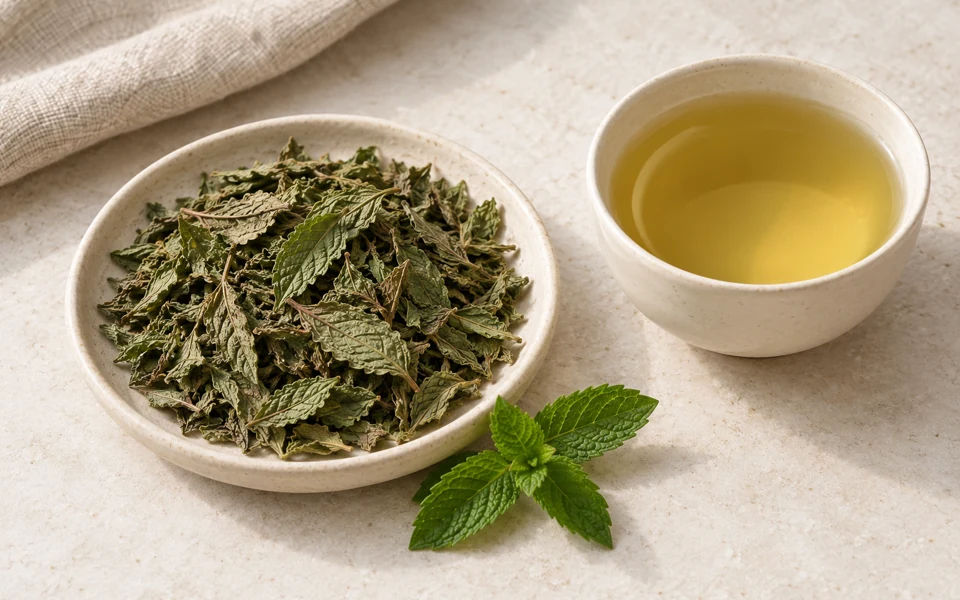
Spearmint (Mentha spicata) is the sweeter, gentler cousin of peppermint — a caffeine-free herbal tisane, not a true tea, known across the Spanish-speaking world as 'hierbabuena' (good herb). Unlike peppermint, whose dominant volatile is the cooling menthol, spearmint's flavor is led by carvone, giving a softer, almost candy-like sweetness with very little of peppermint's chill. This is the mint used in Moroccan mint tea, Cuban mojitos, and Middle Eastern cooking. Spearmint is also the most studied mint in modern hormone research: small clinical trials suggest it may have mild anti-androgenic effects, which is why it has attracted interest as a supportive drink in conditions like polycystic ovary syndrome (PCOS).
How to brew: 95°C, 5 min, 2 g per cup.
Caffeine
None
How to brew
Flavor notes
smooth, sweet, fresh
Often associated with
Digestive comfort, Freshness
Best time to enjoy
After a meal, Any time
Tags
Where to find it in United States
 Where to find it in United States
Near Columbus
- North Market SpicesThis tea
Columbus · North Market, downtown
Spearmint, Crushed Leaves
from US$ 3.85· 1 oz
In storeOnline59 Spruce Street, Columbus, OH 43215See the shop → - Posh Teatime Co.Other Herbal infusion
Columbus · Franklinton, West Broad Street
Farmer's Market Fruit Blend
from US$ 16.95· 4 oz
In storeOnline1273 W Broad Street, Columbus, OH 43222See the shop → - Tea CozyThis tea
Sacramento · R Street Corridor, inside ARTHOUSE
Spearmint Organic
from US$ 7.50· 2 oz
In storeOnline1021 R Street, Sacramento, CA 95811See the shop → - Old City CoffeeThis tea
Philadelphia · Old City · Reading Terminal Market
Spearmint
US$ 9.50· 2 oz
In storeOnline221 Church St, Philadelphia, PA 19106See the shop → - Sencha Tea BarOther Herbal infusion
Minneapolis · Uptown (also Madison, WI)
Rose Hips
from US$ 3.99· 2 oz
In storeOnline2601 Hennepin Ave S, Minneapolis, MN 55408See the shop →
Origin & Production
Spearmint is native to Europe and southern Asia, particularly the Mediterranean basin, and has been cultivated for so long that its exact wild origin is uncertain. Today it grows worldwide in temperate climates, with major commercial cultivation in the United States (Washington, Oregon, Indiana), Morocco, India, China, and Spain. The plant spreads vigorously through underground runners and is famously easy to grow — sometimes too easy, often becoming a garden invader if not contained.
Production process
Propagation
Spearmint is propagated from underground runners or stem cuttings rather than seed, ensuring consistent cultivar character. Planted in early spring, it spreads rapidly to form dense rows.
Harvest
Plants are cut just before flowering, when carvone and other essential oils reach peak concentration. Multiple cuttings (2–3) are typically harvested per season from the same field.
Field wilting
Cut stems are left in windrows on the field for 1–2 days to reduce moisture, concentrating essential oils in the leaves before processing or distillation.
Drying & leaf stripping
For tisane use, leaves are dried at controlled temperatures (30–40°C) to preserve colour and carvone content, then stripped from stems and lightly broken or kept whole depending on grade.
Cutting & packaging
Dried leaves are sieved to remove dust and stems, cut to the desired size, and packaged in airtight, light-protected containers to preserve aroma.
- Free
- Sundays
- 2 min
Drink better tea, one Sunday at a time.
A fact for the table·A shop worth the trip·A better cup·Ritual & kit of the week·Tea fun facts
History & Tradition
Spearmint has been the gentler, sweeter member of the mint family since antiquity — found in Greek banquets, medieval gardens, Moroccan tea ceremonies, and modern Cuban cocktails.
Ancient Mediterranean use
Spearmint was cultivated across the ancient Mediterranean, where Greeks and Romans used it as a culinary herb, strewed it on floors and rubbed it on tables before a meal. The genus name Mentha comes from the Greek nymph Minthe, whom Persephone is said to have turned into the plant.
Pliny the Elder
Pliny's Natural History lists spearmint among the most useful herbs of the Roman Empire and dwells on its smell, recommending it for perfuming rooms and scenting the tables set for guests. What survives is the record of what a Roman naturalist wrote down, not a conclusion about the plant.
Linnaean classification
Carl Linnaeus formally classified spearmint as Mentha spicata, distinguishing it from peppermint (Mentha × piperita), which would later be identified as a hybrid of spearmint and watermint.
Moroccan mint tea spreads
Spearmint became the defining herb of Moroccan mint tea (atay), traditionally brewed with green tea, fresh spearmint leaves, and sugar — now one of the most iconic tea preparations in the world.
PCOS clinical trial
A randomized controlled trial published in Phytotherapy Research found that drinking two cups of spearmint tea daily for 30 days significantly reduced free testosterone in women with hirsutism, drawing scientific attention to spearmint's anti-androgenic potential.
What's in the cup
Carvone, not menthol
Spearmint's essential oil is built on carvone and limonene, with very little menthol — the opposite balance to peppermint. That single difference is why spearmint tastes sweet and rounded where peppermint tastes cold and sharp, and why it is the mint that goes into a Moroccan pot of green tea rather than into a candy cane.
Cognitive support
A randomized trial in the Journal of Alternative and Complementary Medicine reported that a standardized spearmint extract improved working memory and attention in older adults with mild cognitive impairment.
Hormonal balance support
Small clinical trials suggest that drinking 1–2 cups of spearmint tea daily may have mild anti-androgenic effects, of interest for women with hirsutism or polycystic ovary syndrome (PCOS). Always consult a healthcare professional for medical conditions.
Polyphenol antioxidants
Spearmint is a rich source of rosmarinic acid and salvianolic acids — polyphenols with potent antioxidant activity in laboratory studies, supporting cellular defense against oxidative stress.
Breath & oral freshness
Spearmint has been the default flavouring for chewing gum, toothpaste and mouthwash for over a century, which is why the taste reads as "clean" to almost everyone who tries it. That association runs the other way round from what people assume: the flavour was chosen first, and the sense of freshness is something a century of advertising attached to it.
- Free
- Sundays
- 2 min
Drink better tea, one Sunday at a time.
A fact for the table·A shop worth the trip·A better cup·Ritual & kit of the week·Brew better
Grades & Varieties
Moroccan Nana mint
The classic Moroccan cultivar (Mentha spicata var. nana) used in atay — North African mint tea. Bright green, intensely aromatic leaves with a particularly sweet, almost peppery character ideal for pairing with gunpowder green tea and sugar.
Best for
- ✓Moroccan-style mint tea
- ✓Mixed with green tea
- ✓Iced summer infusions
Native garden spearmint
Common garden spearmint dried for tisane. Sweet, soft, and gently fragrant — the everyday hierbabuena of Spanish and Latin American kitchens. Lower in carvone than the Moroccan variety but more versatile.
Best for
- ✓Standalone digestive infusion
- ✓Mojito and lemonade leaves
- ✓Daily caffeine-free cup
Cut & sifted (tea bag)
Finely cut spearmint leaves optimised for tea bags. Quick extraction delivers a strong sweet-minty character with less complexity than whole leaf, but excellent convenience for daily drinking.
Best for
- ✓Daily tea bags
- ✓Office and travel
- ✓Quick after-meal cup
Did you know?
A 2010 randomized clinical trial published in Phytotherapy Research found that drinking two cups of spearmint tea daily for 30 days significantly reduced free testosterone in women with hirsutism — making hierbabuena the most studied mint for hormonal balance.
Foods with this tea
What to Eat with Spearmint Tea
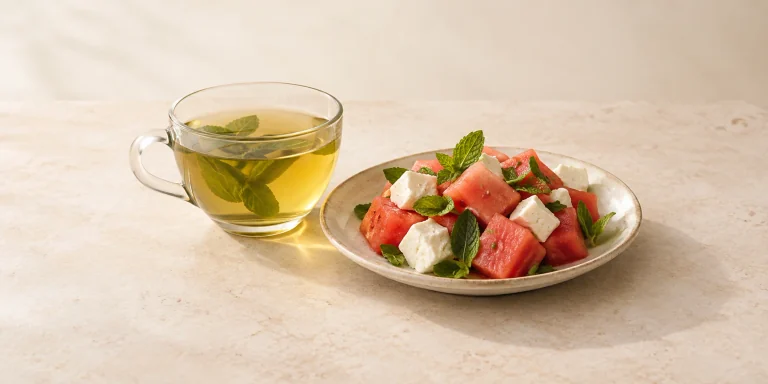
Hierbabuena's sweet, gentle mint pairs beautifully with grilled meats, Middle Eastern mezze, fresh salads, and chocolate-mint desserts.
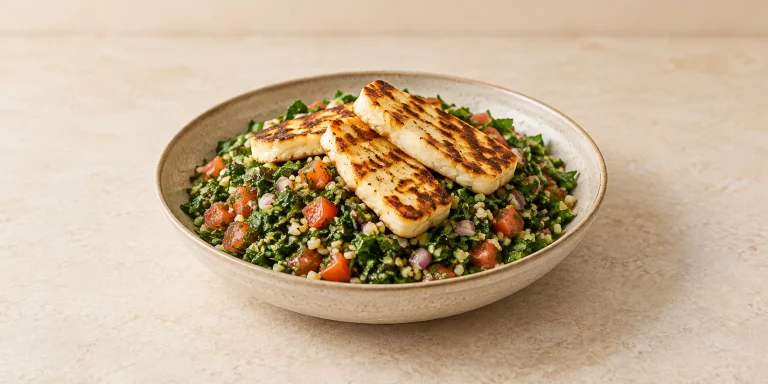
Lemon-Hierbabuena Tabbouleh with Grilled Halloumi
A herb-forward tabbouleh built around bulgur, parsley, and spearmint, served with charred halloumi and a citrus-mint dressing.
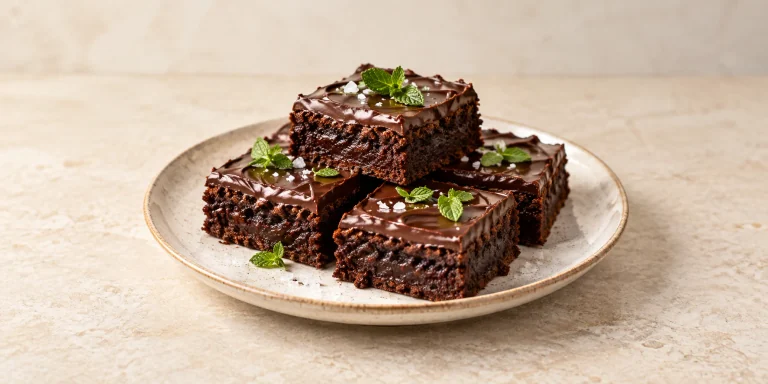
Hierbabuena Brownies with Dark Chocolate Ganache
Fudgy dark chocolate brownies with brewed spearmint tea folded into the batter and a glossy ganache on top—mint and chocolate in their most grown-up form.
- Free
- Sundays
- 2 min
Drink better tea, one Sunday at a time.
A fact for the table·A shop worth the trip·A better cup·Ritual & kit of the week·Tea recipes & drinks
Drinks with this tea
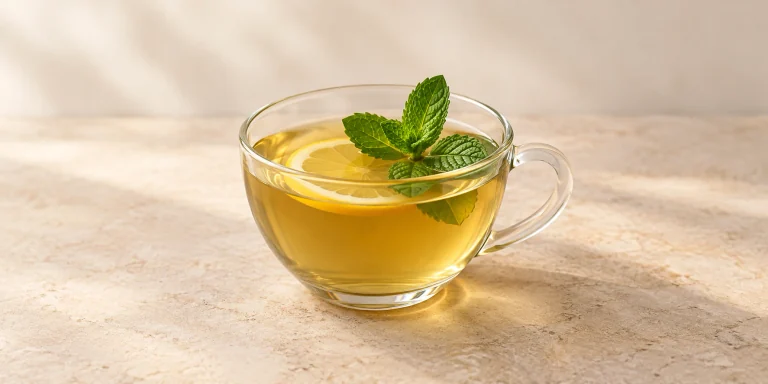
Spearmint and Fennel Seed Tea: the Fresh Recipe
How to brew fresh spearmint (hierbabuena) with fennel seeds and lemon: quantities, steep time and the moment this bright, caffeine-free cup fits best.
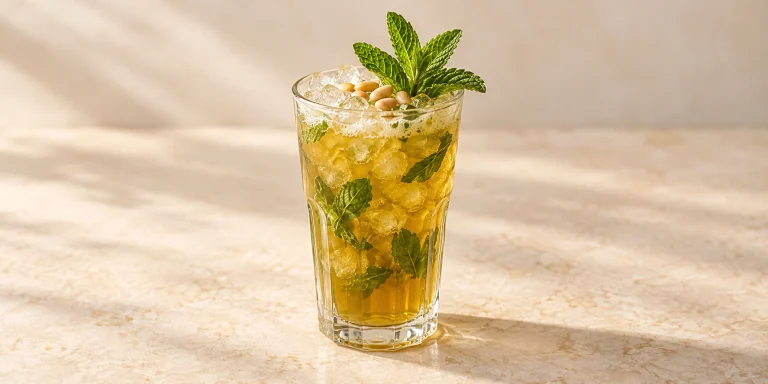
Iced Moroccan-Style Spearmint Tea
Iced spearmint brewed strong, sweetened generously, and poured over ice from height—the cooling, sugar-laced North African classic adapted for summer.
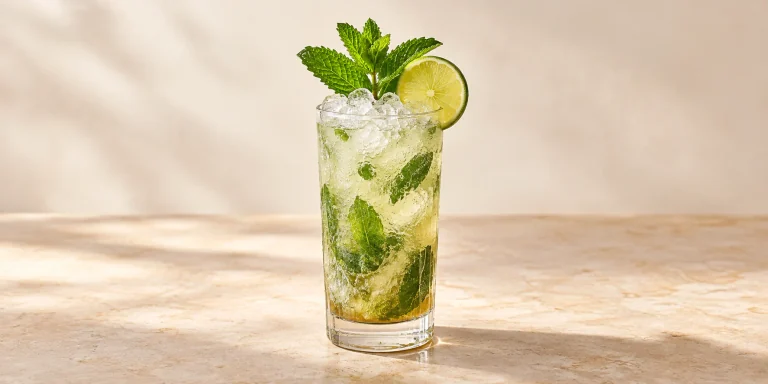
Hierbabuena Mojito
The classic Cuban mojito built properly with hierbabuena instead of generic mint—white rum, lime, brown sugar, soda, and the right mint for once.