
Chamomile
Herbal infusion
4.8/5 · FindMeTea score
About this tea
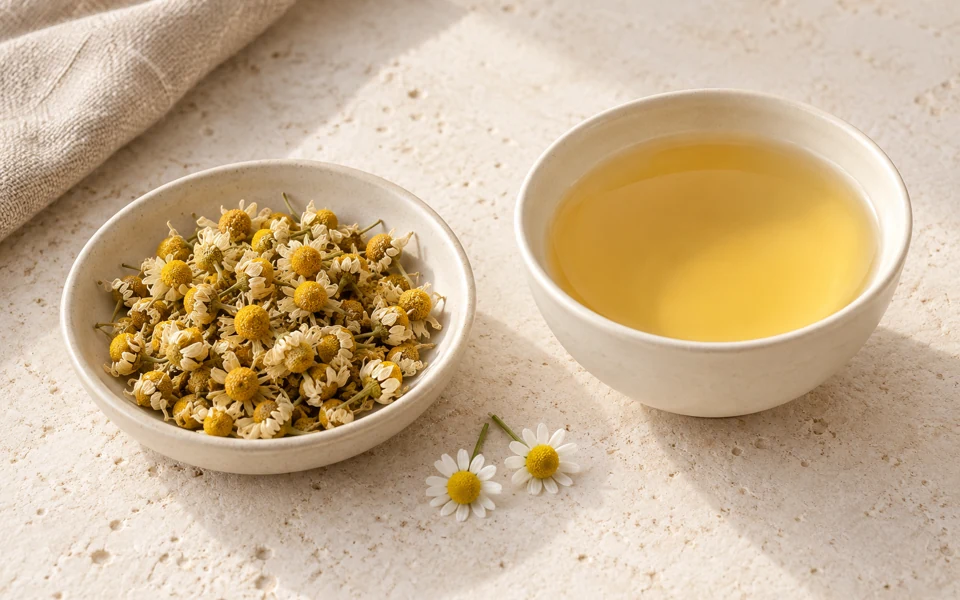
Chamomile (Matricaria chamomilla) is one of the world's most beloved herbal tisanes — a caffeine-free infusion, not a true tea, made from the dried daisy-like flowers of the chamomile plant. It is known for its gentle apple-like sweetness and its golden colour in the cup, and it has been part of household routines from Egypt to Central Europe since antiquity. Its best-known compounds are the flavonoid apigenin and the essential-oil constituents bisabolol and chamazulene, which carry much of its aroma.
How to brew: 95°C, 5 min, 2 g per cup.
Caffeine
None
How to brew
Flavor notes
floral, sweet, smooth
Often associated with
Relaxation, Digestive comfort
Best time to enjoy
Evening, Mid-afternoon
Tags
Where to find it in United States
 Where to find it in United States
Near Columbus
- North Market SpicesThis tea
Columbus · North Market, downtown
Chamomile Flowers
from US$ 4.20· 0.25 oz
In storeOnline59 Spruce Street, Columbus, OH 43215See the shop → - Posh Teatime Co.Other Herbal infusion
Columbus · Franklinton, West Broad Street
Farmer's Market Fruit Blend
from US$ 16.95· 4 oz
In storeOnline1273 W Broad Street, Columbus, OH 43222See the shop → - The Random Tea RoomThis tea
Philadelphia · Northern Liberties
Chamomile
US$ 18· 6 oz
In storeOnline713 N 4th St, Philadelphia, PA 19123See the shop → - The Spice HutThis tea
Bellingham · W Kellogg Road, north Bellingham
Organic Chamomile Herbal Tea
from US$ 6.59· 2 oz
In storeOnline131 W Kellogg Rd, Bellingham, WA 98226See the shop → - Chado Tea Room – South BayThis tea
Torrance · Old Torrance (El Prado Avenue)
Chamomile
US$ 14.38· 4 oz
In storeOnline1303 El Prado Avenue, Torrance, CA 90501See the shop →
Origin & Production
Chamomile has been cultivated since ancient Egypt, where it was dedicated to the sun god Ra for its golden flowers. Today the two main commercial species are German chamomile (Matricaria chamomilla), grown extensively across Central and Eastern Europe, and Roman chamomile (Chamaemelum nobile), cultivated primarily in the UK and France. Egypt remains one of the largest exporters, with the Nile Valley providing ideal sandy soil and warm climate for large-scale production.
Production process
Cultivation
Chamomile thrives in well-drained, sandy soil with full sun. Seeds are sown in early spring, and the plants grow quickly, reaching flowering stage in 6–8 weeks.
Flower harvest
Only the fully opened flower heads are harvested, typically by hand or with specialized combing machines, when the white petals begin to fold back — indicating peak essential oil content.
Drying
Freshly picked flowers are spread in thin layers and dried at low temperatures (35–45°C) to preserve the volatile oils, particularly bisabolol and chamazulene, which carry chamomile's aroma and its characteristic sweetness.
Grading & packaging
Dried flowers are sorted by size and oil content. Premium whole-flower chamomile retains intact flower heads, while lower grades are sieved into smaller fragments used in tea bags.
- Free
- Sundays
- 2 min
Drink better tea, one Sunday at a time.
A fact for the table·A shop worth the trip·A better cup·Ritual & kit of the week·Tea fun facts
History & Tradition
Chamomile's history stretches from the pharaohs of ancient Egypt through Greek and Roman medical writing to the herbal monographs of modern Europe — more than three thousand years of the same golden flower.
Ebers Papyrus, Ancient Egypt
One of the oldest known medical texts lists chamomile among the plants Egyptian physicians wrote about, and it appears as a cosmetic offering to the gods. The Egyptians considered it sacred to Ra.
Hippocrates prescribes chamomile
The Greek physician Hippocrates, the father of Western medicine, documented chamomile's use for treating fevers and inflammatory conditions.
Dioscorides' De Materia Medica
Greek physician Dioscorides included chamomile in his encyclopedic herbal reference, prescribing it for intestinal, nervous, and liver disorders.
Monastic medicine in Europe
Chamomile became a staple of monastic gardens across Europe. Monks cultivated it as one of the essential 'simples', the single-plant preparations every infirmary kept on hand.
European herbal monograph
The European Medicines Agency adopted its European Union herbal monograph for chamomile flower, classifying it as a traditional herbal medicinal product — a status granted on documented long-standing use rather than on clinical trial evidence.
What's in the cup
Caffeine-free by nature
Chamomile is an infusion of flowers, not of Camellia sinensis leaves, so there is no caffeine in the cup — none at any steeping time or strength. That is why it usually turns up at the end of the day rather than at breakfast.
What's in the flower
Dried chamomile flowers carry a small amount of essential oil, whose main constituents are bisabolol and chamazulene — the latter is what makes distilled chamomile oil deep blue. The flowers also contain the flavonoid apigenin. In the cup all of that reads as aroma and a faint honeyed bitterness; the infusion itself stays golden.
The cup that closes the meal
Long before it reached supermarket shelves, chamomile grew in the monastery gardens of medieval Europe as one of the 'simples' every infirmary kept. In Spanish-speaking homes it is still the infusion that closes a meal, and in much of Central Europe the one brewed at the end of the day.
A tradition on the official record
The European Medicines Agency lists chamomile flower as a traditional herbal medicinal product. Its 2016 monograph is explicit about what that category means: the basis is documented long-standing use, and the agency states there is insufficient evidence from clinical trials.
Source: European Medicines Agency (2016)
If daisies are a problem for you
Chamomile belongs to the daisy family (Asteraceae). The US National Center for Complementary and Integrative Health notes that people are more likely to have an allergic reaction to chamomile if they are allergic to related plants such as ragweed, chrysanthemums, marigolds or daisies.
This isn't medical advice. If you have a specific condition, or you are pregnant or taking medication, check with a healthcare provider.
- Free
- Sundays
- 2 min
Drink better tea, one Sunday at a time.
A fact for the table·A shop worth the trip·A better cup·Ritual & kit of the week·Brew better
Grades & Varieties
German chamomile (Matricaria chamomilla)
The most widely cultivated species, with a sweet, herbaceous apple-like flavor. Contains higher concentrations of chamazulene and bisabolol. Annual plant with hollow, cone-shaped flower receptacles.
Best for
- ✓Evening ritual
- ✓After-dinner cup
- ✓Everyday infusion
Roman chamomile (Chamaemelum nobile)
A perennial ground-cover plant with a slightly more bitter, intensely aromatic profile. Preferred for essential oil production and aromatherapy due to its richer scent. Also known as English chamomile.
Best for
- ✓Aromatherapy & essential oils
- ✓Blending with other herbs
- ✓Topical skin preparations
Egyptian chamomile (premium origin)
German chamomile grown in the Nile Valley of Egypt, sold as a premium origin for its high essential oil content, large golden flower heads, and exceptionally sweet, smooth taste with minimal bitterness.
Best for
- ✓Premium loose-leaf infusion
- ✓Standalone sipping — no sweetener needed
- ✓Gifting & specialty blends
Did you know?
The word "chamomile" comes from Greek "ground apple" for its apple-like scent; the Spanish "manzanilla" also means "little apple."
Foods with this tea
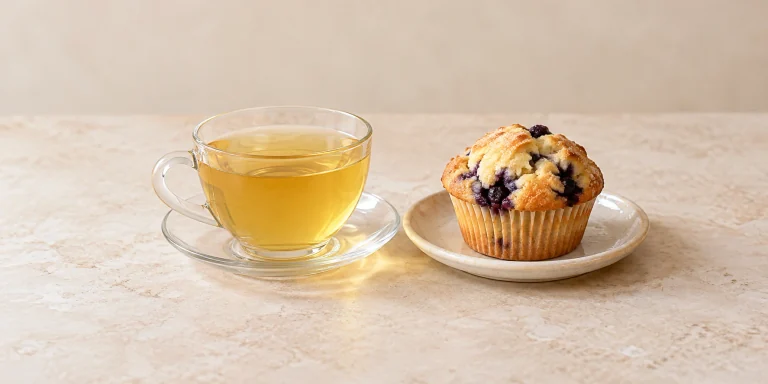
What to Eat with Chamomile Tea
Chamomile's gentle apple-like sweetness and floral softness pair beautifully with light pastries, soft cheeses, and honey-kissed treats.
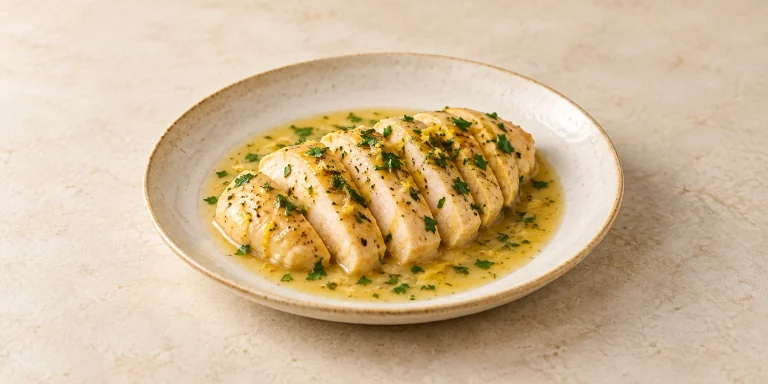
Chamomile-Poached Chicken with Lemon and Herbs
Chicken breasts gently poached in chamomile tea become impossibly tender and fragrant, served with a silky lemon-herb pan sauce.
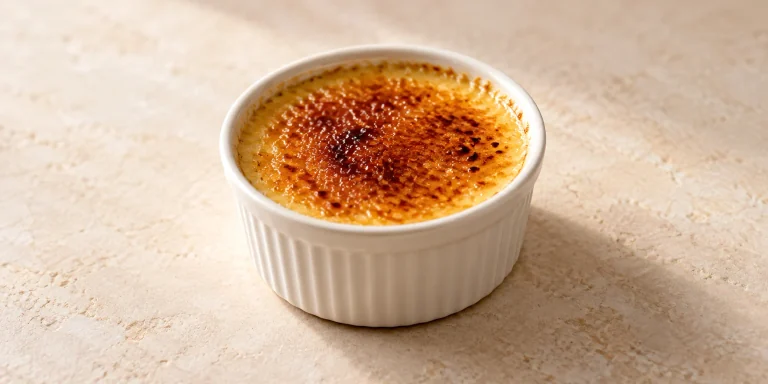
Chamomile Honey Crème Brûlée
A velvety crème brûlée infused with chamomile and wildflower honey—crack the caramelized top to reveal a floral, golden custard.
- Free
- Sundays
- 2 min
Drink better tea, one Sunday at a time.
A fact for the table·A shop worth the trip·A better cup·Ritual & kit of the week·Tea recipes & drinks
Drinks with this tea
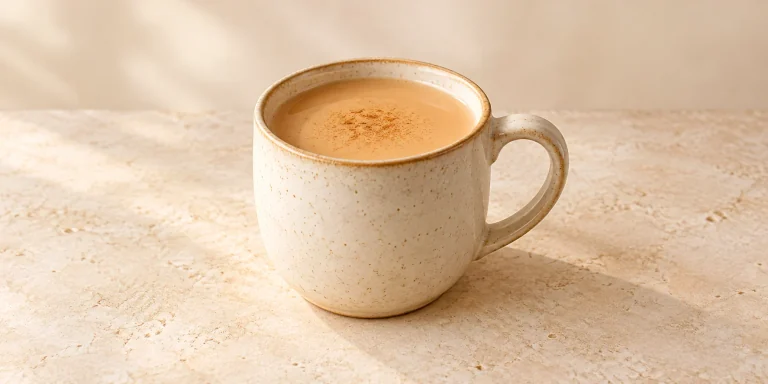
Chamomile with Lavender, Honey and a Splash of Warm Milk
Chamomile flowers steeped with a pinch of dried lavender, finished with raw honey and a splash of warm milk: golden, floral and caffeine-free.

Iced Chamomile Lemonade with Honey
Cold-brewed chamomile blended with fresh lemonade and honey—a golden, caffeine-free summer cooler that's sunshine in a glass.
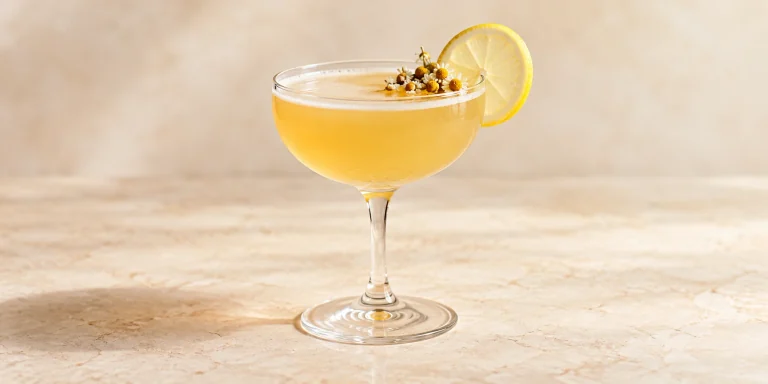
Chamomile Bee's Knees Cocktail
A floral twist on the classic Bee's Knees—chamomile-infused gin, honey syrup, and fresh lemon for a golden, Prohibition-era charmer.