
Nettle
Herbal infusion
4.1/5 · FindMeTea score
About this tea
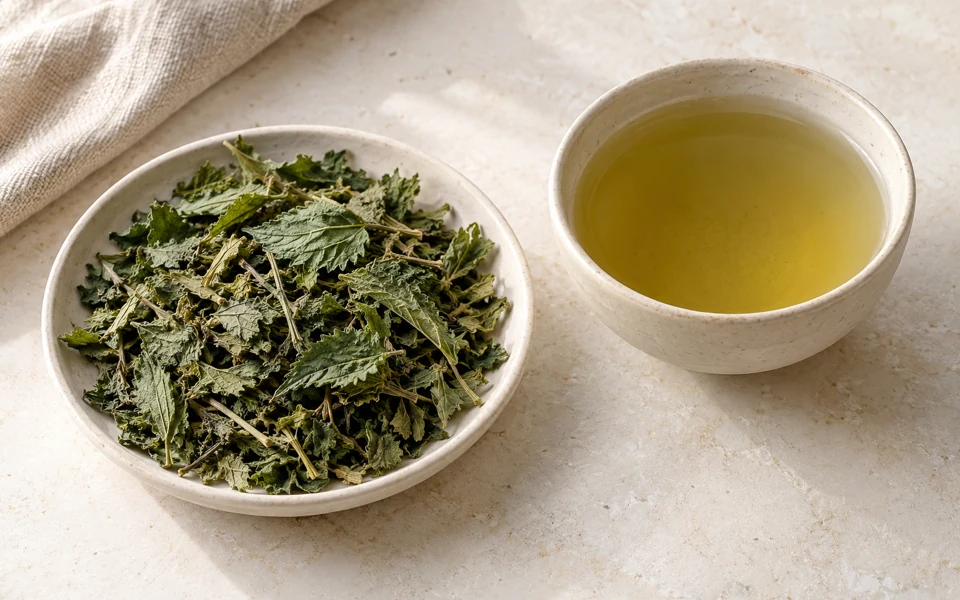
Nettle (Urtica dioica), often called stinging nettle, is a caffeine-free herbal infusion made from the dried leaves of a wild plant that grows across Europe, Asia, and North America. Our catalog lists it at level 0 on the caffeine scale and describes the cup as earthy, vegetal, mineral and fresh — a deep green, savory infusion with a clean finish that many compare to a mild leafy broth. The same leaf has been cooked and eaten like spinach for centuries, and drying or blanching completely removes the plant's famous sting. Brewed at 95 °C for 5 minutes and served warm or chilled over ice, nettle is one of the most familiar foraged herbs of the temperate world.
How to brew: 95°C, 5 min, 2 g per cup.
Caffeine
None
How to brew
Flavor notes
earthy, vegetal, mineral, fresh
Often associated with
Digestive comfort, Balance
Best time to enjoy
Morning, Mid-afternoon, After a meal
Tags
Where to find it in United States
 Where to find it in United States
Near Columbus
- North Market SpicesOther Herbal infusion
Columbus · North Market, downtown
Spearmint, Crushed Leaves
from US$ 3.85· 1 oz
In storeOnline59 Spruce Street, Columbus, OH 43215See the shop → - Posh Teatime Co.Other Herbal infusion
Columbus · Franklinton, West Broad Street
Farmer's Market Fruit Blend
from US$ 16.95· 4 oz
In storeOnline1273 W Broad Street, Columbus, OH 43222See the shop → - Tea CozyThis tea
Sacramento · R Street Corridor, inside ARTHOUSE
Nettle Organic
from US$ 9.20· 2 oz
In storeOnline1021 R Street, Sacramento, CA 95811See the shop → - Sencha Tea BarOther Herbal infusion
Minneapolis · Uptown (also Madison, WI)
Rose Hips
from US$ 3.99· 2 oz
In storeOnline2601 Hennepin Ave S, Minneapolis, MN 55408See the shop → - Old City CoffeeOther Herbal infusion
Philadelphia · Old City · Reading Terminal Market
Hibiscus
US$ 11· 4 oz
In storeOnline221 Church St, Philadelphia, PA 19106See the shop →
Origin & Production
Nettle grows wild and abundantly throughout the temperate Northern Hemisphere, thriving in nitrogen-rich soils along riverbanks, hedgerows, woodland edges, and disturbed ground. Europe — particularly the countryside of Britain, France, Germany, and the Balkans — has the deepest tradition of harvesting nettle as both food and herbal infusion. The plant favors damp, fertile conditions and is often one of the first vigorous greens to appear in early spring. Most culinary and tisane-grade nettle is still gathered from the wild rather than intensively farmed, though cultivated plots are increasingly common in central and eastern Europe. Sustainable foraging, taking only the tender top leaves before flowering, keeps stands healthy year after year.
Production process
Spring harvesting
The tender young top leaves are gathered with gloves in early spring, before the plant flowers, when the flavor is at its peak. Foragers take only the upper few leaf pairs to let the plant keep growing.
Sting neutralization
Fresh nettle carries tiny stinging hairs, but drying or a brief blanch in hot water deactivates them completely. Once dried or wilted, the leaves are entirely safe to handle and brew.
Air-drying
Leaves are spread in thin layers and dried in warm, ventilated shade for several days. Gentle, low-heat drying preserves the vivid green color, the earthy aroma, and the mineral finish.
Cutting & sifting
Dried leaves are cut to a uniform size and sifted to remove coarse stems and dust. Clean, bright-green leaf flakes with a strong green-tea-like aroma are graded as the highest quality.
Packaging
The leaf is packed into sealed, light-protected pouches or tins as loose leaf or tea bags. Protection from light and moisture keeps the green color and delicate aroma intact during storage.
- Free
- Sundays
- 2 min
Drink better tea, one Sunday at a time.
A fact for the table·A shop worth the trip·A better cup·Ritual & kit of the week·Tea fun facts
History & Tradition
Nettle is one of the oldest useful plants in European history, valued for food, fiber, and herbal infusion since prehistoric times and woven through folklore as a symbol of resilience and spring renewal.
Nettle cloth
Fibers from nettle stems were spun into cloth in prehistoric Europe. A textile from the Lusehøj burial mound in Denmark, long assumed to be flax, was identified as nettle in a 2012 study published in Scientific Reports — proof that the plant was woven into everyday life long before it was a herbal cup.
Culpeper's herbal
Nicholas Culpeper's Complete Herbal gives nettles an entry of their own, opening with the line that they 'are so well known, that they need no description; they may be found by feeling, in the darkest night.' The book records the custom of eating nettle tops in spring; the virtues it goes on to list are seventeenth-century astrology, not something we repeat.
Wartime gathering
During wartime shortages, communities across Britain and Europe were encouraged to forage nettle for soups, teas, and even green dye. The plant earned a reputation as a reliable, free source of greens.
Modern wellness revival
Renewed interest in foraging and natural infusions has brought nettle back to specialty tea shops and home gardens. It is now a popular caffeine-free choice, chosen for its earthy, vegetal character.
An EMA monograph
The European Medicines Agency's Committee on Herbal Medicinal Products adopts a traditional-use monograph for nettle leaf, stating the two uses it accepts on long-standing use alone and the cautions that go with them. A call for scientific data to review it ran in 2020.
What's in the cup
The cup, as our catalog lists it
Nettle is level 0 on our caffeine scale: there is no Camellia sinensis in the cup. The catalog brews it at 95 °C for 5 minutes with 2 g per cup, describes the flavor as earthy, vegetal, mineral and fresh, and places it in the morning, mid-afternoon and after meals. Dried leaf brews a deep green, savory cup; the longer it steeps, the more it tastes like a leafy broth.
Nettle leaf, as Europe's medicines agency lists it
The European Medicines Agency's Committee on Herbal Medicinal Products lists nettle leaf as a traditional herbal medicinal product for the relief of minor articular pain, and to increase the amount of urine to achieve flushing of the urinary tract as an adjuvant in minor urinary complaints — a status it grants exclusively on the basis of long-standing use, for no more than four weeks in the first case and two to four weeks in the second, with a doctor consulted if the symptoms persist. The same monograph lists the leaf as not to be used where a reduced fluid intake is recommended (severe heart or kidney disease); does not recommend it under 12 or during pregnancy and breastfeeding; records no reported interactions, and notes that mild stomach upsets (nausea, vomiting, diarrhoea) and skin reactions (itching, rash, hives) may occur. A cup of nettle infusion is not that product. This isn't medical advice — if you have a specific condition, check with a healthcare provider.
Source: EMA/HMPC — Community herbal monograph on Urtica dioica / Urtica urens, folium (2010)
A cup after meals, by custom
Our catalog places nettle after meals as well as in the morning and mid-afternoon, and the savory, broth-like cup is the reason: at the table it behaves more like a light soup than like a sweet drink. Most people pour it plain, or with a squeeze of lemon that lifts the green, earthy flavor.
Naturally caffeine-free
Nettle contains no caffeine, so it can be poured at any hour, including the evening, when many people want a warm cup with nothing in it to count. It is the usual swap for anyone cutting back on tea or coffee after lunch.
From soup pot to teapot
The same leaf goes into nettle soup and into the teapot. Cooking or drying removes the sting, and the dried leaf keeps the deep green color and hay-and-spinach aroma that make the infusion taste like a garden. That overlap is why nettle pairs so naturally with spring vegetables and fresh cheese on our food pages.
This isn't medical advice. If you have a specific condition, or you are pregnant or taking medication, check with a healthcare provider.
- Free
- Sundays
- 2 min
Drink better tea, one Sunday at a time.
A fact for the table·A shop worth the trip·A better cup·Ritual & kit of the week·Brew better
Grades & Varieties
Whole dried leaf
Large, intact air-dried nettle leaves with a vivid green color and a strong, fresh, hay-and-spinach aroma. The premium foraged grade, it yields a deep, full-bodied infusion with a mineral finish, prized by herbal tea enthusiasts.
Best for
- ✓Spring-harvest infusion
- ✓Standalone hot herbal cup
- ✓Cold-brew over ice
Cut leaf (tea bags)
Nettle leaf cut into small, uniform pieces for fast, even steeping in tea bags. Slightly milder than whole leaf but convenient and consistent — the most common everyday format.
Best for
- ✓Daily caffeine-free cup
- ✓Travel-friendly format
- ✓Blending with mint or lemon
Nettle-mint blend
A popular blend pairing earthy nettle with bright peppermint or spearmint, lifting the green, broth-like base with a cool, refreshing top note. A welcoming introduction for newcomers to nettle.
Best for
- ✓Refreshing afternoon cup
- ✓Milder flavor preference
- ✓After-meal cup
Did you know?
Stinging nettle's prickle vanishes the moment the leaves are dried or cooked, turning a feared weed into a nourishing, mineral-rich spring tonic.
Foods with this tea
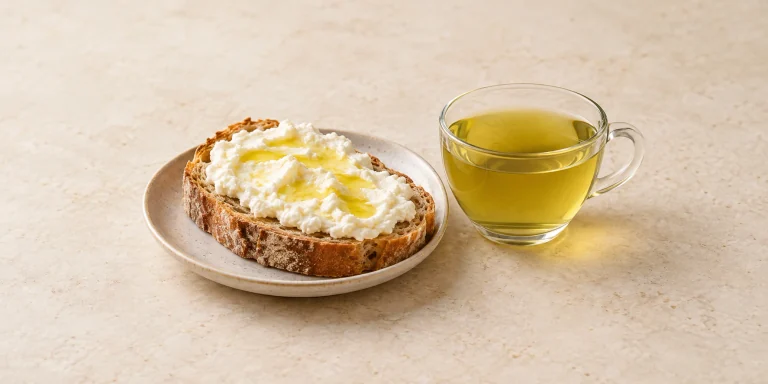
What to Eat with Nettle Tea
Nettle's green, earthy profile with a mineral finish pairs beautifully with springtime vegetables, fresh cheeses, and rustic grain dishes that echo its garden character.
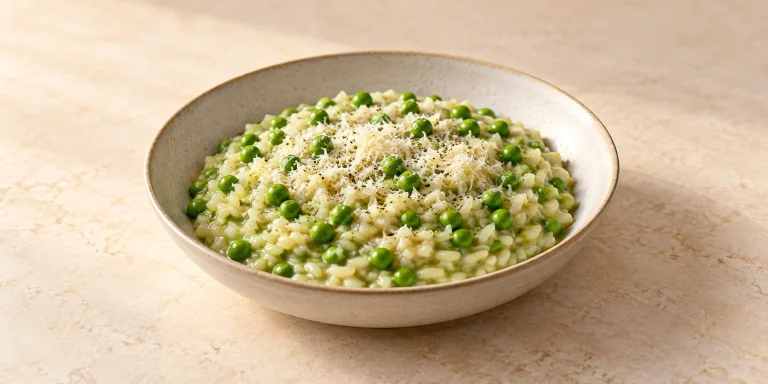
Nettle and Spring Pea Risotto
A creamy, vivid-green risotto built on a strong nettle tea broth, finished with sweet peas, parmesan and a squeeze of lemon.
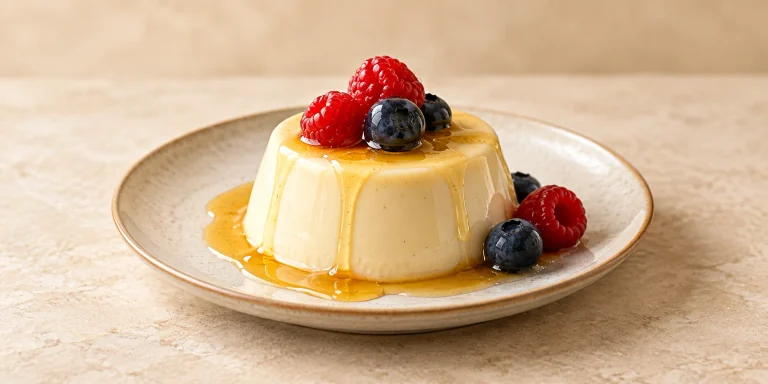
Nettle and Honey Panna Cotta
A delicate, pale-green panna cotta gently infused with nettle tea and sweetened with floral honey — an earthy, refined dessert that surprises.
- Free
- Sundays
- 2 min
Drink better tea, one Sunday at a time.
A fact for the table·A shop worth the trip·A better cup·Ritual & kit of the week·Tea recipes & drinks
Drinks with this tea
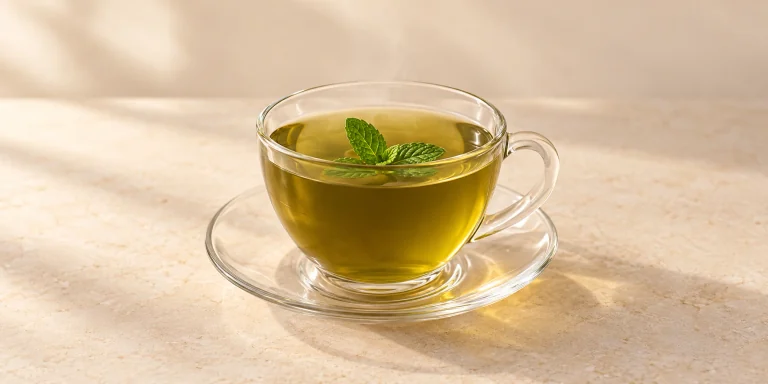
Nettle Infusion with Lemon and Honey
Dried nettle steeped in hot water with lemon, honey and a few fresh mint leaves: green, grassy and caffeine-free.
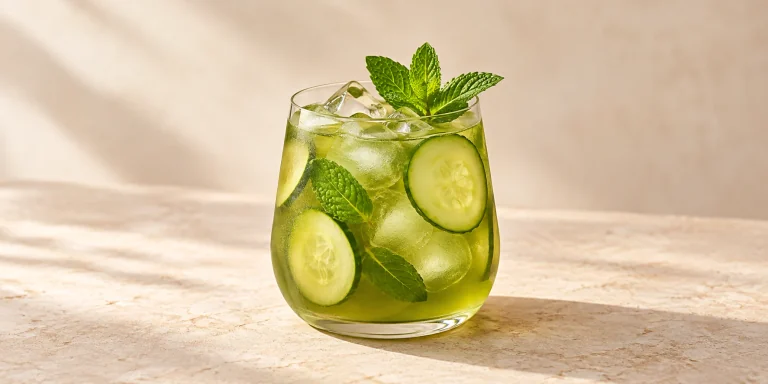
Iced Nettle Green Cooler with Cucumber and Mint
Cold-brewed nettle blended with crisp cucumber and fresh mint — a clean, vivid-green iced drink for warm days.
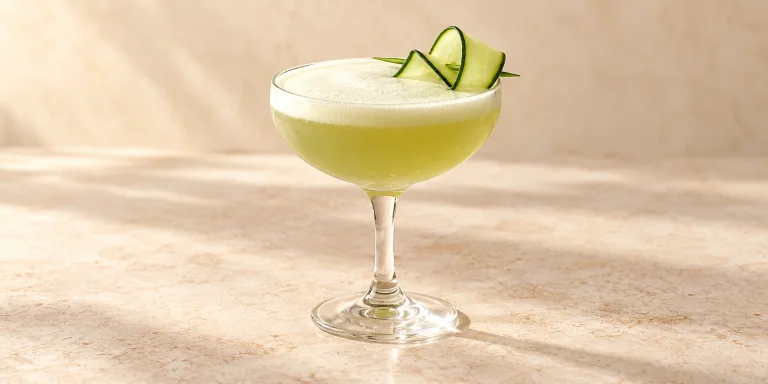
Nettle Garden Gin Sour
A herbaceous, vivid-green cocktail where nettle-infused gin meets fresh lemon and honey syrup — with an easy alcohol-free mocktail version for everyone.