Chai masala, apple-cinnamon black tea and pure cinnamon infusion — three cups that feel like a blanket, with exact brewing for each.
Quick answer
For real cold-day comfort go spiced: chai masala is the classic — black tea simmered with warming spices, best with milk; apple-cinnamon black tea tastes like baked dessert in a cup; and pure cinnamon infusion gives you the same cozy warmth with zero caffeine for the evening.
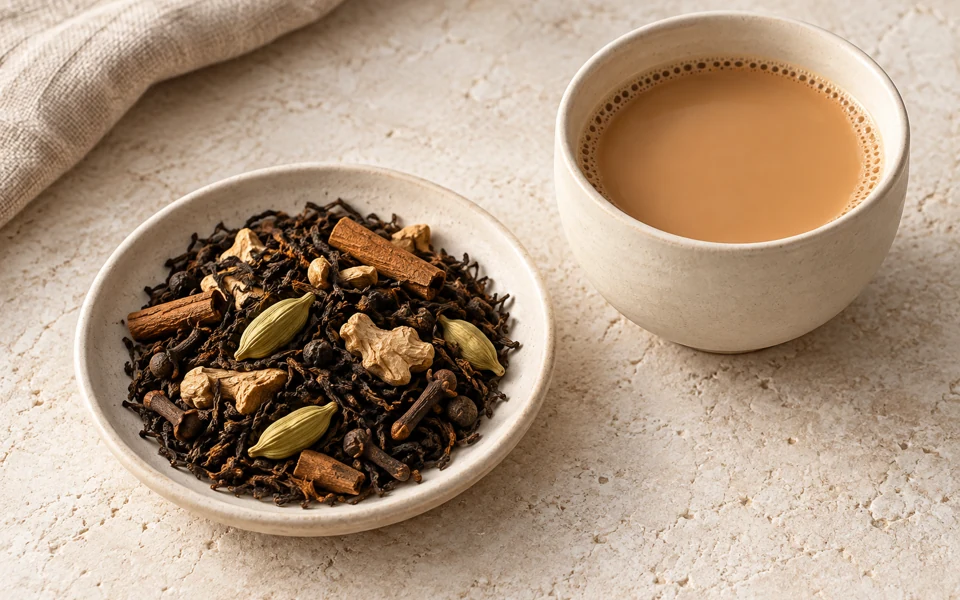
The definitive winter cup: black tea and spices like cardamom, cinnamon and ginger.
Made for milk — simmered chai latte-style it turns into comfort food.
Carries real caffeine, so it doubles as an afternoon pick-me-up.
How to brew
95°C
5 min
3 g per cup
High
If you don't have it
Simmer any black tea with cinnamon, a clove and fresh ginger for homemade chai.
Tea fact
Saying "chai tea" is saying "tea tea"—chai already means tea; street "chai wallahs" in India added milk, sugar, and spices to create the masala chai we know.
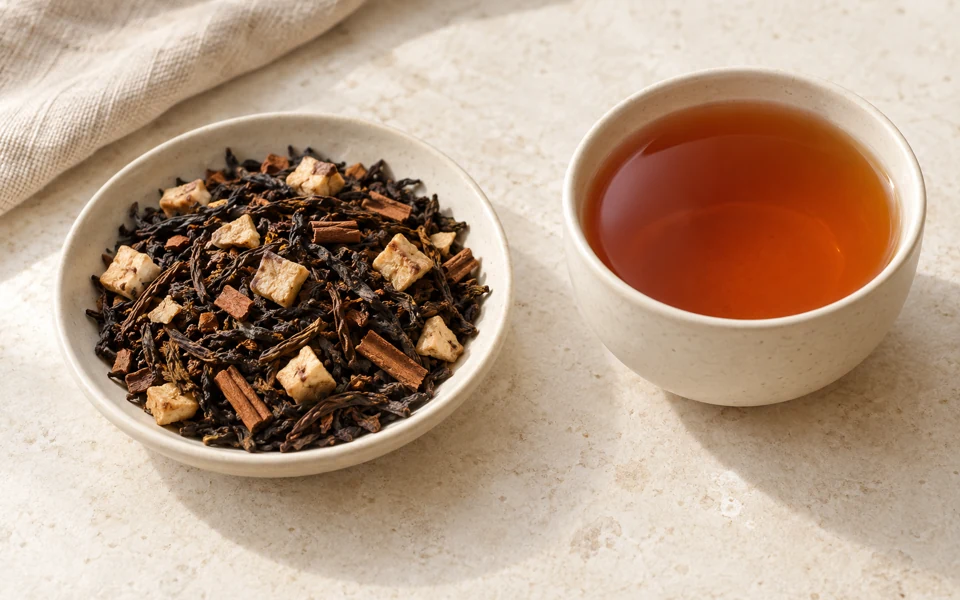
Sweet apple and cinnamon over a black-tea base — the closest a cup gets to warm pie.
Naturally dessert-like, so it satisfies a sweet craving without sugar.
Moderate caffeine — a good mid-afternoon cozy cup.
How to brew
95°C
3.5 min
2.5 g per cup
Medium
If you don't have it
Black tea with a cinnamon stick and a couple of dried apple slices gets very close.
Tea fact
Long before flavored tea existed commercially, European and North American households simmered apples, cider, and cinnamon together as a cold-weather drink in the 1800s — apple cinnamon black tea is essentially that centuries-old mulled-cider comfort ritual bottled into a modern tea bag.
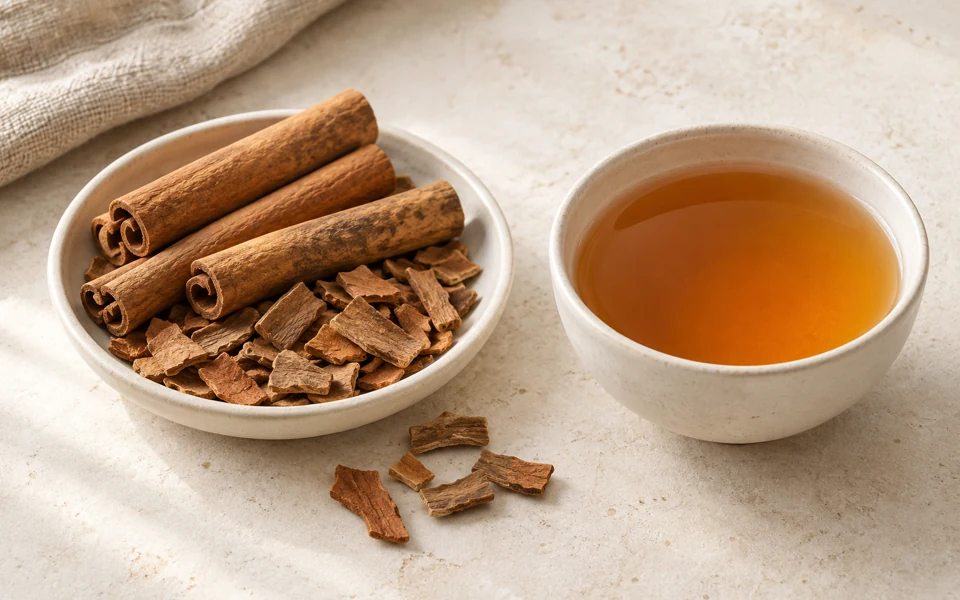
All the warmth of the spice rack with no tea leaf at all — sweet, simple, comforting.
Caffeine-free, so it's the cold-night cup that won't cost you sleep.
Lovely with a splash of milk or a spoonful of honey.
How to brew
100°C
8 min
3 g per cup
None
If you don't have it
Simmer a cinnamon stick from the kitchen for ten minutes — that IS the tea.
Tea fact
Cinnamon was once worth more than silver by weight in ancient Rome, and for centuries Arab traders deliberately hid its true Sri Lankan origin to protect their monopoly on the spice.