Focused but not jittery — the writer's brief: three green teas whose calm-alertness profile has made them the traditional companions of morning creative work.
Quick answer
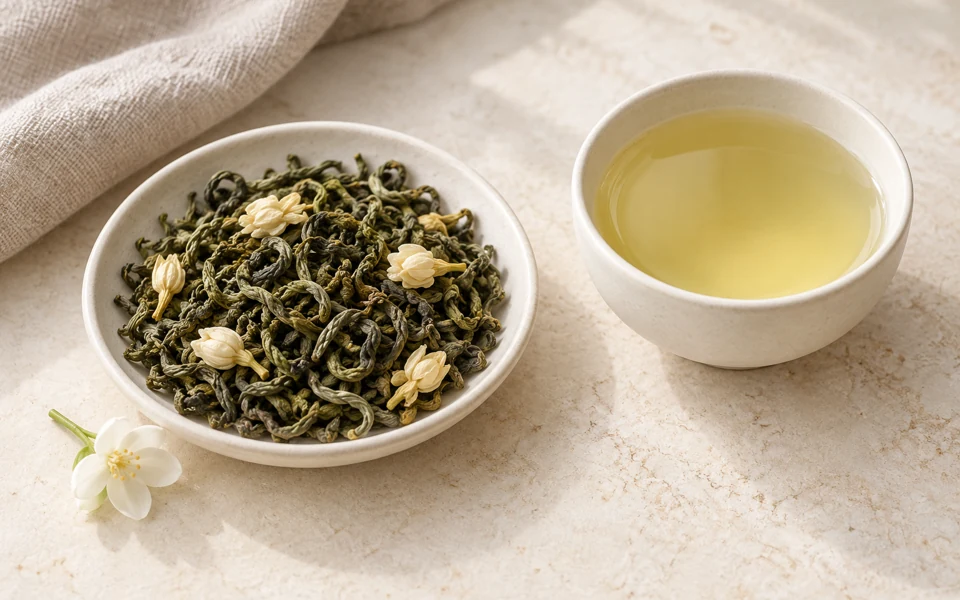
For creating (not just grinding), green tea is the classic: sencha gives a fresh, moderate lift you can refill all morning; gyokuro is the deep, shade-grown session tea for when the work needs real immersion; and jasmine green adds a floral note many people find genuinely inspiring. None hit as hard as coffee — that's the point.
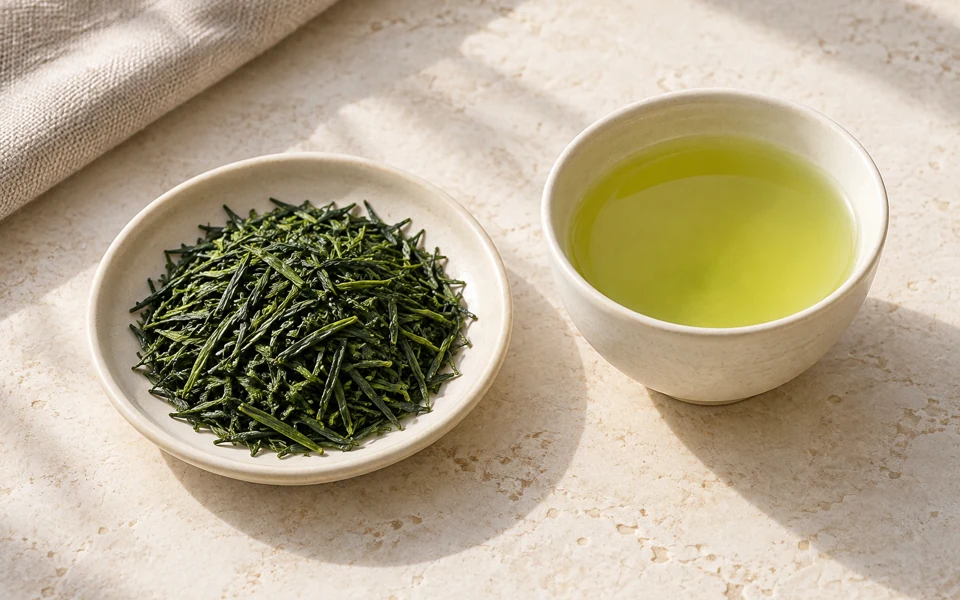
The everyday Japanese green: bright, grassy and easy to keep by the keyboard.
Moderate caffeine with L-theanine — the calm-alertness combination.
Several short steeps from the same leaves carry a whole writing session.
How to brew
75°C
1.5 min
2 g per cup
Medium
If you don't have it
Any everyday green works — just keep the water below boiling.
Tea fact
Sencha was invented in 1738 by Nagatani Soen, who spent 15 years perfecting a steaming method so ordinary people could enjoy quality green tea; it now represents about half of all tea produced in Japan.
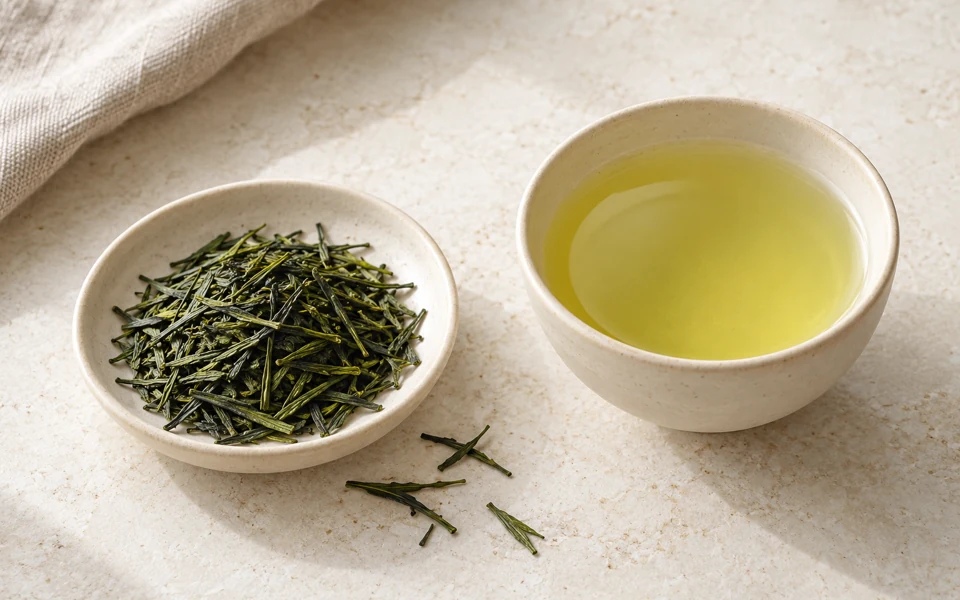
Shade-grown and umami-rich — the green tea people save for work that matters.
Notably rich in L-theanine, associated with calm, sustained attention.
Its slow, cool brewing is itself a pre-work ritual.
How to brew
60°C
2 min
3 g per cup
High
If you don't have it
Sencha brewed cooler and shorter is the everyday approximation.
Tea fact
Gyokuro means 'jade dew'; the bushes are shaded for about 20 days before harvest, which dramatically boosts L-theanine and gives the leaves their deep emerald color and famous umami sweetness.
Plenty of great work runs on coffee. But if espresso leaves you wired and scattered, tea's gentler curve — especially green tea's calm-alertness profile — is exactly what 'focused but not jittery' means.
How do I build the ritual?
Same tea, same cup, same first small task. The brewing minutes double as the moment to decide the first sentence — by the time the cup is ready, you've already started.