Peppermint, ginger and fennel — the after-meal classics found in kitchens everywhere, with how to brew each one and what to use instead.
Quick answer
The world's favorite after-meal infusions are peppermint for a fresh, light finish, ginger for warmth after a heavy plate, and fennel for its gentle anise-like sweetness. All three are caffeine-free and traditionally taken right after eating.
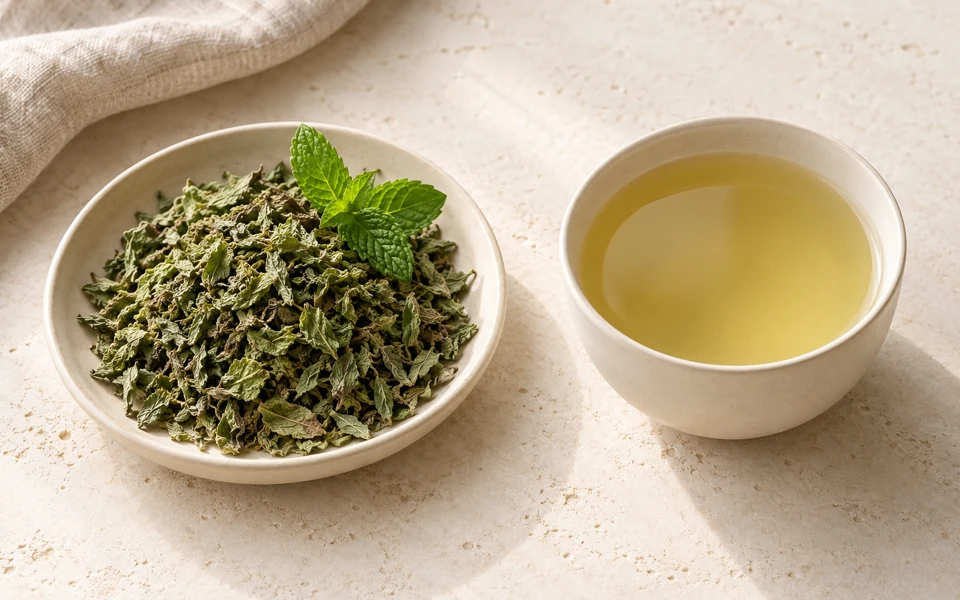
The freshest of the after-meal classics: cooling, clean and naturally sweet.
Traditionally taken after lunch or dinner for a light, settled feeling.
Caffeine-free, so it works after dinner too.
How to brew
95°C
5 min
2 g per cup
None
If you don't have it
A few fresh mint leaves from the kitchen, steeped in hot water, are the original version.
Tea fact
Peppermint is a natural hybrid of watermint and spearmint; in Greek myth, the nymph Minthe was turned into the plant and given a sweet, cooling scent by Hades.
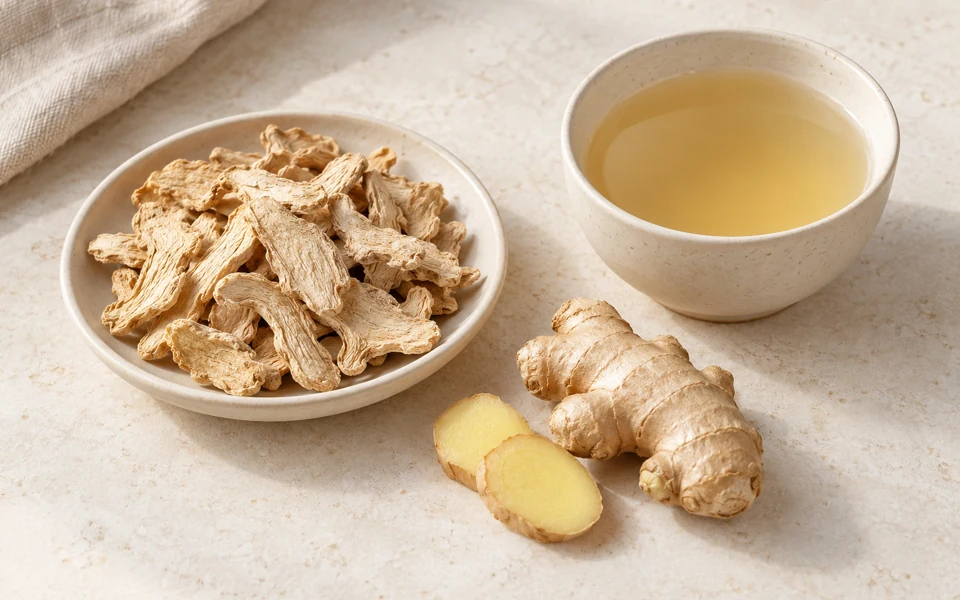
The warming counterpart to mint: spicy, bracing and comforting after a big meal.
Used across Asia for centuries as the go-to after-dinner root.
A squeeze of lemon and a little honey round it out beautifully.
How to brew
95°C
6 min
2 g per cup
None
If you don't have it
Slices of fresh ginger root simmered a few minutes make an even better cup.
Tea fact
Ginger tea has been used as a health tonic for about 5,000 years; the plant was domesticated in Maritime Southeast Asia, and ancient texts from India, China, and the Middle East document its medicinal use.
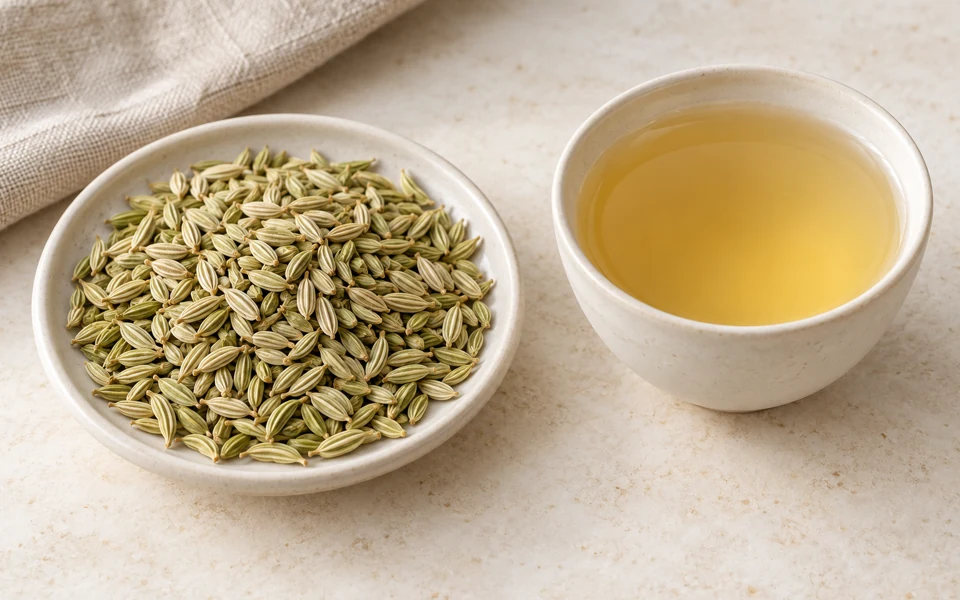
Its soft anise-like flavor has closed Mediterranean and Indian meals for generations.
Naturally sweet without sugar and completely caffeine-free.
The mildest of the three — a good pick if mint or ginger feel too intense.
How to brew
95°C
5 min
2 g per cup
None
If you don't have it
Lightly crushed fennel or anise seeds from the spice rack steep into the same cup.
Tea fact
To the ancient Greeks, fennel represented success; the Battle of Marathon (490 BC) was fought in a fennel field, and the word "marathon" may come from the Greek for fennel.
That's the tradition — a warm cup as the meal winds down. There's no strict rule; many people simply enjoy them as the after-dinner ritual.
Do they actually help digestion?
They've been used for exactly this for centuries, and a warm, caffeine-free cup after a meal feels settling to many people. Treat them as a pleasant tradition rather than a treatment.

 Share