Three caffeine-free herbal infusions traditionally taken before bed — chamomile, valerian and a sleep blend — with the exact way to brew each one.
Quick answer
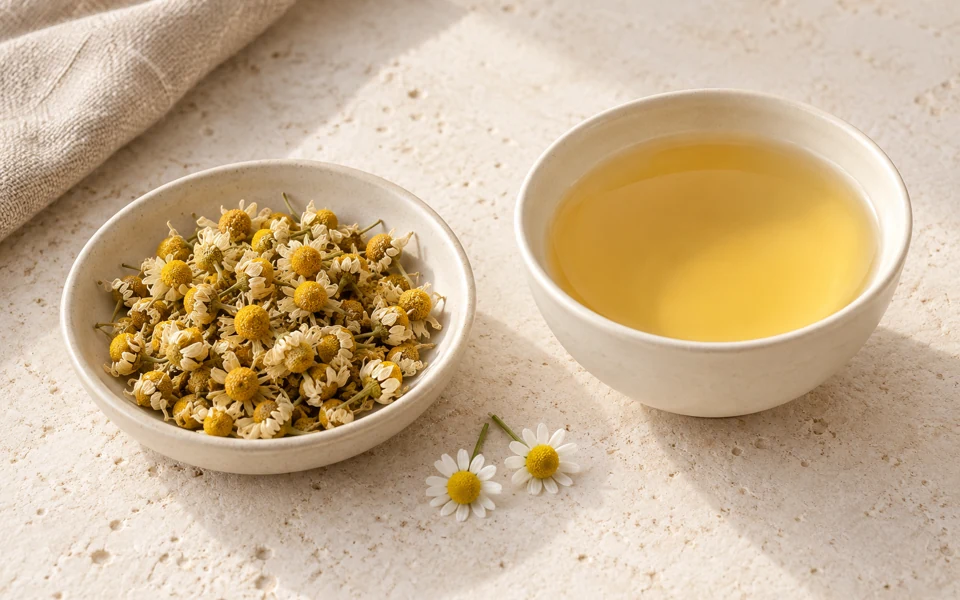
For most people the best pre-bed cup is a caffeine-free herbal: chamomile as the gentle classic, valerian as the strongest traditional wind-down herb, or a sleep blend that combines several calming botanicals in one bag. All three are naturally free of caffeine, so they won't keep you up.
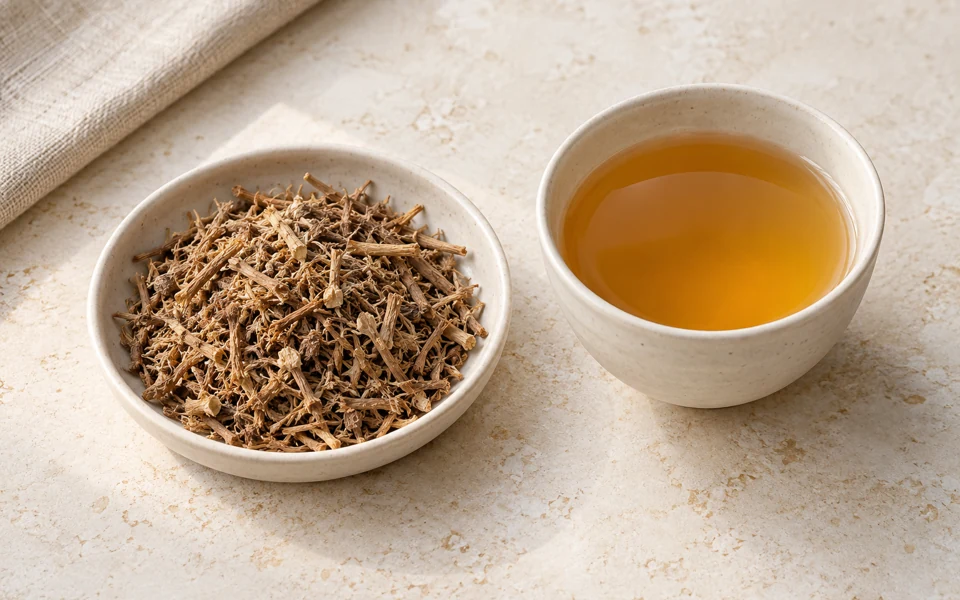
Traditionally used for deep evening relaxation — earthy, with a noticeably stronger character than chamomile.
Caffeine-free; a common habit is a cup 30–60 minutes before bed.
Its distinctive aroma softens nicely with a small spoonful of honey.
How to brew
95°C
5 min
2 g per cup
None
If you don't have it
Passionflower or lavender are the closest caffeine-free alternatives, with a friendlier aroma.
Tea fact
Valerian root barely smells when fresh — its famous pungent, sock-like aroma only develops as the root dries, and cats are often as drawn to it as they are to catnip.
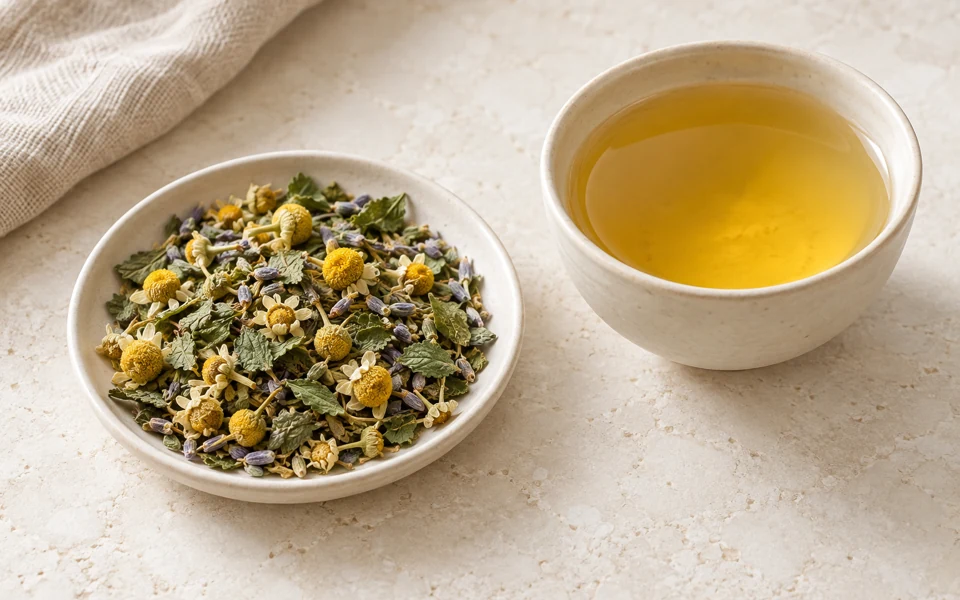
Combines chamomile-style florals with other traditional evening herbs in a single bag.
Made for the end of the day: caffeine-free and softly floral.
An easy default when you don't want to pick a single herb.
How to brew
95°C
8 min
2.5 g per cup
None
If you don't have it
Brew chamomile together with a few leaves of mint or lemon balm for a homemade version.
Tea fact
Lavender's calming reputation has a chemical signature: more than 70% of its essential oil is made up of just two compounds — linalool and linalyl acetate — and a 2010 study in Phytomedicine on the standardized lavender oil 'Silexan' found it comparable to low-dose lorazepam for generalized anxiety symptoms, while monks of medieval Europe had been growing it in cloister gardens for the same purpose nearly a thousand years earlier.
Start with chamomile if you're new to evening infusions — it's the mildest. If you already drink it and want something with more presence, try valerian or a sleep blend.
How long before bed should I drink them?
A common habit is 30–60 minutes before bed — enough time to sip slowly and let the routine wind you down. All three are caffeine-free, so timing is about comfort, not stimulation.
Do these teas actually make you sleep?
No tea is a sleeping pill. These herbs have been used in the evening for centuries, and many people find the warm, screen-free ritual genuinely relaxing — treat them as a calming habit, not a remedy.

 Share