
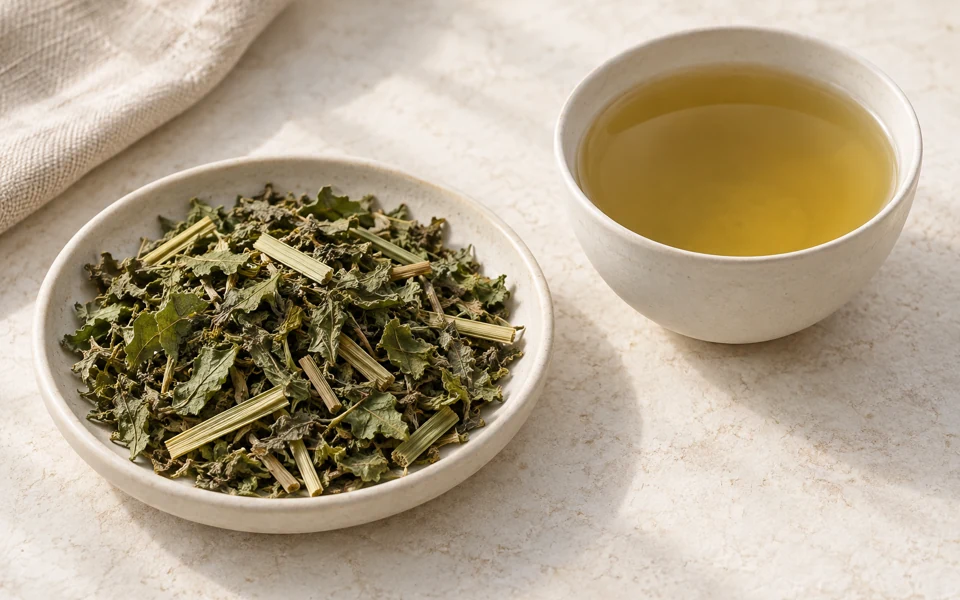
Detox Blend
Herbal infusion
4.3/5 · FindMeTea score
About this tea
This blend is a caffeine-free herbal recipe that combines dandelion (Taraxacum officinale, leaf or root), nettle leaf (Urtica dioica) and lemongrass (Cymbopogon citratus), with burdock root (Arctium lappa) as an optional fourth. Our catalog describes the cup as earthy, bitter and citrus, with no caffeine at all, and lists it for mid-morning and after meals. Three of the four herbs have a traditional-use monograph from the European Medicines Agency; what each monograph says, and what it does not, is quoted in the section below. What a blend like this is usually promised to do, we don't publish: we publish what the regulator says about each herb, and the rest is flavor.
How to brew: 98°C, 9 min, 3 g per cup.
Caffeine
None
How to brew
Flavor notes
earthy, bitter, citrusy
Often associated with
Digestive comfort, Sense of well-being
Best time to enjoy
Mid-morning, After a meal
Tags
Where to find it in United States
 Where to find it in United States
Near Columbus
- North Market SpicesOther Herbal infusion
Columbus · North Market, downtown
Spearmint, Crushed Leaves
from US$ 3.85· 1 oz
In storeOnline59 Spruce Street, Columbus, OH 43215See the shop → - Posh Teatime Co.Other Herbal infusion
Columbus · Franklinton, West Broad Street
Farmer's Market Fruit Blend
from US$ 16.95· 4 oz
In storeOnline1273 W Broad Street, Columbus, OH 43222See the shop → - Sencha Tea BarOther Herbal infusion
Minneapolis · Uptown (also Madison, WI)
Rose Hips
from US$ 3.99· 2 oz
In storeOnline2601 Hennepin Ave S, Minneapolis, MN 55408See the shop → - Old City CoffeeOther Herbal infusion
Philadelphia · Old City · Reading Terminal Market
Hibiscus
US$ 11· 4 oz
In storeOnline221 Church St, Philadelphia, PA 19106See the shop → - The Random Tea RoomOther Herbal infusion
Philadelphia · Northern Liberties
Chamomile
US$ 18· 6 oz
In storeOnline713 N 4th St, Philadelphia, PA 19123See the shop →
Origin & Production
All four herbs are cosmopolitan. Dandelion grows almost worldwide as a 'weed' and is commercially cultivated for its leaf and root in Europe and North America. Stinging nettle is native to Europe, much of Asia, and North America. Burdock is European and widely naturalized; in Japan it is even a cultivated vegetable (gobo). Lemongrass is tropical, native to South and Southeast Asia, and now grown commercially in India, Sri Lanka, Thailand, Guatemala, and other tropical regions. As a blend, it pairs three plants of the European countryside with one tropical grass.
Production process
Recipe (per ~3 g serving)
Classic ratio: 35% dandelion (leaf and/or root, cut), 30% nettle leaf (cut), 25% lemongrass (cut), 10% burdock root (cut, optional). For a brighter, less mineral cup, drop the burdock and use 40% lemongrass.
Choose leaf vs root for dandelion
Dandelion leaf brews greener and grassier, with a lighter bitterness; the root is roastier and deeper, closer to a roasted-root coffee. A 50/50 mix of leaf and root gives a balanced cup.
Weigh and combine
Weigh each cut herb according to the ratio. Combine in a clean dry bowl and toss gently to distribute. Dried nettle has tiny hairs — handle calmly; once dried it does not sting.
Store airtight
Transfer to a glass jar with a tight seal; keep in a cool, dark place. Roots stay good for up to 12 months; the leafy components are best within 6–9 months.
Brew (longer for roots)
Our catalog brews this blend at 98 °C for 9 minutes with 3 g (1 heaped teaspoon) per cup, covered. If your mix includes roots (dandelion root, burdock), a gentle 5-minute simmer before the steep pulls more out of them; a leaf-only mix needs only the steep.
- Free
- Sundays
- 2 min
Drink better tea, one Sunday at a time.
A fact for the table·A shop worth the trip·A better cup·Ritual & kit of the week·Tea fun facts
History & Tradition
Dandelion, nettle and burdock are three of the commonest plants of the European countryside, eaten as spring greens and brewed as roots long before anyone put them in a tin; lemongrass comes from a different kitchen altogether, the tropical one of Southeast Asia. The blend is recent; the herbs are not.
Culpeper's Complete Herbal
Nicholas Culpeper's Complete Herbal, the best-known English herbal of its century, gives dandelion, nettles and burdock an entry each. It is 17th-century herbalism, read today as history, not as evidence.
Spring greens and root coffee
Across Europe and North America, young dandelion leaves were among the first greens of spring, nettle tops went into soups, and roasted dandelion root was brewed in place of coffee when coffee was dear. Those kitchen habits, not any clinic, are where the herbs of this blend come from.
Four EMA monographs
The European Medicines Agency's Committee on Herbal Medicinal Products adopts traditional-use monographs for dandelion leaf and for dandelion root with herb (November 2009), nettle leaf (January 2010) and burdock root (September 2010). Each states the uses it accepts on the basis of long-standing use alone, and the cautions that go with them — the texts quoted in the cards below.
Periodic review
The agency opens calls for scientific data to review the dandelion and burdock monographs (consultation from March to June 2026). Until a revision is adopted, the 2009–2010 texts remain the ones in force.
What's in the cup
Dandelion leaf, as Europe's medicines agency lists it
The European Medicines Agency's Committee on Herbal Medicinal Products lists dandelion leaf as a traditional herbal medicinal product to increase the amount of urine to achieve flushing of the urinary tract, as an adjuvant in minor urinary complaints — a status it grants exclusively on the basis of long-standing use, with adequate fluid intake, and with a doctor consulted if the complaints persist beyond two weeks. The same monograph lists it as not to be used with gallstones, obstructed bile ducts, liver disease or an active peptic ulcer, nor by anyone allergic to the daisy family; advises against it in kidney failure, diabetes and heart failure; does not recommend it under 12 or during pregnancy and breastfeeding; records no reported interactions, and notes that allergic reactions may occur. The root is covered by a monograph of its own, quoted on our dandelion page. This isn't medical advice — if you have a specific condition, check with a healthcare provider.
Source: EMA/HMPC — Community herbal monograph on Taraxacum officinale, folium (2009)
Nettle leaf, by the same committee
The nettle leaf monograph, adopted in January 2010, accepts two traditional uses: relief of minor articular pain, and increasing the amount of urine to achieve flushing of the urinary tract as an adjuvant in minor urinary complaints — both exclusively on the basis of long-standing use, and for no more than two to four weeks. It lists the leaf as not to be used where a reduced fluid intake is recommended (severe heart or kidney disease), does not recommend it under 12 or during pregnancy and breastfeeding, records no reported interactions, and notes that mild stomach upsets and skin reactions may occur. This isn't medical advice — if you have a specific condition, check with a healthcare provider.
Source: EMA/HMPC — Community herbal monograph on Urtica dioica / Urtica urens, folium (2010)
Burdock root, the optional fourth
Burdock root has its own monograph, adopted in September 2010: a traditional herbal medicinal product to increase the amount of urine to achieve flushing of the urinary tract as an adjuvant in minor urinary tract complaints, in temporary loss of appetite, and in seborrhoeic skin conditions — again on long-standing use alone. The committee does not recommend it under 18 or during pregnancy and breastfeeding, advises against taking it together with synthetic diuretics, lists allergy to the daisy family as a contraindication, records no reported interactions, and notes that anaphylactic shock has been reported. This isn't medical advice — if you have a specific condition, check with a healthcare provider.
Source: EMA/HMPC — Community herbal monograph on Arctium lappa, radix (2010)
Lemongrass is there for the nose
Lemongrass carries no monograph in this blend and needs none: it is the ingredient that makes the cup drinkable. Its scent is citral, the same aromatic that gives lemon peel its smell; our catalog describes lemongrass as citrus, fresh, lightly sweet and aromatic, and in the recipe it lifts the earthy, mineral base of the other three. Raise its share to 40–50% and the blend turns bright enough to drink iced.
No caffeine, and when to pour it
The blend is level 0 on our caffeine scale: there is no Camellia sinensis anywhere in the recipe. Our catalog describes the cup as earthy, bitter and citrus, lists it for mid-morning and after meals, and brews it at 98 °C for 9 minutes with 3 g per cup. Taken that way it is a bitter, mineral infusion with a lemon edge, and that is all we claim for it.
This isn't medical advice. If you have a specific condition, or you are pregnant or taking medication, check with a healthcare provider.
- Free
- Sundays
- 2 min
Drink better tea, one Sunday at a time.
A fact for the table·A shop worth the trip·A better cup·Ritual & kit of the week·Brew better
Grades & Varieties
Classic leaf-only blend
40% dandelion leaf, 30% nettle leaf, 30% lemongrass. Lighter, fresher, and easier to brew — only needs steeping, no simmering. The gentlest introduction to a bitter leaf blend.
Best for
- ✓First-time use
- ✓Lighter cup, faster brew
- ✓Spring, when the leaves are new
Root-forward (deeper, more bitter)
30% dandelion root (roasted), 25% nettle leaf, 25% lemongrass, 20% burdock root. Earthier, more bitter, slightly coffee-like — best simmered. The most bitter of the three versions.
Best for
- ✓After heavy meals
- ✓Replacing an afternoon coffee
- ✓Adults who enjoy bitter herbal flavors
Mild & citrusy (lemongrass-led)
25% dandelion leaf, 25% nettle leaf, 50% lemongrass. The most beginner-friendly version: aromatic, refreshing, low bitterness. Easier to drink iced in warmer weather.
Best for
- ✓Warm weather iced cup
- ✓Mild flavor preference
- ✓Anyone who finds the other two too bitter
Did you know?
Despite a multi-million-dollar 'detox tea' industry, regulators have repeatedly pushed back on the term: in 2015 the UK's ASA forced multiple commercial detox-tea brands to stop claiming they 'remove toxins,' and the EU's EFSA has never authorized any 'detox' health claim — meaning the herbs in this blend (dandelion, nettle, burdock) can only legally be sold under their traditional drainage/digestive monographs, not as toxin-removers. Healthy livers and kidneys handle that part themselves.
Foods with this tea
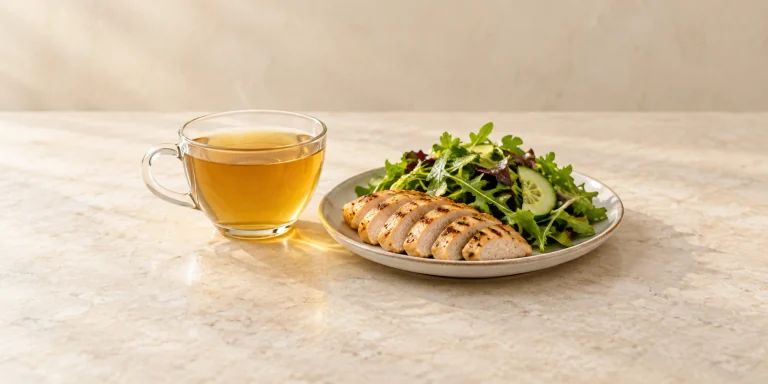
What to Eat with Detox Blend Tea
Detox Blend's earthy mix of dandelion, nettle, and lemongrass pairs naturally with light, balancing meals—fresh green salads, brothy vegetable soups, and steamed fish that let the body feel its best.
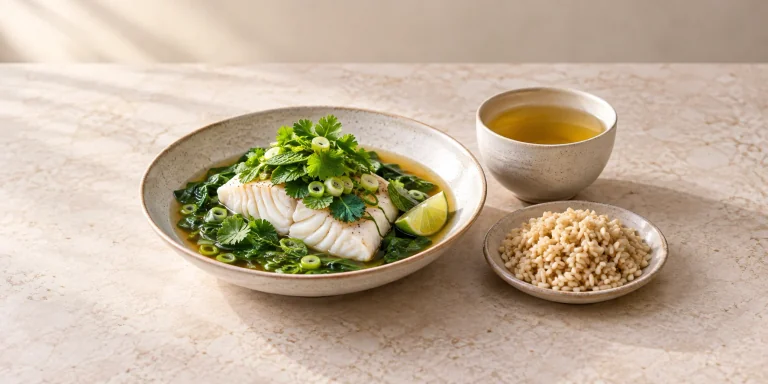
Steamed White Fish with Lemongrass Broth and Greens
Delicate white fish steamed over a fragrant lemongrass and ginger broth, served on a bed of wilted greens—a clean, light bowl that mirrors the balancing spirit of Detox Blend.
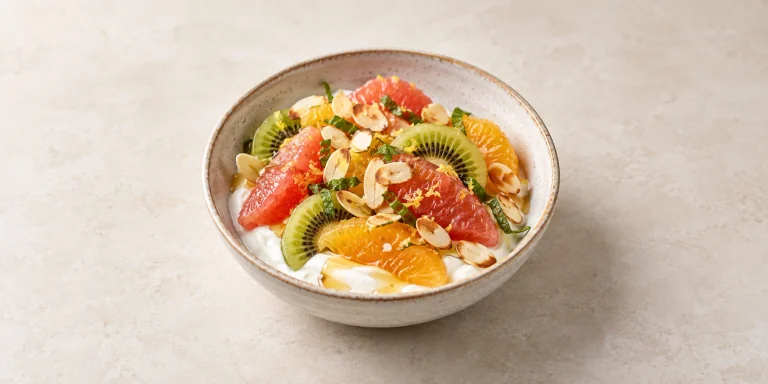
Citrus Fruit Salad with Honey-Yogurt and Mint
A bright fruit salad of grapefruit, orange, and kiwi over honey-sweetened yogurt with fresh mint—a light, refreshing finish that mirrors Detox Blend's clean, balancing spirit.
- Free
- Sundays
- 2 min
Drink better tea, one Sunday at a time.
A fact for the table·A shop worth the trip·A better cup·Ritual & kit of the week·Tea recipes & drinks
Drinks with this tea
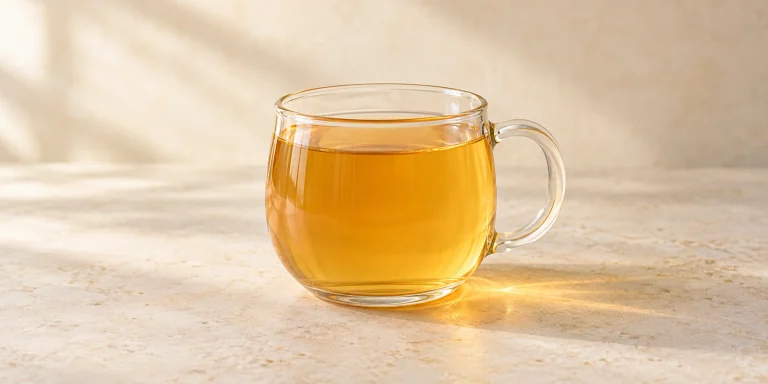
Dandelion, Nettle and Lemongrass Brew with Apple Cider Vinegar
Dandelion, nettle and lemongrass steeped 9 minutes at 98 °C, then stirred with raw apple cider vinegar, lemon juice and a spoon of honey: tart, earthy and caffeine-free.
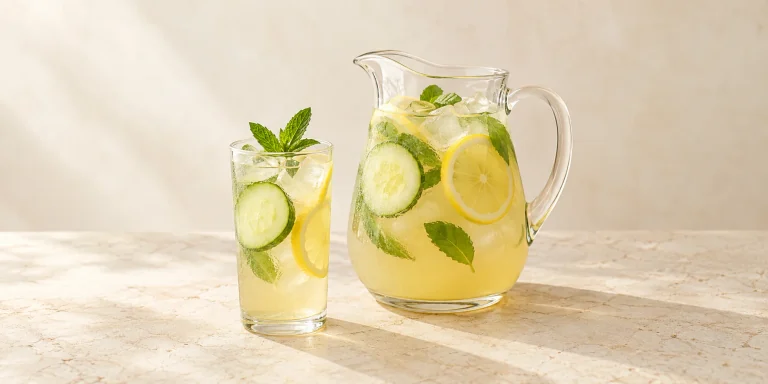
Iced Cucumber Lemonade with Dandelion and Lemongrass
Cold-brewed dandelion, nettle and lemongrass with cucumber, lemon juice, spearmint and honey over ice: light, herbal and thirst-quenching.
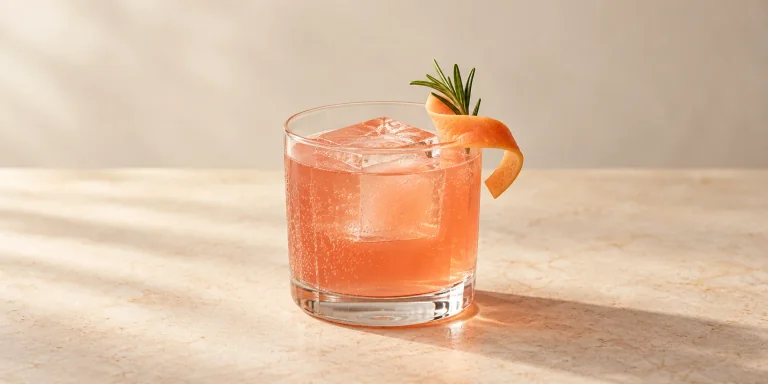
Sparkling Grapefruit and Rosemary Mocktail
Cold dandelion, nettle and lemongrass infusion shaken with pink grapefruit, lemon, honey syrup and muddled rosemary, topped with sparkling water: citrusy, bittersweet and alcohol-free.