
Immunity Blend
Herbal infusion
4.4/5 · FindMeTea score
About this tea
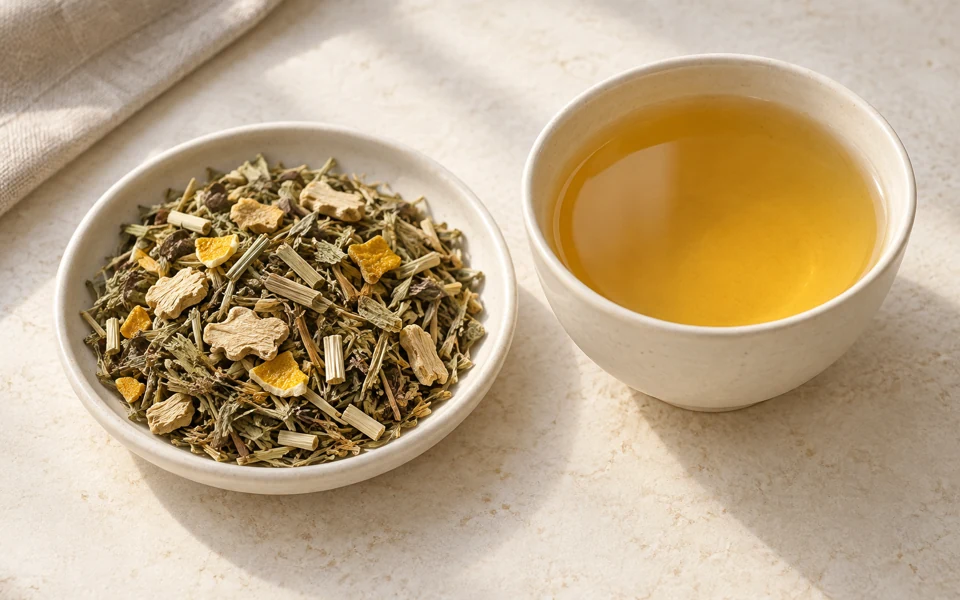
The Immunity Blend is a caffeine-free, warmly spiced herbal recipe for the cold months, built on echinacea (Echinacea purpurea aerial parts), fresh or dried ginger (Zingiber officinale) and lemon peel or juice. Optional additions are rosehip (Rosa canina), for tartness and color, and elderberry (Sambucus nigra), for dark-berry depth. The name comes from how these plants have traditionally been used, not from an effect we promise: what Europe's medicines agency, a Cochrane review and the USDA actually say about each ingredient is set out below, source by source.
How to brew: 98°C, 10 min, 3 g per cup.
Caffeine
None
How to brew
Flavor notes
spiced, citrusy, warming
Often associated with
Warmth, Digestive comfort
Best time to enjoy
Morning, Mid-morning, After a meal
Tags
Where to find it in United States
 Where to find it in United States
Near Columbus
- North Market SpicesOther Herbal infusion
Columbus · North Market, downtown
Spearmint, Crushed Leaves
from US$ 3.85· 1 oz
In storeOnline59 Spruce Street, Columbus, OH 43215See the shop → - Posh Teatime Co.Other Herbal infusion
Columbus · Franklinton, West Broad Street
Farmer's Market Fruit Blend
from US$ 16.95· 4 oz
In storeOnline1273 W Broad Street, Columbus, OH 43222See the shop → - Sencha Tea BarOther Herbal infusion
Minneapolis · Uptown (also Madison, WI)
Rose Hips
from US$ 3.99· 2 oz
In storeOnline2601 Hennepin Ave S, Minneapolis, MN 55408See the shop → - Old City CoffeeOther Herbal infusion
Philadelphia · Old City · Reading Terminal Market
Hibiscus
US$ 11· 4 oz
In storeOnline221 Church St, Philadelphia, PA 19106See the shop → - The Random Tea RoomOther Herbal infusion
Philadelphia · Northern Liberties
Chamomile
US$ 18· 6 oz
In storeOnline713 N 4th St, Philadelphia, PA 19123See the shop →
Origin & Production
The Immunity Blend is a modern multi-cultural recipe. Echinacea is native to the prairies of central and eastern North America, where Indigenous Plains nations (Lakota, Cheyenne, Dakota) used it widely; today it is cultivated commercially in Germany, the United States, and Eastern Europe. Ginger has been grown in tropical Asia for over 5,000 years; today India, Nigeria, and China are the leading producers. Lemons (Citrus × limon) are a Mediterranean staple cultivated since the Middle Ages. Rosehip is foraged or cultivated across temperate Europe, and elderberry is widely harvested wild across Europe and North America.
Production process
Recipe (per ~3 g serving)
Classic ratio: 30% echinacea (aerial parts, cut), 30% dried ginger root (cut/sifted), 20% dried lemon peel (or 1 fresh lemon slice + juice added per cup), 10% rosehip (cracked), 10% elderberry (optional). For a milder, more digestible blend, drop the elderberry and increase lemon peel to 20%.
Source quality dried herbs
Buy echinacea, ginger, rosehip, and elderberry as cut-and-sifted food-grade material from a reputable herb supplier. For lemon, use organic dried peel (no wax) or a fresh organic lemon. Avoid pre-mixed teabag dust which oxidizes quickly.
Weigh and combine
Weigh each herb according to the ratio. Combine in a clean dry bowl and toss gently. Crack any whole rosehips with the side of a knife to expose the seed so the water reaches the inside of the fruit.
Store airtight
Transfer to a glass jar with a tight seal; keep in a cool, dark cupboard. The ginger and rosehip stay potent for 9–12 months; elderberry and lemon peel are best within 6 months.
Brew (decoction-style)
Because ginger root and rosehip are dense, brew slightly longer than a typical herbal: 1 heaped teaspoon (~3 g) per cup, water at 95–100 °C, steep covered 8–12 minutes. For a stronger preparation, simmer gently for 5 minutes. Strain, add fresh lemon juice and (optionally) a teaspoon of honey to taste.
- Free
- Sundays
- 2 min
Drink better tea, one Sunday at a time.
A fact for the table·A shop worth the trip·A better cup·Ritual & kit of the week·Tea fun facts
History & Tradition
The Immunity Blend is a 20th-century reinvention of much older traditions: echinacea among the Plains nations, ginger as a warming spice from Asia to medieval Europe, and the European hot-lemon drink.
Indigenous use of echinacea
Indigenous Plains nations of North America — including the Lakota, Cheyenne, Dakota, and Pawnee — used Echinacea species for sore throat, snake bite, toothache, and infection. It was one of the most widely-used medicinal plants of the prairies.
Ginger across the Silk Road
Ginger spread from Maritime Southeast Asia along trade routes; in Traditional Chinese Medicine it was prescribed to 'expel cold,' and in medieval Europe it became a popular winter spice for warming drinks.
European hot lemon
Hot lemon-and-honey drinks became a familiar cold-weather drink across Europe as citrus became more widely available, especially after the British Navy adopted lemon and lime against scurvy.
Echinacea reaches European phytotherapy
German physician Gerhard Madaus brings Echinacea purpurea seeds from North America to Germany, where it becomes the basis of widely used herbal cold-and-flu preparations still sold across Europe today.
Cochrane review on echinacea
Cochrane publishes the update of its systematic review of echinacea for preventing and treating the common cold (Karsch-Völk et al.): 24 double-blind trials with 4,631 participants, testing preparations so different from one another that the authors declined to pool them for the main analysis. What the review concluded is quoted, with its link, in the cards below.
What's in the cup
The cup, as our catalog lists it
Immunity Blend is level 0 on our caffeine scale: there is no Camellia sinensis in the cup, only echinacea, ginger and lemon, with rosehip and elderberry in the fuller version. The catalog brews it at 98 °C for 10 minutes with 3 g per cup — longer than most herbals, because ginger root and rosehip are dense — describes the flavor as spiced, citrusy and warm, and places it in the morning, mid-morning or after a meal. A lid on the cup keeps the ginger's heat and the lemon's aroma from drifting off while it steeps.
Echinacea, as Europe's medicines agency lists it
The European Medicines Agency's Committee on Herbal Medicinal Products has evaluated purple coneflower herb in one oral form only: the juice pressed from the fresh flowering plant, which it lists for the short-term prevention and treatment of the common cold, for no more than 10 days, starting at the first signs. The same monograph does not recommend that juice under 12, during pregnancy and breastfeeding unless a doctor advises it, or in autoimmune diseases, immunodeficiency, immunosuppression and diseases of the white blood cell system; it contraindicates it for anyone hypersensitive to plants of the daisy family (Asteraceae), and warns of a possible risk of severe allergic reactions in atopic patients. A tea of dried aerial parts is not the product the agency evaluated, and a cup of this blend is not a measured dose of anything.
Source: EMA/HMPC — European Union herbal monograph on Echinacea purpurea (L.) Moench, herba recens (2014)
What the Cochrane review found
Cochrane's 2014 review of echinacea for colds gathered 24 double-blind, placebo-controlled trials with 4,631 participants. None of the 12 prevention comparisons that counted people catching at least one cold found a statistically significant difference, although an after-the-fact pooling suggested a relative risk reduction of 10% to 20%; of the seven treatment trials that reported how long colds lasted, only one showed a significant effect over placebo. The authors concluded that echinacea products have not been shown to provide benefits for treating colds, that a weak benefit from some products is possible, and that any effect is of questionable clinical relevance. The trials tested a wide range of preparations made from different species and plant parts; none of that tells you what a cup of this blend does.
Source: Cochrane — Karsch-Völk et al., Echinacea for preventing and treating the common cold (2014)
Ginger root, on the same register
The same committee's monograph on ginger root, revised in 2025, lists powdered ginger for the prevention of nausea and vomiting in motion sickness and, exclusively on the basis of long-standing use, for the symptomatic relief of motion sickness, mild spasmodic digestive complaints including bloating and flatulence, temporary loss of appetite, minor joint pain and the symptoms of the common cold. The forms it covers are powdered root and ethanol tinctures, not tea. Use under 18 has not been established for most of those indications (under 6 for motion sickness); the monograph prefers to avoid ginger during pregnancy as a precaution, does not recommend it while breastfeeding, lists no known interactions, and records stomach upset, belching, indigestion, heartburn and nausea as common undesirable effects. In this cup, ginger is here for its heat.
Source: EMA/HMPC — European Union herbal monograph on Zingiber officinale Roscoe, rhizoma, revision 1 (2025)
Rosehip's vitamin C, by the numbers
USDA FoodData Central lists wild rose hips, raw, at 426 mg of vitamin C per 100 g. That figure describes the fresh fruit, not a cup: it does not say how much reaches hot water from dried, cracked rosehip that makes up a tenth of a 3 g serving, and we have not measured it either, so we don't put a vitamin C number on this blend. What rosehip reliably brings to the cup is tartness and a red color.
Source: USDA FoodData Central — Rose Hips, wild (Northern Plains Indians), SR Legacy 168998
Elderberry, and who should ask first
If you add elderberry, buy it from a food-grade herb supplier and never use berries picked raw. The US National Center for Complementary and Integrative Health notes that raw or unripe elderberries and other parts of the elder tree contain cyanide-producing substances that can cause nausea, vomiting and severe diarrhea, that cooking eliminates this toxin, and that little is known about the safety of elderberry for health purposes during pregnancy or breastfeeding. Put that next to the echinacea and ginger cards above and the practical rule is short: if you are pregnant or breastfeeding, allergic to daisy-family plants, or taking any medication, ask a healthcare provider before making this blend a habit, or brew the echinacea-free version below. This isn't medical advice — if you have a specific condition, check with a healthcare provider.
This isn't medical advice. If you have a specific condition, or you are pregnant or taking medication, check with a healthcare provider.
- Free
- Sundays
- 2 min
Drink better tea, one Sunday at a time.
A fact for the table·A shop worth the trip·A better cup·Ritual & kit of the week·Brew better
Grades & Varieties
Classic recipe (echinacea + ginger + lemon)
The simplest, most accessible version: 40% echinacea, 40% dried ginger, 20% dried lemon peel. Warmly spiced and citrusy, with echinacea's grassy, slightly tingly note underneath. The agency's 10-day limit is written for echinacea juice, not tea, but we keep echinacea blends to short runs anyway.
Best for
- ✓Cold winter mornings
- ✓Fans of spiced, citrusy cups
- ✓Short runs of a few days
Full 'winter wellness' (with rosehip + elderberry)
The fuller recipe: 30% echinacea, 30% ginger, 20% lemon peel, 10% rosehip, 10% elderberry. Fruitier and tarter, with rosehip's sourness and elderberry's dark-berry color deepening the cup.
Best for
- ✓Deep winter
- ✓Fans of tart, fruity cups
- ✓Weekend batch brewing
Echinacea-free variant
For anyone leaving echinacea out, including the people the agency's monograph above does not recommend it for: 40% ginger, 30% lemon peel, 20% rosehip, 10% elderberry (optional). Still warm, spicy and citrusy, with no daisy-family plant in the jar.
Best for
- ✓Leaving echinacea out
- ✓An everyday winter cup
- ✓Avoiding daisy-family plants
Did you know?
Echinacea purpurea only became a European herbal staple thanks to a single shipment: in the 1930s, German physician Gerhard Madaus traveled to the United States, brought back seeds of the prairie plant traditionally used by Plains nations, and began cultivating it in Germany — within a decade, Echinacea-based cold remedies were on European pharmacy shelves, and they remain among the most-sold OTC herbal products in Germany today.
Foods with this tea
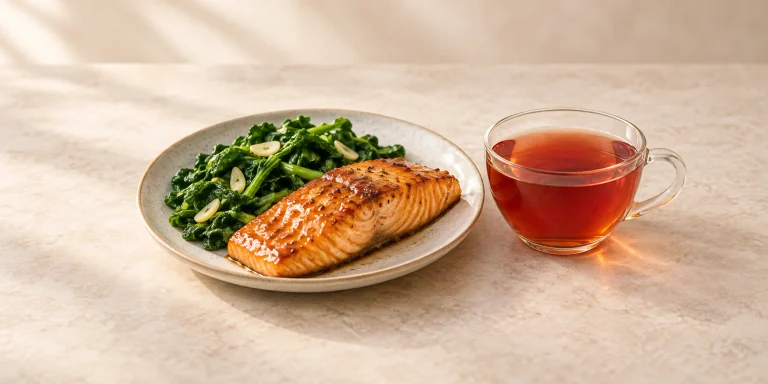
What to Eat with Immunity Blend Tea
Immunity Blend's bright kick of echinacea, ginger, and lemon pairs naturally with warming, satisfying foods—chicken-ginger congee, citrusy salads, and honey-spiced cookies for cold days.
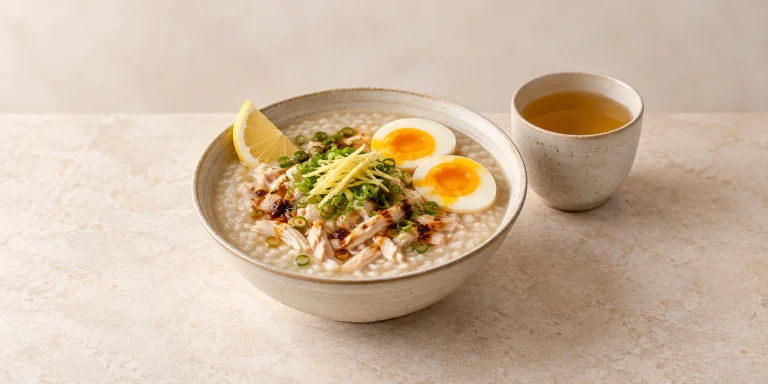
Chicken-Ginger Congee with Lemon and Scallions
A silky chicken-ginger congee built on an Immunity Blend tea base—warming, brothy, and topped with fresh ginger, lemon, and scallions for a bowl built for cold evenings.
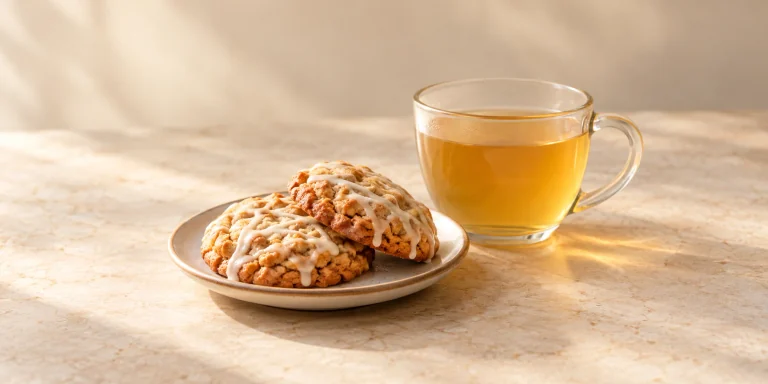
Honey, Ginger and Lemon Cookies
Soft, chewy honey cookies with fresh ginger, lemon zest, and a hint of cinnamon—small enough to slip alongside an afternoon mug of Immunity Blend during the colder months.
- Free
- Sundays
- 2 min
Drink better tea, one Sunday at a time.
A fact for the table·A shop worth the trip·A better cup·Ritual & kit of the week·Tea recipes & drinks
Drinks with this tea
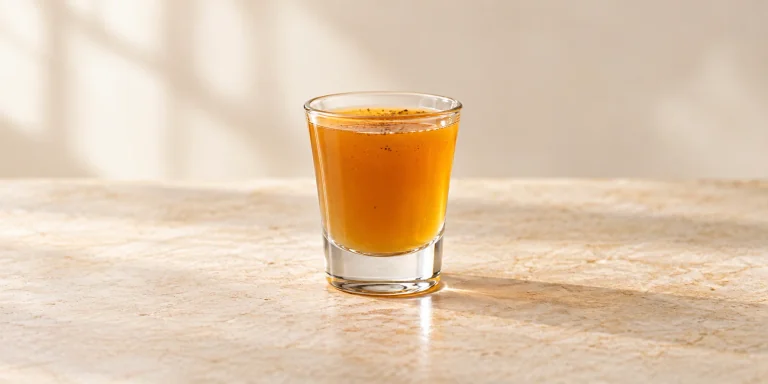
Echinacea, Ginger and Rosehip Shot with Honey and Lemon
Echinacea, ginger, lemon and rosehip brewed double strength and reduced, then mixed with fresh ginger juice, raw honey, lemon and a pinch of black pepper: a sharp, concentrated 60 ml shot.
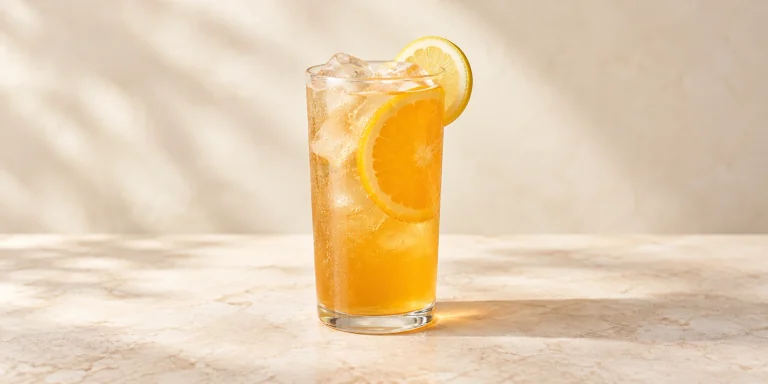
Iced Citrus Sparkler with Echinacea and Rosehip
Cold-brewed echinacea, ginger, lemon and rosehip topped with fresh orange juice, lemon, honey and sparkling water: fizzy, citrusy and lightly sweet.
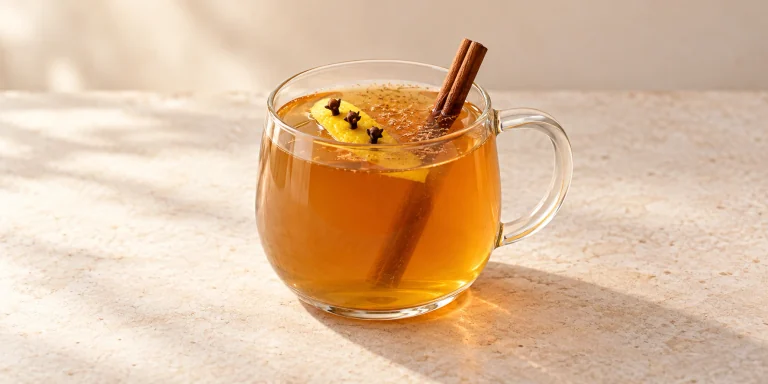
Hot Toddy with Echinacea, Whisky and Clove (with Mocktail Variant)
A hot toddy built on a strong echinacea, ginger, lemon and rosehip infusion with whisky, fresh lemon, raw honey and a clove-studded lemon peel—plus an alcohol-free version made with maple syrup.