
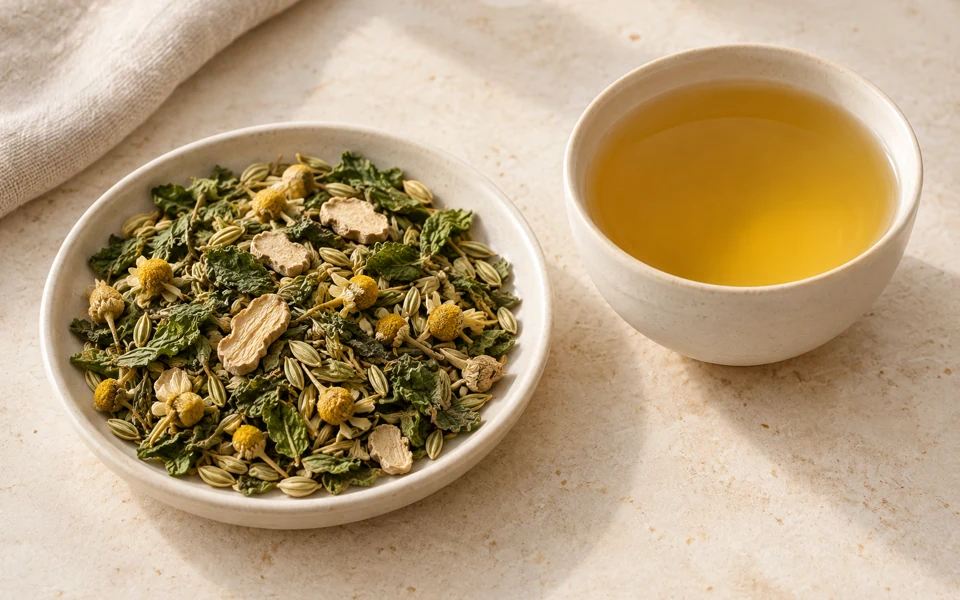
Digestion Blend
Herbal infusion
4.4/5 · FindMeTea score
About this tea
Digestion Blend is a caffeine-free herbal infusion of peppermint, fennel, ginger and chamomile, the four herbs that Europe and the Mediterranean have put in the after-dinner cup for centuries. Each one brings a flavor: the mint is cooling and herbaceous, the fennel adds a soft anise-like sweetness, the ginger a warming, peppery note, and the chamomile a mellow, apple-like roundness. Our catalog brews it at 95 °C for 6 minutes with 2 g per cup, and it sits at level 0 on our caffeine scale, which is why it is the cup that closes a heavy meal or the day itself.
How to brew: 95°C, 6 min, 2 g per cup.
Caffeine
None
How to brew
Flavor notes
minty, anise, fresh, lightly sweet
Often associated with
Digestive comfort, Calm
Best time to enjoy
After a meal, Evening, Afternoon
Tags
Where to find it in United States
 Where to find it in United States
Near Columbus
- North Market SpicesOther Herbal infusion
Columbus · North Market, downtown
Spearmint, Crushed Leaves
from US$ 3.85· 1 oz
In storeOnline59 Spruce Street, Columbus, OH 43215See the shop → - Posh Teatime Co.Other Herbal infusion
Columbus · Franklinton, West Broad Street
Farmer's Market Fruit Blend
from US$ 16.95· 4 oz
In storeOnline1273 W Broad Street, Columbus, OH 43222See the shop → - Sencha Tea BarOther Herbal infusion
Minneapolis · Uptown (also Madison, WI)
Rose Hips
from US$ 3.99· 2 oz
In storeOnline2601 Hennepin Ave S, Minneapolis, MN 55408See the shop → - Old City CoffeeOther Herbal infusion
Philadelphia · Old City · Reading Terminal Market
Hibiscus
US$ 11· 4 oz
In storeOnline221 Church St, Philadelphia, PA 19106See the shop → - The Random Tea RoomOther Herbal infusion
Philadelphia · Northern Liberties
Chamomile
US$ 18· 6 oz
In storeOnline713 N 4th St, Philadelphia, PA 19123See the shop →
Origin & Production
Digestion Blend draws on a long European and Mediterranean tradition of after-meal herbal infusions. Its herbs come from across the temperate and warm world: peppermint and chamomile are cultivated throughout Europe, fennel thrives around the Mediterranean and into Asia, and ginger is a tropical rhizome from South and Southeast Asia. Rather than being grown together, the blend is assembled from these dried herbs in proportions that balance cooling mint, sweet fennel, warming ginger, and gentle chamomile into a single after-dinner cup — the same idea as the herbal infusions served after dinner across many cultures.
Production process
Sourcing the herbs
Peppermint, fennel seed, ginger, and chamomile flowers are sourced as dried herb, each selected for strong aroma — a sign of well-preserved volatile oils.
Drying & preparing
Mint leaves and chamomile flowers are gently dried to keep their color and fragrance, fennel seeds are lightly cracked to release flavor, and ginger is dried and cut.
Blending the four
The herbs are combined so peppermint and fennel lead the cup, ginger adds warmth, and chamomile rounds it off with a soft, apple-like finish.
Resting & quality check
The blend is rested so the aromas marry, then checked for consistent color and fragrance before packaging.
Packaging
The finished blend is sealed in light-protected packaging as loose herb or tea bags, ready to steep as a gentle, caffeine-free after-meal infusion.
- Free
- Sundays
- 2 min
Drink better tea, one Sunday at a time.
A fact for the table·A shop worth the trip·A better cup·Ritual & kit of the week·Tea fun facts
History & Tradition
Digestion Blend is a modern formula resting on very old wisdom: across many cultures, gentle herbs have been sipped at the end of a meal for centuries.
Carminative herbs of old
Fennel, mint and chamomile appear in the herbals of ancient Greece, Rome and Egypt, long before anyone blended them into a single after-meal cup.
Monastery herb gardens
European monastery gardens cultivated mint, fennel, and chamomile, and herbal infusions became a fixture of the after-dinner table.
Ginger joins the cup
As ginger traveled west through trade, its warming, peppery flavor was folded into European after-dinner infusions alongside the local herbs.
After-dinner tisanes
Across Europe, herbal tisanes of mint, fennel, and chamomile became a beloved after-dinner ritual, served at the close of a meal.
Modern digestion blends
Tea makers combined these four herbs into ready-made 'after-dinner' or 'digestion' blends, so the cup came pre-mixed instead of from four separate jars.
What's in the cup
Caffeine-free, level 0
There is no tea leaf in this blend at all, so it sits at level 0 on our 0–3 caffeine scale. That is the practical reason it is the cup after dinner and the last cup of the day: whatever the hour, there is nothing in it to keep you up.
Four herbs, one cup
Peppermint leaf gives the cooling top note, fennel seed a soft anise-like sweetness, dried ginger a warm, peppery edge, and chamomile flower a mellow, apple-like roundness. Taste the cup and you can pick out each one; the proportions decide which leads.
Brew it under a lid
Our catalog brews the blend at 95 °C for 6 minutes with 2 g per cup. Mint, fennel and chamomile carry their aroma in volatile oils that leave with the steam, so cover the cup while it steeps and the room smells of mint a little less and the cup a lot more.
The after-dinner custom
Across Europe and the Mediterranean, a small herbal infusion after dinner is simply how a meal ends: mint tea in Morocco and Spain, fennel and anise in Italy, chamomile in Latin America. This blend puts those traditions in one cup, taken for its taste and its place at the table rather than for anything it does.
A note on chamomile
Chamomile is a member of the daisy family. The U.S. National Center for Complementary and Integrative Health notes that allergic reactions to it are uncommon but more likely in people who are allergic to related plants such as ragweed, chrysanthemums, marigolds or daisies, and that little is known about its safety during pregnancy or breastfeeding.
This isn't medical advice. If you have a specific condition, or you are pregnant or taking medication, check with a healthcare provider.
- Free
- Sundays
- 2 min
Drink better tea, one Sunday at a time.
A fact for the table·A shop worth the trip·A better cup·Ritual & kit of the week·Brew better
Grades & Varieties
Classic after-dinner blend
The traditional balance of peppermint, fennel, ginger, and chamomile — cooling, sweet, warming and apple-soft all at once. The classic version to close a meal.
Best for
- ✓After heavy meals
- ✓The last cup of the day
- ✓Mint lovers who like it rounded
Mint-forward blend
A cooler, brighter version with more peppermint leading the cup, emphasizing the crisp, refreshing side of the mint. Great for those who love a clean, minty finish.
Best for
- ✓Mint lovers
- ✓Refreshing after-meal cup
- ✓Warm-weather sipping
Chamomile-forward blend
A softer, mellower version with more chamomile, leaning toward the apple-like softness of the flower. Ideal as the last cup of the day.
Best for
- ✓Late evenings
- ✓Gentle palates
- ✓The cup before bed
Did you know?
Peppermint and fennel are classic 'carminative' herbs — used after meals across many cultures for centuries — and this blend pairs them with stomach-settling ginger and calming chamomile.
Foods with this tea
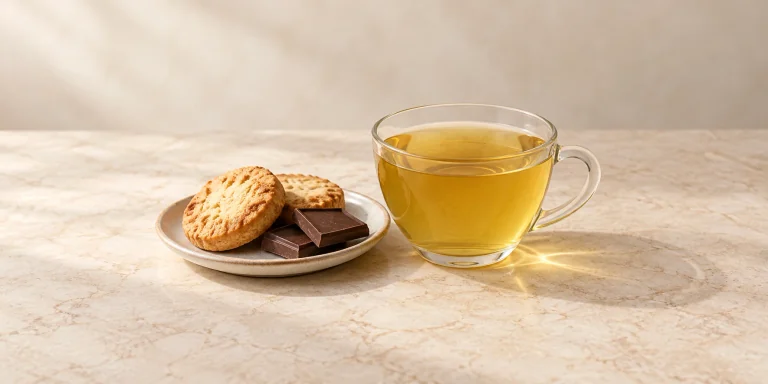
What to Eat with Digestion Blend
Digestion Blend's cooling mint, sweet fennel and gentle ginger sit best at the end of a rich, heavy meal — and alongside light, herb-forward bites.
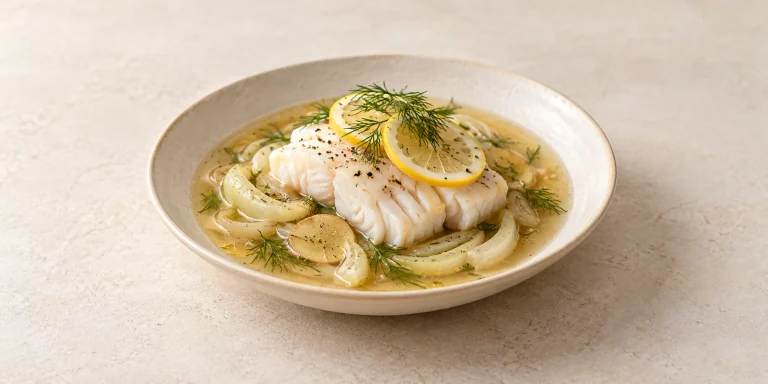
Digestion Blend Poached Fennel and White Fish
Delicate white fish and fennel gently poached in the digestion blend — a light dinner where mint, fennel and ginger perfume a clean broth.
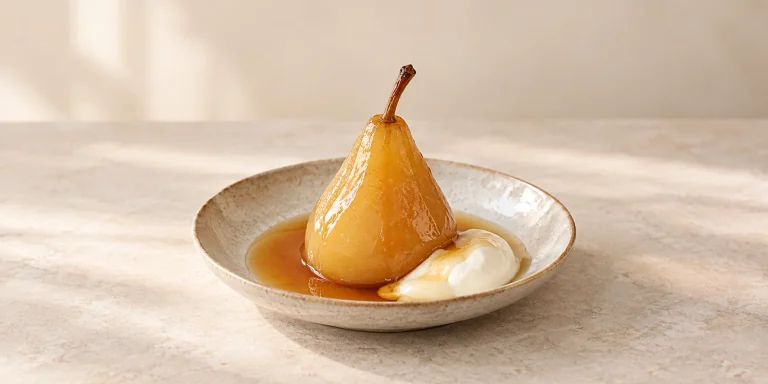
Digestion Blend Poached Pears
Pears poached in the digestion blend with honey and a cinnamon stick — a light after-dinner dessert that turns the tea into a gentle sweet.
- Free
- Sundays
- 2 min
Drink better tea, one Sunday at a time.
A fact for the table·A shop worth the trip·A better cup·Ritual & kit of the week·Tea recipes & drinks
Drinks with this tea
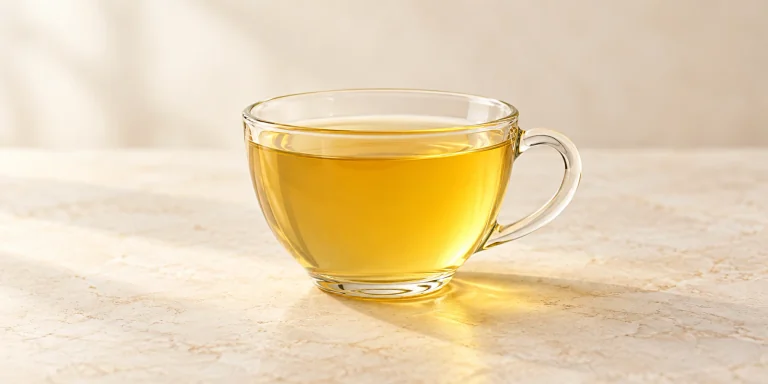
Peppermint, Fennel and Ginger Cup with Lemon and Honey
Peppermint, fennel, ginger and chamomile steeped 5 to 7 minutes under a lid with extra fresh ginger, lemon and honey: warm, minty and caffeine-free after dinner.
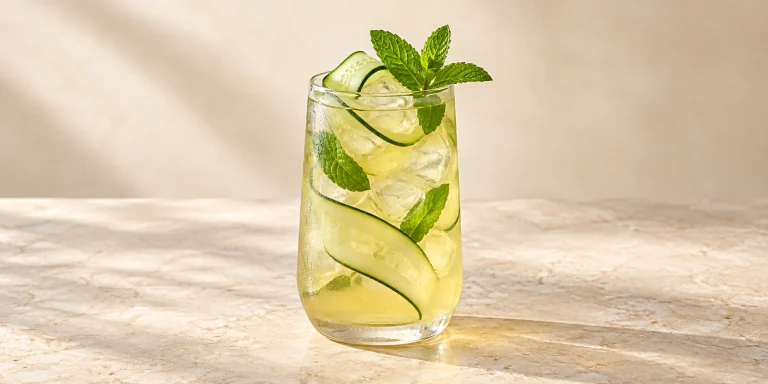
Iced Digestion Blend with Cucumber and Mint
Cold-brewed digestion blend over ice with cucumber and fresh mint — a crisp, cooling, caffeine-free refresher with mint on the finish.
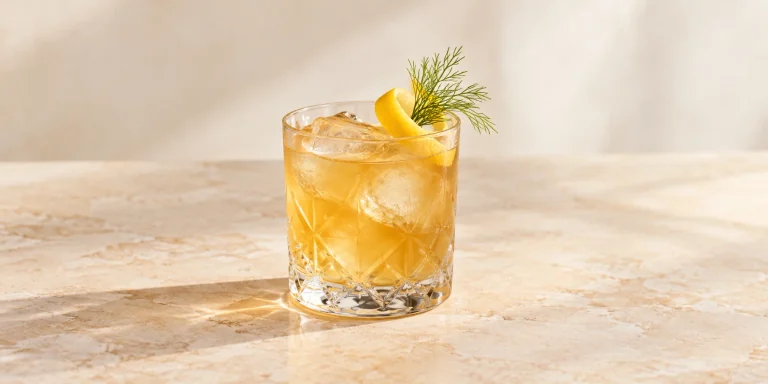
Amaro, Fennel and Lemon Nightcap (with Mocktail Option)
A strong cold infusion of peppermint, fennel, ginger and chamomile shaken with amaro, honey syrup and fresh lemon — plus an alcohol-free version topped with soda water.