
Energy Blend
Herbal infusion
4.4/5 · FindMeTea score
About this tea
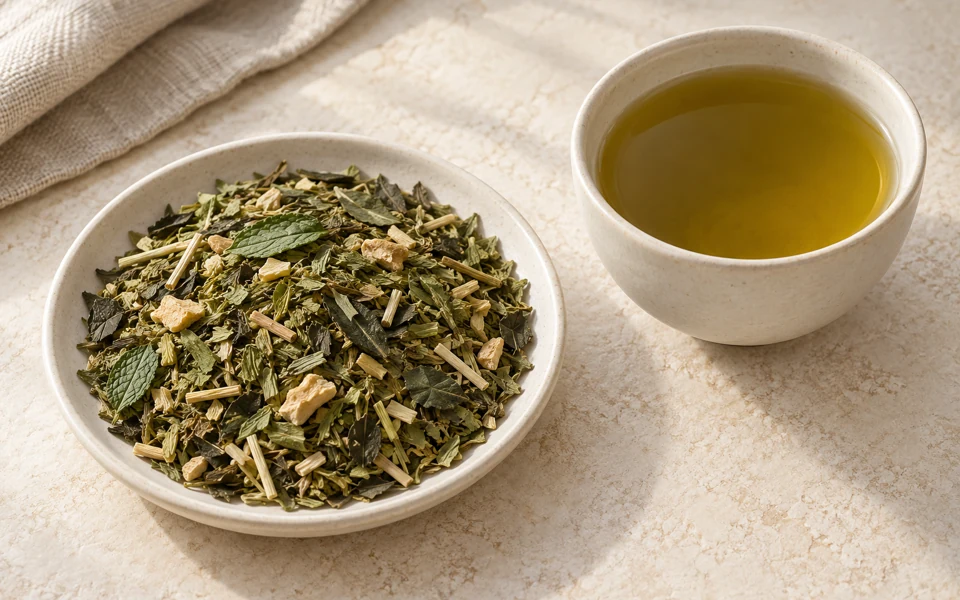
Energy Blend is a caffeinated herbal blend built on two South American hollies — yerba mate and guayusa — with cooling peppermint and a touch of ginger. Our catalog places it at level 2 on the 0–3 caffeine scale and brews it at 85 °C for 5 minutes with 3 g per cup. The peppermint adds brightness and a cool edge, while ginger contributes a warm spark. The result is a cup that tastes green and herbaceous up front, with a cooling, lightly spiced finish — the blend the catalog lists for the morning, mid-morning and early afternoon.
How to brew: 85°C, 5 min, 3 g per cup.
Caffeine
Medium
How to brew
Flavor notes
vegetal, fresh, minty, robust
Often associated with
Sustained energy, Focus
Best time to enjoy
Morning, Mid-morning, Early afternoon
Tags
Where to find it in United States
 Where to find it in United States
Near Columbus
- North Market SpicesOther Herbal infusion
Columbus · North Market, downtown
Spearmint, Crushed Leaves
from US$ 3.85· 1 oz
In storeOnline59 Spruce Street, Columbus, OH 43215See the shop → - Posh Teatime Co.Other Herbal infusion
Columbus · Franklinton, West Broad Street
Farmer's Market Fruit Blend
from US$ 16.95· 4 oz
In storeOnline1273 W Broad Street, Columbus, OH 43222See the shop → - Sencha Tea BarOther Herbal infusion
Minneapolis · Uptown (also Madison, WI)
Rose Hips
from US$ 3.99· 2 oz
In storeOnline2601 Hennepin Ave S, Minneapolis, MN 55408See the shop → - Old City CoffeeOther Herbal infusion
Philadelphia · Old City · Reading Terminal Market
Hibiscus
US$ 11· 4 oz
In storeOnline221 Church St, Philadelphia, PA 19106See the shop → - The Random Tea RoomOther Herbal infusion
Philadelphia · Northern Liberties
Chamomile
US$ 18· 6 oz
In storeOnline713 N 4th St, Philadelphia, PA 19123See the shop →
Origin & Production
The blend takes its caffeine from two holly relatives native to South America. Yerba mate (Ilex paraguariensis) is grown in northern Argentina, Paraguay, and southern Brazil, where it is the heart of a deeply social drinking culture. Guayusa (Ilex guayusa) comes from the Amazon basin of Ecuador, where Kichwa communities have brewed it for generations. Peppermint and ginger, the supporting players, are widely cultivated aromatic plants. Assembled together, these ingredients combine caffeine-bearing leaves with a cooling herb and a warming root to create a balanced, green-tasting cup.
Production process
Harvesting the leaves
Yerba mate and guayusa leaves are harvested from cultivated and agroforestry plots in South America, then prepared for drying — the foundation of the blend's natural caffeine.
Drying & curing
Mate is traditionally dried over heat and aged, developing its characteristic green, grassy depth, while guayusa is dried to preserve its smooth, mild character.
Adding the herbs
Dried peppermint and cut or ground ginger are combined with the caffeine leaves, balancing the green base with a cool note and a warm edge.
Blending for balance
The components are blended in proportions that let the peppermint and ginger brighten the cup without overpowering the mate and guayusa, so the green base still leads the flavor.
Packaging
The finished blend is packed in sealed, light-protected containers as loose leaf or tea bags, ready to brew hot at 85 °C or cold-steep overnight.
- Free
- Sundays
- 2 min
Drink better tea, one Sunday at a time.
A fact for the table·A shop worth the trip·A better cup·Ritual & kit of the week·Tea fun facts
History & Tradition
Energy Blend is a modern formulation, but its caffeinated heart comes from two of South America's most storied caffeine plants, each with deep indigenous roots.
Guaraní and mate
The Guaraní peoples of the Southern Cone drank yerba mate long before European contact, valuing it as a social and ceremonial infusion.
Guayusa at dawn
Kichwa communities in the Ecuadorian Amazon have brewed guayusa for generations, traditionally rising before dawn to share it as a story-telling morning ritual.
Mate spreads
Spanish colonists adopted yerba mate and cultivation spread, embedding the drink in the daily life of Argentina, Paraguay, Uruguay, and southern Brazil.
Guayusa goes global
Guayusa moved from the Amazon to international markets as a smooth, naturally caffeinated leaf, often paired with mate in caffeinated herbal blends.
Mate-and-mint blends
Modern blenders combined mate and guayusa with peppermint and ginger, selling the result as a caffeinated, coffee-free cup for the morning.
What's in the cup
The cup, as our catalog lists it
Two hollies, two herbs, and a caffeine level of 2 on our 0–3 scale: that is Energy Blend as the catalog describes it. It brews at 85 °C for 5 minutes with 3 g per cup, tastes vegetal, fresh, minty and robust, and sits in the morning, mid-morning and early-afternoon slots. Nothing on this page claims an effect on the body: what follows is composition, custom, and what the European food safety authority, the European medicines agency and the WHO's cancer agency have published about caffeine, peppermint leaf and very hot drinks.
Caffeine, as Europe's food safety authority set the benchmarks
The European Food Safety Authority's 2015 opinion on caffeine states that single doses up to 200 mg and habitual intakes up to 400 mg per day do not raise safety concerns for healthy adults, that intakes from all sources up to 200 mg per day do not raise safety concerns for pregnant women, and that it proposes 3 mg per kg of body weight per day as a safety level for habitual consumption by children and adolescents. It also notes that single doses of 100 mg may affect sleep duration and patterns in some adults, particularly when consumed close to bedtime — which is the regulator's reason, not ours, for keeping this blend out of the evening. Our catalog does not measure milligrams per cup: it rates Energy Blend at level 2 because both mate and guayusa carry caffeine, while the peppermint and ginger add aroma and nothing to the count.
Source: EFSA — Scientific Opinion on the safety of caffeine (2015)
Temperature, as the WHO's cancer agency assessed mate
In June 2016 the International Agency for Research on Cancer, the WHO's cancer agency, classified drinking very hot beverages — anything consumed above 65 °C — as probably carcinogenic to humans (Group 2A), based on limited evidence linking very hot drinks to cancer of the oesophagus. It found no conclusive evidence for drinking mate at temperatures that are not very hot, which it left as not classifiable (Group 3), and said it is the temperature, rather than the drinks themselves, that appears to be responsible. The agency notes that mate is traditionally drunk at about 70 °C in South America. This blend steeps at 85 °C, like most hot teas; the practical reading is to let the cup cool before sipping, as with any hot drink.
Source: IARC/WHO — Monographs Vol. 116: drinking coffee, maté and very hot beverages (2016)
Peppermint leaf, as the European Medicines Agency describes its use
The European Union herbal monograph on peppermint leaf (Mentha x piperita, folium), revised by the EMA's Committee on Herbal Medicinal Products and published in July 2020, lists one traditional use based on long-standing practice rather than clinical trials: the relief of digestion-related problems such as indigestion and flatulence, with the dried leaf usually taken as a herbal tea. That describes peppermint leaf on its own, taken as a medicine, not the minority share of mint in a mate-based blend, so we claim nothing for this cup. The monograph also states that these preparations are for adults and children over 4, that symptoms lasting more than two weeks warrant a doctor, that they may worsen gastro-oesophageal reflux and heartburn, and that people with gallstones or other bile problems should be cautious. This isn't medical advice — if you have a specific condition, check with a healthcare provider.
Source: EMA/HMPC — EU herbal monograph on Mentha x piperita L., folium, Rev. 1 (2020)
What is in the leaves, as components
Yerba mate and guayusa are both hollies whose leaves carry caffeine, which is why the catalog rates the blend at level 2 while the mint and ginger stay at zero. Like other leaf infusions they also carry plant polyphenols, the compounds behind mate's grassy astringency, and peppermint carries menthol, the compound behind its cool finish. This page lists all of them as components of the cup and nothing more. The reason the blend is drunk in the morning and early afternoon is the catalog's reason, caffeine at level 2 and a fresh, robust flavor, not an effect we promise.
This isn't medical advice. If you have a specific condition, or you are pregnant or taking medication, check with a healthcare provider.
- Free
- Sundays
- 2 min
Drink better tea, one Sunday at a time.
A fact for the table·A shop worth the trip·A better cup·Ritual & kit of the week·Brew better
Grades & Varieties
Mate-forward blend
A green, grassy blend led by yerba mate with guayusa, peppermint, and ginger in support. The most robust version, with mate's signature depth front and center.
Best for
- ✓Strongest mate flavor
- ✓Mate lovers
- ✓The first cup of the day
Guayusa-forward blend
A smoother, mellower version led by guayusa, which carries caffeine with less of mate's grassy bite. Easygoing and clean, ideal for those new to South American caffeinated hollies.
Best for
- ✓Milder flavor
- ✓Sensitive palates
- ✓Daytime sipping
Iced-ready blend
A peppermint-forward version of the blend designed to shine cold-brewed over ice, where the mint and ginger turn the green base into a crisp, refreshing cooler.
Best for
- ✓Hot afternoons
- ✓Iced cold brew
- ✓Mint-and-lime coolers
Did you know?
Both energy-driving herbs in this blend — yerba mate and guayusa — are holly relatives (Ilex), and Amazonian Kichwa communities traditionally brewed guayusa before dawn as a wakeful, story-telling ritual.
Foods with this tea
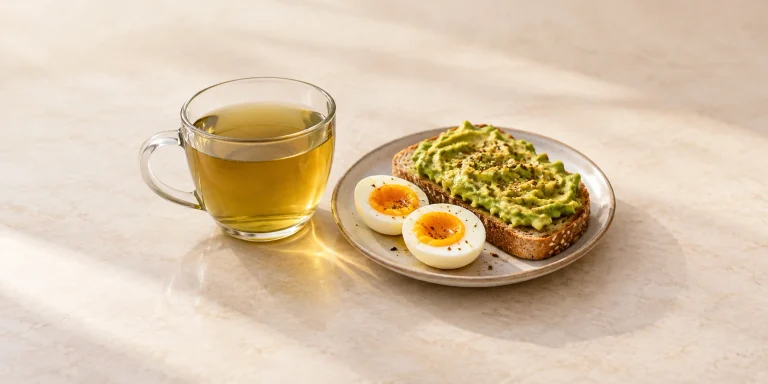
What to Eat with Energy Blend
Yerba mate, guayusa, peppermint and ginger: a green, herbaceous cup with a cooling, lightly spiced finish that pairs best with hearty breakfasts, savory wraps and bright citrus-forward snacks.
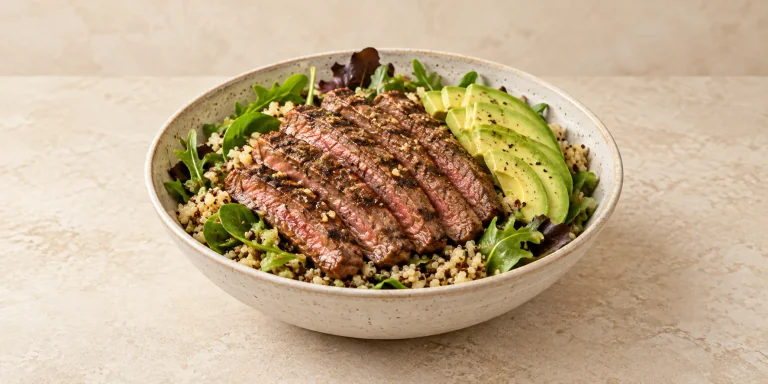
Energy Blend Marinated Grilled Steak Bowl
Steak marinated in a strong brew of the energy blend with garlic, lime and cumin, grilled and served over quinoa with greens and avocado — a South-American-inspired bowl.
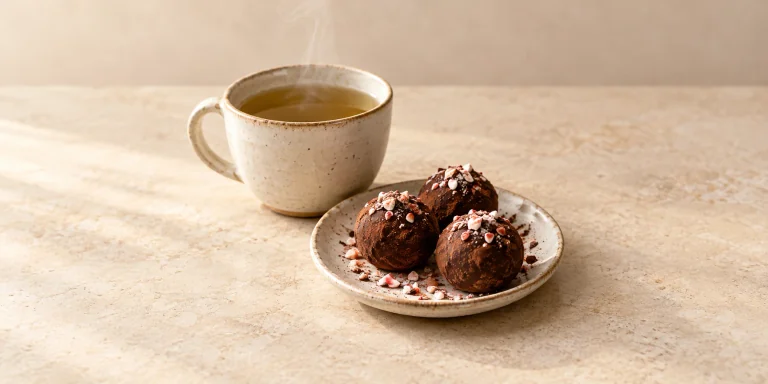
Energy Blend Dark Chocolate Mint Truffles
Dark chocolate truffles infused with the energy blend — yerba mate, guayusa, and peppermint marrying beautifully with cocoa for a lightly caffeinated treat.
- Free
- Sundays
- 2 min
Drink better tea, one Sunday at a time.
A fact for the table·A shop worth the trip·A better cup·Ritual & kit of the week·Tea recipes & drinks
Drinks with this tea
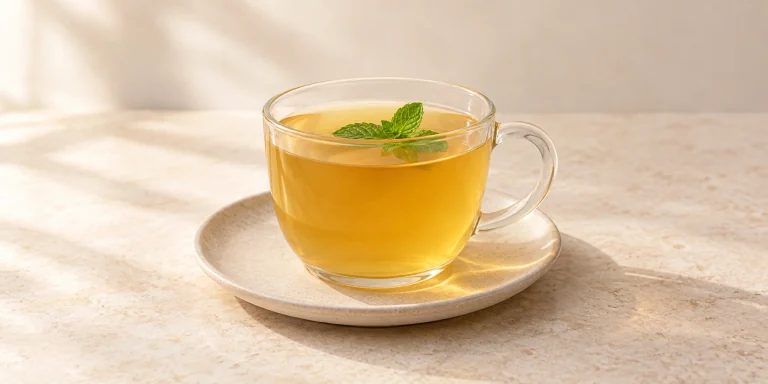
Energy Blend with Fresh Ginger, Lemon and Honey
Yerba mate, guayusa, peppermint and ginger steeped at 85 °C for 5 minutes with extra fresh ginger, lemon and honey: green, sharp and naturally caffeinated, for the morning.
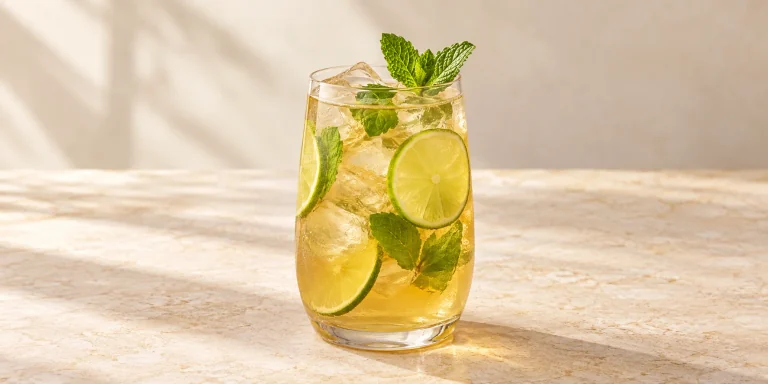
Iced Energy Blend with Lime and Mint
Cold-brewed energy blend over ice with lime and fresh mint — a crisp, naturally caffeinated cooler for a hot afternoon.
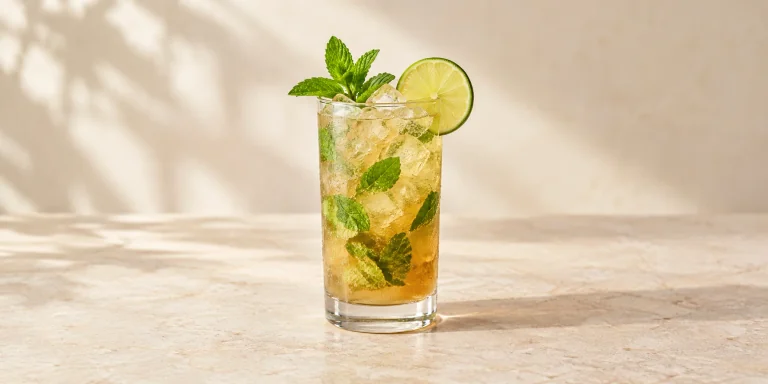
Energy Blend Mate Mojito (with Mocktail Option)
A herbaceous twist on the mojito built on cold-brewed energy blend with white rum, lime, mint and sugar — plus a zero-proof version topped with soda.