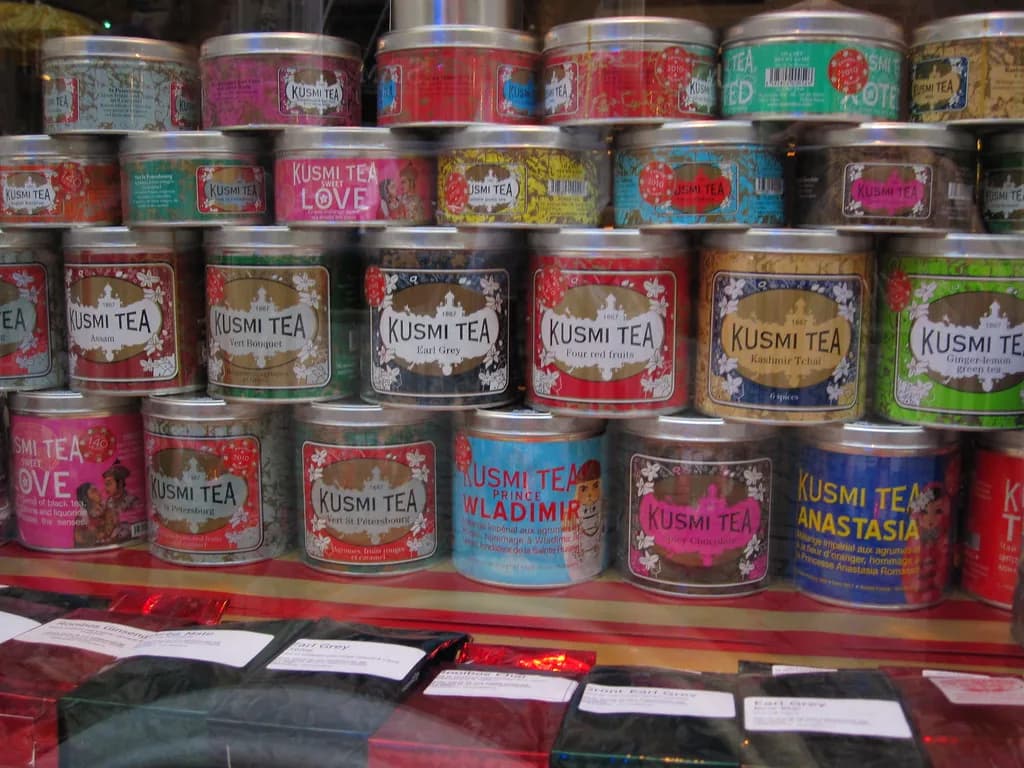
Kusmi Tea dates its story to 1867, when Pavel Kousmichoff opened his tea house in St Petersburg. After the 1917 revolution the family's workshops moved to avenue Niel in Paris, and the head office is still in the city, while the blending now happens in the company's own workshops in Normandy. Sylvain and Claude Orebi took over the house in 2003, and in 2020 the range went organic. The Russian thread survives in the names: St-Pétersbourg was created in 2003 for the city's three-hundredth anniversary, and Anastasia is named after the daughter of Tsar Nicholas II.
The price list is organised by format more than by colour. Most blends come in the same ladder: a 20 g mini tin, a box of twenty bags, a 100 g tin, and loose leaf by 100, 300 or 500 g, with loose the cheapest per gram and the bigger bags priced at exactly the same rate. The plain teas carry the name of a place: Darjeeling N°37, Long Jing from Hangzhou, a Japanese Sencha, a Lapsang Souchong and a Nepal black from the Guranse garden. Plain rooibos and maté sit at the bottom of the loose list, the jasmine Jade Pearls at the top.
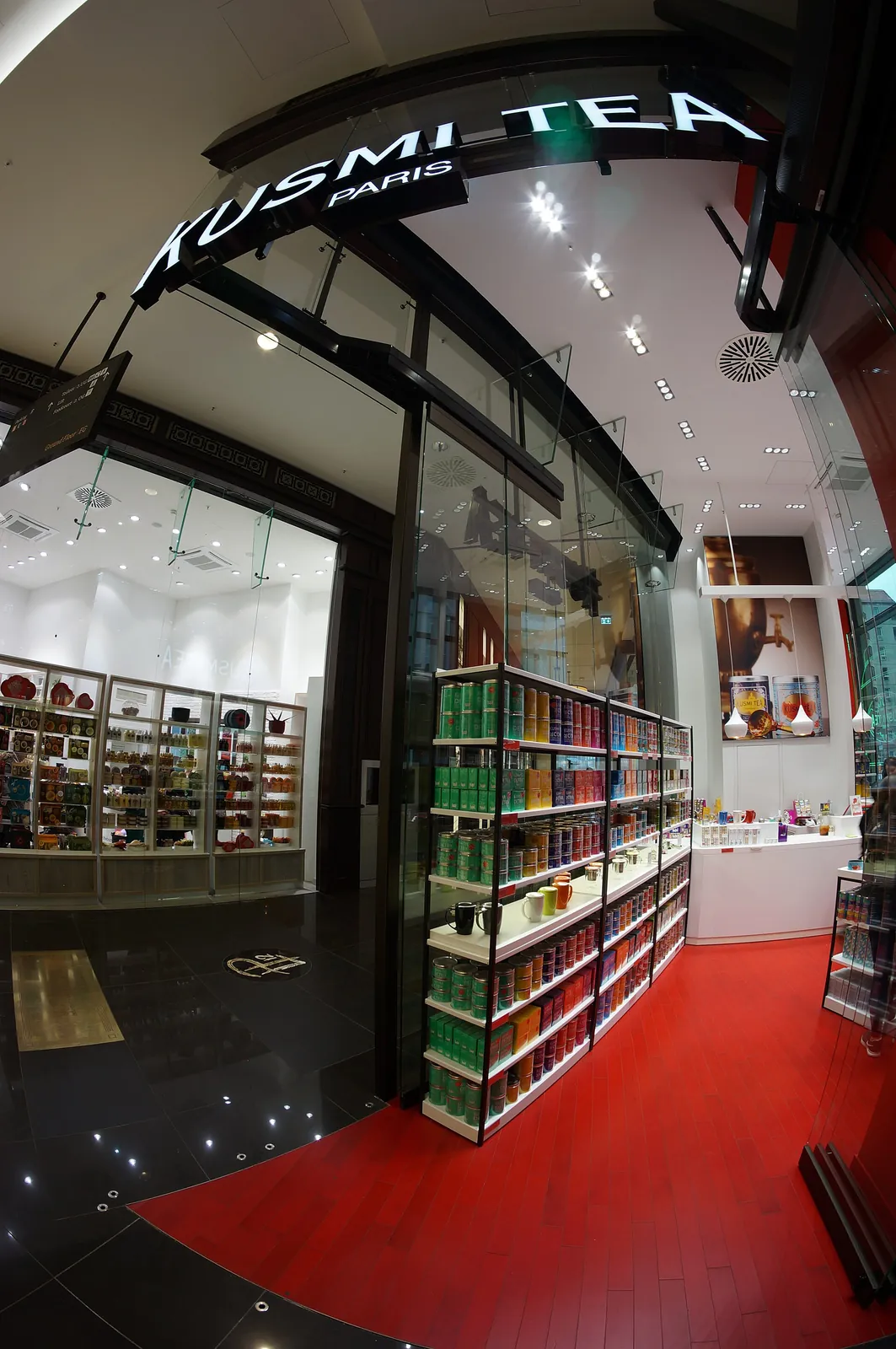
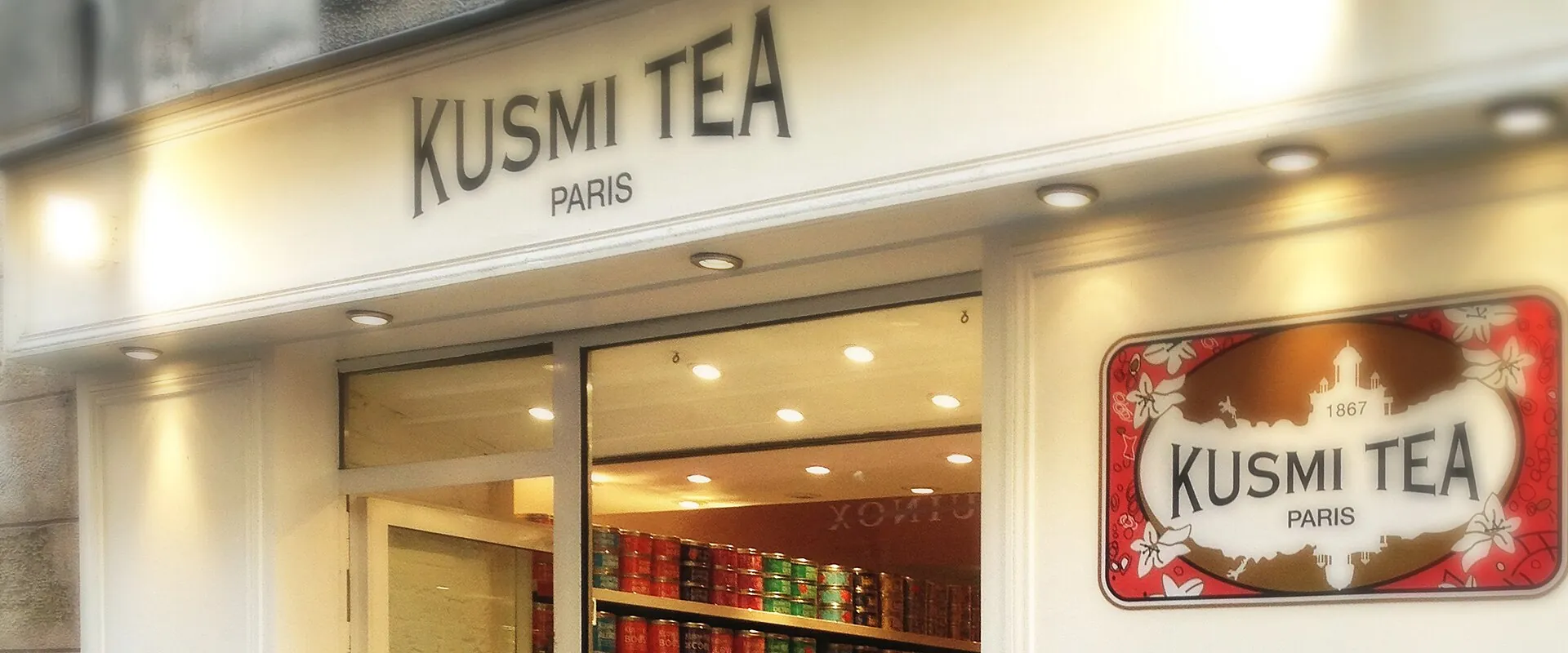
In Paris the house has eight boutiques, from the Marais and the rue des Rosiers to the Saint-Lazare, Montparnasse and Gare de l'Est stations. The one at 49 avenue de l'Opéra, open every day, adds a bar that makes matcha lattes, bubble tea and teas to take away. Every Paris boutique lists free tastings and samples; at Opéra, loose tea is weighed to the amount you ask for, and an empty Kusmi tin can be brought back to be refilled. The French online shop sells no oolong on its own: the range runs from black and green to white, pu-erh, matcha, rooibos and maté.


 Tea shops · Paris, France