Tres infusiones sin cafeína que tradicionalmente se toman antes de dormir — manzanilla, valeriana y una mezcla para dormir — con la preparación exacta de cada una.
Respuesta rápida
Para la mayoría, la mejor taza antes de dormir es una infusión sin cafeína: manzanilla como el clásico suave, valeriana como la hierba relajante tradicional más intensa, o una mezcla para dormir que combina varias botánicas calmantes en una sola bolsita. Las tres son naturalmente libres de cafeína, así que no te van a desvelar.
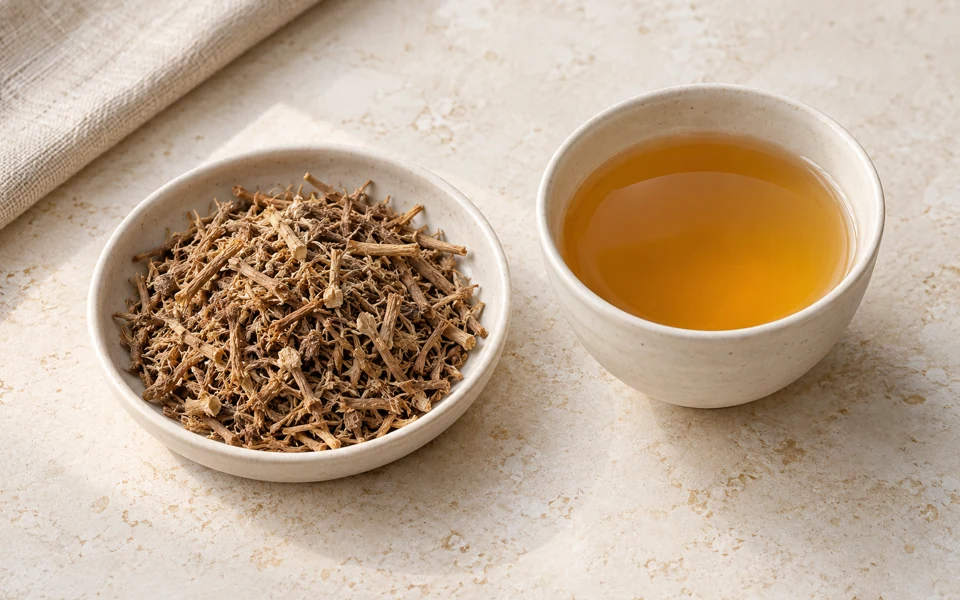
Se usa tradicionalmente para relajarse a fondo por la noche — terrosa, con un carácter notablemente más fuerte que la manzanilla.
Sin cafeína; un hábito común es una taza 30–60 minutos antes de acostarse.
Su aroma particular se suaviza bien con una cucharadita de miel.
Cómo prepararlo
95°C
5 min
2 g por taza
Sin cafeína
Si no lo tienes
La pasiflora o la lavanda son las alternativas sin cafeína más cercanas, con un aroma más amable.
Dato de té
La raíz de valeriana apenas huele cuando está fresca — su famoso aroma penetrante, como a calcetines, solo aparece a medida que la raíz se seca, y los gatos suelen sentirse tan atraídos por ella como por la hierba gatera.
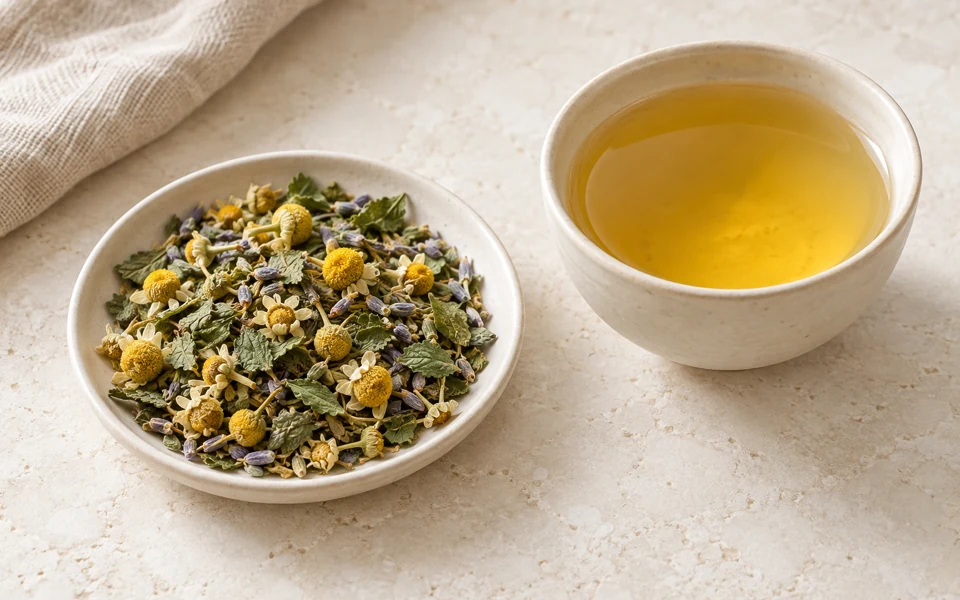
Combina florales tipo manzanilla con otras hierbas nocturnas tradicionales en una sola bolsita.
Pensada para el final del día: sin cafeína y suavemente floral.
Una opción fácil cuando no quieres elegir una sola hierba.
Cómo prepararlo
95°C
8 min
2.5 g por taza
Sin cafeína
Si no lo tienes
Prepara manzanilla junto con unas hojas de menta o melisa para una versión casera.
Dato de té
La reputación calmante de la lavanda tiene una firma química: más del 70% de su aceite esencial está formado por solo dos compuestos — linalool y acetato de linalilo — y un estudio de 2010 en Phytomedicine sobre el aceite de lavanda estandarizado 'Silexan' lo encontró comparable a una dosis baja de lorazepam para síntomas de ansiedad generalizada, mientras que los monjes de la Europa medieval ya lo cultivaban en jardines de claustro con el mismo propósito casi mil años antes.
Empieza con la manzanilla si eres nuevo en infusiones nocturnas — es la más suave. Si ya la tomas y quieres algo con más presencia, prueba la valeriana o una mezcla para dormir.
¿Cuánto antes de acostarme las tomo?
Un hábito común es 30–60 minutos antes de acostarte — tiempo para tomarla despacio y que la rutina te baje las revoluciones. Las tres son sin cafeína, así que el horario es cuestión de comodidad, no de estimulación.
¿Estos tés realmente hacen dormir?
Ningún té es una pastilla para dormir. Estas hierbas se usan por la noche desde hace siglos, y a mucha gente el ritual tibio y sin pantallas le resulta realmente relajante — tómalas como un hábito calmante, no como un remedio.

 Compartir