The city guide · Japan
 The city guide · Japan
Tea shops inNagoya.
Nagoya is the castle town where the Owari lords made matcha an everyday habit, and its tea shops still run from the old merchant streets to the station undergrounds: a 1916 house in Atsuta that roasts hojicha in its shop windows at Sakae and Meieki, an 1840 Uji-matcha merchant on Nishiki with its own café, a young Ise-tea specialist in the Nagono lanes where every leaf on the shelf can be tasted, and a 1978 black-tea importer on the Kakuozan temple approach. Expect sencha from ¥648 for a 100 g everyday pack to ¥2,700 for a top grade, matcha from ¥864 for 20 g, gyokuro from ¥1,998 for 40 g, Ceylon and Assam from ¥972 for 80 g, and tax included in every price.
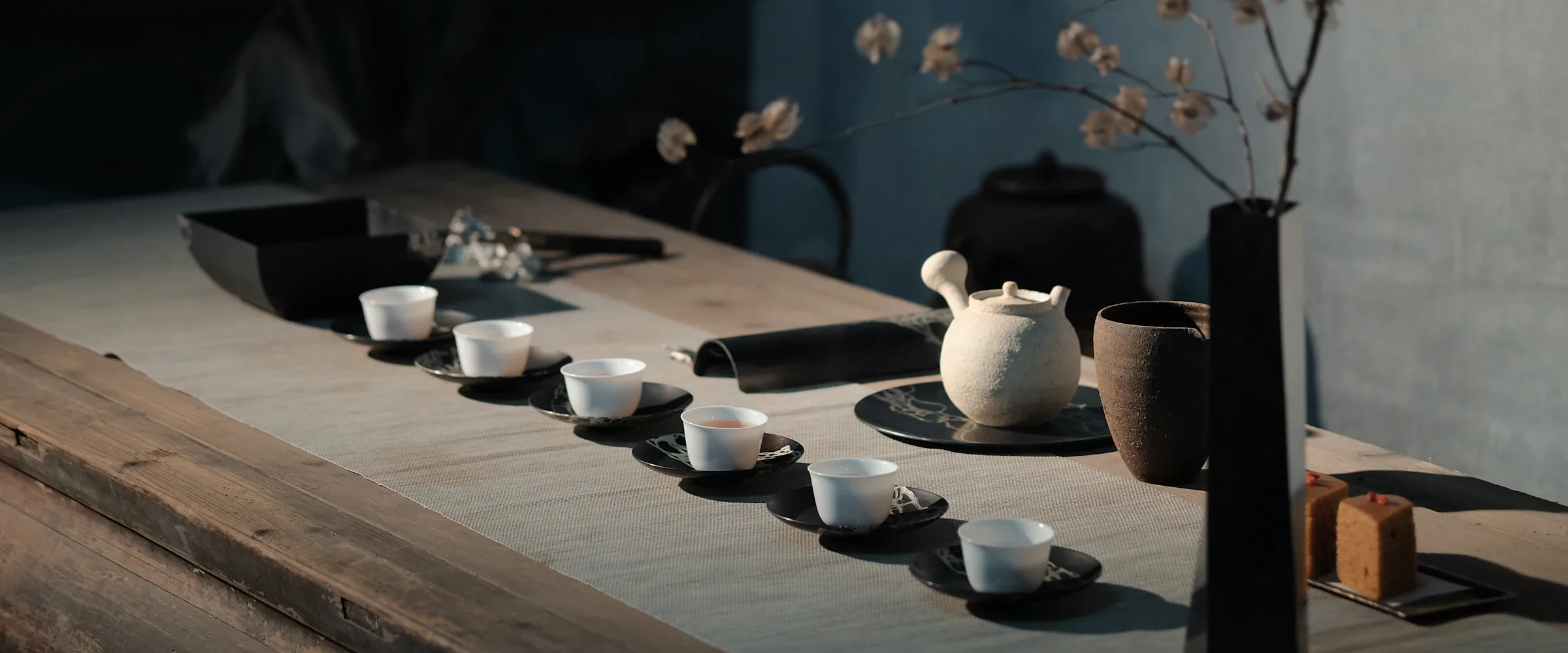
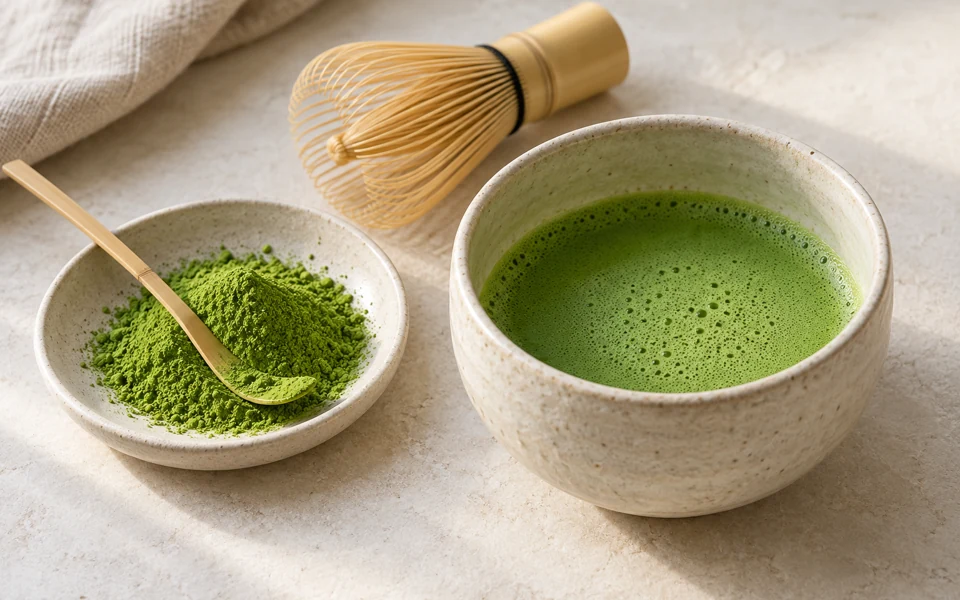
Illustrative tea photograph
4 places we’d send a friend to.
Our Nagoya shortlist
Good tea is worth knowing where to look.
Places to explore, each with a different reason to stop by. See what to bring home before you go.
Showing 4 of 4 places
- 01Loose-leaf specialist
Myokoen (妙香園)
Main shop in Sawakami, Atsuta-ku; also Sakae-chika and Myokoen Tea Store (Sakae), Sunroad (Meieki) and Atsuta nagAya
29 prices listedMyokoen (妙香園)
2-1-44 Sawakami, Atsuta-ku, Nagoya 456-0012 (名古屋市熱田区沢上二丁目1番44号)
Nagoya's hojicha house since 1916: a roaster turning in the window at Sakae and Meieki, free matcha for every visitor and six grades of Uji matcha.
In storeShips onlineSince 1916Main shop 9:00–18:00; Sakae-chika shop 10:00–20:00; Sunroad shop 10:00–20:30
Read the full shop note
Founded in February 1916 and still run from Atsuta, where the main shop at 2-1-44 Sawakami opens 9:00 to 18:00 with its own parking, Myokoen is the Nagoya name for hojicha: the Sakae-chika and Sunroad shops keep a roaster turning in the window and sell the leaf still warm, and every directly run shop offers visitors a bowl of matcha and a sweet. The strong-roast hojicha is ¥1,296 for 150 g, the all-domestic hoji-sencha ¥1,512 for 150 g and the gyokuro-blend Nagoya Hojicha Ran ¥1,404 for 47.5 g; senchas climb from Shokisen at ¥1,026 for 100 g to Sencha Myoko at ¥2,700, six Uji matchas run from Miya no Mori at ¥864 for 20 g to Matcha Myoko at ¥3,456, and gyokuro starts at ¥1,998 for 40 g of Hoo. There is also a 130 g oolong at ¥2,592, jasmine and wakocha in teapot bags, and 500 g of domestic barley tea for ¥756. Online orders ship free from ¥10,000.
What to bring home
Website: myokoen-shop.com 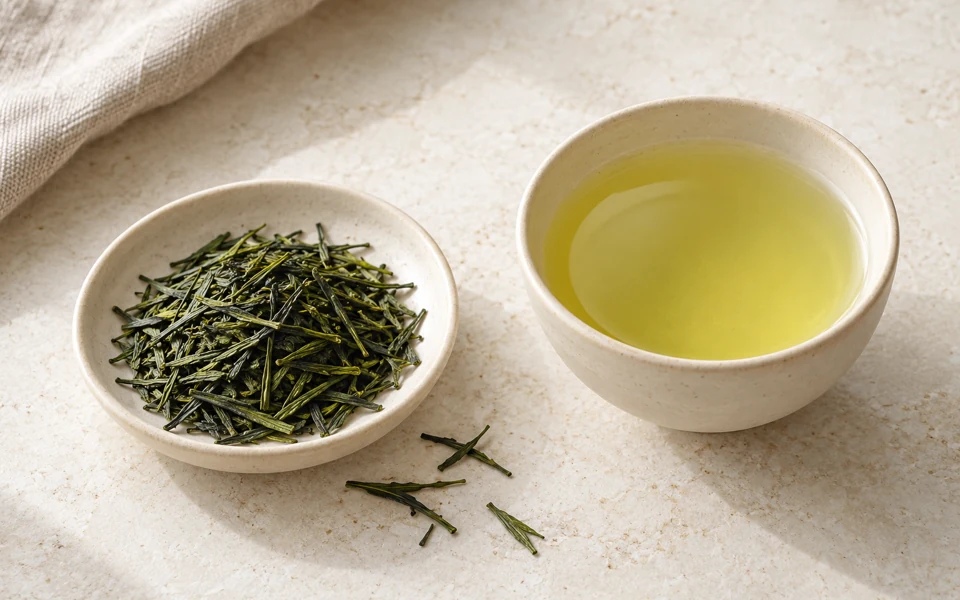 02Loose-leaf specialist
Masuhan Chaten (升半茶店)
Nishiki 2-chome, Naka-ku, 2 min from Marunouchi station; also Sakaemachi shop in Mori no Chikagai, Matsuzakaya Nagoya B1 and Mitsukoshi Hoshigaoka B1
29 prices listedMasuhan Chaten (升半茶店)
camellia Marunouchi 1F, 2-7-1 Nishiki, Naka-ku, Nagoya 460-0003 (名古屋市中区錦2丁目7-1 camellia丸の内1F)
An 1840 Uji-matcha merchant on Nishiki, reborn in 2023 with a café where the matcha is stone-milled in small batches and the top sencha is on the menu.
In storeShips onlineSince 1840Main shop 9:30–17:30, café 10:30–17:30 (last order 17:00), closed Sundays and holidays
Read the full shop note
Masuhan opened in 1840 as Shohakuen, a Nagoya merchant who went to Uji himself to buy matcha for ordinary townspeople, and in 2023 rebuilt its main shop at 2-7-1 Nishiki, two minutes from Marunouchi station, with a café where the matcha is stone-milled in small batches and the top sencha Shoto is on the menu. That Shoto costs ¥2,376 for 100 g, the everyday Shokisen ¥1,188 and the cellar-aged Kuradashi sencha ¥1,296; four Uji gyokuros run from Ayataka at ¥2,808 for 100 g to Zuiun at ¥8,640, the straw-shaded Wara-kabuse is ¥1,404, the light-roast hojicha ¥1,188 for 100 g and the genmaicha Hanafubuki ¥1,242 for 200 g, with sencha, kabusecha and hojicha tea bags from ¥864. Ten grades of matcha from Chiyo no Mukashi to Akebono are sold in boxes and tins from 20 g up. The Sakaemachi shop in Mori no Chikagai and the counters at Matsuzakaya Nagoya and Mitsukoshi Hoshigaoka sell the same teas without the café.
What to bring home
Website: masuhan.co.jp- 03Loose-leaf specialist
mirume Shinryokusabo (mirume 深緑茶房)
Nagono 1-chome, Nishi-ku (Shikemichi and Endoji area), 10 min on foot from Kokusai Center or Marunouchi stations
32 prices listedmirume Shinryokusabo (mirume 深緑茶房)
1-36-57 Nagono, Nishi-ku, Nagoya 451-0042 (名古屋市西区那古野1丁目36-57)
An Ise-tea shop in the Nagono lanes where every leaf on the shelf can be tasted first, with three certified instructors and a kyusu café upstairs.
In storeShips onlineWeekdays 11:00–19:00, Sat/Sun/holidays 9:00–19:00 (last order 18:30), open every day
Read the full shop note
mirume is the Nagoya shop of Shinryokusabo, an Ise-tea house from Mie, set in an old-town lane at 1-36-57 Nagono, ten minutes on foot from Kokusai Center or Marunouchi stations: the ground floor is shelves and a tasting counter where any tea in the shop can be tried before buying, the first floor a café where a kyusu of tea good for three infusions is ¥750 and a cup ¥550, and three certified Japanese tea instructors work the floor. The house blend Kaorikomachi is ¥1,296 for 100 g, the deep-steamed Shinryoku ¥2,160 for 90 g, the kabusecha Senju ¥2,700 for 90 g and a plain deep-steamed sencha ¥648 for 100 g; a pan-fired kamairicha is ¥972 for 60 g, the sand-roasted stem hojicha ¥864 for 130 g, a wakocha ¥972 for 50 g and the two matchas, Ke and Hare, ¥2,300 and ¥3,500 for 30 g. Twenty kinds of tea bag, from five hojicha roasts to cold-brew green, black and semi-oxidised teas, start at ¥648 for 12.
What to bring home
Website: mirume-tea.jp- SenchaShinryoku, deep-steamed sencha 90 g¥ 2,160 · 90 g
- MatchaMatcha Ke, everyday grade 30 g¥ 2,300 · 30 g
- Black teaWakocha Japanese black tea 50 g¥ 972 · 50 g
 04Loose-leaf specialist
Eikokuya Kocha-ten (えいこく屋紅茶店)
Kakuozan, Chikusa-ku, on the Nittaiji temple approach; franchise shop in Irinaka, Showa-ku
34 prices listedEikokuya Kocha-ten (えいこく屋紅茶店)
2-58 Sanmon-cho, Chikusa-ku, Nagoya 464-0064 (名古屋市千種区山門町2-58)
Black-tea importer on the Kakuozan temple approach since 1978: Darjeelings by garden and season, Ceylon by district, and an Indian restaurant next door.
In storeShips onlineSince 1978Kakuozan shop 10:00–18:00, closed Tuesdays
Read the full shop note
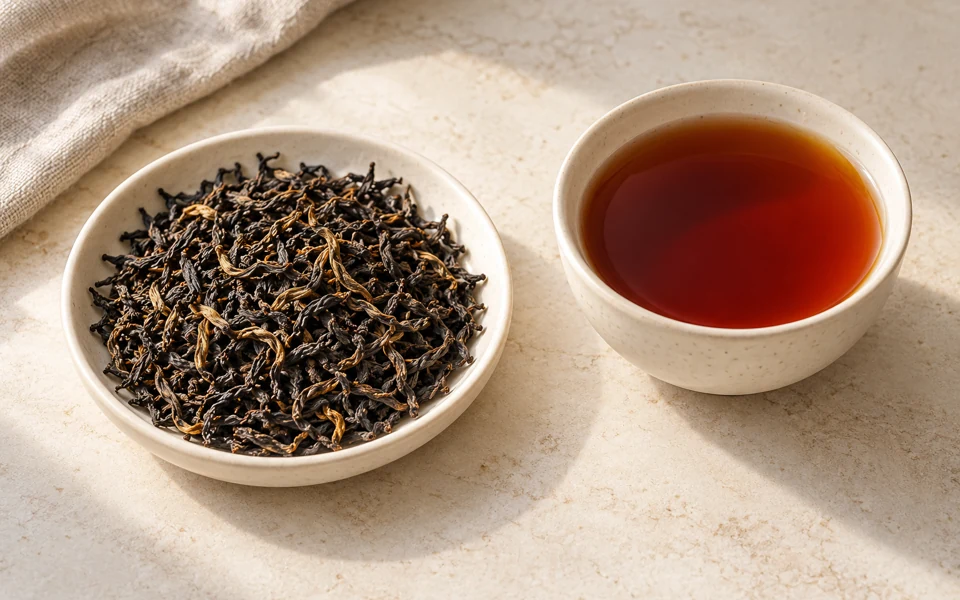
Eikokuya has sold black tea on the Nittaiji temple approach in Kakuozan since 1978, at 2-58 Sanmon-cho, with an Indian restaurant of the same name next door and a second shop in Irinaka; the family imports directly from India, Sri Lanka and Europe, packs tea bags at its own factory in Seto and supplies more than 400 shops and cafés. The shelves run by garden and season: a 2026 first-flush Darjeeling from Orange Valley is ¥3,564 for 30 g, a Gopaldhara Darjeeling ¥3,132 for 200 g, Ceylon districts from Dimbula to Ruhuna ¥1,296 for an 80 g box, Assam and the Nilgiri-based Earl Grey Original ¥972 for 80 g, Keemun ¥1,080 for 100 g and the house masala chai ¥2,160 for 250 g. Single herbs such as peppermint, lemongrass, chamomile and rose come in ¥756 small bags, rooibos is ¥702 for 18 tea bags, and Darjeeling, Uva or Keemun tea bags are ¥432 for 10. Shipping is a flat ¥330 nationwide.
What to bring home
Website: eikokuya-tea.com
Prices keep each product’s listed currency and pack size. Check current prices and hours with the shop.
A good cup, closer than you think
Find your tea in Nagoya.
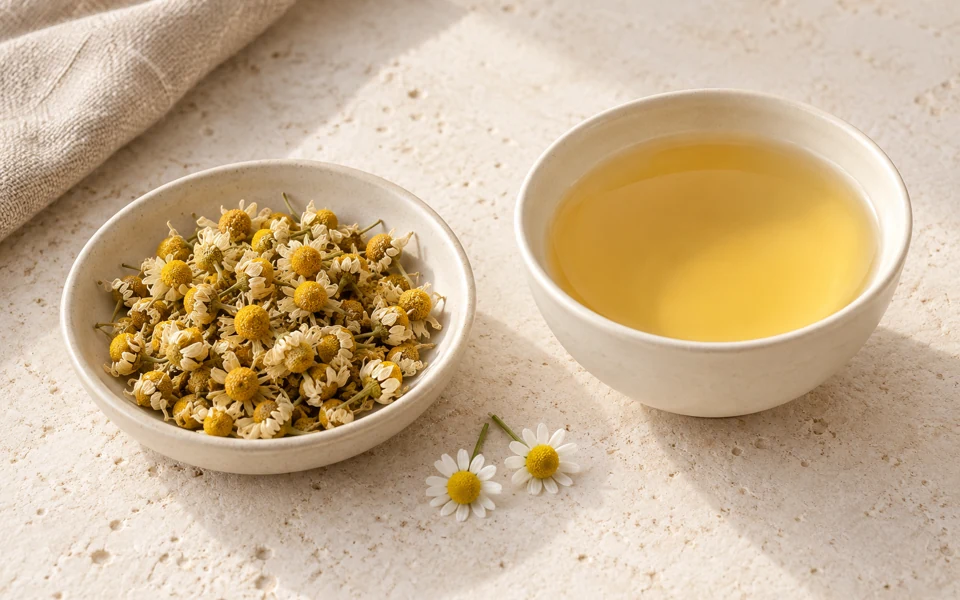
These teas have an exact or close match in the local catalogue. Open a tea to see who sells it and at what price.
Also worth a visit
Ocha no Kakien (お茶の嘉木園)
Osu shopping arcade, Naka-ku (2 min from Kamimaezu station) · 3-34-4 Osu, Naka-ku, Nagoya 460-0011 (名古屋市中区大須3丁目34-4)
Website: kakien.netA third-generation family tea shop in the Osu arcade that roasts its own hojicha and grinds matcha in the shop, sold by weight from 20 g, with a sweets counter next door for matcha soft serve; open 10:00–20:00, closed Wednesdays, and orders are taken by phone, fax or e-mail.
Ask for prices in storeA little local knowledge
Before you head out.
Currency, grams & tea bags
Each price keeps its original pack size. A box of bags and a pouch of loose leaf aren’t a like-for-like comparison.
Check the right location
Hours and visiting conditions can differ between branches. Use the address and details for the location you plan to visit.
Pickup and appointments
Some sellers operate pickup offices or showrooms. Read the shop note and check its visiting conditions before setting out.
A guide with a point of view
Tea specialists lead the discovery. Other retailers keep their own category, for familiar blends and everyday essentials.
Keep following the tea
Where to next?
More in Japan
 Singapore
 Hong Kong
 Mexico
 Uruguay
 New Zealand
 Australia
 Canada
 United States
Add my tea house to the list
Run a tea shop or tea house? Send us your details and we will take a look.
Photography & credits
Tea photographs are illustrative unless identified as a photograph of the shop. Images are cropped or framed to fit the layout.
- 五玄土 ORIENTO · Original photograph · Unsplash License